


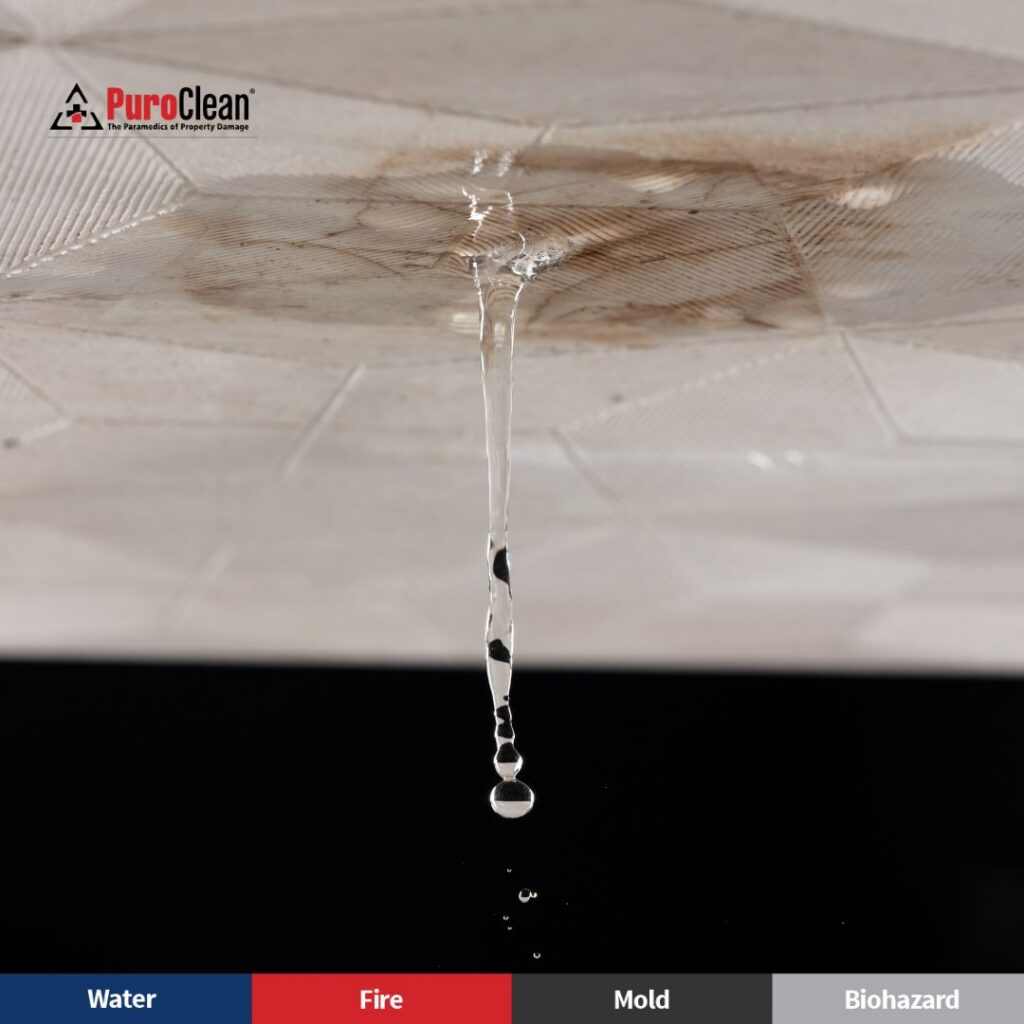
When most people think of winter disasters, they picture snowstorms and blizzards — not water pouring from a burst pipe. But in Lawrenceville, Georgia, burst pipes and winter leaks are among the most common and expensive cold-weather home emergencies.
Even though winters here are relatively mild, temperatures can drop below freezing overnight, putting plumbing systems at risk. A single burst pipe due to winter leaks can release hundreds of gallons of water within minutes, flooding walls, floors, and ceilings.

At PuroClean of Lawrenceville, we’ve helped countless homeowners recover from water leaks caused by frozen and burst pipes. But the truth is — most of these winter leaks are preventable emergencies. In this article, we’ll explain what winter leaks happen, why burst pipes occur, where they’re most likely to happen, and the steps you can take this winter to keep your home safe and dry.
Table of Contents
Understanding the Risk: Why Pipes Burst in Winter
When temperatures drop below 32°F, water inside your pipes can begin to freeze. As it turns to ice, it expands — increasing internal pressure. If that pressure has nowhere to go, the pipe bursts.
The real danger comes when the ice starts to thaw. Suddenly, all that trapped water rushes out, flooding your home before you even realize there’s a problem.
Lawrenceville’s Winter Conditions and Risk Factors
While Lawrenceville doesn’t experience prolonged freezes, the overnight temperature dips in December through February can create perfect conditions for frozen plumbing, especially in:
- Older homes with minimal insulation
- Houses with exposed outdoor pipes or crawl spaces
- Vacant properties or seasonal homes left unheated
- Poorly sealed exterior walls or uninsulated attics
Because these cold snaps often come and go quickly, homeowners might overlook the danger — until it’s too late.
The Cost of a Winter Leak
The damage from a burst pipe extends far beyond the plumbing itself. Within minutes, you could face:
- Soaked drywall and insulation
- Warped flooring or cabinets
- Mold growth within 24–48 hours
- Electrical hazards if water reaches outlets
- Thousands of dollars in repair costs
According to insurance data, the average homeowner’s claim for water damage from a burst pipe ranges between $5,000 and $10,000 — but severe cases can easily exceed that.
Common Areas Where Winter Leaks can Occur
Knowing where your plumbing is most vulnerable helps you take preventive action before cold weather hits.
1. Attics and Crawl Spaces
These areas are often unheated, leaving pipes exposed to outdoor air. Insufficient insulation makes them the first to freeze.
2. Exterior Walls
Pipes running along exterior walls — particularly in older homes — are highly susceptible to temperature changes.
3. Basements and Garages
Even though these areas are enclosed, they often stay colder than the rest of the house. Pipes in these spaces need insulation.
4. Outdoor Fixtures
Hose bibs, irrigation systems, and outdoor faucets are at high risk if not properly drained before winter.
5. Under Kitchen or Bathroom Cabinets
These enclosed spaces can get colder than the rest of the home if cabinet doors remain closed, trapping cold air.
Warning Signs of a Frozen Pipe
Catch the issue early, and you may be able to prevent a burst. Watch for:
- Reduced water flow or no water from faucets
- Frost visible on exposed pipes
- Unusual noises (gurgling or banging sounds)
- Unexplained cold spots on walls or ceilings
- Damp drywall or musty odors (signs of a small leak already forming)
If you notice any of these signs — act fast.
What To Do If a Pipe Freezes
- Shut off the main water supply immediately.
- Open faucets to relieve pressure in the system.
- Apply gentle heat using a hair dryer or heat gun. Start near the faucet and work back toward the frozen section.
- Never use an open flame or blowtorch.
- Call a licensed plumber to inspect for cracks or weaknesses.
If the pipe bursts, contact PuroClean of Lawrenceville right away for emergency water removal and drying services.
How to Prevent Burst Pipes and Winter Leaks
Prevention starts long before the first freeze. Use this step-by-step guide to winterize your plumbing system and protect your home.
1. Insulate Exposed Pipes
Use foam insulation sleeves, fiberglass wraps, or heating tape on any pipes running through unheated spaces. Pay special attention to:
- Attics
- Crawl spaces
- Basements
- Garages
- Exterior walls
This simple measure significantly reduces the risk of freezing.
Pro Tip: For long-term protection, consider installing a pipe insulation system with built-in heating cables — ideal for crawl spaces and outdoor plumbing lines.
2. Seal Air Leaks Around Your Home
Cold air entering through cracks and gaps can chill nearby pipes.
Inspect these areas:
- Window and door frames
- Electrical wiring holes
- Vents and exterior wall openings
- Sill plates and crawl space access doors
Seal leaks using caulk, weatherstripping, or expanding foam to keep cold drafts out.
3. Maintain Consistent Indoor Temperatures
Keep your thermostat set to at least 55°F, even when you’re away from home. Allowing indoor temperatures to drop too low increases the risk of frozen pipes, especially near exterior walls.
For multi-level homes:
Heat naturally rises, so make sure basement and lower-floor temperatures remain warm enough to protect plumbing.
4. Let Faucets Drip During Freezing Nights
Running water — even at a slow trickle — helps prevent pressure buildup in the pipes. This is especially important for:
- Faucets located on exterior walls
- Fixtures connected to uninsulated pipes
It may seem wasteful, but the water you save by preventing a burst pipe far outweighs the small cost.
5. Open Cabinet Doors
On especially cold nights, open cabinet doors under kitchen and bathroom sinks to allow warm air to circulate around the pipes.
6. Disconnect and Drain Outdoor Hoses
Never leave hoses attached to outdoor spigots during winter. Water trapped inside can freeze, expand, and back up into your interior plumbing.
Steps to follow:
- Disconnect the hose.
- Drain any remaining water.
- Shut off the interior valve controlling outdoor faucets.
- Cover the faucet with a faucet insulation cover for added protection.
7. Inspect and Maintain Your Water Heater
Cold weather puts extra strain on your water heater. A failing unit can leak or burst, leading to significant water damage.
Maintenance checklist:
- Flush the tank annually to remove sediment.
- Check the pressure relief valve for proper function.
- Inspect for corrosion or leaks around fittings.
- Set the water temperature to 120°F for efficiency and safety.
8. Protect Vacant or Seasonal Properties
If you plan to leave your Lawrenceville home for an extended period:
- Shut off the main water supply.
- Drain pipes completely.
- Add non-toxic antifreeze to toilets and drains.
- Keep heat on low or install a smart thermostat for remote temperature monitoring.
Pro Tip: Ask a neighbor or friend to check your property periodically, especially after freezing weather.
What To Do If a Pipe Bursts
Even with preparation, emergencies can happen. Here’s how to respond immediately to minimize damage:
Step 1: Turn Off the Water
Locate your main shut-off valve — typically found near the water meter or along an exterior wall — and turn it off right away.
Step 2: Cut Power to the Affected Area
If water has reached electrical outlets or wiring, shut off power to that area from your breaker box. Never step into standing water near electrical systems.
Step 3: Move Valuables and Furniture
Remove electronics, furniture, and rugs from affected rooms to prevent further damage.
Step 4: Call PuroClean of Lawrenceville
Our emergency response team is available 24/7 to provide:
- Water extraction and removal
- Structural drying and dehumidification
- Mold prevention and sanitization
- Repair and restoration of damaged materials
We follow IICRC-certified protocols to ensure your property is fully dried, safe, and restored to its pre-loss condition.
Step 5: Document the Damage
Take photos and videos for your insurance provider. PuroClean can assist you in preparing detailed loss documentation to streamline your claim.
Professional vs. DIY: Why Expert Restoration Matters
It might seem easy to mop up the water and use fans, but hidden moisture can remain behind walls, flooring, and insulation — creating the perfect breeding ground for mold.
Why Professional Restoration is Crucial
- Advanced detection: PuroClean uses moisture meters and infrared cameras to locate hidden water.
- Efficient drying: Industrial-grade dehumidifiers and air movers remove moisture safely.
- Mold prevention: We apply antimicrobial treatments to inhibit microbial growth.
- Structural safety: Technicians assess drywall, flooring, and framing for damage.
By hiring PuroClean of Lawrenceville, you prevent long-term structural problems and secondary damage from developing later.
Long-Term Winter Leak Prevention Strategy
To protect your home year after year, implement a regular maintenance routine:
| Area | Maintenance Task | Frequency |
|---|---|---|
| Plumbing | Insulate pipes, check for leaks | Every fall |
| Roof & Gutters | Clean and inspect for damage | Every fall |
| Water Heater | Flush and inspect for corrosion | Annually |
| Foundation & Crawl Space | Seal cracks, ensure proper drainage | Every 6 months |
| HVAC System | Replace filters, clear condensate drains | Every 2–3 months |
The PuroClean Advantage: Your Local Water Damage Experts
At PuroClean of Lawrenceville, we understand that water damage doesn’t wait for business hours. Our team of IICRC-certified technicians is available 24/7 to respond quickly and restore your property after burst pipes, leaks, or flooding.
Our Services Include:
- Burst pipe cleanup and drying
- Ceiling and wall leak restoration
- Basement flood cleanup
- Structural drying and dehumidification
- Mold removal and odor control
- Full reconstruction and repair
We proudly serve Lawrenceville, Snellville, Grayson, Dacula, and the greater Gwinnett County area, delivering the highest level of care and professionalism.
Conclusion
Cold weather might be fleeting in Georgia, but even one night of freezing temperatures can cause major damage if your plumbing isn’t prepared.
By insulating pipes, sealing air leaks, maintaining consistent temperatures, and knowing how to respond to emergencies, you can protect your Lawrenceville home from winter leaks and burst pipes.
And if the unexpected happens, PuroClean of Lawrenceville is your trusted local partner — ready to respond fast, restore your home, and give you peace of mind.