 PuroClean of Melbourne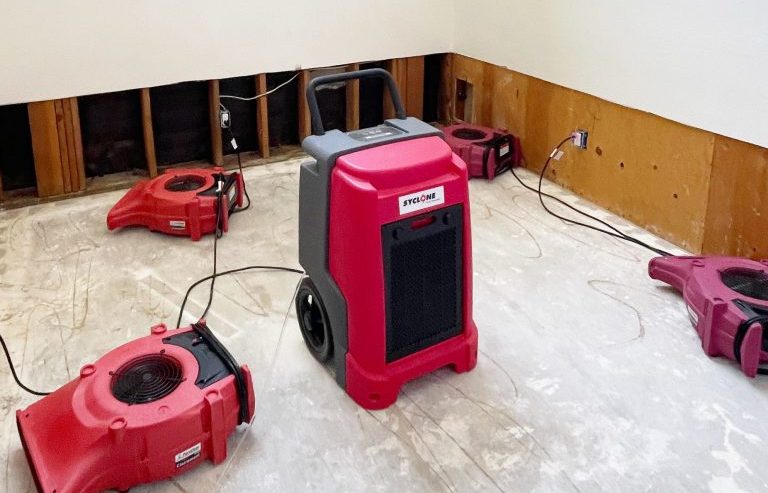
If you live in the Space Coast, you know that water is just part of life. Between the Atlantic humidity, our summer afternoon deluges, and the occasional tropical storm, moisture is always knocking at the door. But when that water moves from the outside to the inside, whether it’s a burst pipe in Suntree or a slab leak in Viera, the clock starts ticking.
Flood Cleanup and Water Damage Restoration in Melbourne, FL
At PuroClean of Melbourne, we are known as the “Paramedics of Property Damage®.” When we arrive at a scene, our first job is to stabilize the “patient” (your home). While many people think restoration is just about sucking up standing water with a vacuum, the real battle is fought in the air.
This is where the industrial dehumidifier becomes the most critical tool in our arsenal. In this deep dive, we’re going to look at the science of dehumidification, why your household dehumidifier isn’t enough, and how we use world-class technology to save your home from the secondary damage that Florida’s climate loves to create.
1. More Than Just “Wet”: Understanding the Three Phases of Water
To understand why we use high-grade dehumidifiers, you have to understand how water behaves after a leak or flood. Water damage isn’t just a puddle on the floor; it exists in three distinct states within your home:
- Liquid Water: This is the standing water you can see. It’s the pool in your kitchen or the soaked carpet in your bedroom.
- Absorbed Moisture: This is the water that has wicked into your drywall, baseboards, and structural studs. This is “bound water,” and it’s much harder to remove.
- Water Vapor: As we begin to dry your home, liquid water evaporates and becomes a gas. This increases the Relative Humidity (RH) of the room.
Read Also: Moisture Control in Restoration: The Power of Dehumidifiers
If we only focus on the liquid water, the water vapor will eventually settle back onto cool surfaces (like your ceiling or inside your AC vents), leading to “secondary damage”which is a polite way of saying mold.
2. Psychrometrics: The Science Behind the Service
At PuroClean of Melbourne, we don’t just “dry things out”; we practice Psychrometrics. This is the study of the thermodynamic properties of moist air and the effect of moisture on materials.
When we set up our equipment at your property in the Coastal Technology Center or a residence in Palm Bay, we are looking at several scientific variables:
- Dry Bulb Temperature: The ambient air temperature.
- Relative Humidity (RH): The amount of moisture in the air compared to what it could hold at that temperature.
- Grains Per Pound (GPP): The actual weight of the water vapor in the air. This is the “gold standard” measurement for restoration pros.
Our goal is to create a “thirsty” environment. By using industrial dehumidifiers to drop the GPP in the air, we create a vapor pressure differential. The dry air “pulls” the moisture out of your wet walls and floors.
3. Why a Home Dehumidifier Won’t Cut It
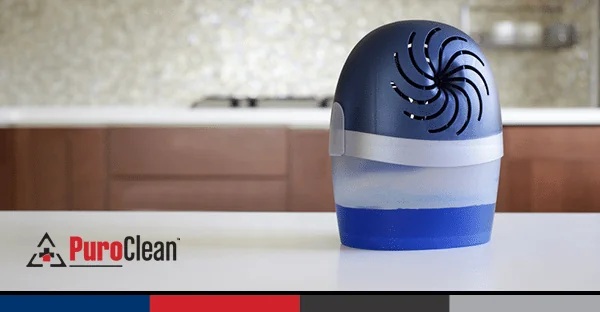
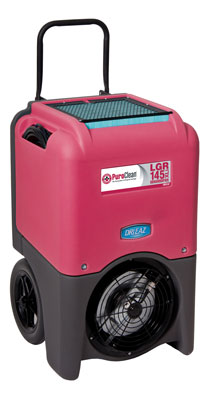
We often get asked, “Can I just use the dehumidifier I bought at the hardware store?” While those units are great for keeping a closet smelling fresh, they are simply outclassed during a water loss. Here is why we use professional LGR (Low Grain Refrigerant) dehumidifiers:
Temperature Resistance
Standard dehumidifiers stop working effectively when the temperature rises above 90°F or drops too low. In a Florida summer, a house without AC (which often happens during water damage) can easily hit 95°F. LGR dehumidifiers are designed to keep pulling moisture out of the air even in extreme heat.
Water Removal Capacity
A standard home unit might remove 30 to 50 pints of water per day. Our industrial units, like the Dri-Eaz Revolution or AlorAir Storm models, can pull 130 to 200+ pints per day. When your subfloor is saturated, you need that massive capacity to stay ahead of mold growth.
Read Also: Categories of Water Damage Explained
Continuous Drainage
Home units have small tanks that you have to empty every few hours. Our professional units have built-in condensate pumps and long hoses that we run directly into your sinks or drains. This allows them to run 24/7 without interruption, which is vital during the critical first 48 hours.
4. The “Capture Zone”: How We Set Up for Success
Dehumidifiers don’t work in a vacuum. To dry a home in Melbourne effectively, we use a “balanced drying system.” This involves a strategic dance between three elements:
- Extraction: We use heavy-duty extractors to remove as much liquid water as possible. Every gallon we pump out is a gallon the dehumidifier doesn’t have to “breathe” in later.
- Air Movement: We place high-velocity air movers (industrial fans) every 10–14 feet. These fans blow air across the surface of the wet materials to speed up evaporation.
- Dehumidification: As the fans turn the water into vapor, the dehumidifier “captures” it, condenses it into liquid, and pumps it out of the house.
Pro Tip: If you see us “compartmentalizing” a room with plastic sheeting, we’re doing that to reduce the volume of air the dehumidifier has to process. By focusing the machine’s power on only the wet area, we dry your home much faster.
5. Preventing the Florida “Mold Explosion”
In Melbourne, mold is always looking for a reason to party. It only takes 24 to 48 hours for mold spores to colonize a damp surface.
The dehumidifier is our primary weapon against mold. By keeping the Relative Humidity below 50% (and ideally closer to 30-40% during active restoration), we create an environment where mold cannot survive. We don’t just want your floors to feel dry; we want the air to be so dry that mold doesn’t stand a chance.
6. What to Expect When We Deploy Equipment
If you call us at (321) 378-2400 after a leak, here is what the dehumidification process looks like:
- Initial Mapping: We use thermal imaging cameras and moisture meters to find exactly where the water is hiding, behind the garden tub, under the laminate, or inside the insulation.
- Deployment: We’ll bring in the appropriate number of LGR or Desiccant dehumidifiers based on the “Class” of the water loss (how much of the room is wet).
- Daily Monitoring: A PuroClean technician will visit your property every day. We’ll take “dryness readings” and adjust the position of the equipment. We don’t pull the machines until the “dry standards” (the moisture levels of unaffected parts of your home) are met.
- Noise and Heat: These machines are powerful. They are noisy, and they exhaust warm, dry air. This is normal! That heat actually helps the drying process by increasing the rate of evaporation.
7. Serving Our Neighbors in Brevard County
Whether you are in a condo in Indialantic, a suburban home in Viera, or a commercial warehouse near our office at 739 North Dr, Melbourne, FL 32934, we treat your property like our own.
Read Also: 10 Signs You Have Hidden Water Damage in 2026
Water damage is stressful. It’s loud, it’s messy, and it’s disruptive. Our goal at PuroClean of Melbourne is to use the best technology available to get your life back to normal as quickly as possible. We work with all major insurance companies, and our IICRC-certified technicians are experts in the science of drying.
Don’t Wait for the Musty Smell
If you’ve experienced water intrusion, don’t wait for the “musty smell” to start. That smell is the sound of mold growing. Let us bring in the big guns, the high-capacity dehumidifiers that can save your drywall, your hardwood floors, and your health.
Connect with PuroClean of Melbourne
Stay up to date with more home maintenance tips and see our team in action across the Space Coast:
- Facebook: PuroClean of Melbourne
- Instagram: @purocleanofmelbourne
- LinkedIn: PuroClean of Melbourne
- YouTube: Watch Our Restoration Process
- Pinterest: Home Safety & Restoration Ideas
Need help right now? We are available 24/7. Call us at (321) 378-2400.


 PuroClean of Melbourne