

Mold growth after a Miami flood can begin in as little as 24 to 48 hours and in Coral Gables’ heat and humidity, it moves even faster. This guide covers every warning sign to look for, where mold hides after flooding, the health risks it poses, and the exact steps you need to take to stop it before it takes over your home.
Miami floods without much warning.
One afternoon thunderstorm during rainy season. A tropical system that stalls over Miami-Dade for six hours. Storm surge from a hurricane that pushes water under your front door. Whatever the cause, the moment floodwater enters a Coral Gables home, a clock starts ticking. One that most homeowners don’t even know about.
That clock counts down to mold.
According to the EPA, mold typically takes 24 to 48 hours to grow after a flood when the right conditions are met. In South Florida, those conditions exist year-round. Warm, humid climates like Coral Gables make the process even faster. The combination of high temperatures and natural humidity creates the perfect environment for spores to multiply.
This isn’t a problem you can postpone. By the time you see visible mold, it has already been growing for days.
Here’s everything you need to know. The signs, the hiding spots, the health risks, and what to do right now.
How Fast Does Mold Growth After a Miami Flood Actually Happen?
Speed matters more than most people realize.
In sufficiently damp conditions, mold only needs a day or two to establish significant growth. If your home floods, some parts of the structure may appear to dry on their own. But air drying alone is rarely enough.
When floodwater enters a home, it doesn’t just cover the floor. It wicks upward into drywall and laterally into framing through capillary action. Studies of mold growth on building materials show that mold begins growing on materials that remain wet for as little as 8 to 72 hours. In Florida, where temperatures and humidity remain elevated even after a storm passes, the lower end of that range applies.
That means in Coral Gables, you could be dealing with active mold growth in under 12 hours under the worst conditions.
The homes most at risk are older Mediterranean Revival properties throughout the Gables. Thick plaster walls, original wood framing, and tight construction that traps moisture beautifully but dries poorly. If your home fits that description, the urgency is even greater.

9 Warning Signs of Mold Growth After a Miami Flood
1. A Musty Smell That Wasn’t There Before
This is almost always the first sign. And most people dismiss it.
Although mold growth after a Miami flood begins within 24 hours, it takes a little longer before the musty odor becomes detectable. Over the following weeks, keep your senses alert for an earthy or damp smell developing anywhere in the home.
If your Coral Gables home smells musty after a flood and the smell isn’t fading, mold is already present somewhere. Trust that smell. It is not lingering floodwater. It is biology.
2. Visible Dark Spots or Fuzzy Growth
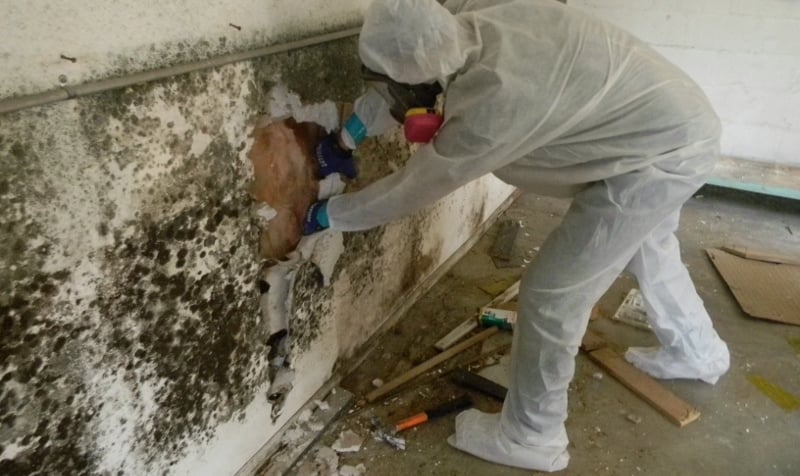
Mold growth can look cottony, velvety, rough, or leathery. It appears in a range of colors including white, gray, brown, black, yellow, and green. It often shows up as staining or fuzzy patches on walls, ceilings, wood surfaces, and furniture.
Don’t assume it’s dirt or an old stain. If it appeared after a flooding event, treat it as mold until proven otherwise.
3. Discoloration on Walls or Ceilings
Stained or discolored areas on ceilings that continue to grow in size or change color are a reliable sign of mold growth after a Miami flood.
Pay attention to change. A spot that looked the same last week is less of a concern. A spot that is growing, darkening, or spreading is active mold.
4. Soft, Warped, or Buckling Surfaces
Press gently on your drywall in any area near floodwater. If it gives, feels soft, or sounds hollow in a new way, moisture has penetrated deep into the material. Mold is feeding on it from the inside.
Hardwood floors that are cupping, bubbling, or separating at the seams are telling you the same thing.
5. Peeling Paint or Wallpaper
Paint peels when moisture pushes through from behind the wall. When you see that in a Coral Gables home after flooding, it is not a cosmetic issue. It is a sign the wall cavity is saturated. Hidden mold after flooding lives exactly in those cavities.
6. Respiratory Symptoms You Cannot Explain
Mold growth after a Miami flood creates air quality problems long before visible growth appears. If people in the home are suddenly coughing, sneezing, experiencing itchy eyes, or waking up congested and those symptoms ease when they leave the house, your home has a mold problem.
Miami’s climate makes this worse. Mold thrives in damp, warm environments, and after major storms, researchers consistently see spikes in respiratory illnesses in flood-affected homes throughout Miami-Dade.
7. Black Mold Appearing in Unexpected Spots
Mold can begin growing within 24 to 48 hours of a flood and spreads rapidly through porous materials like drywall, carpeting, and wood.
Black mold after a flood in Miami is particularly concerning. Stachybotrys, the species most people refer to as black mold, produces mycotoxins that can cause serious health effects well beyond typical allergic reactions. If you see dense black growth anywhere in the home, do not disturb it. Call a professional immediately.
8. Mold Around or Behind Your HVAC System
This is one of the most dangerous and most overlooked signs of mold growth after a Miami flood.
All surfaces of a heating, ventilation, and air conditioning system that were submerged during a flood are potential reservoirs for mold and bacteria. Moisture also collects in HVAC components that were never submerged, creating secondary zones for mold to take hold.
In South Florida, AC units run nearly year-round. If your system was running after a flood, it may have already distributed mold spores to every room in your home, including rooms that never had standing water.
9. Mold in Rooms That Were Never Flooded
This surprises most homeowners. Mold growth after a Miami flood does not stay where the water entered.
Typical hiding places include the back side of drywall, behind wallpaper and paneling, under flooring, inside wall cavities, beneath bathroom tile grout, in closets with exterior-facing walls, and inside ceiling spaces where roof decking meets the structure.
If your HVAC was running, spores have traveled. The whole home needs assessment. Not just the flooded areas.
Where Mold Hides After Flooding in Coral Gables Homes
Mold after water damage in South Florida has favorite hiding spots. Check every one of these after any flooding event.
- 1. Behind drywall. Drywall is porous. Water soaks into the paper backing inside and mold grows there first, long before the surface shows any visible change.
2. Under flooring. Tile may look completely fine while the subfloor underneath is fully saturated. Wood and laminate hold moisture underneath long after the surface feels dry to the touch.
3. Inside wall cavities. Water travels downward through wall framing. The bottom plates of walls sitting directly on the slab hold moisture for weeks and are a primary zone for mold growth after a Miami flood.
4. Crawl spaces and attics. Older Coral Gables homes with crawl spaces are especially vulnerable. These spaces are confined, poorly ventilated, and difficult to dry without professional equipment. Do not enter a crawl space after flooding without professional guidance.
5. Under kitchen and bathroom cabinets. Water pools in base cabinet interiors and the flooring beneath them. It is one of the last places homeowners check and one of the first places mold establishes itself after a flood.
Does Insurance Cover Mold After Flooding in Florida?
It depends. And this is where many Coral Gables homeowners get caught off guard.
Standard homeowners insurance typically covers mold if it results from a sudden and accidental water loss like a burst pipe. It often does not cover mold resulting from floodwater, which requires a separate flood insurance policy through the National Flood Insurance Program or a private flood insurer.
The critical issue is documentation. If floodwater entered your home and you took no action, insurers may deny mold claims on the grounds of negligence rather than attributing the damage to the flood event itself.
Document everything immediately. Photograph all water intrusion. Record when the flooding occurred and what steps you took. Call a certified restoration company as quickly as possible. Their documentation becomes your insurance evidence.
How to Prevent Mold After Flooding. The First 48 Hours.
The window is narrow. Here is what to do the moment it is safe to re-enter your home.
- 1. Extract standing water immediately.
Every hour water sits, it wicks deeper into flooring, walls, and framing. Do not wait.
2. Open windows and run fans, but not your HVAC.
Airflow helps dry surfaces. But running a potentially contaminated AC system spreads spores throughout every room in the home.
3. Remove saturated materials quickly.
Carpeting, area rugs, and soaked furniture that cannot be dried within 24 hours need to come out. They will grow mold before they dry on their own.
4. Run dehumidifiers continuously.
In Coral Gables’ humidity, drying without mechanical dehumidification is nearly impossible. Keep indoor humidity below 60 percent.
5. Do not rely on visible drying as proof.
Surfaces look dry before they actually are. Moisture meters and infrared imaging reveal what the eye cannot see. This is professional grade equipment for a reason.
When to Call a Professional for Mold Remediation in Coral Gables
Be honest with yourself here.
People whose homes have been soaked or affected by dirty floodwater need professional mold remediation services. This is especially true when the heating and cooling system has been running.
Call a certified mold remediation professional immediately if any of the following apply.
Flooding covered more than one room or lasted more than 24 hours. You can smell mold but cannot locate the source. Your HVAC was running during or after the flood. Anyone in the home has developed unexplained respiratory symptoms. The flooding involved anything other than clean water. Storm surge, sewage backup, and street flooding all introduce contaminants that go well beyond what surface cleaning can address.
Mold growth after a Miami flood is not a DIY project when the contamination is significant. In South Florida’s climate, what looks like a small surface problem is almost always part of a larger hidden infestation.
Frequently Asked Questions
How quickly does mold grow after a flood in Miami?
In Coral Gables and greater Miami-Dade, mold can begin growing in as little as 24 hours. Given the region’s heat and ambient humidity, it can start even faster. The 48-hour window is the outer limit before mold growth is almost certainly underway.
Can mold grow in rooms that were never flooded?
Yes. Mold growth after a Miami flood spreads through HVAC systems, wall cavities, and airborne spores to areas that never had direct contact with water. The entire home should be assessed after any significant flooding event.
What does mold smell like after a flood?
A persistent earthy, damp, or musty odor that doesn’t clear even after the home appears dry is the most common early sign. It is distinct from the smell of wet surfaces and tends to be strongest near walls, floors, and HVAC vents.
Is black mold after a flood dangerous?
Yes. Certain mold species produce mycotoxins that pose serious health risks beyond standard allergic reactions, including respiratory illness and chronic health complications with prolonged exposure. Any black or dark-colored mold growth after a flood should be assessed by a certified professional without delay.
Does homeowners insurance cover mold after flooding in Florida?
It depends on your policy and the source of the water. Flood-related mold is generally covered only under flood insurance policies, not standard homeowners policies. Prompt action and professional documentation significantly improve claim outcomes.
Can I clean up mold myself after a flood?
Minor surface mold on non-porous surfaces in small areas can sometimes be addressed with a bleach and water solution. However, mold growth after a Miami flood typically penetrates porous building materials like drywall, wood, and insulation. That level of contamination requires professional remediation to ensure complete removal and prevent recurrence.
Protect Your Coral Gables Home Before Mold Gets a Foothold
Mold growth after a Miami flood does not give you weeks to act. It gives you hours.
PuroClean of Coral Gables provides certified mold remediation services for homes and businesses throughout Coral Gables, Miami-Dade County, and greater South Florida. Our certified specialists conduct thorough mold inspections, air quality testing, and moisture detection to identify the root cause of every infestation. We use containment barriers, HEPA filtration, and professional grade drying equipment to remove mold completely. Not just treat the surface.
We work directly with your insurance company and are available 24 hours a day, 7 days a week, 365 days a year. Because flooding in Miami doesn’t wait for business hours and neither do we.
If there was flooding in your home, even minor, do not wait for visible mold to appear. By then, the problem is already significant.
Call PuroClean of Coral Gables: (305) 894-4343
Mold growth after a Miami flood is one of the most serious and time-sensitive threats a South Florida homeowner faces. It starts within 24 hours, hides behind walls and under floors, spreads through your HVAC system, and poses real health risks to everyone in the home. The nine warning signs in this post give you what you need to catch it early. Act within the first 48 hours, document everything for insurance, and call a certified professional if the flooding was significant. In Coral Gables’ heat and humidity, fast action is the only real defense.