When winter temperatures plunge across Rockland County, Orangetown homeowners face a hidden threat lurking behind their walls: aging pipes at risk of catastrophic failure. With unique housing patterns that put thousands of properties in the danger zone, understanding your home’s vulnerability isn’t just about prevention—it’s about protecting one of your largest financial investments.
Table of Contents
- The Orangetown Housing Challenge: A Statistical Reality
- Why Orangetown’s Older Homes Are Particularly Vulnerable
- Warning Signs: When to Call for Help Immediately
- The Science Behind Why Pipes Burst in Winter
- Beyond Freezing: Other Causes of Burst Pipes
- The Real Cost of Burst Pipes: Prevention vs. Repair
- Comprehensive Prevention Strategies
- Emergency Response: What to Do When a Pipe Bursts
- Frequently Asked Questions
The Orangetown Housing Challenge: A Statistical Reality

Here’s a sobering fact most Orangetown residents don’t realize: nearly 63% of homes in the town were built before 1980, placing them squarely in the highest risk category for pipe-related failures. According to local real estate data, 22% of Orangetown homes date back to before 1939, while another 41% were constructed between 1960 and 1980—the peak era for galvanized steel plumbing installation.
This isn’t just an interesting historical footnote. With median home values in Orangetown hovering around $609,200, a single burst pipe incident can result in average repair costs of $27,000, according to a comprehensive analysis of 433 burst pipe insurance claims conducted by Philadelphia Insurance Companies. In severe cases involving multiple floors or structural damage, costs have reached as high as $1.7 million.
For Orangetown residents, protecting this substantial investment requires both prevention and rapid emergency response capabilities. PuroClean Emergency Restoration Specialists of Nanuet, owned by Mitch Cohen, has served Rockland County communities for years with certified water damage restoration services. Understanding the unique challenges posed by the area’s aging housing stock, their team combines state-of-the-art equipment with extensive experience working with older properties throughout the region.
Warning Signs: When to Call for Help Immediately
⚠️ Contact PuroClean at (845) 570-5060 if you notice ANY of these warning signs:
Immediate Danger Signs:
- ☐ Visible water leaking from walls, ceilings, or fixtures
- ☐ Wet spots or water stains appearing on walls or ceilings
- ☐ Sound of running water when all fixtures are off
- ☐ Sudden complete loss of water pressure
- ☐ Bulging or sagging drywall
Early Warning Indicators:
- ☐ Brown, rust-colored, or discolored water from taps
- ☐ Gradual decrease in water pressure over time
- ☐ Metallic taste in drinking water
- ☐ Banging or knocking sounds when using water
- ☐ Unexplained increase in water bills
- ☐ Visible rust or corrosion on exposed pipes
- ☐ Damp or musty odors in basement or crawl spaces
- ☐ Frost forming on exposed pipes during cold weather
For Historic Orangetown Homes (Pre-1980):
- ☐ You don’t know your pipe age or material
- ☐ Your home has never had a plumbing inspection
- ☐ You’ve noticed any changes in water quality
Don’t wait for a catastrophic failure. Early detection and professional assessment can save you thousands in repair costs. If your Nyack, Piermont, Grand View-on-Hudson, or South Nyack home shows any of these signs, call PuroClean Emergency Restoration Specialists 24/7 at (845) 570-5060.
📞 Spotted Warning Signs in Your Orangetown Home?
Don’t wait for a burst to cause thousands in damage. PuroClean Emergency Restoration Specialists offers professional plumbing assessments for older homes throughout Rockland County. Our IICRC-certified technicians can evaluate your pipes, identify vulnerabilities, and provide expert recommendations—before an emergency happens.
Call (845) 570-5060 today for a professional assessment.

Why Orangetown’s Older Homes Are Particularly Vulnerable
The connection between housing age and burst pipe risk isn’t coincidental—it’s a direct result of the plumbing materials used during different construction eras.
Pre-1939 Homes: The Double Threat
Orangetown’s oldest homes, representing over one-fifth of the town’s housing stock, likely contain either original galvanized steel pipes or, in some cases, remnants of lead service lines. These systems have far exceeded their intended lifespan. Even if visible pipes appear functional, decades of internal corrosion have likely weakened pipe walls to a critical threshold.
The zinc coating that once protected galvanized pipes wears away from the inside out, creating a scenario where pipes can look perfectly fine externally while being severely compromised internally. This hidden deterioration makes these older systems ticking time bombs, especially when subjected to the pressure changes that occur during freezing conditions.
1960-1980 Construction: The Galvanized Pipe Crisis
The 41% of Orangetown homes built during this period face an equally serious challenge. Galvanized steel pipes, which were the standard plumbing material from the 1920s through the 1960s, were originally expected to last 50-70 years. However, real-world performance has fallen dramatically short of these projections.
According to multiple plumbing industry sources, galvanized pipes typically begin showing serious corrosion in less than 25 years, with most failing around the 40-50 year mark. This means homes built in 1960 are now 64 years old—well past the expected lifespan of their original plumbing. Even homes from the later part of this era, constructed in 1980, are now 44 years old and approaching the failure threshold.
The problem compounds over time. As the protective zinc coating erodes, rust accumulates inside the pipes, gradually restricting water flow and creating weak points. These compromised areas become especially vulnerable when water inside freezes and expands, creating immense pressure that older, weakened pipes simply cannot withstand.
The Science Behind Why Pipes Burst in Winter
Understanding the mechanism of pipe bursts helps homeowners recognize their vulnerability and take appropriate action.
The Expansion Problem
Water possesses a unique physical property: it expands approximately 9% when it freezes. In the confined space of a pipe, this expansion creates tremendous internal pressure. Modern pipes in good condition can sometimes withstand this stress, but older pipes with thinned walls and compromised structural integrity cannot.
The most dangerous scenario occurs when ice forms a blockage inside the pipe. As more water continues flowing toward the blocked section, pressure builds between the ice blockage and the closed faucet. Eventually, this pressure exceeds what the pipe walls can contain, resulting in a rupture.
Rockland County’s Winter Reality
Rockland County experiences winter temperatures in the Mid Hudson Valley region that typically range between 30-35°F, with overnight lows frequently dipping well below freezing. These conditions create the perfect environment for pipe freezes, particularly in unheated areas like basements, attics, crawl spaces, and along exterior walls.
The vulnerability increases dramatically during cold snaps, when temperatures plummet rapidly and remain below freezing for extended periods. During January 2024, arctic conditions swept through the New York metro area, causing widespread pipe failures and leaving many residents dealing with extensive water damage.
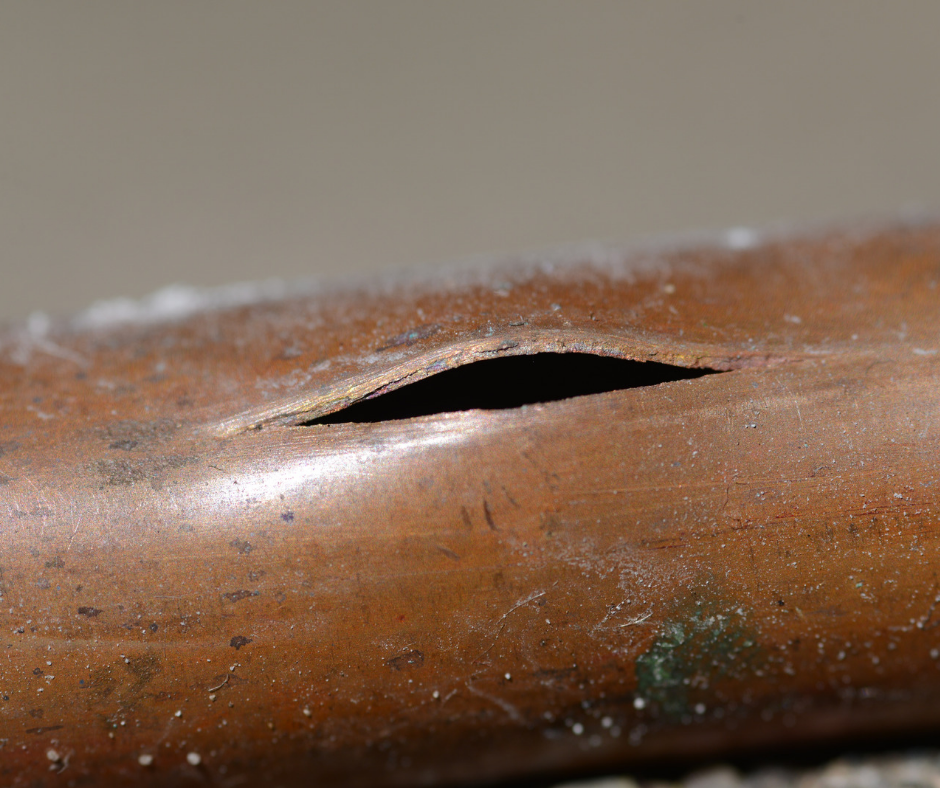

Beyond Freezing: Other Causes of Burst Pipes
While freezing temperatures garner the most attention, Orangetown homeowners with older plumbing systems face additional risks throughout the year.
Corrosion: The Silent Destroyer
For galvanized steel pipes, corrosion isn’t a question of “if” but “when.” The zinc coating protecting these pipes inevitably wears away, exposing the steel underneath to water. This exposure triggers a chemical reaction that causes rust to form and accumulate.
Water quality significantly impacts corrosion rates. Rockland County’s water, like many areas in the Northeast, contains minerals that can accelerate the corrosion process. Hard water with high mineral content proves particularly aggressive, speeding up the deterioration of aging pipes.
The insidious nature of corrosion makes it especially dangerous. From the outside, pipes may appear perfectly functional, showing no visible signs of distress. Meanwhile, the interior walls continue thinning, eventually reaching a point where even normal water pressure can cause a rupture.
High Water Pressure: Stress on Aging Systems
Municipal water systems typically maintain water pressure between 50 and 70 pounds per square inch (psi). While modern plumbing handles this range easily, older pipes with weakened walls struggle under constant pressure.
Signs of excessive water pressure include:
- Banging or knocking sounds when faucets close abruptly
- Persistent dripping from faucets even when fully closed
- Unusually rapid wear on appliances like dishwashers and washing machines
- Water hammer effects in the plumbing system
For homes with galvanized pipes, even normal water pressure can become problematic as corrosion thins pipe walls over time.
Clogs and Blockages
Aging galvanized pipes are particularly susceptible to blockages. As rust accumulates inside pipes, it narrows the interior diameter, restricting water flow. Combined with mineral deposits from hard water, these accumulations can create significant blockages that increase pressure elsewhere in the system.
In Orangetown’s older neighborhoods with mature trees, root intrusion into underground pipes presents an additional concern. Tree roots naturally seek out water sources and can infiltrate even small cracks in aging pipes, causing both blockages and structural damage.
Identifying At-Risk Pipes in Your Orangetown Home
Determining whether your home contains vulnerable galvanized pipes requires some investigation, but the process is straightforward.
Visual Identification
Locate where water supply lines enter your home, typically in the basement or crawl space. Examine the pipes carefully:
- Galvanized steel pipes appear silver-gray in color and feature threaded connections where sections join together
- Copper pipes have a distinctive reddish-brown or greenish patina and are joined with soldered connections
- Modern plastic pipes (PEX or PVC) come in various colors, including white, red, blue, or black
If you can access an exposed section of pipe, carefully scratch the surface with a coin. Copper will reveal its characteristic reddish-brown color underneath any oxidation. Galvanized steel will show a silver-gray metallic surface.
Warning Signs of Failing Pipes
Even without visible inspection, several symptoms indicate your plumbing system may be compromised:
Water Discoloration: Brown, rust-colored, or cloudy water flowing from taps signals internal pipe corrosion. While temporary discoloration after water main work is normal, persistent discoloration indicates a serious problem.
Reduced Water Pressure: If water flow has gradually decreased over time, internal pipe corrosion and rust accumulation may be restricting flow. This problem often affects some fixtures more severely than others.
Frequent Leaks: Recurring leaks, especially at pipe joints or connections, suggest widespread system deterioration rather than isolated problems.
Visible Corrosion: External rust spots, particularly around joints and fittings, often indicate more extensive internal corrosion.
Water Quality Changes: If water develops a metallic taste or causes increased staining on fixtures and laundry, internal pipe deterioration is likely occurring.
The Real Cost of Burst Pipes: Prevention vs. Repair
Understanding the financial impact of burst pipes makes the case for prevention clear. Here’s what Orangetown homeowners can expect:
Prevention Costs (Proactive Investment)
- Annual plumbing inspection: $150-300
- Pipe insulation (whole home): $200-500
- Pressure regulator installation: $300-600
- Smart water shut-off system: $400-800
- Total preventive investment: $1,050-2,200
Burst Pipe Repair Costs (Reactive Response)
- Minor burst (single pipe, limited damage): $5,000-10,000
- Emergency plumbing repair
- Basic water extraction
- Limited drywall replacement
- Average burst (multiple rooms affected): $15,000-27,000
- Extensive water damage restoration
- Flooring replacement
- Wall repairs and repainting
- Content cleaning/replacement
- Major burst (structural damage): $40,000-70,000
- Multiple floors affected
- Hardwood floor refinishing
- Mold remediation required
- Extended hotel stays during repairs
- Catastrophic failure (multi-story, extended exposure): $100,000-1,700,000
- Complete room reconstruction
- Major structural repairs
- Code compliance upgrades
- Total content replacement
The Hidden Costs
Beyond direct repair expenses, burst pipes create additional financial burdens:
- Increased insurance premiums after claims
- Temporary housing costs during restoration (averaging $100-200 per night)
- Lost work time managing contractors and insurance
- Decreased property value if damage history is disclosed
- Health costs if mold develops from inadequate drying
For Orangetown’s median home value of $609,200, a $27,000 repair represents 4.4% of your property’s worth—money that could fund years of preventive maintenance.
For historic homes in Nyack or Piermont with original architectural features, restoration costs can escalate significantly when specialized craftsmen are required to preserve period details. A pre-war home’s plaster walls, hardwood floors, and custom millwork demand expert care that standard restoration cannot provide.
Comprehensive Prevention Strategies for Orangetown Homeowners
Protecting your home from burst pipes requires a multi-layered approach, especially if your property falls into the high-risk age categories.
5-Minute Emergency Prep Checklist (Do This Today)
Every Orangetown homeowner should complete these essential tasks immediately:
- Locate your main water shut-off valve and ensure everyone in the household knows where it is
- Test the shut-off valve to confirm it works properly (turn it off and on)
- Save PuroClean’s number in your phone: (845) 570-5060
- Take photos of your current pipe locations (basement, crawl space, water heater area)
- Set a reminder to check pipes monthly during winter
Time investment: 5 minutes | Potential savings: $27,000+
Winter Protection Strategies
Insulation and Heat Management
Pipe Insulation: Install foam pipe insulation or heat tape on all exposed pipes, prioritizing unheated areas like basements, attics, crawl spaces, and garage spaces. Pay special attention to pipes running along exterior walls in older Orangetown homes, as these face the greatest freezing risk. In pre-1939 homes common throughout Nyack and Piermont, exterior wall cavities often lack modern insulation, making interior pipes especially vulnerable.
Maintain Consistent Heat: Keep your thermostat set to at least 55°F, even when away from home. The cost of maintaining heat is minimal compared to potential repair costs from frozen pipes. For homes with programmable thermostats, avoid setting nighttime temperatures too low during winter months.
Active Prevention During Cold Snaps
Strategic Faucet Operation: During extreme cold events when Rockland County temperatures plunge below 20°F, allow faucets served by vulnerable pipes to drip slightly. Even a small trickle of flowing water can prevent ice formation. Focus on faucets along exterior walls or in unheated areas.
Cabinet Door Management: Open cabinet doors under sinks, especially those on exterior walls. This allows warmer room air to circulate around pipes, reducing freezing risk—a particularly important strategy for homes in Grand View-on-Hudson and other riverside Orangetown communities where cold winds off the Hudson River can rapidly drop temperatures.
Outdoor Preparation (Complete Before First Freeze)
Outdoor Faucet Protection: Before freezing weather arrives, disconnect and drain all garden hoses. Close interior shut-off valves feeding outdoor faucets, then open the outdoor faucets to drain remaining water. Leave exterior valves open to allow any residual water to expand safely if it freezes.
Seal Air Leaks: Identify and seal any cracks or gaps in foundation walls, around pipe penetrations, and near windows and doors. Cold air infiltration dramatically increases pipe freezing risk. Older Orangetown homes often have numerous air leak points that accumulate over decades.
Year-Round Maintenance (Critical for Pre-1980 Homes)
Monthly Monitoring
Water Pressure Monitoring: Install a water pressure gauge on an outdoor spigot or laundry room connection. Regularly verify that pressure stays within the 40-60 psi range. If pressure consistently exceeds 60 psi, consider installing a pressure-reducing valve to protect aging pipes.
Visual Inspections: Check exposed pipes monthly for:
- Rust spots or corrosion
- Wet areas around connections
- Mineral deposits or discoloration
- Any changes in pipe appearance
Annual Professional Maintenance
Professional Inspections: For Orangetown homes with galvanized pipes—particularly those 41% of properties built between 1960-1980—schedule annual plumbing inspections once the system reaches 40 years of age. Professional plumbers can assess pipe condition, identify potential weak points, and recommend proactive replacements before failures occur.
During inspections, licensed plumbers can:
- Conduct video camera inspections of drain lines
- Test water pressure at multiple points
- Check for hidden leaks using thermal imaging
- Assess overall system integrity
- Provide documented reports for insurance purposes
Address Minor Issues Promptly: Small leaks and drips often indicate larger systemic problems in aging plumbing. Addressing these issues immediately can prevent catastrophic failures later. What seems like a $200 repair today could prevent a $20,000 emergency tomorrow.
Long-Term Planning for Aging Systems
Consider Systematic Replacement: If your Orangetown home has galvanized pipes installed in the 1960s or earlier, seriously consider whole-house repiping. While this represents a significant investment (typically $2,000-$15,000 depending on home size), it eliminates the risk of sudden failures and the extensive damage they cause.
For homes in South Nyack or Piermont’s historic districts, coordinate repiping with other planned renovations to maximize efficiency and minimize disruption. Many homeowners find that addressing plumbing during kitchen or bathroom updates makes financial and logistical sense.
Smart Home Technology: Consider installing:
- Water leak detectors near water heaters, washing machines, and under sinks
- Smart water shut-off valves that automatically close when leaks are detected
- Temperature monitors in unheated areas to alert you when freezing conditions develop
These technologies provide 24/7 monitoring and can shut off water automatically, preventing thousands of dollars in damage even when you’re away from your Orangetown home.
Emergency Response: What to Do When a Pipe Bursts
Despite preventive measures, pipe bursts can still occur. Knowing how to respond immediately minimizes damage and reduces restoration costs.
Immediate Actions (First 5 Minutes)
Shut Off Water Supply: Locate your main water shut-off valve and close it immediately. Every second counts—a burst pipe can release hundreds of gallons of water in minutes. Ensure all household members know where this valve is located and how to operate it.
Cut Electrical Power: If water is flowing near electrical outlets, appliances, or electrical panels, shut off power at the main breaker box. Water and electricity create life-threatening situations.
Open Faucets: After shutting off the main water supply, open all faucets and flush toilets to drain the remaining water in the system. This reduces additional water release and helps relieve pressure.
Document Everything: Before beginning cleanup, photograph and video all damage. Capture the burst pipe location, water damage extent, affected belongings, and structural impacts. This documentation proves crucial for insurance claims.
Professional Response and Restoration
Once immediate threats are contained, professional intervention becomes essential. Water damage restoration requires certified professionals with specialized equipment and expertise to properly extract water, dry structures, and prevent secondary damage like mold growth.
Why Professional Restoration Matters:
Our professional remediation team uses industrial-grade equipment that far exceeds consumer dehumidifiers and fans. This includes high-powered extraction pumps to remove standing water quickly, commercial air movers strategically placed to promote rapid evaporation, industrial dehumidifiers that remove massive amounts of moisture from the air, moisture detection equipment to identify hidden water in walls and subfloors, and EPA-registered disinfectants to prevent microbial growth.
The restoration process typically involves immediate water extraction from all flooded spaces, thorough inspection to assess damage extent and identify all affected areas, strategic placement of drying equipment in wall cavities, crawl spaces, and affected rooms, continuous moisture monitoring to ensure complete drying to pre-loss moisture content, and antimicrobial treatment to prevent mold and eliminate odors.
Do you need property damage remediation for your Orangetown home? Contact Mitch today.
Special Considerations for Orangetown’s Older Homes:
Homes built before 1980 often contain materials that require specialized drying techniques. Hardwood flooring, common in Orangetown’s historic properties, requires careful moisture removal using specialized drying systems. Improper drying can cause cupping, warping, or permanent damage requiring complete replacement. Plaster walls and unique architectural features in pre-war homes need expert handling to preserve historic character. Wall cavities and crawl spaces in older construction may contain materials that complicate drying and require strategic equipment placement.
Experienced restoration companies understand these challenges. PuroClean’s technicians have extensive experience working with older properties throughout Rockland County, employing effective drying methods that accelerate moisture removal while preserving original materials whenever possible.
What to Expect When You Call PuroClean: Complete Timeline
Understanding the restoration process helps reduce anxiety during an already stressful situation. Here’s what happens when you call PuroClean Emergency Restoration Specialists:
0-30 Minutes: Emergency Response Dispatch
- 24/7 phone line answered immediately by trained professionals
- Initial assessment of your situation over the phone
- Emergency technicians dispatched to your Orangetown location
- Guidance provided on immediate safety steps you can take
30-60 Minutes: Arrival and Initial Assessment
- IICRC-certified technicians arrive at your home
- Comprehensive damage assessment begins
- Water source identified and secured
- Safety hazards evaluated (electrical, structural)
- Preliminary moisture readings taken
- Restoration plan developed
1-4 Hours: Emergency Water Extraction
- High-powered pumps remove standing water from all affected areas
- Portable extraction units address water in carpets and upholstery
- Moisture meters document water intrusion extent
- Affected contents moved to dry areas or secured
- Initial antimicrobial treatment applied to prevent microbial growth
4-24 Hours: Drying Equipment Deployment
- Industrial air movers strategically placed for maximum air circulation
- Commercial dehumidifiers positioned to extract moisture from air
- Specialized equipment set up for wall cavities and crawl spaces
- Hardwood floor drying systems installed (if applicable)
- Continuous monitoring equipment activated
24-72 Hours: Active Drying and Monitoring
- Equipment runs continuously
- Moisture levels checked multiple times daily
- Equipment repositioned as needed for optimal drying
- Insurance documentation completed
- Preliminary scope of repairs determined
3-7 Days: Completion of Drying Process
- Final moisture readings confirm complete drying to pre-loss levels
- Antimicrobial treatments finalized
- Equipment removed
- Final assessment conducted
- Repair and reconstruction phase scheduled
1-3 Weeks: Restoration and Reconstruction
- Damaged materials removed and disposed of properly
- Structural repairs completed
- Painting and finishing work performed
- Flooring replacement or refinishing (if needed)
- Final walkthrough with homeowner
- Property restored to pre-loss condition
Throughout the Process:
- Direct communication with your insurance company
- Regular updates on progress
- Detailed photo documentation
- Transparent pricing and scope
- Answers to all your questions
For Orangetown homes with extensive damage, timelines may extend, but PuroClean’s goal remains the same: restore your property as quickly as possible while ensuring the highest quality standards.
People Also Ask: Quick Answers to Common Orangetown Pipe Questions
How old are most homes in Orangetown, NY? Approximately 63% of Orangetown homes were built before 1980, with 22% constructed before 1939 and 41% built between 1960-1980. This makes Orangetown’s housing stock significantly older than many surrounding communities, with the majority of properties containing aging plumbing systems that require extra vigilance.
What year were galvanized pipes banned? Galvanized pipes weren’t officially banned, but their use declined dramatically after the 1960s as better alternatives became available. By the 1980s, copper and plastic pipes had largely replaced galvanized steel in new construction. Any galvanized pipes still in use today are at least 40+ years old and likely approaching or past their functional lifespan.
How quickly can a burst pipe flood a home? A burst pipe can release 400-500 gallons of water per hour under normal household pressure. In just 30 minutes, that’s 200+ gallons—enough to cause significant damage to floors, walls, and belongings. This is why shutting off the main water valve immediately and calling PuroClean at (845) 570-5060 is critical.
Does PuroClean work directly with insurance companies? Yes. PuroClean Emergency Restoration Specialists coordinates directly with insurance companies of all sizes to assist with your claim correctly and expediently. Their team handles documentation, communicates with adjusters, and helps reduce stress during an already emotional situation, ensuring you receive the coverage you’re entitled to under your policy.
Are homes in Nyack and Piermont at higher risk? Historic riverside communities like Nyack and Piermont contain a higher concentration of pre-1939 homes with original or aging plumbing systems. Combined with exposure to cold Hudson River winds and potential moisture issues from riverside locations, these properties may face elevated burst pipe risks during winter months.
What’s the difference between water damage and flood damage? Water damage from burst pipes, plumbing failures, or roof leaks is typically covered by standard homeowners insurance. Flood damage from rising water, storm surge, or overflowing rivers requires separate flood insurance. Burst pipe restoration falls under water damage coverage—which is why acting quickly and working with experienced professionals like PuroClean is essential to successful insurance claims.
Frequently Asked Questions About Burst Pipes in Orangetown
How quickly can water damage occur after a pipe bursts?
A burst pipe can release 400-500 gallons of water per hour under normal household pressure. Extensive damage to floors, walls, furnishings, and personal belongings can occur within 30-60 minutes. This is why immediate water shut-off is critical. Professional water damage restoration companies respond quickly to minimize damage, using industrial-grade equipment to extract standing water and thoroughly dry affected areas before mold can establish itself.
Does homeowners insurance typically cover burst pipe damage in Orangetown?
Most homeowners insurance policies cover sudden and accidental water damage from burst pipes, including structural repairs and damaged belongings. However, coverage typically excludes the cost of repairing or replacing the actual pipe, which is considered a maintenance issue. Insurance may deny claims if the burst resulted from neglect, such as failing to maintain adequate heat during winter, not repairing known corrosion, or leaving a vacant property unheated.
For Orangetown’s older homes with aging plumbing systems, maintaining documented regular maintenance helps support insurance claims if failures occur despite reasonable precautions. Working with a restoration company that has strong relationships with insurance providers can significantly reduce stress during the claims process. PuroClean Emergency Restoration Specialists coordinates directly with insurance companies—regardless of their size—to assist with claims correctly and expediently. Their team can help navigate the paperwork, document all damage thoroughly, and ensure you receive the coverage you’re entitled to under your policy, turning an already emotional situation into a more manageable process.
What’s the average cost of burst pipe damage restoration in Rockland County?
According to insurance industry data, average burst pipe restoration costs range from $5,000 to $27,000, with severe cases involving multiple floors or extensive structural damage reaching $70,000 or more. For Orangetown homes with median values above $600,000, protecting this investment from water damage is crucial. Professional restoration costs include water extraction, structural drying, dehumidification, mold prevention, damaged material removal, and complete restoration of affected areas. Early professional intervention by IICRC-certified water damage restoration specialists significantly reduces these costs by preventing secondary damage like mold growth and structural deterioration.
Should I attempt to thaw frozen pipes myself?
If you can safely access the frozen pipe section, you can attempt careful thawing using a hair dryer, heating pad, or warm towels. Always work from the faucet end toward the frozen section, and keep the faucet open to allow melting ice and steam to escape. Never use open flames, propane torches, or other high-heat sources—these create fire hazards and can cause pipes to burst from steam pressure. If frozen pipes are inside walls, underground, or otherwise inaccessible, call a licensed plumber immediately. Professional plumbers have specialized equipment to safely thaw pipes without causing additional damage.
How can PuroClean help after a burst pipe in my Orangetown home?
PuroClean Emergency Restoration Specialists of Nanuet, owned by Mitch Cohen, specializes in comprehensive water damage restoration following burst pipes throughout Orangetown and the surrounding Rockland County area. Our IICRC-certified technicians provide 24/7 emergency response, arriving quickly to assess damage and begin the restoration process immediately.
Our comprehensive approach includes immediate water extraction using high-powered industrial pumps to remove all standing water from flooded spaces, strategic moisture removal with commercial-grade air blowers and dehumidifiers specifically designed for thorough drying, advanced moisture detection to identify hidden water in wall cavities, crawl spaces, flooring, and other concealed areas, EPA-registered disinfectants applied to all affected areas to eliminate disease-causing pathogens and prevent microbial growth, specialized treatment for hardwood floors using unique drying panel systems designed to minimize refinishing requirements, and complete deodorization to eliminate water damage odors.
Mitch Cohen and his team understand how challenging water damage can be for families and businesses. We take pride in our proven combination of training, state-of-the-art equipment, and strong relationships with insurance partners. Our technicians are passionate about helping you restore your property and go the extra mile to make an undesirable situation as painless as possible. We coordinate directly with your insurance company, document all damage thoroughly, and handle the entire restoration process—from initial emergency response through final repairs—restoring your property to its pre-loss condition while minimizing disruption to your daily life.
Are newer homes in Orangetown immune to burst pipe problems?
While homes built after 1990 typically feature modern plumbing materials like PEX or copper that are more durable than galvanized steel, they’re not completely immune to burst pipe risks. Freezing conditions can still cause bursts in poorly insulated areas, and installation defects or mechanical failures can occur regardless of pipe age. However, the risk profile differs significantly—newer homes face primarily freeze-related risks during extreme weather, while older homes with galvanized systems face year-round risks from corrosion, in addition to freeze vulnerability. This is why nearly two-thirds of Orangetown homes in the pre-1980 category require extra vigilance and preventive measures.
What should I do if I discover my Orangetown home has galvanized pipes?
First, determine the approximate age of the pipes based on your home’s construction date. If pipes are 40+ years old, schedule a professional plumbing inspection to assess their current condition. A licensed plumber can evaluate corrosion levels, test water pressure, check for leaks, and recommend appropriate action. For severely corroded systems, whole-house repiping, while expensive upfront, eliminates ongoing failure risks and often improves water quality and pressure. If immediate replacement isn’t feasible, implement rigorous preventive measures: maintain consistent home temperatures, install pipe insulation, monitor for warning signs like discolored water or pressure drops, and ensure someone checks your home regularly if you’re away during winter. Additionally, consider increasing your homeowners insurance coverage and maintaining thorough documentation of all maintenance activities.
How does professional water damage restoration prevent mold growth after a burst pipe?
Mold can begin growing within 24-48 hours after water damage occurs, making rapid professional response essential. Statistics show that over 20% of Americans will experience property damage due to water issues, and improper cleanup is a leading cause of subsequent mold problems.
Professional water damage restoration companies like PuroClean Emergency Restoration Specialists use a comprehensive, certified approach that includes immediate water extraction using powerful truck-mounted pumps to remove standing water from all flooded areas, strategic placement of commercial-grade air movers to promote rapid evaporation from floors, walls, and furnishings, industrial dehumidifiers running continuously to remove airborne moisture and reduce humidity levels, EPA-registered antimicrobial treatments applied to all affected surfaces to counteract microbe growth, continuous moisture monitoring with specialized detection equipment to ensure complete drying to pre-loss moisture content levels, and thorough inspection of wall cavities, crawl spaces, and other hidden areas where moisture can linger undetected.
This systematic process, guided by IICRC industry standards, reduces moisture levels below the threshold required for mold growth. PuroClean technicians are specifically trained to locate abnormal moisture that, if left for extended periods, may lead to mold growth. As part of the inspection process, they also look for pre-existing mold and develop plans to remediate it. Attempting DIY cleanup often leaves hidden moisture in wall cavities, subflooring, and other concealed spaces, creating perfect conditions for mold proliferation and leading to more extensive—and expensive—remediation needs later. Having certified professionals assess the damage is vital for maintaining good health and your property’s integrity.
Protecting Your Orangetown Investment
For Orangetown homeowners living in the 63% of properties built before 1980, understanding burst pipe risks isn’t just about avoiding inconvenience—it’s about protecting a substantial financial investment. With median home values exceeding $600,000 and average burst pipe damage costs reaching $27,000, prevention and rapid response capabilities are essential.
The combination of aging infrastructure, harsh Northeast winters, and Rockland County’s cold climate creates a perfect storm of vulnerability. Whether your home contains pre-war plumbing or galvanized pipes from the 1960s-70s construction boom, taking proactive steps now can prevent catastrophic failures later.
Regular maintenance, strategic upgrades, and knowing how to respond quickly to emergencies form the foundation of effective protection. For older homes, whole-house repiping represents the ultimate solution, eliminating corrosion risks and providing peace of mind for decades to come.
When Water Damage Strikes: Expert Help Is Just a Call Away
Despite your best prevention efforts, pipe bursts can still occur—often at the worst possible times. When water damage threatens your Orangetown home, immediate professional intervention makes the difference between manageable repairs and catastrophic losses.
PuroClean Emergency Restoration Specialists of Nanuet, led by owner Mitch Cohen, serves Orangetown, Tappan, and communities throughout Rockland, Westchester, and Orange Counties in NY, as well as Northern NJ. As “The Paramedics of Property Damage™,” our IICRC-certified technicians respond immediately to burst pipe emergencies with a 24/7 contact line, bringing professional-grade extraction equipment, commercial drying systems, and many years of restoration expertise.
Why Choose PuroClean Emergency Restoration Specialists:
Experience with Older Properties: We understand the unique challenges Orangetown’s older homes present. Our team has extensive experience working with historic properties and aging plumbing systems throughout Rockland County, from pre-war construction to 1960s-70s era homes with galvanized pipes.
Insurance Assistance: This is a stressful time, whether your loss is residential or commercial. We can assist by correctly and expediently helping you with your claim and coordinating with the insurance company—regardless of its size—to reduce stress in an already emotional situation.
State-of-the-Art Equipment: Our proven combination of training and advanced technology includes specialized drying systems for hardwood floors, moisture detection equipment for hidden water damage, EPA-registered disinfectants, and industrial-grade extraction and drying equipment.
24/7 Emergency Response: We take pride in our round-the-clock availability because a quick response can make all the difference in averting disaster. In many cases, immediate action is what separates minor damage from major structural issues.
Certified Professionals: Our technicians are passionate about their role in helping you restore your property and go the extra mile to make an undesirable situation as painless as possible.
Don’t let a burst pipe destroy your home and disrupt your life. Whether you’re facing an active emergency or want to establish a relationship with a trusted restoration partner before problems occur, contact PuroClean Emergency Restoration Specialists of Nanuet today.
For immediate emergency assistance or to schedule a preventive property assessment, call (845) 570-5060. We’re available 24 hours a day, seven days a week, ready to protect your home when you need us most. Save this number now—you’ll be glad you did when an emergency strikes.
Orangetown Services — See all PuroClean services available in Orangetown and throughout Rockland County. Driving directions to PuroClean of Nanuet.
Sources: