Key Takeaways
- Pipes freeze most often when temps hit 20°F or below
- Wind chill + drafts = frozen pipes even above 20°F
- Burst pipes can release tens of thousands of gallons if undiscovered
- Mold can begin forming within 24–48 hours
- Winter travel requires emergency numbers + sensors + heat maintained
- Professional drying protects both structure and insurance coverage
Why Pipes Freeze in Rockland County: Quiet Cold, Fast Damage
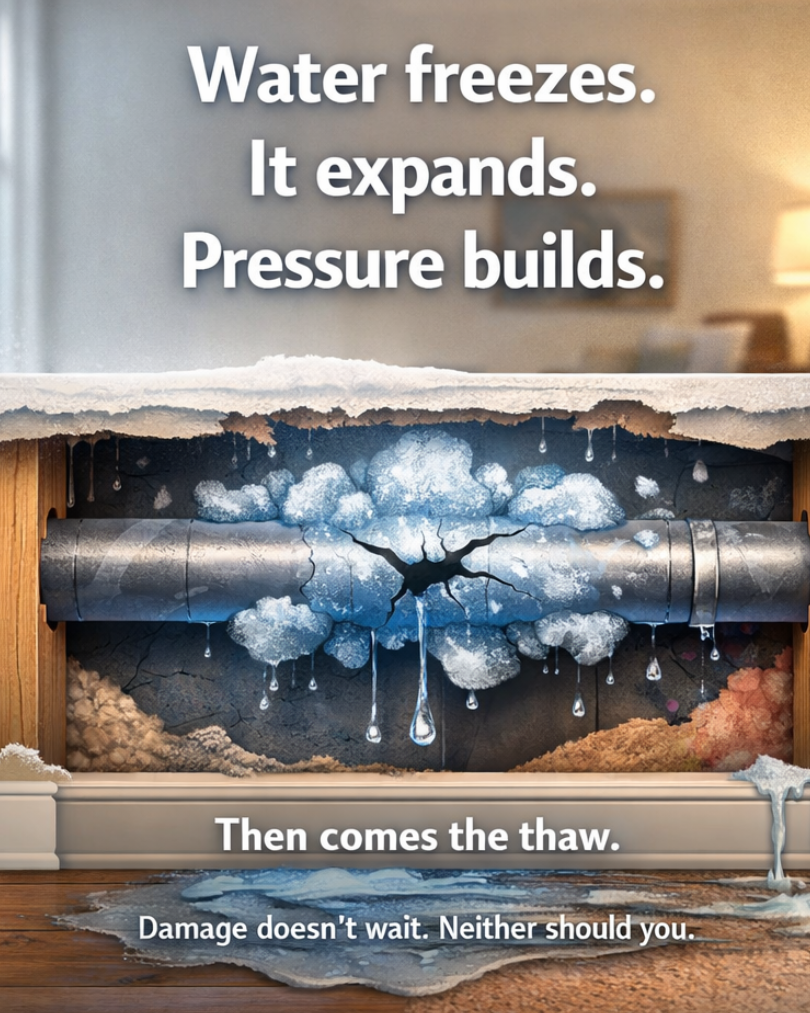
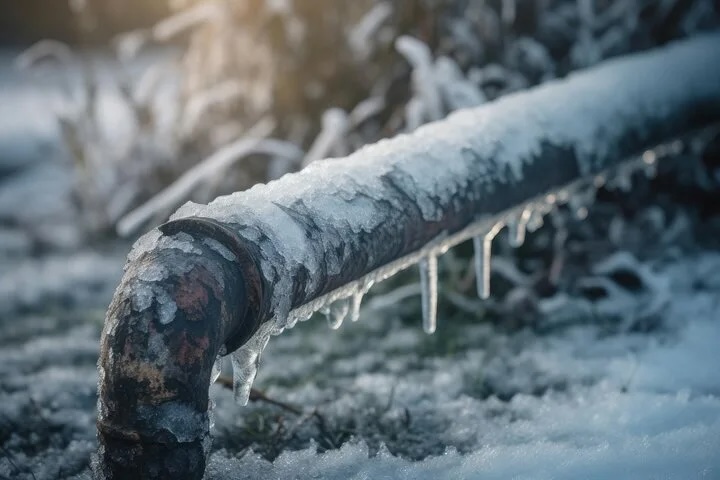
Cold snaps don’t always arrive with drama here — sometimes they creep in quietly, press against exterior walls, and turn plumbing into pressure chambers. Why pipes freeze is simple physics: water expands when temperatures drop, pressure builds in confined spaces, and metal or plastic can only withstand so much. Then comes the thaw — and suddenly a cracked pipe sends water through walls, ceilings, insulation, and flooring.
Burst pipe water moves like it has a mission. Homeowners who act fast protect their home and their insurance standing.
Why our region sees frozen pipes
Rockland County has a unique winter pattern:
| Factor | How it affects freezing |
|---|---|
| Freeze-thaw swings | Pipes expand/contract fast, creating stress points |
| Wind exposure | Cold pushes into walls & crawlspaces |
| Older home layouts | Many homes plumbed through exterior walls |
| Basement & crawlspace drafts | Traditional stone foundations = cold entry |
| Weekenders & commuters | Homes left unattended in cold spells |
If temperatures hit 20°F or below, assume your plumbing needs protection.
What the numbers show in our area
Frozen-pipe emergencies aren’t rare here — they’re a recurring winter reality across Rockland County.
In a recent 12-month period, homeowners in New York experienced over $45 million in frozen-pipe losses according to State Farm, and average water/freeze claims in our region typically range between $8,000 and $25,000 depending on severity and response speed.
Nationwide, water and freezing incidents make up nearly 28% of all home insurance claims, meaning almost one in four property losses involves water intrusion — often from burst pipes.
Rockland County communities like Sloatsburg, Pearl River, Nyack, Orangetown, Valley Cottage, New City, Blauvelt, and West Nyack are especially vulnerable because many homes mix older construction, winter wind exposure, and basement piping.
Winter doesn’t wait. Neither should your preparation.
Where pipes freeze first
High-risk areas include:
- Exterior wall bathrooms and kitchens
- Unfinished basements & crawlspaces
- Attics & knee-wall spaces
- Garages + utility rooms
- Laundry rooms with exterior access
- Behind kitchen cabinets on outside walls
If a floor feels cold, plumbing behind it likely is too.
Commercial & mixed-use spaces see it behind back bathrooms and utility closets.
How to prevent frozen pipes
Think layers of defense:
Keep heat consistent
- 55°F minimum even when away
- Avoid lowering heat at night or while traveling
Let warm air circulate
- Open cabinet doors under sinks
- Keep interior doors open to share heat
Keep water moving
- Slow drip in vulnerable fixtures during cold snaps
Insulate and seal
- Foam pipe insulation / heat tape where exposed
- Seal rim joists, basement sill plates, and foundation gaps
- Close crawlspace vents during deep freezes
Use smart technology
Modern protection tools:
- Smart leak detectors
- Wi-Fi temperature sensors
- Automatic water shut-off valves
- Utility-room cameras
Technology buys time — and sometimes saves entire floors.
Signs a pipe is freezing
- Low or no water flow
- Frost or condensation on pipes
- Ticking or banging in walls
- Sewer smell (vent freeze)
This is the warning bell — not the time to wait.
If a pipe freezes
• Run faucets to relieve pressure
• Apply gentle heat to the area
• Warm the room, not the pipe directly
Avoid all open flames. Burst prevention is precision, not force.
If a pipe bursts
- Shut off the main water valve
- Turn off electrical power if water reached outlets or appliances
- Move belongings & lift furniture
- Call a water mitigation professional immediately
- Document everything for insurance
Remember: Mold can begin in 24–48 hours, even in winter.

When you’re away on vacation

Northern winters don’t pause when homeowners leave.
Here’s how to protect your home while you’re traveling:
Before you leave
• Heat set to 55°F+
• Drip faucets in cold-risk locations
• Open cabinets at sinks on exterior walls
• Shut off and drain outdoor hose bibs
• Seal basement drafts
Smart winter travel tools
- Water leak sensors
- Smart thermostat
- Remote water shut-off valve
- Utility room camera
Property checks
Arrange a trusted person to:
- Enter the home
- Check water flow
- Confirm heat is working
- Scan basement & mechanical room
A 90-second walkthrough can stop a major loss.
Save these numbers before you go
- Plumber
- PuroClean of Nanuet
- Insurance claims line
- Trusted neighbor / home checker
Emergencies don’t wait for convenient timing.
Why professional drying matters
Burst pipe water spreads into:
- Wall cavities
- Insulation
- Subfloors
- Framing
- Ceilings
- Flooring layers
Professional mitigation includes:
- Thermal imaging
- Moisture mapping
- Industrial dehumidifiers
- Airflow engineering
- Cavity drying systems
- Mold-preventive treatment
DIY fans won’t extract water from structures — and improper drying can jeopardize insurance coverage.
FAQs
1) A pipe is frozen but not burst. What’s the safest DIY thaw?
- Open the affected faucet to relieve pressure.
- Warm the room, not just the pipe: space heater at a safe distance, doors open, HVAC on.
- Apply gentle, moving heat along the pipe starting from the faucet end: hair dryer on low, warm towels rotated every 5–10 min. No torches, no heat guns.
- Keep cabinet doors open; pull items out to let air circulate.
- If no flow returns in 30–45 min, or you can’t access the frozen section, call a plumber. Pro tip: note the exact location so you can insulate or re-route later.
2) A pipe burst. What do I do in the first 15 minutes?
- Shut off main water (and well pump, if applicable).
- If water is near outlets or a fuse box, shut off power to that zone.
- Move electronics, rugs, photos, and soft goods to a dry area.
- Put down foil or furniture pads under wood feet to prevent staining.
- Start controlled ventilation only if there’s no contamination: crack a few windows, start HVAC fan only, not heat if it blows moisture into other rooms.
- Call mitigation (Mitch at PuroClean of Nanuet) and your plumber. Start documentation: quick phone video of every room, water lines, and the shut-off.
3) Should I use fans right away?
- Yes only when the water is clean (supply line) and you don’t see visible mold. Aim fans to create cross-flow across wet surfaces, not directly into one spot.
- Do not use fans if: water came from sewage/groundwater, you smell mustiness already, or materials are visibly deteriorating. You’ll aerosolize contaminants. In these cases, wait for pro containment and filtration.
4) How do I control humidity so mold doesn’t start?
- Target indoor RH 40–50% during drying.
- Place a dehumidifier in the wet zone; keep doors closed to let it work the air volume it’s rated for.
- Empty or drain it continuously.
- Replace HVAC filters (wet fibers = mold risk).
- If RH stays >60% for more than 24 hours, expect secondary damage and call mitigation for commercial dehumidification.
5) When do walls and ceilings need to be opened?
Open up if any of these are true:
- Moisture meter shows wet readings in cavities compared to an unaffected “dry standard.”
- Insulation is wet (fiberglass holds water; cellulose collapses; both usually require removal).
- Vapor barriers (foil-backed drywall, plastic) are trapping moisture.
- Ceilings are sagging/bulging or you see staining spreads; punch a small relief hole only if power is off and a pro can control drainage.
Typical cuts: 12–24 inch “flood cuts” above the wet line for fast cavity airflow, then HEPA vacuum and directed drying.
6) What can be saved vs. what is usually a loss?
- Likely salvageable: framing, subfloor, tile, concrete, some engineered wood if dried fast, cabinets if water didn’t reach the carcass backs.
- Often non-salvageable: swollen MDF baseboards, laminate flooring with a felt underlayment, wet carpet pad, blown-in cellulose, moldy drywall.
- The rule: keep anything that can reach pre-loss moisture content and is cleanable; remove items that can’t.
7) I smell a musty odor. What does that tell me and what should I do?
A musty odor means ongoing moisture or early microbial growth somewhere hidden.
- Check RH; get it to <50%.
- Inspect behind furniture, inside closets on exterior walls, under area rugs, and inside adjacent rooms.
- Don’t fog or “cover” the smell. Odor control without moisture control is pointless.
- If >10 sq ft of suspect growth or any porous materials are involved, pause DIY and call for containment, HEPA filtration, and source removal.
8) How do I know materials are truly dry?
- Pros set a drying goal by measuring an unaffected area (“dry standard”) and drying wet materials to match it.
- Wood framing: typically ≤ 16% moisture content before rebuild.
- Drywall/gypsum: return to readings that match adjacent unaffected panels (consumer meters will show a low/normal range).
- Log daily readings; insurers expect that.
9) What should I document for insurance so I don’t get dinged for “neglect”?
- Time-stamped photos/video of: the source, the shut-off, all affected rooms, and any pre-existing issues.
- Keep receipts for heaters, dehumidifiers, fans, plumber, and mitigation.
- Keep a simple timeline: when you discovered it, shut off water/power, who you called, when drying began.
- Don’t toss materials until the adjuster or the mitigation company documents them.
10) How do I winterize a kitchen sink on an exterior wall?
- Pull the kick plate or open the back if accessible and look for cold air leaks; seal gaps at the sill plate.
- Add pipe insulation or UL-listed heat cable on supply lines, following manufacturer spacing and GFCI requirements.
- Keep the sink base uncluttered in cold snaps so warm air can reach the plumbing.
- During sub-20°F nights, set a pencil-lead drip on both hot and cold.
11) We’re leaving town. What are the practical tech and check-in steps?
- Heat at 55°F+, interior doors open, cabinet doors open on exterior-wall sinks.
- Install leak sensors at: water heater, kitchen sink, fridge supply, main mechanical room, and any bathroom over finished space.
- If possible, add an automatic shut-off valve with app alerts.
- Give a trusted neighbor/caretaker a key and a 2-minute checklist: verify heat is on, water pressure is normal, no alarms, glance at basement and utility areas.
- Save your SOS list in your phone: Plumber, PuroClean of Nanuet, insurer.
12) How long does professional drying take?
- Clean-water burst: often 3–5 days to hit targets if opened promptly and equipment is sized correctly.
- Hidden/slow-discovery events: expect 5–7+ days plus selective demolition.
- The big variables: how fast you shut off water, temperature control, air changes per hour, and whether cavities were opened.
13) What can I safely clean myself after a clean-water event?
- Hard, non-porous surfaces (tile, sealed wood, metal, plastic): use a detergent cleaner, not bleach on porous finishes.
- Launder washable fabrics on hot and dry completely.
- Avoid disturbing materials if you see visible growth or if the water touched anything potentially contaminated (crawlspace, drain lines). That’s pro territory.
14) What upgrades actually reduce future risk in Rockland County homes?
- Re-route vulnerable lines away from exterior walls when renovating kitchens/baths.
- Add insulation at rim joists/sill plates; air-seal with foam carefully.
- Insulate and heat-trace pipes in garages and crawlspaces.
- Install smart shut-off and leak sensors in the mechanical room and at fixtures stacked above finished spaces.
- Label your main shut-off and any fixture shut-offs; make it family-proof.
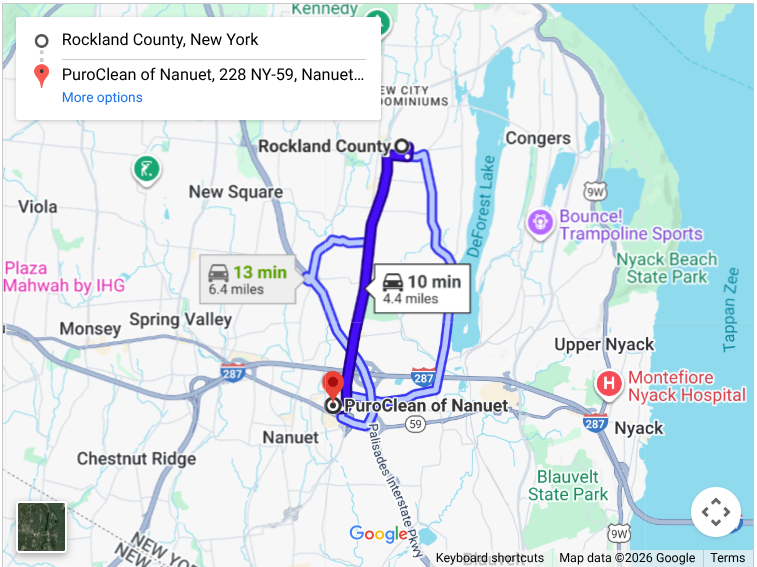
Serving Rockland County
We respond fast in:
Stony Point • Sloatsburg • Tappan • Orangetown • West Nyack • Valley Cottage • Pearl River • Blauvelt • Nyack • New City
Need emergency water cleanup?
Fast Response. Real Experience.
PuroClean of Nanuet responds to water damage emergencies across Rockland County — from slow drips to catastrophic burst pipes. Our certified technicians understand the timeline: water doesn’t wait, mold doesn’t negotiate, and every hour of delay costs you in structural damage and insurance complications.
We stop the spread, document everything, and dry it right the first time.
Call anytime: (845) 570-5060