PuroClean of Nanuet | 24/7 Water, Fire, and Mold Restoration in the Village That Built New York
PuroClean of Nanuet | 24/7 Water, Fire, and Mold Restoration in the Village That Built New York
PuroClean of Nanuet is a restoration company in Haverstraw, NY that responds 24 hours a day to water, fire, smoke, mold, and biohazard damage. The village rises from the widest reach of the Hudson on the clay banks that once made it the brickmaking capital of the world, and that history still shapes what water and fire do to its buildings. Our office is on Route 59 in Nanuet, a straight run north on Route 9W or the Palisades Parkway, so a crew reaches the village quickly, from the waterfront at Harbors at Haverstraw to the brick blocks of the downtown. Call (845) 570-5060 any hour, any day.
Quick Answer: If you are searching for a restoration company in Haverstraw after water, fire, or mold damage, PuroClean of Nanuet provides 24/7 emergency restoration throughout the village and Town of Haverstraw, including West Haverstraw and Garnerville, plus neighboring Congers and New City. Call (845) 570-5060 for immediate help.
Haverstraw catches water from both directions: tidal surge off the bay in front and the county’s largest watershed draining past its northern edge. Three local conditions matter most.
Haverstraw Bay is tidal, and the waterfront has the scars to prove it. The village faces the widest reach of the Hudson, a tidal estuary where coastal storm surge travels upriver. During Superstorm Sandy in 2012, the surge decimated Civile’s Venice on the Hudson, a waterfront landmark that never reopened, and damaged the shoreline at Haverstraw Bay County Park. Since then, hundreds of new households have moved to the water’s edge at Harbors at Haverstraw, which means more homes than ever sit in reach of surge. River floodwater arrives with force, carries contaminants, and is treated as Category 3 water requiring certified handling, not ordinary drying.
The county’s largest drainage basin empties along the village’s northern edge. The village’s own waterfront plan, prepared under New York’s coastal program, notes that the Minisceongo drainage basin is the largest in Rockland County at roughly 19 square miles, with the creek running along the village’s northern boundary into tidal marshland at the Hudson. When a storm hits, the village is squeezed from both sides at once: the bay pushes in from the east while 19 square miles of upstream Rockland drain past the northern blocks. Properties near the creek, the train trestle, and the low ground behind the waterfront should treat a flood watch as a basement watch.
This is a brick village, and brick handles water on its own terms. Haverstraw’s downtown was built dense in the brick era and rebuilt after the 1906 landslide that took five streets and 21 buildings, much of it in the village’s own product. Brick and masonry do not shed water the way siding does; they absorb it, hold it deep in the wall, and release it slowly, which is why a masonry building can read dry at the surface while staying wet inside for weeks. Add shared walls, multi-family conversions, and older plaster interiors, and a water loss in downtown Haverstraw calls for a drying plan built for masonry, not a generic one.
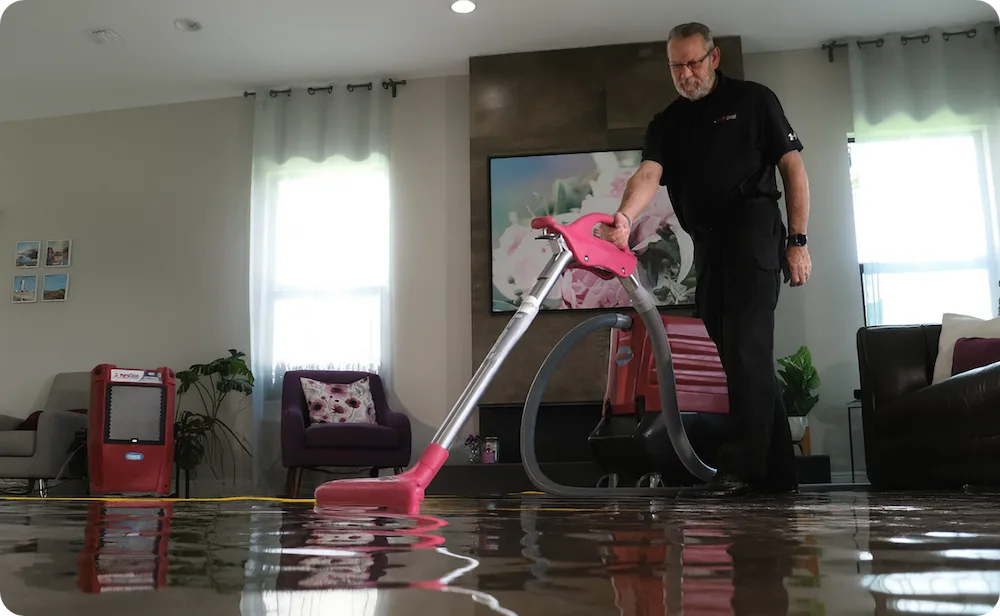
Losses here come from tidal flooding, creek and storm runoff, burst supply lines, water heater failures, and roof leaks. Whatever the source, our water damage restoration process follows the same certified sequence, and each stage exists for a reason:
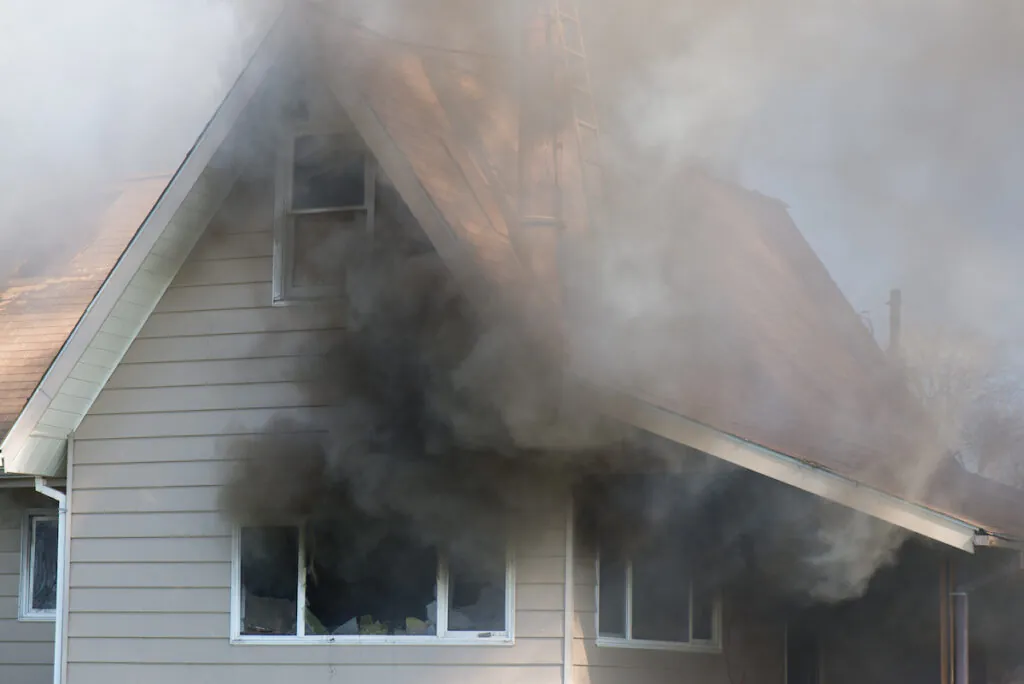
In a dense downtown of attached and multi-family buildings, fire rarely stays where it starts. Smoke migrates through shared walls, cocklofts, and HVAC systems into neighboring units, soot keeps etching finishes for days, and firefighting water soaks floors below the fire. Our fire and smoke damage restoration work matches the cleaning method to each material, including smoke-holding brick and plaster, addresses firefighting water immediately, and documents every affected unit and item for the insurers involved. Some contents can be saved and some cannot, and we tell you honestly which is which before work begins.
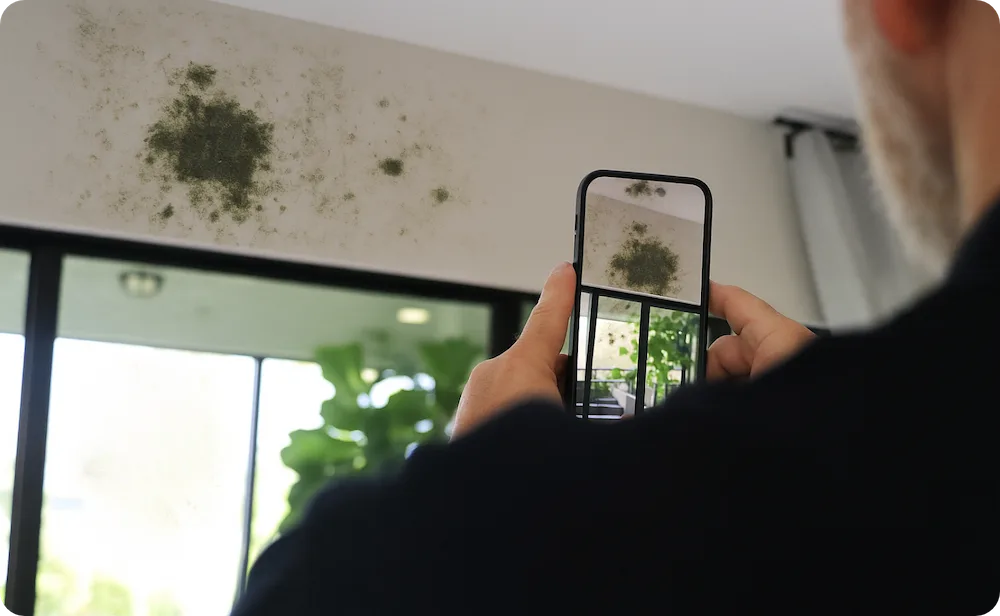
Mold is the reason building owners often call a restoration company in Haverstraw weeks after a loss that looked handled. Masonry that holds moisture, riverfront humidity, and basements below the old downtown all give mold time to work, and the EPA notes that growth can begin within 24 to 48 hours when moisture goes unaddressed, a documented possibility rather than a guarantee. Our mold remediation process corrects the moisture source, contains the affected area, filters the air, removes contaminated materials, and cleans what remains. No responsible company promises a permanently mold-free building; we promise a corrected moisture problem and a properly remediated space.
Choosing a restoration company in Haverstraw comes down to who can get there fast and who understands a dense, historic, waterfront village when they arrive.
The first visit is an inspection, not a sales call. The technician walks every affected area with a moisture meter and maps readings room by room, paying particular attention to masonry depth readings, because brick can read dry at the surface while holding water inside. An infrared camera scan checks behind walls and under floors, and in attached buildings we check the far side of shared walls when access allows. Every reading and affected material is photographed and logged before anything is moved, becoming the backbone of your insurance or flood claim. The visit ends with a written drying plan stating what equipment goes where and why.
Every job produces the same set of tangible deliverables. These are not promises; they are documents you hold at the end.
✓ Moisture map: room-by-room meter readings recorded on day one, establishing exactly what was wet and how wet
✓ Daily drying log: readings taken every day equipment runs, showing materials moving toward dry standard
✓ Equipment placement plan: a written statement of what equipment is placed where and why
✓ Insurance documentation: photographs and material logs in the format adjusters expect, produced as we work
✓ Final moisture verification: closing readings confirming affected materials reached dry standard before equipment leaves
On the waterfront, elevation and flood insurance are the real defenses: keep utilities and stored belongings above known flood levels where feasible, and remember standard policies exclude surge. Near the Minisceongo, keep an eye on the creek during sustained rain and treat county flood watches seriously. Downtown, test sump pumps before storm season and add battery backups, since outages and heavy rain arrive together. Owners of older buildings should have original drain lines camera-inspected and masonry joints repointed where washout appears, because failed mortar is a water pathway. In winter, watch the roof edge after heavy snow: ice dams force meltwater under shingles and into wall cavities, a pattern we covered in our post on ice dam damage and hidden roof leaks. Water leak detectors under sinks, behind the washer, and near the water heater cost little and catch failures early.
PuroClean of Nanuet is a dependable restoration company in Haverstraw and across the Town of Haverstraw, with crews that also serve New City, Congers, and Nanuet. Whether you are standing in water right now or planning ahead of the next storm, call (845) 570-5060 and speak with someone who can help immediately, 24 hours a day.
Crews dispatch from our Nanuet office to these Rockland County communities daily:
If your property sits near any of these, the local risk notes on this page apply directly to you:
No, and in some ways the opposite. Brick and masonry absorb water and hold it deep in the wall, releasing it slowly over weeks, so a wall can feel dry at the surface while staying wet inside. That trapped moisture feeds mold and degrades mortar and plaster. Masonry losses need depth readings, longer drying schedules, and monitoring to verify the wall is actually dry, which is exactly how we run them.
Yes. Haverstraw Bay is tidal, so coastal storm surge travels upriver and can arrive with wave force, carrying contaminants picked up along the way. Restoration treats it as Category 3 water: affected porous materials are typically removed rather than dried in place, and sanitization is mandatory. A burst pipe and a bay flood in the same room are two very different jobs.
Usually not for river or creek water. Standard policies cover burst pipes and appliance failures but exclude surge and surface flooding, which require a separate flood policy, and sump pump failure often needs an endorsement. If you own near the waterfront or the Minisceongo, review your flood coverage before you need it, and never assume coverage.
Our office is in Nanuet, a straight run south on Route 9W. We answer 24/7 and dispatch immediately. We do not promise exact arrival times, because the storms that flood the waterfront can slow every road in the town, but proximity is the biggest factor in response speed and ours is hard to beat.
Structural drying typically takes three to five days, confirmed by daily readings rather than a calendar; brick and plaster can run longer because those materials release moisture slowly. Flood losses often add removal and sanitization time. Full restoration ranges from a few days to several weeks depending on how far the water traveled.
Yes, it is possible. The EPA notes mold growth can begin within 24 to 48 hours when moisture is not addressed. That is a documented possibility, not a certainty in every case, but moisture-holding masonry gives mold a longer window, which is why professional drying should begin the same day as the loss whenever possible.
From our Nanuet office we serve all of Rockland County, including West Haverstraw, Garnerville, Stony Point, Congers, New City, and Nanuet, along with Westchester and Orange Counties in New York and Northern New Jersey.
Last reviewed July 2026. Annual review scheduled for July 2027, or sooner if FEMA map revisions, village or town drainage projects, or service changes warrant.
Owned & Operated by Mitch Cohen
228 East Rte 59, Suite 179, Nanuet, NY, 10954
(845) 570-5060
 Airmont
Bardonia
Chestnut Ridge
Congers
Grand View-on-Hudson
Haverstraw
Hillcrest
Kaser
Ladentown
Monsey
Montebello
Mount Ivy
Nanuet
New City
New Hempstead
New Square
Nyack
Pomona
Pomona Heights
South Nyack
Spring Valley
Suffern
Tallman
Thiells
Upper Nyack
Valley Cottage
Viola
Wesley Hills
West Haverstraw
West Nyack
Airmont
Bardonia
Chestnut Ridge
Congers
Grand View-on-Hudson
Haverstraw
Hillcrest
Kaser
Ladentown
Monsey
Montebello
Mount Ivy
Nanuet
New City
New Hempstead
New Square
Nyack
Pomona
Pomona Heights
South Nyack
Spring Valley
Suffern
Tallman
Thiells
Upper Nyack
Valley Cottage
Viola
Wesley Hills
West Haverstraw
West Nyack
Water damage can result from unexpected leaks, flooding from storms, plumbing failures, or appliance malfunctions. Our certified teams focus on rapid water removal, drying, and stabilization to help prevent further damage and mold growth.
 Explore Our Water Damage Mitigation Services
Even after a fire is extinguished, smoke, soot, and odor can continue to affect your home. Fire damage restoration services address visible damage while also helping reduce lingering effects that impact indoor air quality and surfaces.
Explore Our Fire and Smoke Damage Restoration Services
Mold often develops as a result of unresolved moisture or hidden water damage. Professional mold remediation helps identify affected areas, contain growth, and restore healthy indoor conditions.
Explore Our Mold Removal and Remediation Services
Biohazard situations, including crime scene cleanup and virus decontamination, require specialized cleaning and handling to protect health and safety. Biohazard cleanup services address contamination using proper protocols and professional care.
Explore Our Biohazard Cleanup Services
PuroClean provides 24/7 commercial property damage restoration services for businesses and facilities across the United States.
Explore Our Commercial Services
Water damage can result from unexpected leaks, flooding from storms, plumbing failures, or appliance malfunctions. Our certified teams focus on rapid water removal, drying, and stabilization to help prevent further damage and mold growth.
Explore Our Water Damage Mitigation Services
Find answers to common questions about our services
No, and in some ways the opposite. Brick and masonry absorb water and hold it deep in the wall, releasing it slowly over weeks, so a wall can feel dry at the surface while staying wet inside. That trapped moisture feeds mold and degrades mortar and plaster. Masonry losses need depth readings, longer drying schedules, and monitoring to verify the wall is actually dry, which is exactly how we run them.
Yes. Haverstraw Bay is tidal, so coastal storm surge travels upriver and can arrive with wave force, carrying contaminants picked up along the way. Restoration treats it as Category 3 water: affected porous materials are typically removed rather than dried in place, and sanitization is mandatory. A burst pipe and a bay flood in the same room are two very different jobs.
Usually not for river or creek water. Standard policies cover burst pipes and appliance failures but exclude surge and surface flooding, which require a separate flood policy, and sump pump failure often needs an endorsement. If you own near the waterfront or the Minisceongo, review your flood coverage before you need it, and never assume coverage.
Our office is in Nanuet, a straight run south on Route 9W. We answer 24/7 and dispatch immediately. We do not promise exact arrival times, because the storms that flood the waterfront can slow every road in the town, but proximity is the biggest factor in response speed and ours is hard to beat.
Structural drying typically takes three to five days, confirmed by daily readings rather than a calendar; brick and plaster can run longer because those materials release moisture slowly. Flood losses often add removal and sanitization time. Full restoration ranges from a few days to several weeks depending on how far the water traveled.
No, and in some ways the opposite. Brick and masonry absorb water and hold it deep in the wall, releasing it slowly over weeks, so a wall can feel dry at the surface while staying wet inside. That trapped moisture feeds mold and degrades mortar and plaster. Masonry losses need depth readings, longer drying schedules, and monitoring to verify the wall is actually dry, which is exactly how we run them.
Yes. Haverstraw Bay is tidal, so coastal storm surge travels upriver and can arrive with wave force, carrying contaminants picked up along the way. Restoration treats it as Category 3 water: affected porous materials are typically removed rather than dried in place, and sanitization is mandatory. A burst pipe and a bay flood in the same room are two very different jobs.
Usually not for river or creek water. Standard policies cover burst pipes and appliance failures but exclude surge and surface flooding, which require a separate flood policy, and sump pump failure often needs an endorsement. If you own near the waterfront or the Minisceongo, review your flood coverage before you need it, and never assume coverage.
Our office is in Nanuet, a straight run south on Route 9W. We answer 24/7 and dispatch immediately. We do not promise exact arrival times, because the storms that flood the waterfront can slow every road in the town, but proximity is the biggest factor in response speed and ours is hard to beat.
Structural drying typically takes three to five days, confirmed by daily readings rather than a calendar; brick and plaster can run longer because those materials release moisture slowly. Flood losses often add removal and sanitization time. Full restoration ranges from a few days to several weeks depending on how far the water traveled.
What Our Customers Say:
When you need water damage restoration services near you, call the experts at PuroClean. We are here day or night, 24/7, to help remove any standing water quickly and begin your water restoration service. We monitor the drying process so you can rest assured that your property is dried thoroughly. We offer commercial water restoration services for businesses and residential water damage restoration for homeowners.

PuroClean of Nanuet
(845) 570-5060
228 East Rte 59, Suite 179, Nanuet, NY 10954


© 2026 PuroClean. All Rights Reserved.