Winter weather in Tappan and across Rockland County creates conditions where ice dams frequently form along roof edges. While large icicles may look harmless, the real issue is often the water trapped behind the ice ridge, which can travel beneath shingles and enter the home.
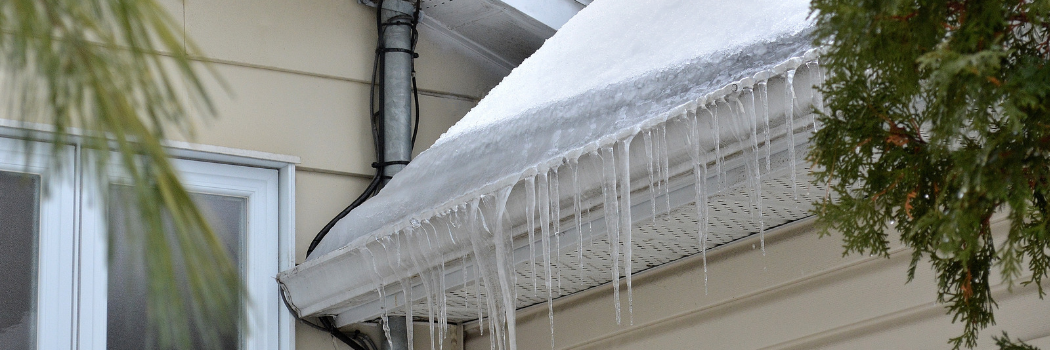
Ice Dam Definition
An ice dam is a ridge of ice that forms along the edge of a roof when melting snow refreezes before draining off the roof surface.
When this ridge forms, additional meltwater becomes trapped behind the ice and can flow beneath shingles, allowing water to enter the roof structure, attic insulation, and wall cavities.
Ice dams commonly occur during winter weather cycles where daytime melting is followed by nighttime freezing.
For homeowners in Tappan, ice dams are more than a seasonal nuisance. The combination of older housing stock, historic architecture, and aging insulation systems creates conditions where roof melt and refreeze cycles happen quickly, allowing water to penetrate the structure before the damage becomes visible.
Property restoration professionals like PuroClean of Nanuet regularly respond to winter water damage events in Rockland County that begin with an ice dam at the roof edge but later reveal hidden moisture in insulation, wall cavities, and structural framing. After a winter storm, a post-winter storm inspection helps identify ice dam damage and hidden moisture before stains or structural issues appear.
5 Key Ice Dam Facts Tappan Homeowners Should Know
- Ice dams form when attic heat melts snow unevenly across a roof.
- Meltwater refreezes at colder roof edges and creates an ice ridge.
- Trapped water can travel beneath shingles and enter roof decking.
- Older homes with dormers, valleys, and outdated insulation are at higher risk. Certain architectural styles common in Rockland County—Cape Cod, Colonial Revival, ranch, and split-level homes—contain structural features that accelerate heat loss into the attic.
- Hidden moisture in insulation and wall cavities is common after ice dam leaks. Professional moisture inspection is often required to locate hidden damage and prevent mold growth after an ice dam event.

What Is an Ice Dam?
An ice dam is a ridge of ice that forms along the lower edge of a roof when melting snow refreezes before draining away.
The process typically happens in four stages:
- Heat escapes from the attic and warms the roof surface.
- Snow melts on the warmer upper section of the roof.
- Meltwater runs down toward colder roof edges near gutters.
- The water refreezes and forms a ridge of ice.
Once that ridge forms, water from additional melting snow becomes trapped behind it. Instead of draining off the roof, the water pushes under shingles and into the roof decking.
From there, moisture can travel into attic insulation, framing, and interior walls.
Why Tappan Homes Experience Ice Dam Problems
Homes throughout Tappan often include architectural features that make roofs more vulnerable to ice dams.
Historic homes in the region frequently contain:
Older insulation systems that allow heat to escape into the attic
Roof dormers and valleys that trap snow
Attic ventilation systems designed before modern building science
These conditions allow roof temperatures to vary significantly across the surface. Areas where heat escapes melt snow faster, while colder edges remain frozen.
This temperature imbalance is the primary driver behind ice dam formation.

Hidden Damage Ice Dams Can Cause
One of the most dangerous aspects of ice dam damage is how often it remains hidden.
Homeowners typically notice a problem only after seeing a ceiling stain or dripping water. By that time, moisture may already be trapped inside structural components.
Saturated Attic Insulation
Insulation inside the attic is often the first place where ice dam water collects.
When insulation becomes wet, it loses its insulating value and holds moisture against structural wood.
This can lead to:
Architectural Styles That Increase Ice Dam Risk
Several architectural designs common in Rockland County homes can increase ice dam vulnerability.
Split-Level and Ranch Homes
These homes often include knee wall attic spaces where the ceiling meets the roofline. Heat escaping from these areas creates localized hot spots on the roof.
Snow melts quickly above these areas and refreezes at the eaves.
Colonial Homes With Dormers
Dormers interrupt the roof surface and create corners where snow accumulates.
Roof valleys funnel melting snow into concentrated areas, increasing the likelihood of water being forced beneath shingles.
Cape Cod Homes
Cape Cod homes frequently have upstairs rooms with ceilings located just inches below the roof deck.
This leaves little room for insulation, allowing heat from the living space to warm the roof directly.
Without specialized insulation solutions, these homes are particularly prone to ice dams.
Micro-Climate Effects in Rockland County
Local geography also influences how ice dams form in this region.
North-Facing Roof Slopes
Homes built along hillsides often have roof sections facing north. These areas receive less winter sunlight and remain frozen longer.
When snow melts on warmer sections of the roof, water runs toward these colder edges and refreezes.
This can cause ice dams to grow thicker and persist longer during winter.
Hudson River Moisture
Communities near the Hudson River frequently experience higher winter humidity levels.
Moisture-laden storms can produce heavier snow accumulation and rime ice formation on roofs, increasing both weight and meltwater volume.
Older roof structures may struggle to handle these conditions.
How Ice Dam Damage Is Properly Addressed
Repairing ice dam damage involves more than fixing a visible roof leak.
Professional restoration typically includes:
Moisture mapping to identify hidden water intrusion
Removal of saturated insulation
Structural drying with commercial equipment
Documentation for insurance claims
Because moisture often spreads through hidden structural areas, professional inspection is essential to prevent mold growth and long-term damage.
Ice Dam Damage Restoration in Tappan
Winter water damage events in Tappan often begin with roof ice dams but quickly extend into attic insulation and wall cavities.
Restoration teams like PuroClean of Nanuet provide property damage restoration services throughout Rockland County, including structural drying and moisture detection.
Early inspection after a winter leak can help limit the extent of repairs and protect the structural integrity of the home.
Wet insulation often requires removal and replacement during restoration.
Water Intrusion Inside Wall Cavities
Water entering through the roof rarely travels straight down.
Instead, it follows structural framing and can migrate inside exterior walls before appearing indoors.
Hidden wall cavity moisture can cause:
- Rotting wall studs
- Damaged insulation
- Interior drywall deterioration
- Mold growth
These problems often develop quietly until visible signs appear.
Architectural Styles That Increase Ice Dam Risk
Several architectural designs common in Rockland County homes can increase ice dam vulnerability.
Split-Level and Ranch Homes
These homes often include knee wall attic spaces where the ceiling meets the roofline. Heat escaping from these areas creates localized hot spots on the roof.
Snow melts quickly above these areas and refreezes at the eaves.
Colonial Homes With Dormers
Dormers interrupt the roof surface and create corners where snow accumulates.
Roof valleys funnel melting snow into concentrated areas, increasing the likelihood of water being forced beneath shingles.
Cape Cod Homes
Cape Cod homes frequently have upstairs rooms with ceilings located just inches below the roof deck.
This leaves little room for insulation, allowing heat from the living space to warm the roof directly.
Without specialized insulation solutions, these homes are particularly prone to ice dams.
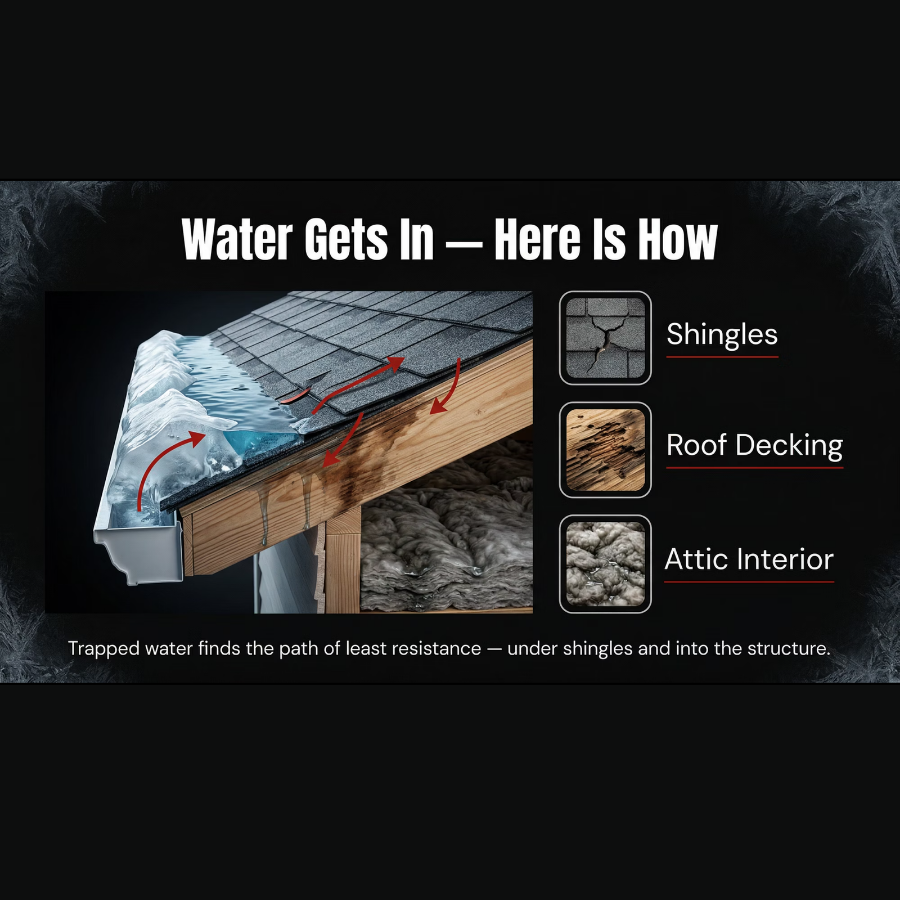
Summary: Why Ice Dams Cause Hidden Water Damage
Ice dams occur when uneven roof temperatures cause melting snow to refreeze along roof edges.
Once an ice ridge forms, trapped water can move beneath shingles and enter the roof structure.
In many homes across Tappan and Rockland County, the most serious damage occurs inside attic insulation and wall cavities before visible ceiling stains appear.
Early inspection and professional moisture detection help prevent structural damage and mold growth after winter roof leaks.
Ice Dam Questions Homeowners in Tappan Ask
What causes ice dams on roofs in Tappan, NY?
Ice dams form when heat escapes from the attic and melts snow on the upper portion of a roof. The melted water flows downward until it reaches colder roof edges near gutters, where it refreezes. Over time this creates a ridge of ice that traps additional meltwater behind it. The trapped water can then push under shingles and leak into the roof structure.
Why are homes in Tappan more prone to ice dam damage?
Many homes in Tappan and throughout Rockland County were built decades ago with insulation levels that no longer meet modern energy standards. Historic architecture, roof dormers, valleys, and complex rooflines can trap snow and create uneven melting patterns. These conditions increase the likelihood of ice dams forming during winter storms.
What damage can an ice dam cause inside a home?
Ice dams often cause hidden water damage inside the structure before any visible signs appear. Water can soak attic insulation, travel along roof framing, and enter wall cavities. This may lead to reduced insulation performance, wood rot, drywall damage, and mold growth if moisture is not properly dried.
How can I tell if an ice dam has caused water damage?
Common warning signs include large icicles along roof edges, water stains on ceilings, peeling paint near exterior walls, or dripping water during winter thaws. A musty smell in attic spaces can also indicate moisture trapped in insulation or structural materials.
Are ice dam leaks covered by homeowners insurance?
Many insurance policies cover interior water damage caused by ice dams, but coverage depends on the policy and documentation of the damage. Insurance providers typically require evidence showing that the damage resulted from a sudden winter event rather than long-term maintenance issues.
What should homeowners do if they suspect ice dam damage?
If you notice signs of a roof leak during winter, it is important to have the home inspected quickly. Professional restoration teams can check attic insulation, measure moisture inside walls, and dry affected materials to prevent mold growth and structural deterioration.
How can homeowners prevent ice dams in the future?
Preventing ice dams usually involves improving attic insulation, sealing air leaks that allow warm air into the attic, and ensuring proper roof ventilation. These steps help keep the roof temperature consistent so snow melts evenly and drains properly.
Who handles ice dam water damage restoration near Tappan?
Property restoration companies such as PuroClean of Nanuet provide winter water mitigation, moisture detection, and structural drying services for homes affected by winter roof leaks. Professional restoration helps ensure hidden moisture is removed and prevents secondary issues like mold. Before you address the water damage, the roofing damage needs to be addressed. Learn more about what to look for from a roofing professional.