


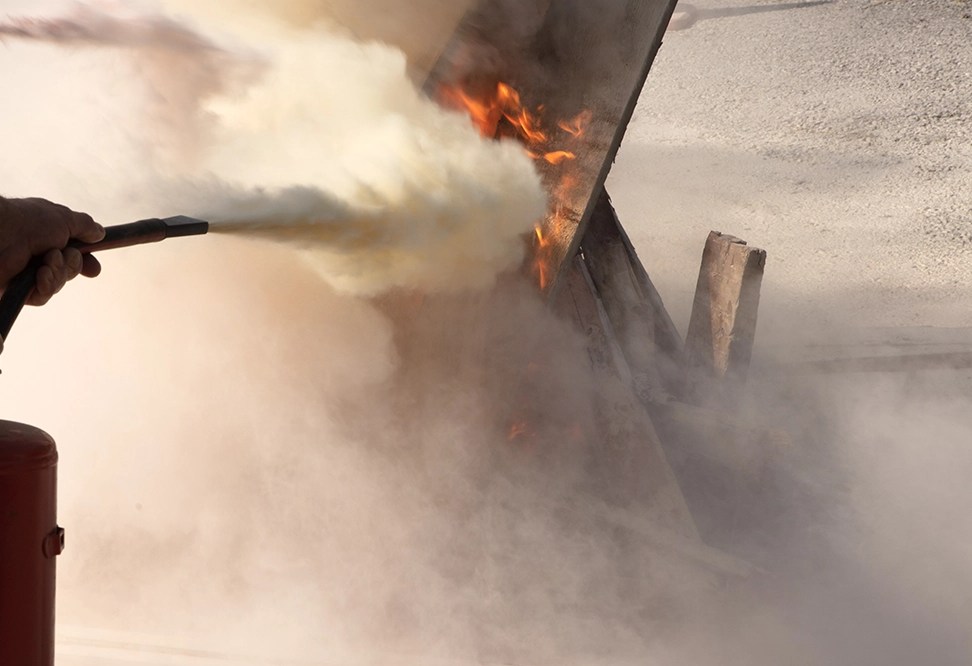
The powder inside most portable fire extinguishers is known as a dry chemical extinguishing agent. Its purpose is to interrupt the chemical reaction that allows a fire to continue burning while separating the fuel source from oxygen.
The exact chemical composition depends on the type of fire extinguisher.
ABC Fire Extinguishers
The most common fire extinguishers found in homes, schools, offices, and commercial buildings are ABC dry chemical extinguishers.
Their primary extinguishing agent is:
Monoammonium phosphate
This yellow powder is highly effective because it can suppress multiple classes of fires.
ABC extinguishers are designed for:
Class A Fires – Wood, paper, cardboard, cloth, and other ordinary combustibles.
Class B Fires – Gasoline, oil, grease, paint, and other flammable liquids.
Class C Fires – Energized electrical equipment.
Because they are versatile, ABC extinguishers are recommended for most residential and commercial environments.
BC Fire Extinguishers
Some extinguishers are specifically designed for flammable liquids and electrical fires.
These typically contain:
Sodium bicarbonate
Potassium bicarbonate
BC extinguishers are commonly used in:
Commercial kitchens
Garages
Mechanical rooms
Fuel storage areas
Unlike ABC extinguishers, they are not intended for ordinary combustible materials such as paper or wood.
Other Fire Extinguisher Types
Not every extinguisher contains powder.
Other common extinguishing agents include:
Carbon dioxide (CO₂)
Clean agent extinguishers
Water
Water mist
Wet chemical solutions
These extinguishers typically leave little or no residue after use.
Is Fire Extinguisher Powder Dangerous?
The dry chemical used in most portable extinguishers is generally considered low in toxicity when used as directed. However, exposure can still cause temporary irritation.
Possible effects include:
Eye irritation
Skin irritation
Coughing
Sore throat
Nasal irritation
Respiratory discomfort
People with asthma, allergies, or other respiratory conditions may be more sensitive to airborne particles.
If a large amount of powder has been discharged indoors, ventilate the area and avoid unnecessary exposure until cleanup has been completed.
Why Fire Extinguisher Residue Should Be Removed Quickly
Although the powder helps stop a fire, it should not remain on surfaces for an extended period.
Dry chemical residue may:
Become corrosive
Damage electronics
Stain surfaces
Contaminate HVAC systems
Affect indoor air quality
Corrode metal components
Prompt cleanup helps minimize secondary property damage.
Can Fire Extinguisher Powder Damage Electronics?
Yes.
The extremely fine particles can infiltrate:
Computers
Televisions
Security systems
Electrical panels
Appliances
HVAC equipment
Networking equipment
If left untreated, the residue may attract moisture and contribute to corrosion, potentially leading to equipment failure.
For this reason, electronics exposed to fire extinguisher residue should be evaluated before being returned to service.
How Professionals Remove Fire Extinguisher Powder
Professional fire damage restoration companies use specialized equipment and procedures to safely remove residue without spreading contamination.
The restoration process generally includes:
1. Inspection
Technicians assess:
Fire damage
Smoke damage
Residue distribution
Type of extinguisher used
Sensitive equipment exposure
2. HEPA Vacuuming
Industrial HEPA-filtered vacuums remove loose powder while preventing particles from becoming airborne.
3. Surface Cleaning
Residue is carefully removed from:
Walls
Floors
Cabinets
Countertops
Furniture
Fixtures
Cleaning agents are selected based on the affected materials to minimize the risk of damage.
4. Electronics Evaluation
Sensitive electronics often require specialized cleaning to remove fine particles without damaging internal components.
5. Smoke Odor Removal
If a fire occurred, technicians may also perform:
Smoke residue removal
Soot cleanup
Thermal fogging
Hydroxyl or ozone treatments (where appropriate)
Air purification
Common Cleanup Mistakes
Property owners should avoid:
Sweeping the powder with a broom
Using compressed air
Washing residue into electrical equipment
Applying excessive water
Ignoring hidden residue in vents or HVAC systems
Improper cleanup can spread contamination and increase restoration costs.
When Should You Call a Professional?
Professional cleanup is recommended when:
A fire extinguisher has discharged indoors.
Smoke damage is present.
Electronics have been exposed.
Large areas are contaminated.
HVAC systems may contain residue.
Commercial properties are affected.
There is uncertainty about hidden contamination.
Professional restoration helps reduce the risk of corrosion, protects valuable equipment, and restores a clean and safe environment.
Why Choose PuroClean of Naperville?
PuroClean of Naperville provides comprehensive fire damage restoration services for homeowners and businesses throughout Naperville and the surrounding communities. Our certified restoration professionals use advanced equipment and industry-recognized restoration techniques to remove fire extinguisher residue, clean smoke and soot damage, eliminate odors, and restore your property efficiently. Whether the fire involved a small kitchen incident or a larger structural event, our team is prepared to respond quickly and help return your property to its pre-loss condition.