


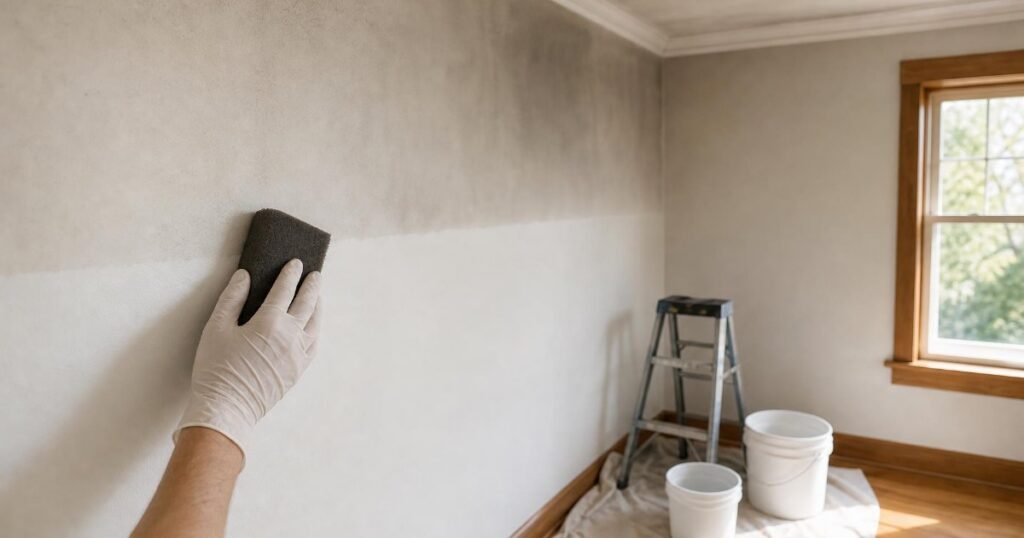
Smoke leaves its mark in ways that are easy to spot and hard to ignore. Dark streaks collect above a stove or a candle. A gray film settles across a wall. Ceilings turn yellow or brown, and a sharp, stale smell hangs in the room long after the smoke has cleared. If you are figuring out how to clean smoke damage on walls and ceilings, the first wipe matters most. Soot is a fine, often oily powder, and the wrong cloth or cleaner pushes it into paint and drywall, where it smears and sets. This guide answers two questions. The first is how to clean smoke residue safely, step by step. The second is how to tell when the damage has moved beyond a do-it-yourself job.
Before You Start: Is This a Job You Can Do Yourself?
Smoke damage comes in two very different sizes. Light residue from a small, contained source is often a job you can handle. That includes the dark ring above a candle that burned too long, a smudge from a fireplace that drew poorly for an evening, or a thin film after a brief stovetop flare-up that went out on its own. In these cases the residue stays in one area, the smell fades within a day or two, and the surfaces underneath are sound.
Soot from a house fire or a furnace puff-back belongs in another category. A puff-back happens when a furnace or boiler misfires and releases soot and oily residue into the home. Air movement and the heating, ventilation, and air conditioning (HVAC) system can carry that residue into rooms far from the furnace, and it settles on ceilings, walls, furniture, and fabrics. Puff-backs tend to happen during the heating season, which in Saratoga County runs for much of the year.
After any house fire, wait for the fire department to say the home is safe before going back inside. The soot and dirty water left behind may contain things that could make you sick. Keep the HVAC system and ceiling fans off, since both can spread soot through the home. Because the wrong cleaning method can smear soot, drive residue deeper into materials, or permanently damage finishes, PuroClean of North Albany advises holding off on wiping or washing soot-covered surfaces until the residue and the surface have been evaluated.
Some people should stay out of the cleanup entirely. Fine smoke particles can get into the eyes and lungs and aggravate chronic heart and lung conditions, so children, older adults, and people with heart or lung disease such as asthma should not take part in cleanup work.
What Kind of Soot Is on Your Walls?
Soot behaves differently depending on what burned, and each type calls for a different approach. Our technicians sort smoke residue into three broad types: dry, oily or wet, and protein.
Dry soot comes from fast, hot fires that burn paper and wood. It is powdery and sits on the surface of the wall. Since it is loose, it responds well to vacuuming and dry cleaning sponges, though it turns into a smear if it gets wet too early.
Oily or wet soot comes from slow, smoldering fires that burn plastics, rubber, and synthetic materials, and from furnace puff-backs. It is black, sticky, and greasy. A dry sponge tends to spread it around, so it usually needs a degreasing cleaner, and a heavy coating is a job for professionals.
Protein residue comes from burned food, and it shows up in many homes, since an estimated 48 percent of home structure fires involve kitchen and cooking equipment. Thanksgiving is the peak day of the year for home cooking fires. Protein residue is often hard to see. It leaves a thin yellow or brown film that discolors paint and cabinets and carries a strong odor that lingers.
A simple touch test tells you which type you have. Pick a hidden spot, such as inside a closet or behind a piece of furniture. Wearing gloves, press a dry cleaning sponge lightly against the wall and pull it across in one short stroke. If the sponge lifts a gray or black powder and the wall underneath looks lighter, the residue is dry soot. If it leaves a dark streak or the sponge feels greasy, the residue is oily. If the sponge picks up very little but the wall feels tacky and smells of burned food, it is likely protein residue.
Supplies and Safety Gear for Smoke Cleanup
Gather everything before you start, since walking back and forth with soot on your gloves spreads it to clean rooms.
For protection, wear rubber or nitrile gloves, eye protection, long sleeves, long pants, and an N95 respirator. Soot particles are small enough to reach deep into the lungs, and a simple dust mask does little to stop them.
For cleaning, you need a high-efficiency particulate air (HEPA) vacuum with a soft brush attachment. A standard household vacuum blows fine particles back into the air, and dry sweeping does the same. Add several dry cleaning sponges, sometimes sold as soot sponges or chemical sponges, which are made of vulcanized rubber and lift soot without water. You also need two buckets, one for cleaning solution and one for rinse water, a mild dish detergent or a degreaser made for painted surfaces, and a stack of clean cloths. Drop cloths, plastic sheeting, and painter's tape protect the floor and the rest of the house. Open windows for fresh air while you work.
Many cleaning guides suggest bleach, vinegar, ammonia-based cleaners, or other household products for soot. Use one product at a time and rinse the surface between them. Mixing bleach with ammonia produces toxic chloramine gases, and mixing bleach with an acid such as vinegar releases chlorine gas. Either one can cause coughing, shortness of breath, chest pain, and eye, nose, and throat irritation.
How to Remove Smoke Damage From Walls, Step by Step
Smoke residue comes off best when you start gently and add moisture only when you need it. The steps below show how to remove smoke damage from walls in an order that keeps soot from spreading. Work in sections about two to three feet square, and swap out sponges and cloths as soon as they look dirty, since a loaded sponge puts soot right back on the wall.
Protect the room and the rest of the house
Close the doors to other rooms and cover open doorways with plastic sheeting taped at the edges. Lay drop cloths along the base of each wall and over any furniture you cannot move. Shut off the HVAC system so it cannot pull soot into the ducts and carry it to the rest of the home.
Vacuum loose soot without touching the wall
Since loose soot falls as you work, dry removal starts at the top of the wall and moves down. Hold the brush attachment of the HEPA vacuum just off the surface so it pulls up loose particles without pressing them into the paint. Go slowly and overlap your passes.
Lift residue with a dry cleaning sponge
Wipe the dry sponge across the wall in straight, overlapping strokes from top to bottom. Avoid scrubbing or rubbing in circles, which grinds soot into the surface. When the face of the sponge turns black, cut away the dirty layer with scissors or switch to a fresh sponge. Keep the sponge completely dry, since water makes it smear.
Wash in small sections with a lightly damp cloth
Mix a small amount of mild detergent or degreaser into a bucket of warm water. Wring the cloth until it is barely damp, because extra water carries soot into drywall and leaves streaks. Since drips that run onto a washed surface wipe off easily and drips on a sooty wall leave stubborn streaks, wash walls from the bottom up. Ceilings come last.
Rinse, dry, and check the result
Wipe each section with a second cloth dipped in clean rinse water, then dry it right away with a clean towel. Change the rinse water often. Once the wall has dried fully, look at it in daylight from an angle. Faint shadows or yellowing that remain after two careful passes call for sealing and repainting, covered below.
How to Clean Smoke Damage From Painted Walls and Other Finishes
The finish on a wall decides how much moisture and pressure it can take. Before you clean smoke damage from painted walls, test your method on a hidden spot and let it dry, then check whether the paint has dulled, streaked, or lifted.
Flat and matte paint is the most fragile. It is porous, so it soaks up both soot and water, and scrubbing leaves shiny patches or worn spots. Rely on the HEPA vacuum and the dry sponge, and use only a barely damp cloth with a very mild detergent. Semi-gloss and gloss paint, common in kitchens, bathrooms, and on trim, has a harder, smoother surface that tolerates gentle washing with a mild detergent or degreaser.
Textured walls catch soot in every ridge and hollow. Vacuum with the brush attachment first, then dab the dry sponge into the texture with light pressure. Dragging the sponge across the surface tears it apart and pushes soot deeper into the low spots.
Wallpaper depends on its type. Washable vinyl wallpaper can take a light wipe with a damp cloth once the loose soot is gone. Paper, fabric, and grasscloth coverings should be cleaned dry only, since water can stain them and loosen the adhesive behind them.
Wood paneling and trim with a sealed finish can be cleaned with a product made for finished wood. Wipe with the grain and dry each section right away. Unfinished or oil-finished wood absorbs smoke residue and odor, and it often needs professional cleaning or refinishing.
Cleaning Smoke Damage on Ceilings
Ceilings usually hold the heaviest residue in a room. Smoke and heat rise, spread out across the ceiling, and only then work their way down the walls. The corners and the area directly above the source of the smoke tend to be the darkest.
Ceilings are also the most delicate surface to clean. Most are painted with flat ceiling paint, which is soft, porous, and quick to show water marks. Textured and popcorn ceilings are even more fragile. They crumble under a sponge and soak up water. Popcorn texture in homes built before the 1980s may contain asbestos, so it should be tested before anyone scrapes or wets it. On these ceilings, stick to careful HEPA vacuuming with the brush held just off the surface.
On a smooth painted ceiling, follow the same order as the walls. Vacuum and dry-sponge the ceiling first, so falling soot lands on walls you have not cleaned yet. Save washing the ceiling for last, after the walls are done, and use the least water you can.
Working overhead brings its own risks. Use a sturdy step ladder on a level floor in place of a chair, and move the ladder often so you never lean far to one side. Keep your eye protection on, since soot and drips fall straight down. Work in small sections and give your arms and neck regular breaks.
Know when to stop. If two careful passes have not lifted a stain, more washing tends to wear through the paint, soften the paper face of the drywall, and leave a patch that looks worse than the stain did. At that point the ceiling is ready for a stain-blocking primer.
When Soot Stains Won't Come Off: Sealing and Repainting
Yellow or brown staining that stays after a careful cleaning means residue has soaked into the paint or the drywall underneath. Scrubbing harder only wears down the surface.
Ordinary latex paint lets that stain come back. Smoke residue contains oils and tars that dissolve into water-based paint, so the discoloration bleeds through within days or weeks, and the smoke smell often returns with it.
Stain-blocking primer seals the residue in place. Shellac-based primers block both stains and odor well and dry quickly, which makes them a common choice for heavy smoke staining and for ceilings. Oil-based primers also seal stains effectively, though they dry more slowly and give off stronger fumes, so keep the room well ventilated. Once the primer has cured, the wall can take a regular coat of paint.
Timing matters as much as the product. Since primer laid over damp drywall or leftover soot cannot bond properly and may trap residue that bleeds through later, the surface needs to be clean and completely dry first. Give washed walls at least a full day to dry, and longer in a cool or humid room.
Some walls should be replaced instead of cleaned. Drywall that is charred, warped, crumbling, or sagging has lost its strength. Drywall soaked by firefighting water can hold moisture inside the wall cavity, where mold can grow and odor can settle, and wet insulation behind it seldom dries on its own. These materials are cut out and replaced, and the framing behind them is cleaned and dried before new drywall goes up.
Why Smoke Odor Lingers After the Walls Look Clean
A wall can look spotless and still smell like smoke. Odor-causing residue penetrates porous materials such as drywall, insulation, wood, and fabric, and it travels into wall cavities, adjoining rooms, and HVAC pathways. In upstate New York, our technicians often see older homes where wall cavities and chases let smoke travel farther than expected, so the source of an odor can sit behind finished walls in rooms that look untouched.
Two terms explain why some fixes last and others fade. Deodorization removes odor at its source by removing or breaking down the residue that causes it. Odor control masks or contains the smell. Household sprays, scented candles, and bowls of vinegar, baking soda, or charcoal fall into the second group, and the smell comes back once their effect wears off. With that difference in mind, PuroClean of North Albany advises against using household deodorizing sprays to cover smoke odor before the residue is removed.
If smoke reached the HVAC system, the ductwork may need attention too. Duct cleaning is a judgment call, and air ducts should be cleaned only as needed after a fire, such as when they are clogged with excessive dust and debris or particles are released into the home from the supply registers.
When to Call a Professional for Smoke Damage
Some smoke damage goes beyond what a sponge and a bucket can handle. Call a fire restoration professional if you are not sure whether the home is safe to enter or occupy, or if you see sagging drywall or ceilings, charring, or exposed wiring. Smoke odor spreading to rooms that were not near the fire is another sign, since it points to residue inside wall cavities or ductwork. So is soot coating walls, cabinets, or contents, especially when it feels oily or sticky. Firefighting water that soaked floors, drywall, insulation, or crawlspaces adds water damage to the smoke damage, and both need attention at the same time.
At PuroClean of North Albany, the work starts with a safety assessment and an evaluation of the residue and the affected materials. From there, our technicians select the least aggressive approach that still removes residue effectively, which protects finishes and prevents smearing and permanent staining. We set up HEPA filtration and targeted containment to keep particles from moving into clean areas, and we address returns and supply vents when the HVAC system has been exposed. Professional deodorization follows residue removal, and firefighting water is extracted and dried as part of the same coordinated plan.
Our team also documents the affected areas, damaged materials, contents, and the work performed throughout the project. We can communicate with your insurance company and provide that documentation to support your claim, while coverage decisions remain with your insurance carrier.
This work now has its own industry standard. The Institute of Inspection Cleaning and Restoration Certification (IICRC) published the S700 Standard for Fire and Smoke Damage Restoration in January 2025, an American National Standard that covers the assessment of fire residues and odors, source removal, HVAC systems, odor management, contents restoration, and post-restoration evaluation.
Smoke Damage Help in Clifton Park, Saratoga Springs, and Saratoga County
As The Paramedics of Property Damage®, PuroClean of North Albany provides fire and smoke damage restoration 24/7 across Saratoga County, including Clifton Park, Saratoga Springs, Ballston Spa, Round Lake, and Mechanicville. Many of our technicians hold IICRC certifications, and our team handles soot removal, puff-back cleanup, professional deodorization, and contents cleaning. You can read how each stage of our fire damage restoration in Saratoga County works, from the first safety assessment to final detail cleaning. If smoke or soot has reached your home or business, use our Request Immediate Help page and our local team will guide your next steps.