Professional mold removal and remediation for homes and businesses, with containment, HEPA filtration, controlled removal and detailed cleaning.
Mold remediation is more than spraying or treating visible growth. Effective remediation requires controlling the work area, preventing cross-contamination, removing materials that cannot be safely restored, cleaning remaining surfaces, and correcting the moisture conditions that allowed mold to grow.
PuroClean of North Albany provides professional mold removal and remediation throughout Saratoga County and the Capital Region for residential and commercial properties. Our remediation team uses containment, negative air pressure, HEPA filtration, controlled removal, EPA-registered antimicrobials, detailed cleaning, and moisture control to complete mold projects according to the established remediation plan.
In New York, larger mold projects follow a specific process designed to protect property owners. When a covered mold project involves more than 10 square feet of affected area, an independent NYS-licensed Mold Assessor must first evaluate the property and prepare a Mold Remediation Plan. The remediation contractor then performs the work according to that plan.
New York State requires mold assessment and mold remediation to remain independent on covered mold projects. The company performing the remediation cannot also perform the mold assessment on the same project.
For covered mold projects, a NYS-licensed Mold Assessor evaluates the affected property, identifies the areas requiring remediation, develops the Mold Remediation Plan, and establishes the criteria that must be met before the project can be cleared.
Once the Mold Remediation Plan is provided to PuroClean, we prepare a project-specific Mold Remediation Work Plan describing how we will complete the required remediation.
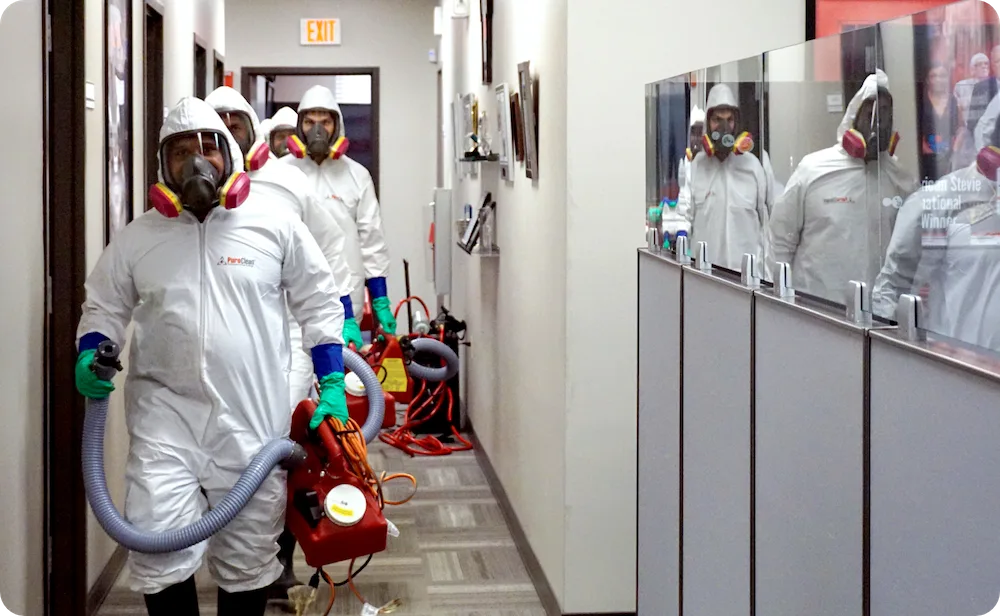
Before disturbing affected materials, the work area is isolated as required by the remediation plan. Negative air pressure and HEPA-filtered air filtration devices help prevent dust and mold particles from migrating into unaffected portions of the property.
Materials identified for removal are carefully removed and handled according to the remediation plan. Remaining surfaces are HEPA vacuumed and cleaned using methods appropriate for the affected materials and conditions.
Mold remediation is unlikely to succeed long term if the underlying moisture problem remains. Water intrusion, leaks, condensation, or excessive humidity should be corrected, and affected building materials must be properly dried.
For covered New York mold projects, the independent licensed Mold Assessor returns after remediation to perform the required post-remediation assessment and determine whether the established clearance criteria have been met.
Basements are one of the most common areas for mold problems because they combine cooler surfaces, limited airflow, higher humidity, groundwater concerns, plumbing systems, and stored materials.
Mold may develop on framing, drywall, insulation, subflooring, rim joists, contents, or other materials after prolonged dampness or water intrusion. In finished basements, growth may also remain concealed behind walls or beneath flooring.
Professional basement mold remediation focuses on both the contaminated materials and the conditions allowing moisture to remain in the space. Depending on the project, remediation may include containment, HEPA filtration, removal of affected porous materials, detailed cleaning of structural materials, and drying or humidity control.
Mold does not always grow where it can be easily seen. Plumbing leaks, roof intrusion, overflowing fixtures, condensation, or previous water damage can allow moisture to become trapped behind drywall, beneath flooring, around cabinets, or inside other concealed building assemblies.
A persistent musty odor, staining, soft drywall, warped baseboards, or a history of water damage may indicate a concealed moisture problem.
For covered mold projects, a licensed Mold Assessor determines the extent of the affected area and establishes the remediation scope before materials are opened or removed for mold remediation.
Homeowners often use the term “black mold” when they discover dark-colored growth, but color alone does not reliably identify the species of mold or determine how a remediation project should be performed.
Professional mold remediation focuses on the location and extent of growth, affected materials, moisture source, and prevention of cross-contamination rather than relying only on mold color.
Whether growth appears black, green, white, gray, or another color, the priority is to address the moisture problem and properly remove or clean contaminated materials according to the remediation plan.
Mold problems frequently begin with an unresolved water loss. A plumbing leak, appliance failure, roof leak, basement intrusion, or other water event can wet drywall, insulation, flooring, framing, and other materials.
When wet building materials remain damp, mold may begin developing before visible growth appears. This is one reason professional water extraction, moisture detection, structural drying, and drying verification are important after a water loss.
If mold has already developed, the project may transition from ordinary water mitigation into regulated mold remediation.
Attics can develop mold when warm, moisture-laden indoor air reaches cold roof surfaces and condenses. Roof leaks, inadequate ventilation, bathroom exhaust fans venting into the attic, air leakage, and insulation problems can also contribute to elevated moisture.
Because cleaning visible growth without addressing the moisture source may allow the problem to return, attic mold remediation should include consideration of the conditions responsible for the growth in addition to remediation of affected materials.
Mold in an office, apartment building, retail property, hospitality property, or other commercial facility can affect occupants and operations while creating additional coordination requirements for property managers and owners.
PuroClean provides commercial mold remediation throughout Saratoga, Albany, and Schenectady Counties. We work from the Mold Remediation Plan and coordinate containment, access, remediation activities, documentation, and scheduling around the needs of the property.
For occupied and multifamily buildings, careful containment and communication are especially important because work may take place adjacent to unaffected tenants, customers, employees, or residents.
Avoid disturbing the affected material. Scraping, sanding, removing drywall, or pulling up flooring can release additional particles into the air and spread contamination.
Do not point household fans at the affected area. Uncontrolled air movement can carry particles from the affected space into clean areas.
Stop active water intrusion when it is safe to do so. If mold followed a plumbing leak or another active water source, shut off or repair the source when possible.
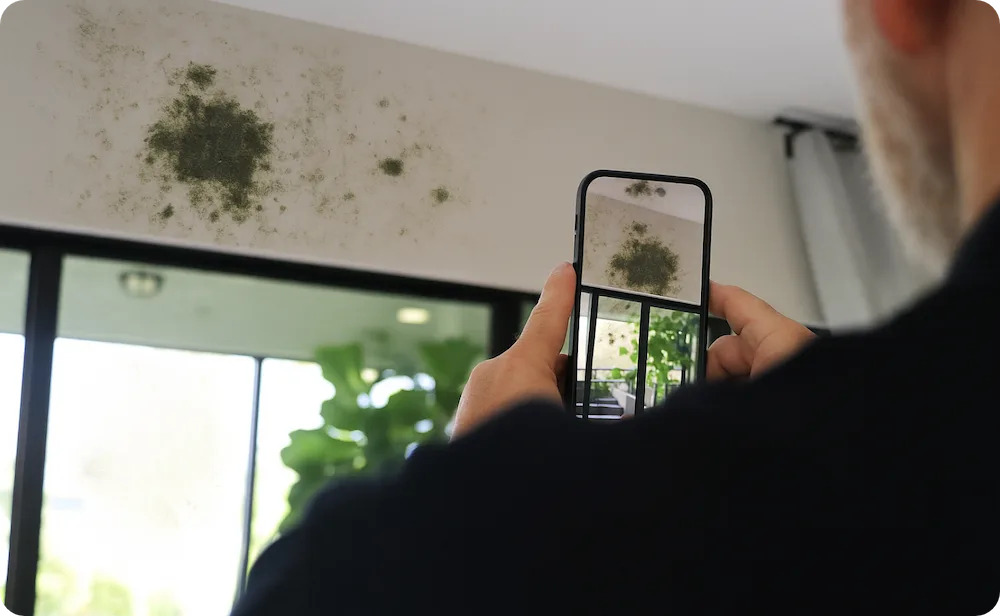
Document what you found. Photograph visible growth, water staining, and affected materials before items are moved or removed.
For larger mold problems, contact a NYS-licensed Mold Assessor. Covered mold projects greater than 10 square feet require an independent assessment and Mold Remediation Plan before a remediation contractor performs the work.
Recurring mold usually indicates that the conditions supporting mold growth were never fully corrected.
Common moisture sources include plumbing leaks, roof intrusion, basement seepage, high indoor humidity, condensation on cold surfaces, improperly vented bathrooms, HVAC condensation, and building-envelope problems.
Successful remediation therefore involves two separate objectives: removing or cleaning contaminated materials and correcting the moisture conditions that allowed the mold to develop.
Not every material affected by mold automatically needs to be removed.
Nonporous and some semi-porous materials may be successfully cleaned depending on the conditions and requirements of the remediation plan. Heavily affected porous materials such as drywall, insulation, carpet pad, or certain composite materials may require removal because contamination cannot be reliably cleaned from within the material.
The Mold Remediation Plan identifies what should be removed or cleaned, and the remediation contractor performs the work according to that scope.
PuroClean performs mold remediation in accordance with applicable IICRC guidelines, New York State requirements, and the project-specific Mold Remediation Plan prepared by the independent licensed Mold Assessor.
We use containment, engineering controls, and HEPA filtration as required to help prevent mold particles and remediation dust from spreading into unaffected areas.
Because mold frequently follows water intrusion, our restoration background allows us to address drying and moisture-related conditions that often accompany mold projects.
We provide mold remediation for homes, rental properties, multifamily buildings, businesses, and commercial properties throughout Saratoga Springs and Saratoga County.
We provide a written remediation work plan and document the work performed so property owners, assessors, property managers, and insurance professionals can understand the remediation process.
Insurance coverage for mold depends heavily on the cause of the moisture and the individual policy. Mold resulting from a sudden covered water loss may be handled differently from mold caused by long-term seepage, ongoing humidity, maintenance problems, or repeated leakage.
Before affected materials are removed, document visible damage and the event that caused the moisture when possible. Keep records related to plumbing repairs, roof repairs, water mitigation, and other work associated with the loss.
PuroClean can document the remediation work performed and communicate with insurance professionals when appropriate. Coverage decisions remain with the insurance carrier.
If you have visible mold, a persistent musty odor, or mold following water damage, the next step depends on the size and circumstances of the affected area.
For covered mold projects, an independent NYS-licensed Mold Assessor can establish the required remediation plan. Once that plan is complete, PuroClean of North Albany can provide the professional remediation work needed to carry out the scope.
Call (518) 830-0070 to speak with our team about mold remediation in Saratoga Springs and throughout Saratoga County.
We start by identifying where mold is growing and why. This includes visual assessment, moisture mapping of building materials, and targeted checks of likely reservoirs (behind baseboards, under flooring edges, around plumbing penetrations, and inside wall/ceiling cavities when indicated).
What Our Customers Say:
When mold is suspected, the fastest way it spreads is often through accidental cross-contamination—opening cavities, pulling baseboards, or running air movement without isolating the work zone. Once spores and dust migrate into adjacent rooms and soft contents, the scope can expand from one hidden pocket to a whole-home cleaning problem. In NY homes, a common hidden reservoir we see is basement rim-joist and band-board mold: seasonal temperature swings can drive condensation at the cold-warm interface when rim areas are under-insulated or air-sealed poorly. The growth may stay invisible behind stored items until odor increases or materials are disturbed. That’s why containment plus targeted investigation matters—find the reservoir, control the air, and fix the moisture pathway before cleaning begins.
If mold followed a sudden water event (like a supply-line leak), insurance may consider coverage differently than long-term seepage or maintenance-related moisture. The best next step is to document the water source, timing, and affected materials. Before disposal, photograph visible growth, staining, and any water-damaged building materials. Keep notes on when you first noticed odor or symptoms, and save any related invoices (plumber, roofer, prior water mitigation). During remediation, PuroClean of North Albany can provide work authorization, moisture readings, and a scope summary that helps your adjuster understand what was removed, what was cleaned, and why containment was necessary. If your adjuster requests testing or clearance documentation, ask early so the right party performs it and the results match the remediation plan.
If you suspect mold is spreading beyond what you can see, start with a focused inspection and a containment plan—not guesswork. Call PuroClean of North Albany at (518) 830-0070 to schedule an on-site assessment. We’ll help determine where the mold is coming from, what needs to be isolated, and what it will take to remediate the space safely and verify it’s dry and clean.
Find answers to common questions about our services
Common signs include a persistent musty odor, recurring allergy-like irritation in one area of the home, staining that reappears after cleaning, or bubbling/soft drywall near plumbing or exterior walls. A professional inspection uses moisture mapping and targeted cavity checks to confirm whether conditions inside the wall are supporting growth. If moisture is present, mold can exist even when the surface looks “fine.”
Hidden mold typically happens when moisture is trapped behind finishes—inside wall cavities, under flooring, behind cabinets, or above ceilings—so growth occurs on the backside of drywall, insulation, or wood. Slow leaks, intermittent roof intrusion, and seasonal condensation can wet materials without leaving obvious surface evidence. Odor is often the first clue because airflow carries microbial byproducts out of concealed spaces.
If you already have visible growth and a clear moisture problem, remediation can often proceed based on inspection and moisture findings without air testing. Testing is most helpful when you need to confirm whether mold is present in a hidden area, differentiate between multiple potential sources, or when a third party (real estate, an insurer, or a concerned occupant) requires documentation. When you do test, it should be tied to a plan—sampling without a clear decision it will inform often creates confusion.
Yes—containment is designed to prevent cross-contamination. The affected area is isolated with barriers, and negative air pressure with HEPA filtration helps keep airborne particles from migrating into clean rooms. The specific containment size depends on where the mold is and how you move in and out of the space safely.
Often, yes, especially when containment is properly set up and the affected area can be isolated from living spaces. If growth is in a main living area, multiple rooms, or if occupants have heightened sensitivities, it may be safer to avoid those areas (or temporarily relocate) until the work is complete. We’ll outline practical access limits and what to expect before work begins.
Most projects take anywhere from 1–5 days, depending on how much material is impacted, how much is hidden, and how quickly the structure can be dried. Timelines change when mold is found behind multiple finishes or when drying requires extra dehumidification time. We’ll give a schedule after inspection and update it if new reservoirs are discovered.
Coverage depends on what caused the moisture: sudden, accidental water events are more likely to be covered than long-term seepage or humidity issues. Document the source, take photos before removal, and keep related repair invoices so the claim is tied to a specific event. PuroClean of North Albany can provide scope and moisture documentation that supports the claim review, but your adjuster determines coverage.
Our mold remediation team is trained, certified, and experienced in addressing a wide range of residential mold situations. We follow industry standards and proven remediation practices to support safe, effective results.
Mold concerns can be stressful and confusing. Our team works with insurance providers when applicable to help document mold-related damage and guide homeowners through next steps with clarity and transparency.
Certain mold situations require immediate attention, especially when linked to active water intrusion. Our team is available 24/7 to respond when mold or moisture concerns need prompt action.
Water damage can result from unexpected leaks, flooding from storms, plumbing failures, or appliance malfunctions. Our certified teams focus on rapid water removal, drying, and stabilization to help prevent further damage and mold growth.
 Explore Our Water Damage Mitigation Services
Even after a fire is extinguished, smoke, soot, and odor can continue to affect your home. Fire damage restoration services address visible damage while also helping reduce lingering effects that impact indoor air quality and surfaces.
Explore Our Fire and Smoke Damage Restoration Services
Mold often develops as a result of unresolved moisture or hidden water damage. Professional mold remediation helps identify affected areas, contain growth, and restore healthy indoor conditions.
Explore Our Mold Removal & Remediation Services
Biohazard situations, including crime scene cleanup and virus decontamination, require specialized cleaning and handling to protect health and safety. Biohazard cleanup services address contamination using proper protocols and professional care.
Explore Our Biohazard Cleanup Services
In some cases, property damage requires repairs beyond cleanup and mitigation. Reconstruction services help restore damaged areas of the home after water, fire, or other incidents, supporting a smoother transition from damage to recovery.
Explore Our Reconstruction Services Services
PuroClean of North Albany provides commercial water damage restoration throughout Saratoga County and New York’s Capital Region. Our team is available 24/7 to respond to water-related emergencies and help businesses begin recovering as quickly as possible.
Explore Our Commercial Water Damage Restoration Services
Commercial Fire Damage Restoration is North Albany, NY.
Our restoration professionals work with business owners, property managers, facility directors, and insurance representatives to assess the damage, stabilize affected areas, and establish an organized recovery plan.
Explore Our Commercial Fire Damage Restoration Services
Commercial Mold Remediation in North Albany, NY
Our trained professionals evaluate affected areas, establish containment when appropriate, remove materials that cannot be restored, and clean remaining surfaces using professional remediation procedures.
Explore Our Commercial Mold Remediation Services
Commercial Biohazard Cleanup in North Albany, NY
PuroClean of North Albany understands that commercial biohazard cleanup requires technical knowledge, careful documentation, and sensitive communication. Our team works efficiently while respecting the privacy and operational requirements of the property.
Explore Our Commercial Biohazard Cleanup Services
Water damage can result from unexpected leaks, flooding from storms, plumbing failures, or appliance malfunctions. Our certified teams focus on rapid water removal, drying, and stabilization to help prevent further damage and mold growth.
Explore Our Water Damage Mitigation Services

PuroClean of North Albany
(518) 830-0070
30 Wood Road, #3, Round Lake, NY 12151


© 2026 PuroClean. All Rights Reserved.