


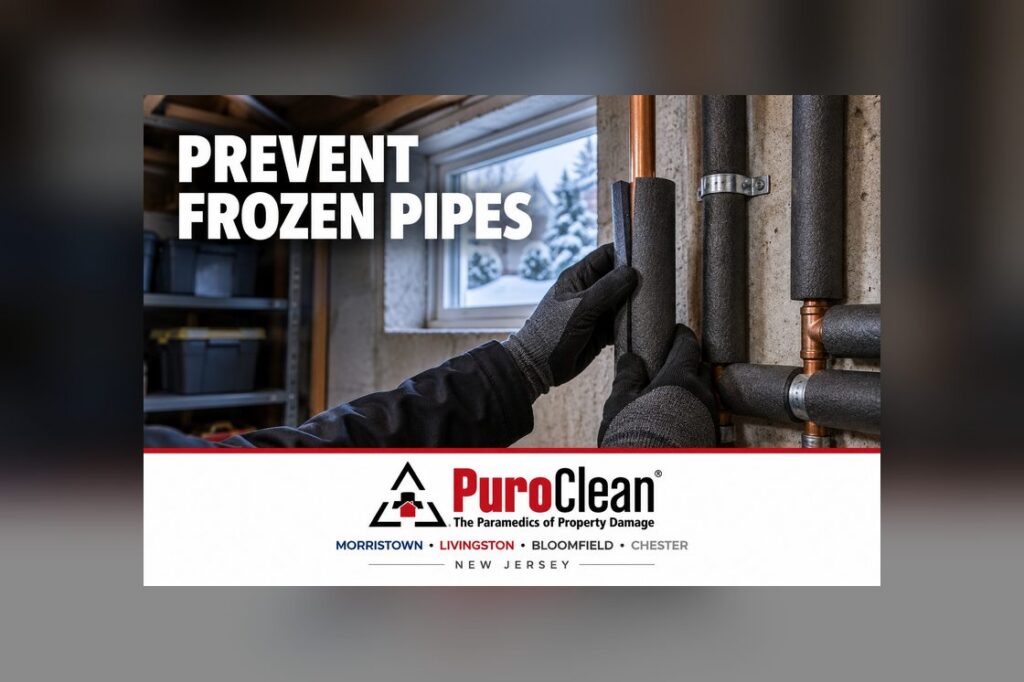
Frozen pipe prevention is one of the smartest investments a Morristown homeowner can make before winter sets in. When temperatures drop into the teens and single digits across Morris County, the water inside an unprotected pipe can freeze, expand, and split the pipe open. The real damage often shows up hours later, when the ice thaws and hundreds of gallons of water pour into walls, ceilings, and finished basements. The good news: a few hours of preparation in the fall can spare you a very expensive winter.
Table of Contents
Why Pipes Freeze in Morristown Homes
Our area’s housing stock includes plenty of older colonials, capes, and split-levels with plumbing routed through crawl spaces, exterior walls, and unheated garages. Those are exactly the places where pipes freeze first. Pipes along outside walls, under kitchen and bathroom sinks on exterior walls, and in uninsulated basements or attics are the most vulnerable. A pipe doesn’t need a record-breaking cold snap to freeze, either. Exposed or poorly insulated pipes can freeze during sustained cold, and drafts, poor insulation, and reduced indoor heat all raise the risk – the American Red Cross frozen pipe guidance recommends protecting vulnerable pipes before freezing weather arrives, especially if the home’s heat will be turned down or a room left unheated.
Frozen Pipe Prevention Steps That Actually Work
Most frozen pipe prevention comes down to two goals: keep warm air around the pipes, and keep cold air away from them. Work through these steps before the first hard freeze (the winter weather guidance at Ready.gov covers the same ground for homeowners nationwide):
- Insulate exposed pipes. Foam pipe sleeves from any hardware store fit over pipes in basements, crawl spaces, and garages. Pay special attention to the first few feet of pipe closest to where the line enters the house.
- Seal air leaks. Cold air pouring through gaps around sill plates, dryer vents, and cable or pipe penetrations will freeze a pipe faster than still air at the same temperature. Caulk and expanding foam handle most of these gaps in an afternoon.
- Disconnect and drain outdoor hoses. Shut off the interior valve feeding each exterior spigot if your home has one, then open the spigot to drain the line. A hose left connected traps water right at the wall, a classic freeze point.
- Keep the heat consistent. Set the thermostat no lower than about 55°F, even when you’re away. The small heating cost is nothing compared to a burst pipe.
- Open cabinet doors during cold snaps. This lets warm room air reach supply lines under sinks on exterior walls.
- Let faucets drip on the coldest nights. A slow drip keeps water moving through vulnerable runs and relieves pressure if ice does start to form.
- Know your main shutoff. Make sure every adult in the house can find and turn the main water valve. If a pipe ever does burst, closing that valve in the first minute is the single biggest factor in limiting damage.
How to Tell a Pipe Is Frozen (Before It Bursts)
A frozen pipe usually announces itself: a faucet that only trickles or delivers nothing at all on a cold morning, frost visible on an exposed pipe, or an odd smell from a drain because a frozen trap is blocking venting. If you suspect a frozen pipe, leave the faucet open and warm the pipe gradually with a hair dryer, heating pad, or towels soaked in warm water, working from the faucet back toward the frozen section. Never use a torch or open flame. If you can’t locate the frozen section, can’t reach it, or the pipe has already cracked, shut off the main and call for help.
When Prevention Isn’t Enough
Even the best frozen pipe prevention routine gets tested: a power outage during a storm, a furnace failure while you’re at work, or a cold snap that outlasts your preparation. If a frozen pipe bursts in your Morristown, Livingston, Bloomfield, or Chester home, fast professional water damage restoration is what stands between a wet floor and torn-out walls, ruined insulation, and mold growth after winter water damage in the weeks that follow.
Puroclean of Morristown, Livingston, Bloomfield & Chester responds to water damage from frozen and burst pipes throughout the area, any time of day or night. We extract standing water, dry the structure with professional equipment, monitor moisture inside walls and floors, and help you document everything for your insurance claim. Good frozen pipe prevention lowers your risk, and we’re here when winter gets past it anyway.
T: (973) 993-6444
[email protected]
www.PuroClean.com/pm-nj