 PuroClean of Plantation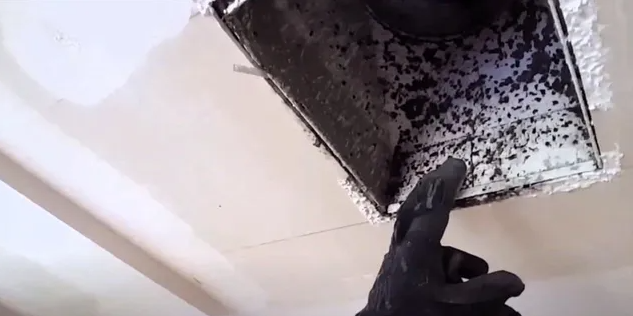
Table of Contents
HVAC mold contamination cleanup is the professional process of detecting, safely removing, and preventing mold growth inside heating and cooling systems. In Plantation, FL, and the wider Broward County area, this process typically involves shutting down the contaminated system, professional inspection, containment, mechanical removal, sanitization, and post-remediation verification. Because South Florida’s humidity makes HVAC mold a high-probability problem rather than a rare one, knowing how to respond ; and when to call for help ; can protect both your family’s health and your property value.
Why HVAC Mold Is a Serious Problem in South Florida
Most people imagine mold as something you find behind a bathroom tile or under a leaking sink. Those are common locations. But the HVAC system is arguably the most dangerous place for mold to grow in your entire home, because it does not stay there.
Every time your air conditioner kicks on, it moves air through every room you live in. If mold is growing inside your ductwork, coils, or drain pan, those spores travel with that air.
Unlike mold that grows in a bathroom or basement and stays relatively contained, mold in an air conditioning system becomes an active distributor of spores throughout your home. Every time the AC turns on, it potentially circulates thousands of microscopic mold spores into the air you breathe, creating widespread contamination that can affect every room.
South Florida’s subtropical climate delivers average humidity levels above 70 percent for most of the year, annual rainfall approaching 60 inches, and a hurricane season that runs six months from June through November. Every one of those conditions feeds mold growth.
For homeowners in Plantation, Fort Lauderdale, Hollywood, Davie, and surrounding communities, HVAC mold contamination cleanup is not a “what if” scenario. It is a “when” scenario that warrants proactive attention.
How Mold Gets Inside Your HVAC System
Understanding how mold finds its way into your HVAC system helps you prevent it from happening in the first place.
Mold needs three things to survive: moisture, an organic food source, and time. South Florida provides the first two in abundance.
Condensation forms naturally when warm, humid air contacts cooled ductwork surfaces. This moisture does not simply evaporate; it lingers in dark, enclosed spaces where air circulation is minimal. The problem intensifies during Florida’s rainy season when outdoor humidity levels soar above 80 percent. Even well-maintained HVAC systems struggle to manage this excess moisture, leading to persistent dampness within ductwork.
Several factors allow mold to establish itself inside HVAC systems:
Leaky or poorly sealed ductwork: Gaps in ductwork allow warm, humid attic or crawlspace air to enter the system, creating repeated moisture events inside the ducts themselves.
Clogged condensate drain lines: The drain line removes moisture your AC pulls from the air. When it clogs, water backs up into the system and sits there; creating ideal mold growing conditions within 24 to 48 hours.
Oversized AC units: A unit that is too large for the space cools the air quickly without removing enough moisture. The result is a cold, damp home interior that favors mold growth.
Water damage events: Flooding, roof leaks, or plumbing failures that are not fully dried within 48 hours dramatically increase the chance of mold establishing itself in the ductwork. This is why professional water damage restoration is so critical after any water intrusion event.
Warning Signs Your HVAC System Has Mold Contamination
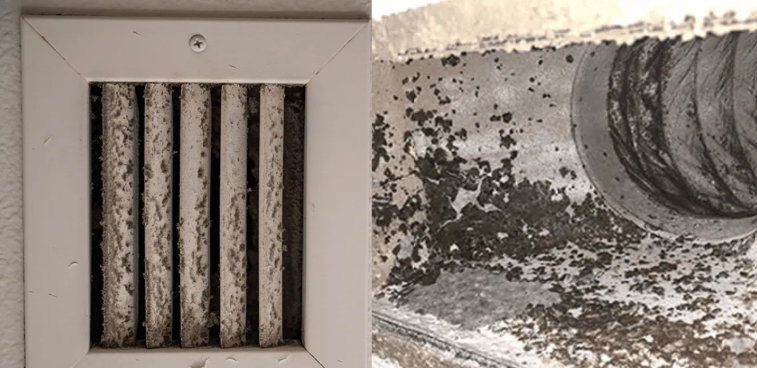
Mold inside an HVAC system is often invisible to the naked eye until it has already spread significantly. But your body and your home usually give you signals before that point. Pay attention to these:
A musty or earthy smell when the AC turns on. This is one of the most reliable early warning signs. If the smell is worst right when the system kicks on, the odor is almost certainly coming from inside the ductwork or air handler.
Allergy or respiratory symptoms that improve when you leave the house. If these symptoms worsen when the HVAC system is running, mold contamination may be the culprit. Many homeowners do not realize their HVAC system could be contributing to their health issues.
Dark specks or fuzzy growth around vent covers. Visible growth on or around vents is a clear indicator that mold is actively growing somewhere inside the system.
Worsening indoor air quality despite regular cleaning. If surfaces seem to get dusty faster than normal, or if indoor air feels thick and heavy, the duct system deserves inspection.
Water stains around vents or on ceiling panels near duct runs. These suggest moisture is present somewhere in the duct pathway.
If you recognize any combination of these signs in your Plantation home or commercial property, the right response is not to wait and see. A professional inspection is the next step.
Health Risks of Ignoring HVAC Mold
This section is worth reading carefully; especially if you have children, elderly family members, or anyone with respiratory conditions living in your home.
Mold exposure can lead to respiratory issues including coughing, a stuffy nose, sore throat, wheezing, and itchy eyes, as well as skin rashes. For vulnerable populations including children, older adults, and those with asthma or compromised immune systems, the consequences can be severe. People with asthma or mold allergies may experience fever or shortness of breath, while individuals with weakened immune systems may develop lung infections.
There are numerous health issues associated with mold exposure. Most of these issues are directly related to the respiratory system, including asthma attacks, coughing, runny nose, sneezing, and other allergic reactions. Other issues involve eye irritation, skin rashes, a general sense of fatigue or depression, shortness of breath, and a sore, scratchy throat.
What makes HVAC mold uniquely dangerous is the delivery mechanism. An HVAC system delivers contaminated air directly, repeatedly, and throughout the entire structure. There is no avoiding it simply by avoiding one room.
For commercial property managers, insurance agents, and business owners serving communities like Riverland, Hacienda Village, or Washington Park, this is also a liability issue. Tenants and employees have a right to a healthy indoor environment, and HVAC mold contamination is a documented health hazard.

Step 1: Shut Down the System Immediately
If you suspect or confirm mold growth anywhere in your HVAC system, the very first thing you should do is turn the system off.
Do not run the HVAC system if you know or suspect that it is contaminated with mold ; it could spread mold throughout the entire building. This is the EPA’s direct guidance, and it is the most important immediate step a homeowner can take.
Every hour the system continues to run while contaminated is another hour that mold spores are being distributed into every room. Turning the system off stops the active spread while you arrange for professional assessment.
If you are in a property that has recently experienced flooding or significant water intrusion, review our guide on water damage FAQs for Plantation, FL to understand what steps should come first in the restoration process.
Step 2: Get a Professional Inspection and Air Quality Assessment
Once the system is off, the next step is to have a professional evaluate the extent of the contamination. This is not the moment for guesswork.
Mold spores are not visible to the naked eye; they average in size from 10 to 30 microns, smaller than the width of a typical human hair. The best way to determine whether there is a mold contamination problem is to have your home and HVAC system tested through air sampling, which involves capturing a known volume of air and measuring the number of contaminants present.
A trained inspector will evaluate:
- The ductwork, including supply and return air ducts
- The evaporator coils and drain pan
- The air handler unit
- Registers, grilles, and diffusers
- Any porous insulation lining inside the ducts
Professional documentation of the extent of contamination is also valuable for insurance purposes; particularly given that standard insurance policies often cap mold coverage, and independent documentation is required to link mold to a covered peril and support your claim.
Step 3: Contain the Contamination
Professional HVAC mold contamination cleanup always includes containment. This step is essential to prevent mold spores from spreading to unaffected areas of the home during the remediation process.
Containment strategies typically include:
Negative pressure systems: Similar to how hospitals contain infectious areas, remediation professionals use negative air pressure machines to ensure that air moves toward the contaminated zone rather than away from it during cleaning.
Physical barriers: Polyethylene sheeting is used to seal off duct openings and work areas so that disturbed mold spores do not escape into the living space.
PPE and controlled access: Technicians wear appropriate protective equipment, and foot traffic through the work area is strictly limited.
Skipping this step during a DIY attempt is one of the primary reasons homeowners end up with worse contamination after attempting to clean their own ducts. Without containment, cleaning can actually spread spores that were previously isolated.
Step 4: Mechanical Removal and Sanitization
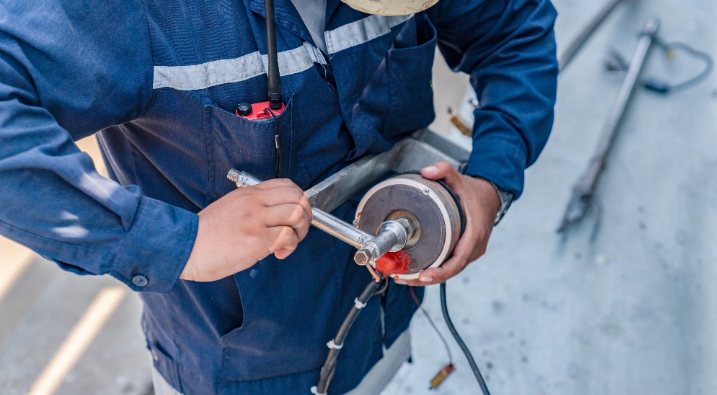
This is the core of the HVAC mold contamination cleanup process. Mechanical removal uses specialized equipment to physically extract mold, debris, and biological matter from deep inside the duct system.
The process typically includes:
HEPA-filtered vacuuming: High-efficiency vacuums capture mold spores and fine particles without releasing them back into the air.
Rotary brush systems: These reach deep into duct runs and scrub contamination off duct surfaces that handheld tools cannot access.
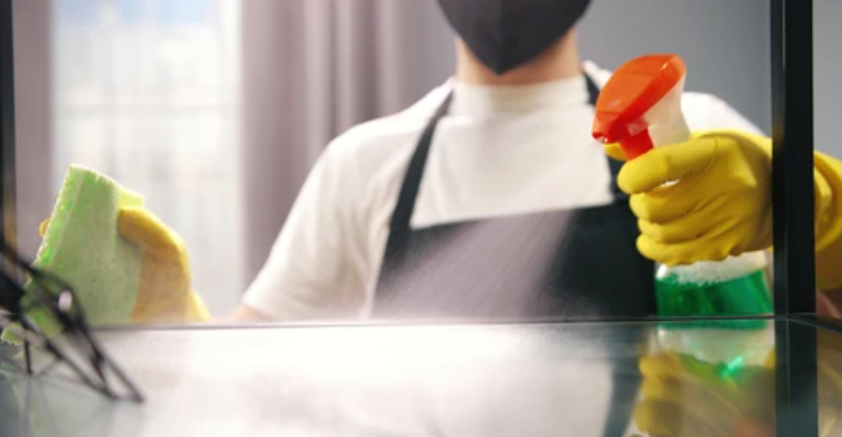
Antimicrobial sanitization: After physical removal of contaminants, professional sanitization treatments reduce remaining microbial contamination. These treatments reach areas that mechanical cleaning cannot access, ensuring thorough decontamination of the entire system. Sanitization also helps prevent immediate recontamination by creating an environment that inhibits new mold growth; particularly important in South Florida’s humid climate, where conditions favor rapid mold establishment.
It is worth noting that if mold has penetrated porous duct materials such as fiberglass duct liner, simple cleaning may not be sufficient. In those cases, full duct replacement may be necessary to ensure the contamination is fully eliminated.
For properties that have experienced smoke or fire damage in addition to mold, you may also want to review resources on smoke damage cleanup services in Plantation, FL, as combined remediation is sometimes needed.

Step 5: Correct the Root Cause to Prevent Recurrence
This is the step that separates a lasting solution from a temporary fix.
If you clean the mold without correcting the conditions that allowed it to grow, the mold will return. Guaranteed.
Regular system maintenance becomes critical: address any water leaks around the unit within 24 to 48 hours, as standing water creates ideal conditions for mold growth. Repair damaged ductwork that allows moisture infiltration and seal gaps around ductwork in crawl spaces, attics, or basements to prevent humidity-related issues.
Additional root-cause corrections to address after remediation:
Humidity control: Indoor humidity levels should ideally remain between 30 and 50 percent for optimal comfort and health. Anything higher can lead to a damp, sticky environment that encourages mold and mildew growth. A whole-home dehumidifier integrated with your HVAC system is often the most reliable solution for South Florida homes.
Condensate drain maintenance: Flush the condensate drain line quarterly to prevent clogging and water backup inside the system.
Regular filter replacement: In South Florida’s high-use environment, HVAC filters should be checked every 30 days and replaced at least every 60 days. Higher-rated MERV 11 to 13 filters provide significantly better protection against biological particles.
Post-hurricane inspections: After any significant storm event, have your HVAC system and ductwork professionally inspected. After major storms, moisture intrusion, flood debris, and compromised building envelopes introduce significant biological contaminants into homes throughout South Florida.
Can You DIY HVAC Mold Cleanup?
It is a reasonable question. And the honest answer is: it depends on the extent of contamination, and there are real risks to trying.
Removing mold from your HVAC system can be a DIY project for very minor issues, but more serious cases should be left to professionals. If the mold covers more than 10 square feet, the EPA recommends hiring a professional. Mold issues of this size can be difficult and dangerous to manage on your own.
For surface mold on a vent cover or register, careful cleaning with appropriate protective gear and an EPA-registered antifungal cleaner may be sufficient. But for mold inside the ductwork, air handler, or on evaporator coils, DIY approaches consistently fall short.
The core problem is containment. Without professional negative-pressure equipment, cleaning mold inside a duct system can disperse spores far more widely than they would have spread on their own. You can turn a manageable situation into a significant health hazard.
For anything beyond surface-level contamination, professional HVAC mold contamination cleanup is the responsible choice.
What PuroClean’s Certified Priority Response (CPR) Program Means for You
When dealing with HVAC mold contamination cleanup, timing matters enormously. According to the EPA, mold can begin growing on wet surfaces within 24 to 48 hours of water exposure. Every hour of delay is an hour the contamination can deepen and spread.
PuroClean of Plantation operates a Certified Priority Response (CPR) Program specifically designed to address this urgency. The CPR program provides 24/7 availability, rapid deployment, strict certification standards, and pre-agreed scope protocols that reduce both claim costs and resolution time for insurance agents and property managers.
For residential homeowners, this means you never have to wonder whether help is available at 2 a.m. after discovering mold. For commercial clients, insurance professionals, and property managers across communities like Lauderhill, Oakland Park, and Dania Beach, the CPR program provides documentation, transparency, and a predictable remediation process from the first call to final clearance.
Reach the team any time by visiting the PuroClean of Plantation contact page, or stop by in person at 200 Torchwood Ave, Plantation, FL 33324. Get directions here.
Conclusion
HVAC mold contamination cleanup is not a project to put off. In South Florida’s climate, mold inside an HVAC system spreads faster, recurs more aggressively, and causes more widespread health effects than almost anywhere else in the country.
The five steps outlined in this guide; shutting down the system, getting a professional inspection, containing the contamination, completing mechanical removal and sanitization, and correcting the root cause; represent the medically and professionally endorsed process for handling this situation safely.
Understanding mold remediation is important. But knowledge only protects you when paired with action.
Your air ducts could be making your family sick right now, and the contamination may have no visible sign at all. The question is not whether you should get your HVAC system inspected ; the question is how much longer you are willing to wait before you do.
Stay connected with PuroClean of Plantation on Instagram, Facebook, LinkedIn, and X/Twitter.

 PuroClean of Plantation