


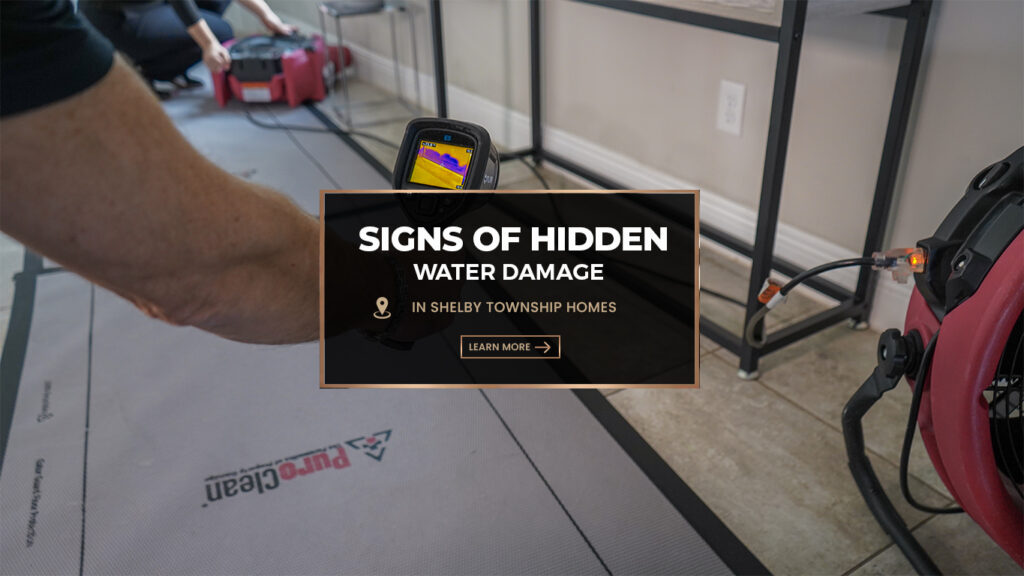
Water damage is not always obvious. In many cases, moisture can hide behind walls, under flooring, or inside ceilings for weeks or even months before homeowners realize there is a problem.
Hidden water damage is particularly common in Shelby Township and throughout Macomb County because homes often experience basement moisture, plumbing leaks, and seasonal weather conditions that allow water to enter unnoticed.
If hidden moisture is not addressed quickly, it can lead to mold growth, structural damage, and expensive repairs. Learning how to recognize the warning signs can help homeowners identify problems early and take action before the damage spreads.
Below are some of the most common signs of hidden water damage in Shelby Township homes.
Why Hidden Water Damage Is a Serious Problem
Many homeowners assume that if they cannot see water, there is no issue. However, water can travel through building materials and settle in areas that are difficult to detect.
Common places where hidden water damage occurs include:
- Behind drywall
- Under carpet and padding
- Inside insulation
- Beneath hardwood flooring
- Around plumbing fixtures
- Inside ceilings and attic spaces
When moisture remains trapped in these areas, it can weaken structural materials and create the perfect environment for mold growth.
Because of these risks, it is important to investigate any unusual signs that could indicate hidden water damage.
Musty or Damp Odors in the Home
One of the earliest warning signs of hidden water damage is a persistent musty odor.
When moisture becomes trapped in building materials, it often leads to mold or mildew growth. Even before mold becomes visible, it can produce a strong, earthy smell that lingers in certain areas of the home.
Homeowners may notice musty odors in places such as:
- Basements
- Bathrooms
- Laundry rooms
- Closets near plumbing lines
- Areas near exterior walls
If a musty smell continues despite cleaning or airing out the room, hidden moisture may be present behind walls or beneath flooring.
Stains or Discoloration on Walls and Ceilings
Water stains are another common indicator of hidden leaks.
When water slowly seeps through drywall or ceiling materials, it often creates visible discoloration. These stains may appear as yellow, brown, or copper-colored marks.
Ceiling stains often indicate problems such as:
- Roof leaks
- Plumbing leaks from upstairs bathrooms
- Ice dam damage during Michigan winters
Wall stains may suggest hidden plumbing leaks inside the structure.
If stains continue to grow or reappear after being painted over, there is likely an ongoing water issue that needs to be addressed.
Warped or Buckling Flooring
Water can easily become trapped beneath flooring materials, especially in basements or lower levels of the home.
When moisture accumulates under flooring, it can cause materials to expand, warp, or buckle.
Common signs of flooring damage include:
- Hardwood boards that lift or separate
- Laminate flooring that bubbles or swells
- Carpet that feels damp or smells musty
- Soft spots under vinyl flooring
These changes often indicate that water has penetrated beneath the surface and may be affecting the subfloor as well.
Peeling Paint or Bubbling Drywall
Excess moisture inside walls can cause paint and drywall finishes to deteriorate.
Homeowners may notice paint beginning to peel, bubble, or crack. In some cases, drywall may begin to bulge or feel soft to the touch.
These issues often occur when water slowly leaks from plumbing pipes or when condensation builds up inside poorly ventilated areas.
Signs to watch for include:
- Paint that bubbles or flakes off walls
- Drywall that appears swollen or warped
- Cracks forming around baseboards
- Soft or crumbling drywall surfaces
These conditions can indicate that moisture has been present for an extended period.
Increased Humidity or Condensation
Excess humidity inside a home can sometimes indicate hidden water damage.
If homeowners notice increased condensation on windows, damp air in certain rooms, or a persistent feeling of humidity indoors, moisture may be accumulating somewhere in the structure.
Areas that often experience humidity problems include:
- Basements
- Crawl spaces
- Laundry rooms
- Bathrooms without proper ventilation
Dehumidifiers can help control humidity levels, but persistent moisture may require further inspection to locate hidden leaks.
Mold Growth in Unexpected Areas
Visible mold is often a sign that water damage has already occurred.
Mold can appear as black, green, gray, or white patches on surfaces such as drywall, wood, or insulation.
Some of the most common areas where mold develops include:
- Basement walls
- Around window frames
- Under sinks
- Inside closets
- Behind furniture placed against exterior walls
Mold growth can spread quickly if moisture remains present, so it is important to address the source of water immediately.
Why Early Water Damage Detection Matters in Shelby Township Homes
Catching hidden water damage early can prevent much larger problems later.
Homes throughout Shelby Township, Sterling Heights, Macomb Township, Utica, and Washington Township often experience seasonal moisture issues due to heavy rainstorms, freezing winters, and aging plumbing systems.
When hidden water damage is ignored, it can lead to:
- Structural deterioration
- Mold infestations
- Damaged flooring and drywall
- Poor indoor air quality
- Expensive repair costs
Professional water damage restoration companies use specialized equipment such as moisture meters and thermal imaging cameras to detect hidden moisture and ensure homes are fully dried after a leak or flood.
If homeowners suspect hidden water damage, addressing the issue quickly can help protect the home, prevent mold growth, and avoid costly repairs in the future.