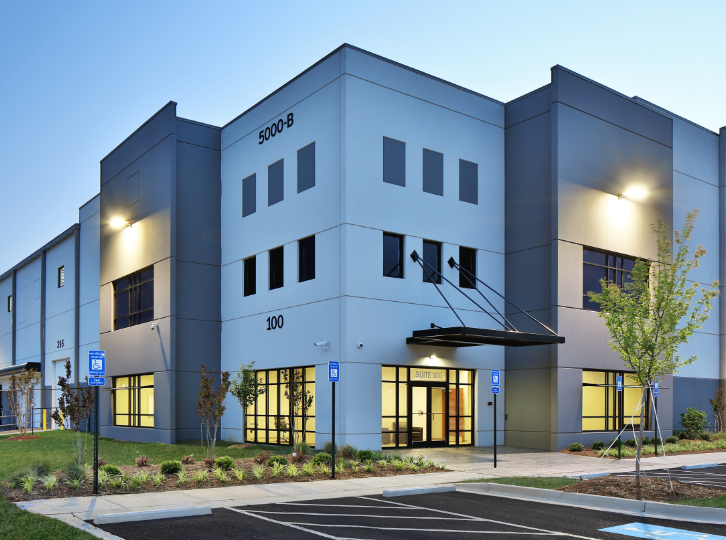
PuroClean of Shelby Township — 56700 Mound Rd., Shelby Twp., MI 48316
Sterling Heights is not a small suburb — it is Michigan’s fourth-largest city, home to roughly 134,000 residents spread across 36 square miles of fully built-out residential neighborhoods, commercial corridors, and light industrial zones that together make it one of the most densely populated communities in the entire state outside of Detroit. Incorporated as a city in 1968 from the former Sterling Township, it grew at a remarkable pace through the 1970s and 1980s as automotive industry workers and their families sought affordable housing close to the Chrysler, Ford, and GM facilities that define Macomb County’s economic backbone. Lakeside Mall on Hall Road served for decades as the city’s commercial anchor, drawing regional retail traffic along a corridor that also hosts the Michigan Army National Guard’s Selfridge Air National Guard Base to the east. The Clinton River runs through the city’s southern neighborhoods before continuing west toward Mount Clemens, and Dodge Park — the city’s largest — sits along its banks near Ryan Road, serving as a community gathering point for a city that otherwise lacks a traditional downtown.
The sheer scale and density of Sterling Heights — block after block of mid-century ranches, colonial two-stories, and split-levels built between 1955 and 1990 — makes it one of PuroClean of Shelby Township’s highest-volume service communities. The housing stock along streets like Plumbrook Road, Clinton River Road, and the residential grids east of Van Dyke Avenue represents exactly the aging infrastructure profile that drives consistent restoration demand: original cast iron and galvanized plumbing reaching the end of its service life, slab-on-grade and shallow-basement construction with limited waterproofing, and HVAC systems with aging ductwork that harbors mold when moisture events go unaddressed. Add the Clinton River’s flooding influence on southern neighborhoods and the city’s dense commercial corridors along Mound Road, Van Dyke, and Hall Road — where restaurant operators, medical offices, and retail centers face their own water and fire damage scenarios — and Sterling Heights represents a wide, consistent cross-section of every damage type we handle.
From ranch homes on Dobry Drive to commercial properties along the Hall Road corridor, PuroClean of Shelby Township responds to Sterling Heights damage calls across every category our team handles:
Our home base at 56700 Mound Road in Shelby Township shares Mound Road itself with Sterling Heights — the same arterial corridor that runs directly through the heart of both communities. That geographic reality means we are not routing around Sterling Heights to reach it; we are driving into it along the road our shop already sits on. For the majority of Sterling Heights addresses, our mitigation crews are on-site in 10 to 20 minutes under normal traffic conditions, making this one of our fastest-response service communities.
For calls in the western neighborhoods of Sterling Heights — the residential grids west of Van Dyke along Clinton River Road, Dobry Drive, and the streets surrounding Dodge Park — we route south on Mound Road and cut west on 15 Mile Road, 16 Mile Road, or Metropolitan Parkway depending on the specific address. Calls in the central residential core along Utica Road, Plumbrook Road, and the neighborhoods between Mound and Ryan Road are reached directly by heading south on Mound and navigating from there. For the Hall Road commercial corridor and the residential neighborhoods in northern Sterling Heights near 19 Mile Road, we head south from our Shelby Township location and approach from the north end of Mound or cut west on 19 Mile Road to reach Van Dyke-area addresses.
The eastern portions of Sterling Heights near Hayes Road and the Utica border are reached efficiently by heading south and east from Mound Road via 18 Mile Road or Utica Road. Sterling Heights’ street grid is well-organized and our crews know it well — this is a city we serve regularly, and our dispatch team routes available units based on real-time traffic data rather than fixed routes, shaving minutes off response time during the peak-hour congestion that Mound Road and Van Dyke can generate during morning and afternoon commutes.
Sterling Heights generates more restoration calls per square mile than almost any other community in our service area — and the reasons are specific, structural, and well understood by anyone who knows the city’s building history and geography.
The Clinton River is Sterling Heights’ most consequential hydrological feature. The river enters the city from the north near Hayes Road and flows westward through the southern neighborhoods before exiting toward Clinton Township and Mount Clemens. Properties within the Clinton River floodplain — mapped by FEMA and subject to mandatory National Flood Insurance Program (NFIP) coverage requirements for mortgaged properties — face seasonal flooding risk that standard HO-B homeowner’s insurance policies do not cover. Beyond the mapped floodplain, the river’s influence extends further through elevated groundwater tables in adjacent low-lying neighborhoods. Homes along Ryan Road, Plumbrook Road, and the residential streets south of 15 Mile Road sit in terrain that drains slowly toward the river corridor, and intense summer thunderstorms regularly overwhelm storm sewer infrastructure in these areas, driving basement flooding events that repeat year after year in the same blocks.
Sterling Heights’ housing stock is the single largest driver of restoration volume in the city. The post-war residential construction boom that built Sterling Heights produced tens of thousands of homes with galvanized steel water supply plumbing — pipe that corrodes from the inside out and typically reaches the end of its functional life between 40 and 70 years of service. Homes built in the 1960s and 1970s along streets like Dobry Drive, Clinton River Road, and the residential grids east of Van Dyke Avenue are now firmly in that failure window, producing a steady volume of pinhole leak events, supply line separations, and drain backups that create Category 1 and Category 2 water damage conditions inside finished wall cavities and below flooring assemblies. Many of these homes also feature slab-on-grade construction with no basement, meaning that water intrusion events affect living space directly rather than a basement buffer zone — raising the urgency of every moisture event.
Sterling Heights’ large inventory of rental housing — the city has a substantial renter population concentrated in apartment complexes along Hall Road, Utica Road, and the Van Dyke corridor — creates a distinct property damage dynamic for landlords and property managers. Multi-unit buildings concentrate plumbing risk: a single supply line failure in an upper-floor unit can produce Category 2 water migration through floor assemblies into multiple units below within hours, creating claims that involve multiple tenants, a property manager, a commercial insurance carrier, and potentially a municipal building inspector if habitability is compromised. Our commercial project management team has direct experience with this multi-stakeholder restoration scenario and can coordinate the documentation, drying, and reconstruction process across a multi-unit building efficiently.
Owned & Operated by Steve Marceau
56700 Mound Rd., Shelby Twp., MI, 48316
(586) 697-8100
Water damage can result from unexpected leaks, flooding from storms, plumbing failures, or appliance malfunctions. Our certified teams focus on rapid water removal, drying, and stabilization to help prevent further damage and mold growth.
 Explore Our Water Damage Mitigation Services
Even after a fire is extinguished, smoke, soot, and odor can continue to affect your home. Fire damage restoration services address visible damage while also helping reduce lingering effects that impact indoor air quality and surfaces.
Explore Our Fire and Smoke Damage Restoration Services
Mold often develops as a result of unresolved moisture or hidden water damage. Professional mold remediation helps identify affected areas, contain growth, and restore healthy indoor conditions.
Explore Our Mold Removal and Remediation Services
Biohazard situations, including crime scene cleanup and virus decontamination, require specialized cleaning and handling to protect health and safety. Biohazard cleanup services address contamination using proper protocols and professional care.
Explore Our Biohazard Cleanup Services
PuroClean provides 24/7 commercial property damage restoration services for businesses and facilities across the United States.
Explore Our Commercial Services
Water damage can result from unexpected leaks, flooding from storms, plumbing failures, or appliance malfunctions. Our certified teams focus on rapid water removal, drying, and stabilization to help prevent further damage and mold growth.
Explore Our Water Damage Mitigation Services

These are the questions Sterling Heights homeowners, landlords, and business owners ask us most often.
Window well flooding driven by storm water accumulation is one of the most coverage-contested scenarios in residential insurance, and the answer depends on the specific cause and your policy language. If water entered because a drain inside the window well was blocked and surface water pooled and breached the well — that is typically a surface water event, which standard HO-B policies exclude and which requires a separate National Flood Insurance Program (NFIP) policy or private flood endorsement to cover. If water entered because a sump pump failed during the storm, some policies with sump pump failure riders will apply. We document every entry point, drainage path, and moisture migration pattern in detail so your adjuster has the factual record needed to evaluate coverage accurately — and so no covered portion of the loss goes underpaid.
Slab-on-grade water damage is among the most technically demanding drying scenarios in residential restoration, and it is one we handle regularly in Sterling Heights given the prevalence of that construction type. When water migrates from a slab leak or surface intrusion event into flooring assemblies above the slab, we use a combination of surface drying equipment positioned to draw moisture upward through flooring materials and, where necessary, drying mat systems placed directly on hard flooring surfaces to pull moisture out of the concrete itself. Thermal imaging confirms the boundary of slab saturation, and daily moisture readings track drying progress at the slab surface and in the flooring above. Drying logs from this process are submitted to your carrier in Xactimate format as part of the claim documentation.
A toilet overflow producing water migration through multiple floor assemblies is a Category 2 gray water event under IICRC classification — which means affected materials in the impacted units below cannot simply be dried in place without first determining whether contamination protocols apply to flooring, subfloor, and ceiling assemblies that absorbed the overflow water. We start with a full moisture map of all three affected units using thermal imaging and moisture meters, establish the full vertical and horizontal extent of migration, and determine which materials require removal versus which can be dried in place per IICRC S500 standards. We then coordinate drying across all affected units simultaneously, manage communication with each tenant’s space, and produce a single Xactimate-format estimate covering the entire loss for your commercial property carrier.
Commercial kitchen hood suppression system discharges create a specific and messy restoration scenario: the wet chemical agent — typically a potassium-based liquid that becomes a sticky, corrosive foam on contact — coats every surface in the kitchen and can migrate through HVAC systems into adjacent dining or storage areas. Cleanup requires removal of all discharged agent from equipment surfaces, hood components, walls, floors, and any exposed food preparation surfaces using alkaline neutralizing cleaners, followed by thorough rinsing and sanitation. HVAC ductwork connected to the kitchen must be inspected and cleaned. Our Fire and Smoke Restoration Technicians (FSRT) are trained in this specific scenario, and we understand the health department documentation requirements that Macomb County inspectors will expect before you can reopen your kitchen for food service operations.
A persistent musty odor in a basement without visible mold growth is one of the most reliable indicators that active mold colonization is occurring inside wall cavities, behind paneling, under flooring, or within HVAC ductwork — locations that are not visible during a casual inspection but are detectable through professional assessment. Mold produces microbial volatile organic compounds (mVOCs) as a metabolic byproduct, and the musty smell those compounds generate typically precedes visible surface growth by weeks or months. We conduct a full assessment using moisture meters, thermal imaging, and where indicated, air sampling and surface sampling through a licensed industrial hygienist, to identify the source. Treating the symptom without finding and addressing the moisture source that is feeding the mold produces only temporary relief.
What Our Customers Say:
When you need water damage restoration services near you, call the experts at PuroClean. We are here day or night, 24/7, to help remove any standing water quickly and begin your water restoration service. We monitor the drying process so you can rest assured that your property is dried thoroughly. We offer commercial water restoration services for businesses and residential water damage restoration for homeowners.

PuroClean Restoration Services
(586) 697-8100
56700 Mound Rd., Shelby Twp., MI 48316


© 2026 PuroClean. All Rights Reserved.