


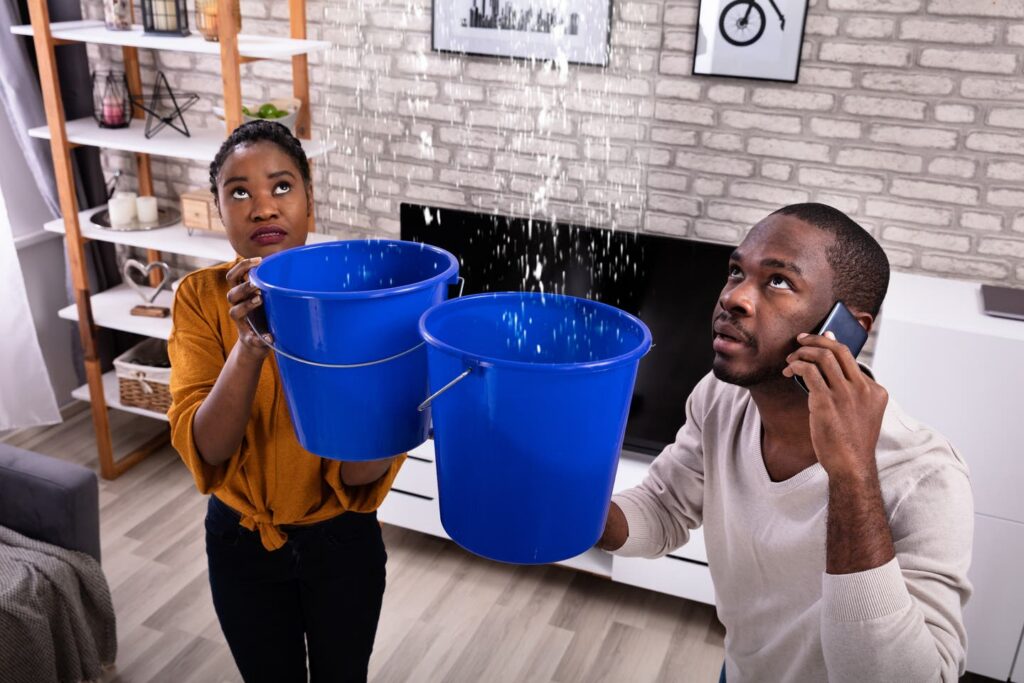
You find a little water next to the refrigerator.
You grab a towel. You clean it up. The floor looks dry.
Crisis averted.
Except sometimes the water has already packed a bag, left the kitchen, moved underneath your flooring, visited the baseboards, and started exploring the next room.
Water is an overachiever like that.
One of the biggest misconceptions about water damage is that what you can see is the entire problem. Unfortunately, water is very good at getting into places homeowners can’t see—and once it gets there, it doesn’t send a forwarding address.
So, where exactly does it go?
Water Has Absolutely No Respect for Room Boundaries
If a pipe leaks in your bathroom, you’d reasonably expect the bathroom to be wet.
Water does not share this logic.
Once it gets into your home, gravity and the materials around it determine where it travels. It can move underneath flooring, soak into drywall, travel behind baseboards, enter insulation, follow framing, and make its way into adjoining rooms.
In a two-story home, it may even head downstairs.
This is why the stain on your first-floor ceiling might actually be coming from a bathroom several feet away upstairs.
Your house basically becomes the world’s least-fun water park.
Your Flooring May Be Hiding Secrets
This one surprises homeowners all the time.
You walk across your LVP flooring. It looks fine. It feels fine. There isn’t a puddle anywhere.
Meanwhile, water may be underneath it having the time of its life.
Water can migrate underneath LVP, laminate, carpet, padding, and other flooring materials. Depending on the loss, it can travel well beyond the area where the original leak occurred.
That’s why wiping up the visible water is important—but it doesn’t necessarily mean everything underneath is dry.
Dry on top doesn’t always mean dry underneath.
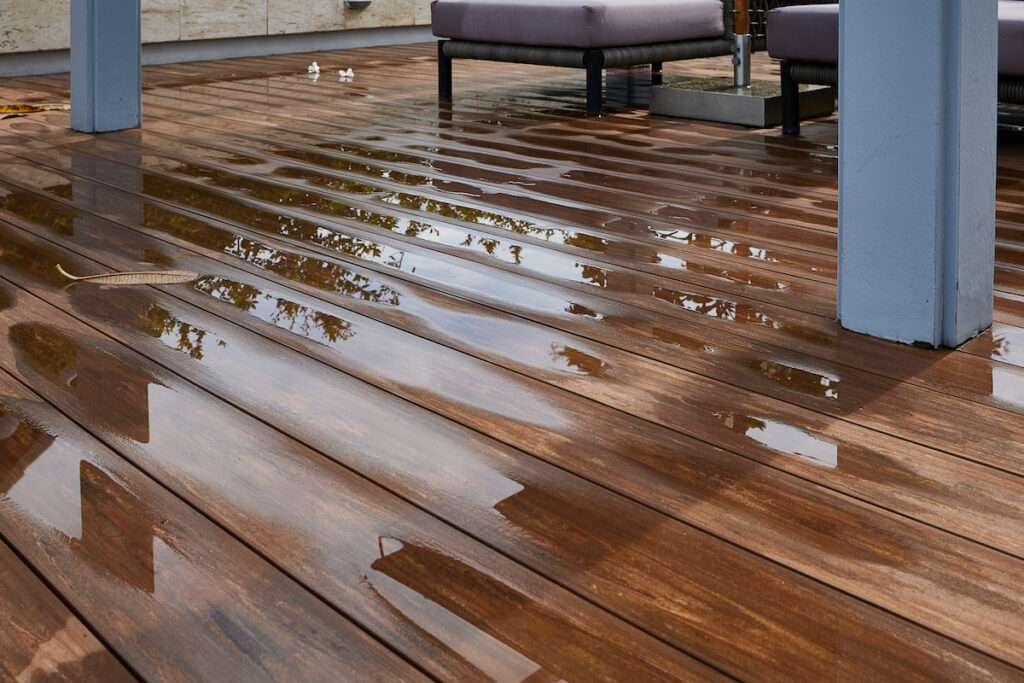
Baseboards Are Tiny Little Snitches
Your baseboards may actually be one of the first things to tell you something isn’t right.
Watch for swelling, discoloration, separation from the wall, peeling paint, or sections that suddenly look different from everything around them.
If one baseboard suddenly looks like it’s had a rough weekend, there’s probably a reason.
Water traveling underneath flooring or inside a wall can reach the baseboard even when you’ve never seen standing water in that area.
Don’t blame the baseboard.
It’s trying to warn you.
Walls Are Basically Water’s Secret Highway
Unfortunately, we cannot see through drywall.
Professionally, this is inconvenient.
Water can enter wall cavities and affect drywall, insulation, framing, and other materials without immediately showing itself on the surface.
Eventually, you might notice staining, bubbling paint, swelling, an odor, or another visible change.
But by the time the wall finally says, “Hey, we’ve got a situation in here,” the leak may have been happening for a while.
This is especially important with slow plumbing leaks. A dramatic pipe burst gets everyone’s attention.
A tiny drip inside a wall?
That little jerk can be surprisingly sneaky.
Cabinets: Beautiful on the Outside, Questionable Underneath
Kitchens and bathrooms are prime real estate for hidden water damage because they’re packed with plumbing.
Think underneath sinks, behind vanities, around toilets, beside dishwashers, behind refrigerators, and near water heaters.
A slow leak can affect the cabinet itself, the wall behind it, and the flooring underneath it before you notice anything unusual.
Every once in a while, take a peek underneath your sinks.
We’re not asking you to reorganize the 47 bottles of cleaning products under there.
Just make sure nothing is leaking.
Upstairs Water Loves Downstairs Ceilings
Here’s a fun homeowner experience:
You notice a water stain on the living room ceiling.
There isn’t any plumbing in the living room.
Excellent.
Before assuming your ceiling has spontaneously started producing water, look at what’s above it.
Bathrooms, laundry rooms, HVAC systems, and plumbing lines on upper floors can all be potential sources. Water can travel along building materials before finally becoming visible somewhere completely different.
The location of the stain gives us a clue.
It doesn’t always give us the answer.
Apartments and Condos Get Even More Interesting
Property managers already know where this is going.
When you have people living above, below, and beside one another, water damage becomes a team-building exercise nobody signed up for.
A leak originating in one unit can potentially affect the unit below, adjoining walls, ceilings, common areas, or neighboring spaces.
And naturally, Unit 302 discovers the problem at 4:47 p.m. on a Friday.
Because water apparently keeps business hours too.
“But I Touched It and It’s Dry.”
We hear you.
And we believe you.
But building materials can contain moisture below the surface even when they feel dry to your hand.
Restoration professionals use specialized moisture-detection equipment to help determine which materials have been affected and how far the water has traveled.
That information helps establish an appropriate drying plan and determine whether materials need additional attention.
It’s considerably more scientific than walking around touching walls and saying:
“Eh. Feels okay.”
Finding the Leak Is Just as Important as Drying the Water
You can dry an affected area beautifully, but if nobody fixes what’s causing the water…
Congratulations.
You’re going to do it again.
Plumbing leaks, HVAC condensate issues, water heaters, appliance supply lines, roofs, windows, showers, toilets, and other sources all have the potential to cause water damage.
The source needs to be identified and corrected by the appropriate professional.
Otherwise, the water will simply return for the sequel.
Water Damage II: This Time It’s Under the Flooring.
Nobody wants to see that movie.

So What Should You Actually Do?
If you discover a leak or water damage, stop the source when it’s safe and possible to do so.
Clean up standing water if the situation is minor and safe to handle, but pay attention to the surrounding area. Look at nearby baseboards, flooring, walls, cabinets, and ceilings.
If water may have traveled into areas you can’t see—or you’re simply not sure how extensive the damage is—having the area professionally evaluated can provide a much clearer picture of what’s actually going on.
Because when it comes to water damage, “I don’t see any more water” isn’t necessarily the same thing as “everything is dry.”
And If You’re Thinking, “There’s NO WAY the Water Got Over There…”
Oh, there is.
Water is ambitious.
At PuroClean Emergency Restoration Services, we help homeowners, property managers, and businesses throughout Jacksonville, St. Augustine, Ormond Beach, and surrounding Northeast Florida communities deal with water damage and determine just how far that little “oops” actually traveled.
Whether it’s underneath your flooring, behind your baseboards, inside a wall, or somehow three rooms away making everyone question the laws of physics, we’ll help you figure out what’s going on and determine the appropriate next steps.
PuroClean Emergency Restoration Services
Paramedics of Property Damage®
24/7 Emergency Response | 904-495-0950
Water belongs in pools, oceans, and overpriced emotional-support water bottles.
Not underneath your flooring.