Quick answer: Comparing restoration contractors in Toms River and the Jersey Shore comes down to four things: proper state registration and relevant restoration credentials, clear service scope, transparent pricing practices, and fast, honest communication. Checking New Jersey registration, verifying credentials, and asking detailed questions before signing can reduce the risk of poor workmanship and insurance-claim complications.
Key takeaways
- New Jersey requires home improvement contractors to register with the Division of Consumer Affairs, and you can verify any contractor’s registration before signing a contract.
- IICRC certification is a widely recognized restoration-industry credential and an important factor when comparing companies for relevant restoration work.
- A trustworthy restoration contractor should explain its full scope of services up front, since water damage often leads to mold, structural, or electrical issues that need coordinated handling.
- Forbes Home notes that for water emergencies, a fast response time of one to two hours (or at least within 24 hours) is an important factor to weigh.
- Written contracts are required by New Jersey law for home improvement projects of $500 or more, and should spell out the contractor’s legal name, address, and registration number.
Why Comparing Restoration Contractors Matters on the Jersey Shore
Water, fire, mold, and storm damage rarely follow a tidy schedule, and the Jersey Shore adds its own complications: older coastal homes, seasonal rentals, and high humidity. A contractor who excels at emergency drying may not handle full reconstruction, and a general contractor may not understand mold remediation or insurance documentation.
The difference matters. A poor choice can mean incomplete drying, recurring mold, denied insurance claims, or repeat repairs. Vetting a fire restoration company or a water mitigation company before an emergency — or at least before you sign — gives you a clearer comparison of response time, scope, and accountability.
What Licensing and Registration Should You Verify First?
In New Jersey, companies that repair, restore, or renovate residential property generally must register as home improvement contractors with the state Division of Consumer Affairs, according to the New Jersey Division of Consumer Affairs. This applies to many restoration-related tasks, including basement waterproofing, roofing, and other repair work that often follows water or fire damage.
Before hiring anyone, verify the contractor’s registration status through the state’s online lookup tool, and review the Ocean County Department of Consumer Affairs’ homeowner-protection guidance. Registration is not an endorsement of quality, but a contractor who cannot or will not provide a registration number is a red flag worth taking seriously.
- Ask for the company’s legal name and home improvement contractor registration number.
- Verify registration on the New Jersey Division of Consumer Affairs website.
- Confirm whether the company uses subcontractors and who is responsible for their work.
- Ask how the company handles permits for reconstruction work, especially structural repairs.
Also confirm insurance. A reputable contractor should carry general liability insurance and workers’ compensation coverage for its employees. Ask for proof before work begins and confirm the policy is current.
Red flags to watch for include: a contractor who refuses to provide a registration number, asks for a large cash deposit upfront, or pressures you to sign before you have a written scope of work.
How Do Certifications Like IICRC Factor Into the Comparison?
The Institute of Inspection, Cleaning and Restoration Certification (IICRC) sets widely recognized standards for water damage restoration, mold remediation, and fire and smoke restoration. Certifications do not replace experience, but they show that technicians have completed standardized training and follow current industry practices.
PuroClean of Toms River is IICRC Certified and EPA Lead-Safe Certified, and many of its technicians hold individual IICRC certifications. When comparing contractors, ask which specific IICRC certifications their technicians carry, since a company can be certified as a firm while individual technicians vary in training.
Certifications worth asking about
- IICRC Water Damage Restoration Technician (WRT)
- IICRC Applied Microbial Remediation Technician (AMRT)
- IICRC Fire and Smoke Restoration Technician (FSRT)
- IICRC Applied Structural Drying (ASD)
- EPA Lead-Safe certification, if your home was built before 1978
- State-specific mold remediation credentials where applicable
Comparing Service Scope: What Should a Full-Service Restoration Company Cover?
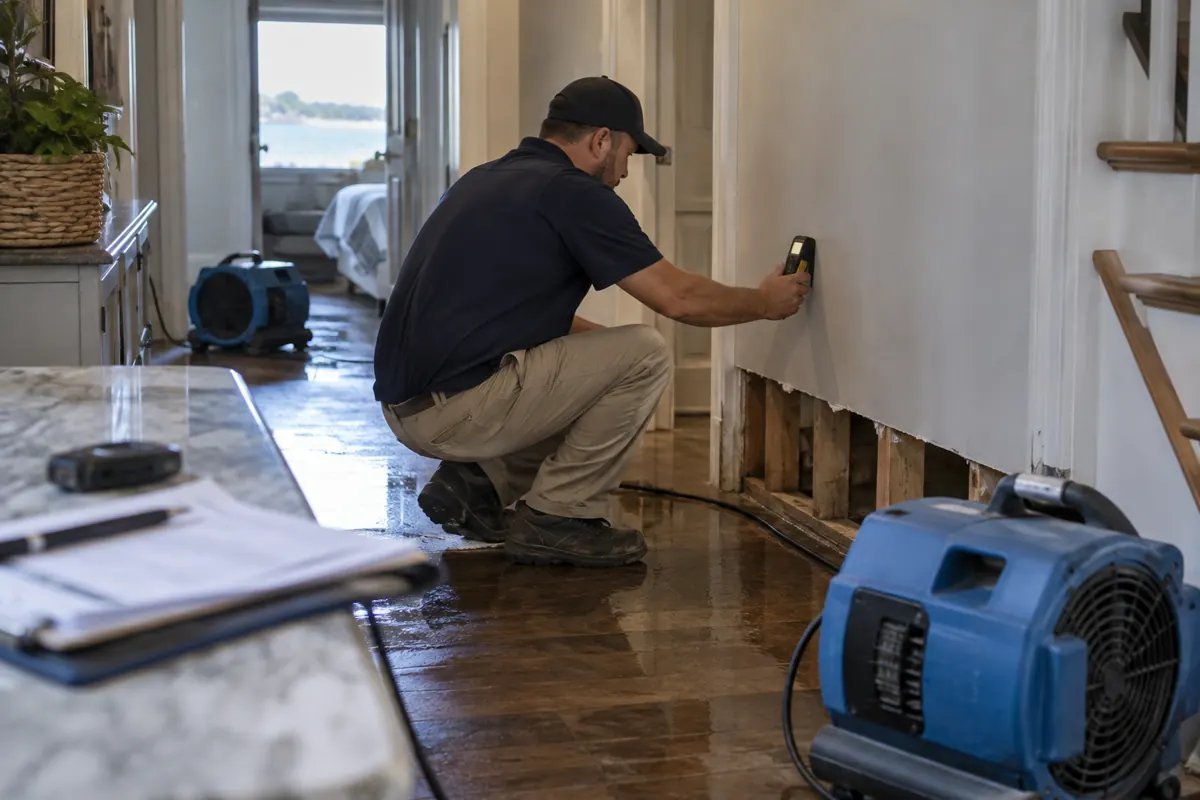
Water damage rarely stays contained to one problem. A leak today can lead to mold growth quickly, and smoke damage often requires both cleaning and deodorizing, plus repair of affected materials. Angi describes the restoration process in three phases: mitigation (stopping further damage), remediation (drying, removing damaged materials, addressing mold), and restoration (rebuilding to pre-loss condition).
When comparing contractors, ask whether they cover the full process or only part of it. A company that stops at drying may leave you to find a separate reconstruction contractor, which adds cost and delays.
Look for a company that can handle:
- Water extraction and structural drying
- Mold remediation and prevention
- Fire and smoke damage cleanup and deodorization
- Storm and wind damage repair
- Contents cleaning and pack-out services
- Reconstruction and general repairs
A full-service approach reduces handoffs and keeps one company accountable for the outcome. PuroClean of Toms River offers mitigation and reconstruction through its residential restoration services and also handles larger properties through its commercial property damage restoration services.
| Area | Why It Matters |
|---|---|
| Toms River | Central hub for Ocean County response; many properties are older coastal homes prone to leaks, roof damage, and mold. |
| Brick | Heavy commuter corridor; frequent water damage from plumbing failures and appliance leaks. |
| Jackson | Larger properties and well/septic systems add complexity to drying and repairs. |
| Lakewood | Large residential population; fast response prevents secondary mold damage. |
| Point Pleasant Beach | Direct coastal exposure; storm surge and high humidity complicate drying. |
| Seaside Heights | Seasonal rental properties need quick turnaround after damage. |
| Long Beach Island | Saltwater exposure and vacation-home vacancy mean damage often goes unnoticed. |
| Mantoloking | Small borough with high-value coastal properties; specialized repair skills matter. |
For business owners, the same comparison applies. A company that handles both residential and commercial work can adapt its process to offices, retail spaces, and multi-unit properties, which often have different insurance and scheduling requirements.
How Transparent Is Their Pricing, Really?
Restoration pricing depends on the extent of damage, materials affected, and equipment needed, so a contractor cannot always give an exact price before an inspection. Forbes Home notes that water damage restoration costs vary widely by category of water, square footage, and whether reconstruction is needed.
Transparency is not about a low quote — it is about a clear, itemized estimate. Ask for:
- A written estimate that separates mitigation, remediation, and reconstruction costs.
- A clear explanation of what is included and what is not, such as contents cleaning or temporary housing.
- How change orders are handled if additional damage is found during demolition.
- Whether the company works directly with your insurance carrier and provides detailed documentation.
- How payment is structured — deposit, progress payments, and final payment after completion.
Be cautious of quotes that are dramatically lower than others without explanation, vague line items, or pressure to sign a contract before you have time to compare. A reputable contractor will explain its pricing and give you time to review the estimate.
What Does Good Communication and Responsiveness Look Like?
After damage, you need a contractor who answers the phone, shows up when promised, and keeps you informed. Communication problems are a common source of frustration in restoration projects, especially when insurance claims are involved.
Look for these signs of strong communication:
- A single point of contact for your project
- A clear timeline with milestones and expected completion dates
- Regular updates, especially after demolition or when hidden damage is found
- Written documentation of moisture readings, photos, and progress reports
- A process for handling questions or concerns during the project
Ask how quickly the company responds to emergencies. PuroClean of Toms River offers 24/7 emergency response for water, fire, mold, and biohazard damage, which matters when a burst pipe or storm floods a home at night.
Also ask about the company’s process for working with your insurance adjuster. A contractor who provides detailed documentation and communicates directly with your insurer can reduce delays and disputes.
Local Coverage: Does the Company Actually Serve Your Jersey Shore Town?
A company may advertise Jersey Shore coverage but have limited crews in your area, which can affect response time. Ask for the company’s actual service area and how it handles emergency calls in your town.
PuroClean of Toms River serves Toms River and surrounding Ocean County communities, and you can review the areas we serve in New Jersey to confirm coverage for your town.
Local knowledge matters, too. A contractor familiar with Jersey Shore building codes, flood zones, and seasonal rental schedules can plan repairs more effectively. For example, preparing your home for summer storms can reduce the risk of damage in the first place.
Quick Comparison Checklist Before You Sign a Contract
Use this checklist to compare contractors side by side before you commit:
| Check Before You Sign | What to Confirm |
|---|---|
| New Jersey registration verified | Home improvement contractor registration is current and matches the company name. |
| Insurance and liability coverage | General liability and workers’ compensation are in place. |
| Written scope and estimate | Every service, material, and repair is itemized before work begins. |
| Start date and timeline | A realistic schedule with milestones and completion target. |
| Insurance documentation support | Photos, moisture readings, and a detailed invoice for your claim. |
| Communication plan | A named contact and update schedule (for example, daily progress reports). |
| Cleanup and final walkthrough | Who removes debris and how the final inspection works. |
If you are still unsure what to do first after damage, review the critical steps after property damage to understand the order of operations before you sign a contract.
Frequently Asked Questions
How many restoration quotes should I get before choosing a contractor?
Get at least two or three quotes for non-emergency work, so you can compare scope, pricing, and timelines. For emergencies, focus on response time and a clear written scope, then compare the estimate carefully before authorizing reconstruction.
Can I use any restoration contractor, or do I have to use one my insurance recommends?
You are generally free to choose your own contractor, even if your insurer suggests a preferred vendor. Check your policy for any requirements, but do not feel pressured to use a company you have not vetted.
What’s the difference between water mitigation and water restoration?
Mitigation is the emergency phase — stopping the water source, extracting water, and drying the structure to prevent further damage. Restoration is the rebuild phase — repairing or replacing damaged materials to return the property to its pre-loss condition.
Do restoration contractors in New Jersey need a special license beyond general contractor registration?
New Jersey requires home improvement contractor registration for most residential repair and restoration work. Some specialties, such as mold remediation or lead-safe work, may require additional credentials, so ask about certifications for your specific job.
Should I worry if a contractor can’t give me an exact price over the phone?
Not necessarily. Accurate pricing requires an on-site inspection to assess hidden damage, moisture levels, and materials. What matters is whether the contractor explains this clearly and provides a detailed written estimate after inspection.
Sources
- New Jersey Division of Consumer Affairs – Home Improvement Contractors
- Ocean County Government – Home Contractors
- Forbes Home – Best Water Damage Restoration Services
- Angi – Hire the Best Local Water Damage Restoration Pros
- This Old House – SERVPRO Restoration Review
Reach PuroClean of Toms River Any Time
If you need help after water, fire, mold, or storm damage in Toms River or the surrounding Jersey Shore communities, contact PuroClean of Toms River for 24/7 emergency response. Call (732) 349-9885 or visit our contact page to request service.
Compare carefully, ask direct questions, and choose the contractor who gives you clear answers, honest timelines, and a plan you can trust.