24/7 Emergency Slab Leak Water Damage Cleanup Port Charlotte Services in Venice
You notice a warm spot on your floor. Your water bill has climbed unexpectedly, or the vinyl planks near your kitchen are beginning to lift. There’s no obvious leaking faucet or appliance, but something isn’t right.
These can be warning signs of a concealed plumbing problem, including a possible slab leak. Because the affected pipe may be beneath your home’s concrete foundation, water can escape without creating an obvious puddle near the source.
PuroClean of Venice provides professional slab leak water damage cleanup in Port Charlotte, Florida, helping homeowners address wet flooring, damaged baseboards, affected drywall, cabinetry, and moisture hidden within building materials.
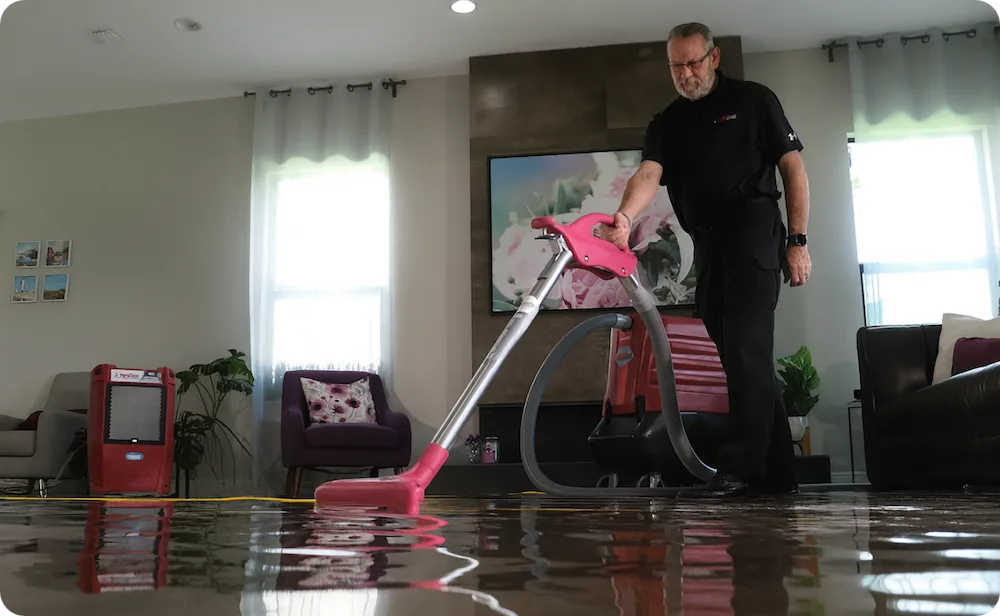
Our residential water damage restoration services include moisture assessment, water extraction when necessary, evaluation of damaged materials, structural drying, and drying progress monitoring.
One important distinction: A qualified plumber should locate and repair the leaking pipe. PuroClean of Venice focuses on restoring the property after water has damaged interior building materials.
If you suspect a slab leak has caused water damage in your Port Charlotte home, call (941) 294-0404 to discuss the conditions you’ve discovered and the appropriate next steps.
Finding and repairing a broken pipe is only part of recovering from a slab leak. Water may have already traveled beneath flooring, reached nearby walls, or affected cabinets and other interior materials.
Professional slab leak restoration focuses on determining where the water traveled, which materials were damaged, and what cleanup or drying is necessary.
For example, a plumber may repair a leaking supply line beneath your kitchen, but moisture could remain beneath adjoining vinyl plank flooring or around cabinet bases.
Even after the plumbing repair is completed, those materials may require additional evaluation.
Not every slab leak requires every step. The appropriate restoration scope depends on the extent of the damage, the materials involved, and whether moisture has reached areas that cannot be adequately dried in place.
For broader information about our services, visit Water Damage Restoration by PuroClean of Venice.
Common warning signs of a possible slab leak include unexplained water consumption, warm areas of flooring, damp baseboards, lifting floor coverings, and moisture that appears without an obvious source.
Because a slab leak may remain concealed, homeowners sometimes discover the resulting damage before learning that a pipe has failed.
These signs do not prove a slab leak is present. Air-conditioning condensation, appliance failures, exterior water intrusion, irrigation problems, and other plumbing leaks can create similar symptoms.
A qualified plumber should determine whether a pipe beneath the foundation is leaking. If water has affected your home’s interior, a restoration professional can evaluate the resulting damage.
If you believe water is escaping beneath your home’s foundation, the priority is to prevent additional damage without creating new safety hazards.
Homeowners should not assume that a household fan or dehumidifier can resolve moisture trapped beneath flooring. A dry-looking surface does not necessarily mean the materials underneath are dry.
Port Charlotte has a mix of established neighborhoods, renovated properties, and newer residential construction. Many homes throughout Charlotte County and Southwest Florida are built on concrete slab foundations.
These construction characteristics, combined with finished flooring, concealed plumbing, and Florida’s humid climate, can complicate the discovery and evaluation of water damage.
Water escaping beneath a slab may move through surrounding soil, along cracks or penetrations, or toward nearby building materials.
In some homes, moisture may affect flooring without creating an obvious puddle. In others, it may appear near a wall or cabinet some distance from the original plumbing failure.
For example, a homeowner may discover lifting flooring in a hallway even though the leaking pipe is located beneath an adjoining area.
However, moisture near concrete does not automatically indicate a slab leak. Condensation, exterior drainage, and other sources must also be considered.
Tile and luxury vinyl plank flooring are common choices in Southwest Florida homes, including properties built over concrete slabs.
Although many finished flooring products resist water at the surface, moisture can sometimes collect beneath them or affect installation materials.
A waterproof vinyl plank does not necessarily mean the entire flooring assembly is waterproof.
If moisture is trapped beneath flooring, professional evaluation can help determine whether appropriate drying is possible or selective removal is necessary.
For a detailed explanation, read Water Under Vinyl Plank Flooring: How to Detect Hidden Moisture.
Port Charlotte’s warm, humid conditions can make controlled drying particularly important when moisture has reached enclosed building materials.
Opening windows during a humid afternoon may introduce additional moisture rather than help dry the property.
Professional structural drying considers the affected materials, indoor conditions, and moisture measurements rather than relying on surface appearance alone.
Some Port Charlotte homeowners spend extended periods outside Florida.
If a plumbing leak develops while a house is unoccupied, the duration of exposure may be unknown when the damage is discovered.
By the time someone notices a warm floor, unusually high water consumption, or damaged flooring, moisture may have affected materials beyond the original leak location.
Homeowners with seasonal properties may benefit from appropriate leak-detection devices, water-use monitoring, and a trusted local contact who can investigate unexpected conditions.
If your home receives service from Charlotte County Utilities, the water meter may provide a useful early clue when you suspect a concealed plumbing leak.
Meter activity when no water should be in use can indicate a possible leak somewhere in the plumbing system, but it cannot identify the leak’s location.
Meter activity can have explanations other than a slab leak, including running toilets, irrigation equipment, pool filling, or other plumbing problems.
Charlotte County Utilities provides homeowner instructions on its Reading My Meter page.
Do not delay shutting off water or contacting a professional to complete a meter test during an active emergency.
Sometimes. Whether flooring can be restored depends on the material, duration of exposure, water conditions, physical damage, and whether moisture beneath the surface can be adequately addressed.
Homeowners understandably want to avoid replacing flooring across multiple rooms, especially when the same material extends throughout the house.
However, retaining materials that cannot be adequately dried may create additional problems later.
| Flooring Material | Restoration Considerations |
|---|---|
| Porcelain or ceramic tile | Tile may remain serviceable if the installation is sound and affected underlying materials can be appropriately addressed. |
| Luxury vinyl plank | Some products may be retained or reinstalled, depending on their condition, installation, and moisture beneath the planks. |
| Laminate flooring | Swelling, damaged joints, or deterioration may prevent successful restoration. |
| Engineered wood | Restorability depends on moisture exposure, dimensional stability, adhesives, and material condition. |
| Carpet and padding | Water conditions, contamination, duration of exposure, and material damage influence drying or replacement decisions. |
| Concrete slab | Moisture conditions may require additional evaluation before installing new flooring or finishes. |
Not every wet floor needs complete replacement. The appropriate decision should be based on actual damage and the requirements of the flooring system.
If flooring has been removed after a slab leak, the concrete substrate may need additional evaluation before replacement materials are installed.
Flooring manufacturers may specify acceptable substrate moisture conditions and testing methods. Depending on the product and installation, the flooring contractor may need to conduct additional testing before installation.
This is different from simply checking whether the floor looks or feels dry.
Completing water damage mitigation does not automatically establish that a concrete slab is ready for every flooring product. Appropriate installation requirements should be addressed before reconstruction proceeds.
Yes. When water from a concealed plumbing leak reaches susceptible building materials and remains there, conditions may support mold growth.
The concern is usually not concrete alone. Moisture may affect drywall, wood-based cabinetry, flooring materials, adhesives, insulation, or other components.
The U.S. Environmental Protection Agency recommends drying water-damaged materials within approximately 24–48 hours when possible to help prevent mold growth.
This does not mean mold automatically appears within two days. Actual conditions depend on moisture availability, the materials involved, temperature, and exposure duration.
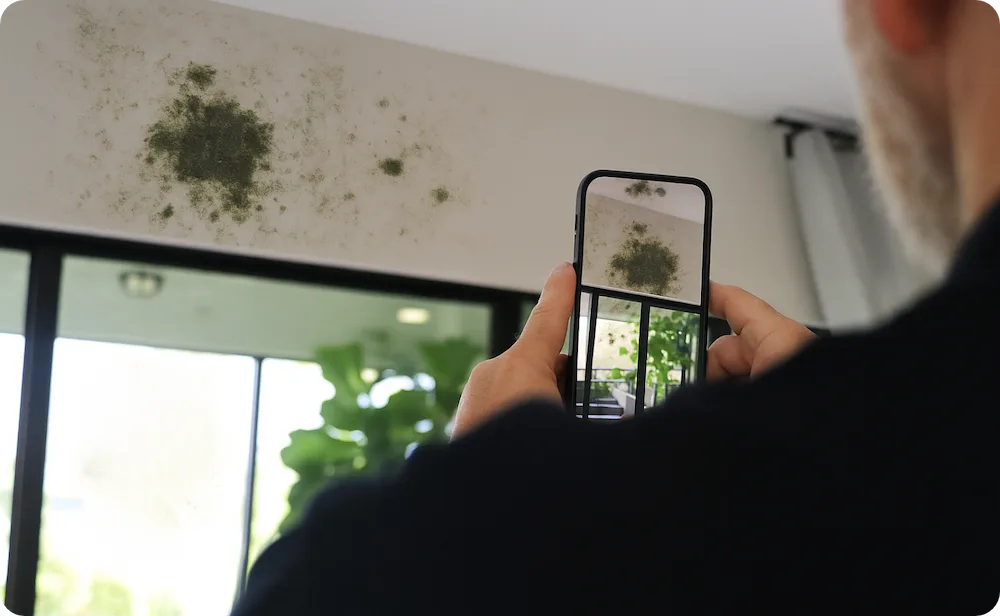
If visible growth, persistent damp odors, or unresolved moisture conditions are present, additional assessment or remediation may be appropriate.
Learn more about mold remediation and removal in Port Charlotte, FL.
The cost depends on how far the water traveled, which building materials were damaged, and the work necessary to restore the affected areas.
A concealed leak discovered before water reaches the living space may require plumbing work without a substantial restoration project.
By comparison, a leak that saturates flooring across multiple rooms, damages cabinetry, or affects lower wall materials may require more extensive mitigation.
There are three potentially separate expenses homeowners should understand:
Not every project requires all three categories of work.
For published planning ranges and a breakdown of plumbing, mitigation, and reconstruction costs in Southwest Florida, read our 2026 Slab Leak Water Damage Cleanup Cost Guide.
Florida homeowners insurance may cover certain resulting water damage from a slab leak, but coverage depends on the cause of the loss, the policy language, and applicable exclusions, limits, or deductibles.
Several costs may be involved in a slab leak claim, and they are not necessarily treated the same way:
Damage from a sudden plumbing failure may be evaluated differently from long-term seepage, deterioration, or other excluded conditions.
Some policies contain specific provisions concerning access or tear-out costs. Homeowners should review their coverage and ask their insurance representative how the circumstances of their loss apply.
When safe, retain photographs of the damage, relevant water bills, the plumber’s findings, repair invoices, water restoration records, and estimates for damaged flooring or other materials.
Notify your insurer promptly if you intend to file a claim. Do not delay necessary safety measures or reasonable steps to limit additional damage simply to collect more documentation.
A restoration company can document the mitigation work performed, but the insurance carrier determines coverage under the applicable policy.
A slab leak can leave you with two separate problems: the pipe that needs repair and the water damage that may remain afterward.
For homeowners, the hardest part is often determining how much damage occurred beneath the flooring or inside nearby materials.
PuroClean of Venice serves Port Charlotte and surrounding Southwest Florida communities with professional water damage restoration services.
Our approach focuses on understanding the extent of the water damage and recommending appropriate restoration work based on the actual conditions.
The objective is to address the resulting water damage without assuming that every wet surface or flooring system must be completely replaced.
For information about other residential restoration services available locally, visit our Port Charlotte service-area page.
Yes. Water escaping beneath a concrete foundation may affect flooring systems, lower walls, or other materials without producing obvious standing water. Changes in flooring, unusually high water consumption, or damp baseboards may be among the first signs.
No. Moisture beneath flooring can result from several sources, including plumbing leaks, condensation, exterior water intrusion, or appliance failures. A qualified plumber should investigate a suspected under-slab plumbing failure.
Sometimes. The appropriate method depends on the flooring product, installation, underlying materials, contamination concerns, and extent of moisture. Some assemblies may be suitable for drying, while others require selective removal to address trapped water.
There is no fixed timeline. A limited water loss may require several days of drying, while damage involving extensive flooring, concealed moisture, or reconstruction can take longer. Moisture measurements and site conditions should guide the process.
Not necessarily. Repairing the plumbing stops that source of water, but residual moisture may remain in the flooring assembly or adjoining materials. Moisture assessment can help determine whether additional drying or repairs are necessary.
Not automatically. The amount requiring replacement depends on the actual damage, flooring installation, material condition, and whether the affected assembly can be appropriately restored. Continuous flooring and matching issues may also affect reconstruction decisions.
A qualified plumber should locate and repair the leaking pipe. PuroClean of Venice provides water damage restoration services to address affected flooring, walls, cabinets, and other materials after a plumbing leak.
Yes. PuroClean of Venice provides slab leak water damage cleanup and restoration services for homeowners in Port Charlotte and surrounding Southwest Florida communities. Call (941) 294-0404 to discuss the damage and appropriate next steps.
Not sure what’s causing moisture beneath your flooring? Trying to understand the cost of repairing a concealed pipe or restoring water-damaged materials? These homeowner guides from PuroClean of Venice explain common plumbing and water damage concerns affecting Port Charlotte and Southwest Florida properties.
A slab leak doesn’t always create an obvious flood. Sometimes the first signs are a changing water bill, a warm floor, swollen baseboards, or moisture appearing where it shouldn’t.
Once the plumbing problem is being addressed, it’s important to understand whether water has damaged flooring, cabinetry, drywall, or other interior materials.
PuroClean of Venice provides professional slab leak water damage cleanup in Port Charlotte, FL, including moisture assessment, water extraction when needed, structural drying, and related restoration services.
You don’t need to know how far the water traveled or whether your flooring can be saved before reaching out. Tell us what you’ve noticed, whether a plumber has investigated the leak, and which areas appear affected.
What Our Customers Say:
Find answers to common questions about our services
You can check the walls and ceilings for water stains, the floors for warping and buckling, and the pipes for corrosion, leaks, missing grout, and mold. Attics and basements may have damaged flooring, mildew or mold, dampness, and odors. Also, be sure to inspect the exterior of the home for cracked roof tiles, puddles, standing water, and whether the ground is sloping away from the house.
First, if safe, shut off the utilities in your home to avoid further damage. Don’t enter your home if it has suffered structural damage. Don’t walk through floodwater if electricity hasn’t been turned off, and avoid contaminants. Next, contact a water-damage restoration company, such as PuroClean of Venice, as soon as possible. Don’t wait, as water can cause mold and irremediable damage to the wood, walls, and carpet. Then, depending on the extent of the damage and the recommendation of the remediation company, contact your insurance provider to start the claim process.
There are many variables that determine whether a flooded property can be saved: the amount of water, and even more important, the amount of time the water was in/around the property. Every situation is different, and PuroClean of Venice expert restoration professionals can determine what can be salved once one site.
Property water damage can pose several dangers including structural instability, electrical hazards, mold and mildew growth leading to health issues, contamination from sewage or chemicals, and potential collapse of weakened structures.
Water flooding can cause extensive damage including structural damage to walls, floors, and foundations, damage to personal belongings, electrical hazards, and potential health risks from mold and bacteria growth. The longer water sits, the more severe the damage becomes.
Water damage can result from unexpected leaks, flooding from storms, plumbing failures, or appliance malfunctions. Our certified teams focus on rapid water removal, drying, and stabilization to help prevent further damage and mold growth.
 Explore Our Water Damage Mitigation Services
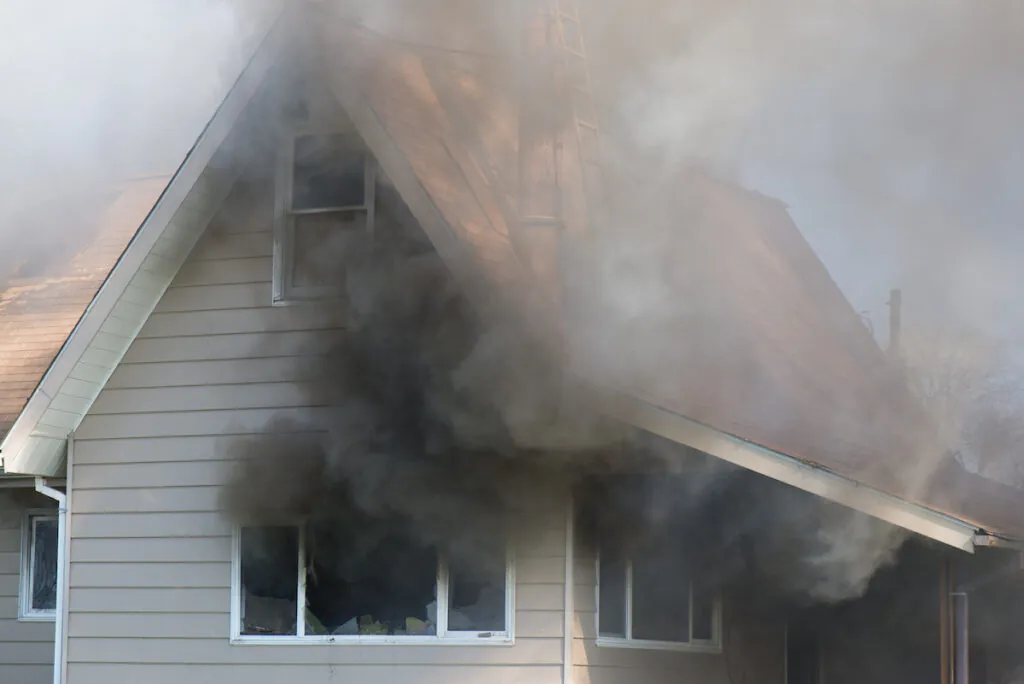
Even after a fire is extinguished, smoke, soot, and odor can continue to affect your home. Fire damage restoration services address visible damage while also helping reduce lingering effects that impact indoor air quality and surfaces.
Explore Our Fire and Smoke Damage Restoration Services
Mold often develops as a result of unresolved moisture or hidden water damage. Professional mold remediation helps identify affected areas, contain growth, and restore healthy indoor conditions.
Explore Our Mold Removal and Remediation Services
Biohazard situations, including crime scene cleanup and virus decontamination, require specialized cleaning and handling to protect health and safety. Biohazard cleanup services address contamination using proper protocols and professional care.
Explore Our Biohazard Cleanup Services
When water reaches production gear, refrigeration, IT, or stock, every hour matters. PuroClean of Venice stabilizes the loss fast, documents asset impacts, and manages a staged return to use so operations can resume in phases—not all at once. Commercial water damage isn’t just structural—it’s the machinery, inventory, electrical systems, and data infrastructure at stake.
Explore Our Commercial Water Damage Restoration Services
When a fire impacts one suite, the entire building can be affected by smoke migration, access restrictions, and documentation needs across tenants, ownership, and insurance. PuroClean of Venice helps property managers coordinate phased commercial fire and smoke restoration so each tenant’s path to re-occupancy is clear and documented.
Explore Our Commercial Fire Damage Restoration Services
For operations leaders and property managers, mold is an indoor air and liability event—not a housekeeping issue. PuroClean of Venice supports containment-first remediation, moisture-source correction, and clearance documentation workflows so regulated or occupancy-critical areas can reopen with defensible records.
Explore Our Commercial Mold Remediation Services
For regulated and sensitive environments, biohazard cleanup is an access-controlled response with infection-control documentation—not routine janitorial cleaning. PuroClean of Venice supports property managers and compliance stakeholders with discreet containment, approved disinfectant workflows, and clear re-entry records.
Explore Our Commercial Biohazard Cleanup Services
Water damage can result from unexpected leaks, flooding from storms, plumbing failures, or appliance malfunctions. Our certified teams focus on rapid water removal, drying, and stabilization to help prevent further damage and mold growth.
Explore Our Water Damage Mitigation Services

PuroClean of Venice
(941) 294-0404
7027 Treadway Rd., Port Charlotte, FL 33981