


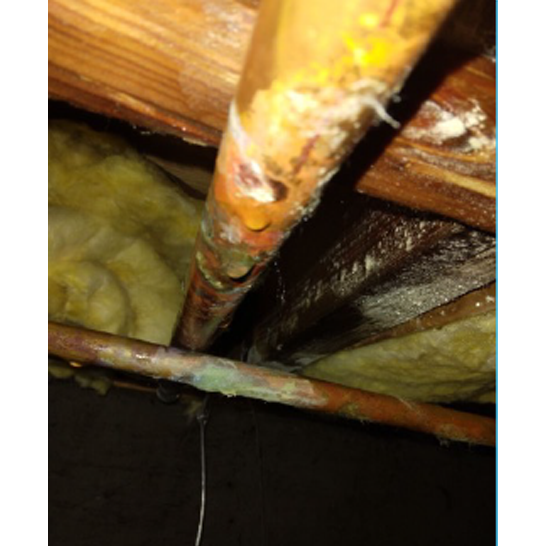
A burst water pipe can turn an ordinary day into a plumbing emergency. Water may spread across your floors, soak into drywall, reach electrical outlets, and disappear beneath cabinets or flooring before you realize how much damage has occurred.
If a pipe bursts in your Port Charlotte, Florida, home, your first priority is safety. Next, stop the water supply, identify the damaged plumbing, and take reasonable steps to prevent additional water damage.
The most important thing to remember: Repairing a burst pipe stops additional water from entering your home, but it does not necessarily remove the moisture already inside your walls, floors, ceilings, or other building materials.
Whether the damaged pipe is behind a bathroom wall, beneath a kitchen sink, above your ceiling, or under your concrete slab, the following seven steps explain what to do immediately, what to avoid, and when professional help is necessary.
Quick Answer: What Should You Do Immediately After a Pipe Bursts?
If a water pipe bursts in your house, move away from electrical hazards, shut off the water supply when safe, contact a licensed plumber, document the damage, protect your belongings, and arrange water damage assessment and drying when necessary. Notify your homeowners insurance company promptly if you may have a covered claim.
| Step | What to Do | Why It Matters |
|---|---|---|
| 1 | Check for electrical and structural hazards. | Protects people from shock, falling materials, and unsafe conditions. |
| 2 | Shut off the main water supply when safe. | Stops additional water from escaping a pressurized supply pipe. |
| 3 | Contact a licensed plumber. | Identifies and repairs the failed plumbing component. |
| 4 | Photograph the damage and record what happened. | Creates documentation for repairs and a possible insurance claim. |
| 5 | Protect belongings and remove accessible water when safe. | Helps reduce additional damage to contents and exposed surfaces. |
| 6 | Evaluate hidden moisture and begin appropriate drying. | Addresses water trapped inside building materials. |
| 7 | Notify your insurer and coordinate restoration. | Helps organize coverage questions, documentation, and necessary work. |
Important: These steps are a practical checklist, not a rigid sequence. If the situation is unsafe, leave the affected area. You can also contact a plumber, restoration provider, or insurer while completing other appropriate steps.
In This Guide
- Step 1: Check for Electrical and Structural Hazards
- Step 2: Shut Off the Main Water Supply
- Step 3: Contact a Licensed Plumber
- Step 4: Document the Water Damage
- Step 5: Protect Your Belongings and Remove Accessible Water
- Step 6: Address Hidden Moisture and Begin Drying
- Step 7: Notify Your Insurance Company and Coordinate Repairs
- What to Do During the First 24–48 Hours
- Where Water Can Hide After a Pipe Bursts
- Burst Pipe Problems in Port Charlotte Homes
- Does Florida Homeowners Insurance Cover Burst Pipes?
- Common Mistakes to Avoid
- Frequently Asked Questions
- Burst Pipe Water Damage Cleanup in Port Charlotte
- References
Step 1: Check for Electrical and Structural Hazards
Before attempting to stop the leak or clean up water, determine whether the affected area is safe to enter.
A burst pipe can send water into electrical outlets, appliances, wiring, ceiling fixtures, and other areas where water creates additional hazards.
Watch for the following warning signs:
- Water collecting around electrical outlets, power strips, or appliances.
- Water dripping through ceiling lights or electrical fixtures.
- Sparks, unusual electrical sounds, or a burning smell.
- A ceiling that is sagging, bulging, or visibly saturated.
- Large amounts of water near the electrical panel.
- Damaged ceilings or walls that appear unstable.
Do not enter standing water if electrical equipment may be energized. Never operate a circuit breaker, electrical switch, or appliance while standing in water.
The Centers for Disease Control and Prevention advises turning off power when electrical circuits or equipment are wet, but only when the electrical panel can be reached safely from a dry location. If accessing the panel requires entering standing water, contact a qualified electrician.[1]
Do not restore electrical power to water-affected equipment until it has been evaluated by an appropriately qualified professional.
What if Water Is Coming Through the Ceiling?
Keep people away from the area beneath a sagging or water-filled ceiling.
Wet drywall may lose strength, and saturated insulation can add significant weight above the ceiling.
Do not puncture a bulging ceiling or attempt to pull down wet drywall yourself. A qualified professional can evaluate the hazards and determine how to address the water safely.
If you suspect an immediate danger to occupants, leave the affected area and contact appropriate emergency services.
Step 2: Shut Off the Main Water Supply
Once the area is safe, stopping the water supply is usually the most effective immediate action you can take.
If a pressurized plumbing line has ruptured, water may continue escaping until the supply is isolated.
If the leak involves a specific fixture and you can safely access its shutoff valve, that may be sufficient. However, if you cannot identify the source or the water is spreading rapidly, shutting off the home’s main water supply may be necessary.
Where Is the Main Water Shutoff Valve in a Florida House?
In Port Charlotte homes, the main water shutoff may be located near the point where the water service enters the house, along an exterior wall, in a garage or utility area, or near other accessible plumbing equipment.
The exact location depends on the home’s age, plumbing configuration, and installation.
A separate utility-owned shutoff may also be located near the water meter, which is commonly housed in an underground box near the property boundary.
Do not assume the water meter valve is intended for homeowner operation. If your home’s shutoff cannot be found or operated safely, contact your water utility or a licensed plumber for guidance. Do not force a corroded or unfamiliar valve.
How Do You Turn Off the Main Water Supply?
The correct method depends on the type of valve installed.
- Lever-style ball valve: The lever is generally positioned perpendicular to the pipe when closed.
- Round-handle gate or globe valve: These valves are generally closed by turning the handle clockwise until it stops gently.
- Fixture shutoff valve: A smaller valve beneath a sink, behind a toilet, or near an appliance may isolate that individual fixture.
Never apply excessive force to a stuck valve. Damaging an older valve can create another plumbing problem.
After shutting off the supply, check from a safe location whether the active flow has stopped or substantially decreased.
If water continues entering the room, the source may not have been fully isolated, or the remaining water may be draining from pipes, fixtures, or concealed spaces.
Do not turn the water back on until the damaged plumbing has been evaluated and repaired.
Should You Open a Faucet After Turning Off the Water?
Opening a nearby cold-water faucet may help relieve residual pressure after the water supply has been shut off.
However, it is not essential to do this before seeking help. Do not enter a hazardous area, operate a suspected damaged fixture, or attempt plumbing disassembly to relieve pressure.
A licensed plumber can determine the safest way to isolate, drain, and repair the affected line.
Step 3: Contact a Licensed Plumber to Identify and Repair the Burst Pipe
Once the water supply has been isolated, contact a licensed plumber to investigate the failure.
Some burst pipes are clearly visible beneath sinks or near appliances. Others may be concealed behind walls, above ceilings, or beneath concrete foundations.
A plumbing professional can determine where the failure occurred, what caused it, and which repairs are necessary.
What Information Should You Give the Plumber?
When requesting assistance, be prepared to explain:
- Where water first appeared.
- Whether the main water supply has been shut off.
- Whether the problem involves hot water, cold water, or an unknown source.
- Whether water is still actively flowing.
- Whether the leak is visible or concealed.
- Which rooms or building materials are affected.
- Whether the home has a concrete slab foundation.
- Whether any electrical hazards or structural concerns are present.
This information can help the plumber assess the urgency and determine what equipment or expertise may be needed.
Do Not Assume a Burst Pipe Must Be Replaced Throughout the Entire House
One damaged pipe does not automatically mean the entire plumbing system must be replaced.
Depending on the condition of the system, a localized repair may be appropriate.
More extensive work may be recommended if the plumber identifies widespread corrosion, recurring failures, deteriorated piping, or other system-wide concerns.
Ask the plumber to explain the cause of the failure and why the recommended scope is necessary.
Plumbing Repair and Water Damage Restoration Are Different Services
A plumber repairs the damaged supply line or other plumbing component.
A water damage restoration provider evaluates and addresses the moisture that escaped into floors, walls, ceilings, cabinets, insulation, and other affected materials.
For example, a plumber may replace a burst pipe behind a bathroom wall, but the drywall, insulation, and nearby flooring may still require water damage assessment and drying.
If the incident has affected your home’s interior materials, learn more about burst pipe water damage cleanup in Port Charlotte.
Step 4: Photograph and Document the Water Damage
Once immediate hazards are addressed, document the damage before major cleanup or removal whenever doing so is safe.
Photographs, videos, and written observations can help you explain what happened to your plumber, restoration provider, and insurance company.
The Florida Department of Financial Services recommends documenting property damage and keeping receipts for necessary emergency repairs.[4]
What Should You Photograph After a Pipe Bursts?
- The location where water first appeared.
- The visible burst pipe or damaged plumbing component, if safely accessible.
- Standing water and the approximate extent of flooding.
- Wet drywall, baseboards, ceilings, or insulation.
- Damaged flooring, carpet, or furniture.
- Water beneath cabinets or appliances.
- Any water entering adjacent rooms.
- Damaged personal belongings.
- Materials removed during necessary mitigation, when practical.
Take both wide photographs showing the overall affected area and closer photographs documenting specific damage.
If water is actively flowing, you may be able to record a short video from a safe location. However, do not delay shutting off the water or place yourself at risk simply to obtain footage.
Create a Simple Timeline
Write down the following information while it is fresh:
- When you first noticed the water.
- Where the water was initially visible.
- When the main water supply was shut off.
- Which plumber or service provider was contacted.
- What the plumber identified as the cause.
- Which rooms and belongings were affected.
- When mitigation or drying work began.
- When the insurance company was notified.
Be accurate about what you know. If you do not know exactly when a concealed pipe failed, record when the damage was discovered rather than guessing when the pipe burst.
Should You Save the Damaged Pipe?
Ask the plumber and your insurance company whether the failed pipe or fitting should be retained for inspection.
If practical, photograph the failed component before and after removal, and ask the plumber to document the observed condition and apparent cause of failure.
Do not preserve a damaged component at the expense of necessary emergency repairs or safety.
Step 5: Protect Your Belongings and Remove Accessible Water
After the water source is stopped and the area is safe, take reasonable steps to limit additional damage.
Water can spread beyond the original leak location through flooring joints, carpet, cabinets, and other building materials.
Move Unaffected Belongings Out of the Wet Area
When safe, move furniture, electronics, rugs, clothing, documents, and other unaffected belongings away from the water.
Prioritize irreplaceable items such as photographs, important documents, and sentimental belongings.
Do not move heavy furniture through standing water when doing so creates a risk of slipping, injury, or electrical contact.
Remove Accessible Surface Water When Safe
If the water is known to be sanitary, the area is electrically safe, and the amount is manageable, accessible surface water may be removed using appropriate methods or equipment.
Do not use an ordinary household vacuum to collect water.
Never operate electric water-removal equipment while standing in water or when electrical safety has not been established.[1]
If the water source is unknown, sewage contamination is possible, or substantial flooding has occurred, avoid direct contact and seek professional guidance.
Do Not Assume the Floor Is Dry After Visible Water Is Removed
Removing standing water is an important first step, but it does not necessarily address moisture beneath flooring or inside building materials.
For example, a kitchen supply-line failure may allow water to spread beneath vinyl plank flooring, behind baseboards, or inside lower cabinets.
Even if the surface appears dry after cleanup, concealed materials may still contain moisture.
For a closer look at this problem, see our guide to water trapped beneath vinyl plank flooring.
Step 6: Address Hidden Moisture and Begin Appropriate Drying
One of the biggest mistakes after a burst pipe is assuming that stopping the leak and removing visible water means the problem is resolved.
Water can move through drywall, insulation, flooring assemblies, cabinets, and other concealed areas.
The EPA recommends drying water-damaged materials and areas within approximately 24–48 hours when possible to help prevent mold growth.[2]
That timeframe is a prevention guideline—not a guarantee that every material will dry within two days or that mold will always develop after that period.
Where Can Water Hide After a Pipe Bursts?
| Location | Possible Hidden Damage | What May Be Needed |
|---|---|---|
| Behind drywall | Wet gypsum board, insulation, or framing | Moisture assessment and appropriate drying or material removal. |
| Under vinyl plank flooring | Water beneath planks or underlayment | Flooring assembly evaluation and possible targeted removal. |
| Under carpet | Wet carpet backing, pad, or subfloor | Water extraction and assessment of affected materials. |
| Inside cabinets | Wet cabinet bases, toe kicks, or adjacent walls | Evaluation of concealed moisture and material condition. |
| Above ceilings | Wet insulation, drywall, or framing | Professional moisture evaluation and safety assessment. |
| Behind baseboards | Moisture migrating into lower drywall | Targeted inspection and drying when appropriate. |
| Within wood subfloors | Moisture absorption, swelling, or deterioration | Moisture measurements and assessment of structural condition. |
The appropriate response depends on the water source, amount of water, duration of exposure, and condition of the affected materials.
How Do Restoration Professionals Check for Hidden Moisture?
Depending on the situation, a water damage restoration professional may use moisture meters, thermal imaging, and targeted inspection techniques.
Moisture meters can help evaluate the condition of building materials. Thermal imaging can reveal temperature differences that suggest areas warranting additional investigation, but a thermal image alone does not establish that a material is wet.
Where necessary, affected materials may need to be exposed so their condition can be evaluated and appropriate drying can occur.
Why Fans and Dehumidifiers May Not Be Enough
Fans and dehumidifiers can support drying when used appropriately, but air movement across an exposed surface may not remove moisture trapped behind drywall, beneath flooring, or inside enclosed assemblies.
The EPA’s water-damage guidance identifies different cleanup approaches for different building materials and recognizes that some wet materials may require removal.[3]
Professional drying is generally guided by the actual condition of the materials rather than by operating equipment for a predetermined number of days.
Do not reinstall flooring, close repaired walls, or paint over affected materials until the water source is corrected and drying has been appropriately evaluated.
Step 7: Notify Your Insurance Company and Coordinate Necessary Repairs
If the burst pipe caused significant property damage and you may have applicable homeowners insurance coverage, notify your insurer promptly.
Do not wait until every repair estimate is available before reporting a potentially covered loss.
Florida homeowners policies may cover certain sudden and accidental plumbing water losses, but coverage depends on the specific policy, cause of the failure, exclusions, and resulting damage.
The cost of repairing a failed pipe may also be treated differently from the cost of restoring the resulting water damage.
What Should You Tell the Insurance Company?
Provide an accurate description of what you know:
- When you discovered the water.
- Where the damage occurred.
- Whether the water supply was shut off.
- Whether a plumber identified the failed pipe.
- Which rooms and materials were affected.
- Whether emergency water removal or drying is necessary.
- Whether photographs, videos, and repair records are available.
If the cause has not yet been confirmed, explain that it remains under investigation.
Should You Wait for Insurance Approval Before Removing Water?
Not necessarily.
Waiting for a final coverage decision while water remains inside building materials can allow additional damage to occur.
The Florida Department of Financial Services advises policyholders to take reasonable steps to prevent further damage, document the loss, and preserve records and receipts for necessary emergency repairs.[4]
Contact your insurer promptly to understand any applicable emergency mitigation, inspection, authorization, or managed repair requirements.
Necessary emergency work and permanent reconstruction are not necessarily the same thing. When practical, document damaged materials before removal and coordinate nonemergency permanent repairs with the insurer’s inspection process.
Important: The decision to perform emergency work does not guarantee that your insurer will reimburse every expense.
Keep Plumbing and Restoration Documentation Separate
Ask the plumber to document the failed component and repair performed.
Ask the restoration provider to document affected materials, moisture conditions, mitigation work, and drying progress when applicable.
These records help explain the difference between correcting the plumbing failure and addressing the water damage it caused.
What to Do During the First 24–48 Hours After a Burst Pipe
The first hours after a burst pipe are especially important because water may continue spreading into concealed spaces even after the plumbing supply has been shut off.
The following timeline provides a practical guide for Port Charlotte homeowners. Every incident is different, and serious safety concerns should always take priority over a suggested schedule.
| Timeframe | Primary Priorities | Important Considerations |
|---|---|---|
| Immediately | Identify hazards, stop the water supply when safe, and contact a plumber. | Keep away from wet electrical equipment and unstable ceilings. |
| First few hours | Document damage, protect belongings, and arrange water removal or moisture evaluation as needed. | Water may already have reached concealed spaces. |
| Within the first 24 hours | Confirm the plumbing source, assess affected materials, and begin appropriate mitigation and drying. | Notify your insurer promptly if a claim may be involved. |
| 24–48 hours | Continue drying and monitoring; identify materials that cannot be adequately restored. | EPA guidance emphasizes prompt drying to help prevent mold growth.[2] |
| Following days | Verify drying progress, complete necessary repairs, and retain documentation. | Do not close walls or reinstall flooring over unresolved moisture. |
Does Every Burst Pipe Require Emergency Restoration?
No. The necessary response depends on how much water escaped and which materials became wet.
A small leak that is immediately isolated and does not affect surrounding materials may require only plumbing repair and limited cleanup.
A pipe failure that releases water into several rooms, beneath flooring, behind walls, or above a ceiling may require professional water damage mitigation and drying.
The objective is to address actual damage—not to assume every incident requires extensive demolition or complete material replacement.
Where Can Water Hide After a Pipe Bursts?
Water does not always remain in the room where a plumbing line failed.
It can travel beneath flooring, through wall cavities, along framing, and into adjacent rooms before becoming visible.
Water Beneath Vinyl Plank Flooring
Many Port Charlotte homeowners have luxury vinyl plank flooring because of its durability and resistance to surface water.
However, waterproof vinyl planks do not necessarily prevent water from reaching the subfloor.
After a burst pipe, water may travel beneath floating planks, attached padding, or separate underlayment.
Possible warning signs include water emerging from seams, squishing sounds, damp baseboards, or moisture returning after the visible surface has been dried.
Even without those symptoms, significant water exposure may warrant evaluation of the flooring assembly.
For additional guidance, read our article on water under vinyl plank flooring and how to detect hidden moisture.
Water Behind Drywall and Baseboards
Drywall can absorb moisture when water reaches its surface or enters an adjacent wall cavity.
Water can also move along framing and affect materials beyond the visibly stained area.
Signs of possible damage include soft drywall, peeling paint, swelling baseboards, discoloration, and persistent dampness.
However, the absence of these symptoms does not necessarily mean concealed materials are dry.
Water Inside Kitchen and Bathroom Cabinets
A burst supply line beneath a kitchen sink or bathroom vanity can allow water to travel behind and beneath cabinetry.
Cabinet toe kicks, unfinished surfaces, particleboard, and nearby drywall may be affected.
Some cabinet materials can swell or deteriorate after prolonged wetting.
For additional guidance, see our resource on kitchen water damage cleanup in Port Charlotte.
Water in Ceilings and Attic Insulation
If a plumbing line bursts above the ceiling, water may collect in insulation, drywall, framing, or other materials before becoming visible in the room below.
A small stain does not necessarily reveal how much insulation or framing has been affected.
Ceilings that are sagging, bulging, or actively dripping should be treated as potentially unsafe until evaluated.
Homeowners who are uncertain whether a ceiling stain originates from plumbing, roofing, or air conditioning may also find our guide helpful: Ceiling Water Stains: Is It a Roof Leak, AC Condensation, or Plumbing Problem?
Burst Pipe Water Damage in Port Charlotte: What Florida Homeowners Should Know
Although burst pipes are often associated with freezing temperatures, a pipe can fail in Southwest Florida for other reasons.
Possible contributing factors include aging plumbing, corrosion, excessive pressure, damaged connections, installation defects, and physical damage to pipes.
Cold weather can occasionally contribute to pipe failures in Florida, but freezing should not be assumed to be the cause of a burst pipe in Port Charlotte.
Concrete Slab Foundations Can Conceal Plumbing Problems
Many homes in Port Charlotte and surrounding Charlotte County communities are built on concrete slab foundations.
Depending on the plumbing configuration, a leaking water line may be located beneath or within the slab.
Possible signs include unexplained water-meter activity, damp flooring, recurring moisture, or water pressure changes.
These symptoms are not proof of an underground pipe failure, but they can indicate that further investigation is warranted.
A licensed plumber can evaluate a suspected plumbing leak. If the leak has damaged the flooring or surrounding building materials, water damage restoration may also be necessary.
For more information, see slab leak water damage cleanup in Port Charlotte.
High Humidity Can Complicate Structural Drying
Southwest Florida’s warm and humid climate can make moisture management an important part of water damage restoration.
Opening windows may not improve drying when outdoor air is more humid than the air inside the home.
Depending on conditions, appropriate air conditioning, controlled airflow, and dehumidification may help establish a suitable drying environment.
The EPA recommends keeping indoor relative humidity below 60%, ideally between 30% and 50% when practical.[7]
These humidity recommendations are general guidance. Effective structural drying depends on the materials involved, the amount of water, temperature, airflow, and other conditions.
A Burst Supply Pipe Is Different From a Sewer Backup or Flood
Identifying the source of the water is essential.
Water released from a pressurized domestic water supply line may have different contamination concerns from water originating in a sewer, toilet overflow, drain backup, or exterior flood.
Water quality can also change depending on the materials it contacts and the conditions present.
If sewage or contaminated water is suspected, avoid direct contact and seek appropriate professional guidance.
The CDC cautions that floodwater can contain sewage, chemicals, debris, and other hazards.[6]
Does Florida Homeowners Insurance Cover Water Damage From a Burst Pipe?
Florida homeowners insurance may cover certain sudden and accidental plumbing water losses, but coverage depends on the policy and circumstances.
It is important to distinguish between the cost of repairing the failed plumbing component and the cost of restoring damage caused by escaping water.
Plumbing Repairs vs. Resulting Water Damage
| Expense | Potential Insurance Treatment | What to Remember |
|---|---|---|
| Repairing the burst pipe | May be excluded or covered differently from resulting damage. | Policy language determines whether the failed component itself is covered. |
| Drying wet drywall and flooring | May qualify when resulting from a covered water loss. | Document why the work is necessary. |
| Replacing damaged insulation | May qualify when the loss is covered. | Extent and material condition matter. |
| Accessing a concealed damaged pipe | Coverage varies by policy. | Some policies contain provisions for locating or accessing failed plumbing. |
| Repairing damage caused by repeated seepage | May be excluded or limited. | Duration, cause, and policy exclusions matter. |
| Emergency water extraction | May qualify as part of covered mitigation. | Keep invoices and supporting documentation. |
This table describes potential coverage considerations, not guaranteed claim outcomes. Review the applicable policy and consult the insurer for a coverage determination.
Florida Insurance Claim Filing Deadlines in 2026
Florida Statute 627.70132 establishes important notice deadlines for property insurance claims.[5]
- Initial claims: Generally must be reported within one year after the date of loss.
- Reopened claims: Generally subject to the same one-year notice deadline.
- Supplemental claims: Generally must be reported within 18 months after the date of loss.
Specific statutory provisions and exceptions may apply.
These deadlines should never be treated as a reason to delay notifying your insurer. Your policy may impose additional requirements concerning prompt notice and cooperation with the investigation.
How Long Does an Insurance Company Have to Respond?
Florida Statute 627.70131 establishes claims-handling requirements for insurers.[8]
Under the statute, insurers generally must acknowledge claim-related communications within seven calendar days, subject to applicable exceptions.
For qualifying property claims, insurers generally must pay or deny the claim, or a portion of it, within 60 days after receiving notice, unless an applicable exception or permitted extension applies.
These requirements do not guarantee that an individual claim will be paid or that every dispute will be fully resolved within exactly 60 days.
What if You Discover Additional Damage Later?
Some water damage is not visible during the initial inspection.
For example, removing wet flooring or opening a damaged wall may reveal moisture beyond the original affected area.
Document newly discovered conditions and notify your insurer promptly when additional damage or expenses may affect an existing claim.
Keep photographs, inspection findings, moisture records, estimates, and invoices organized.
7 Common Mistakes Homeowners Make After a Pipe Bursts
Some actions that seem helpful during a plumbing emergency can create additional problems.
- Entering standing water near electrical equipment. Electrical hazards must be addressed before cleanup begins.
- Waiting too long to shut off the water. A pressurized supply-line failure can continue releasing water until the source is isolated.
- Assuming the plumbing repair solves the entire problem. Water may remain inside walls, floors, ceilings, or insulation.
- Using a household vacuum to remove water. Ordinary household vacuums are not designed for water extraction and can present hazards.
- Assuming a dry-looking floor means a dry subfloor. Water may remain beneath flooring and underlayment.
- Repainting or rebuilding before confirming appropriate drying. Concealed moisture can create recurring problems after repairs.
- Discarding evidence or losing repair records. Photographs, damaged components when practical, and service documentation may be important during the insurance process.
Homeowners can often reduce unnecessary complications by focusing on safety, stopping the source, documenting conditions, and choosing an appropriate response for the materials affected.
Frequently Asked Questions About Burst Pipes in Port Charlotte
What is the very first thing to do when a pipe bursts?
First, check for immediate electrical and structural hazards. If the area is safe, shut off the affected water supply or the home’s main water valve. Then contact a licensed plumber and address any resulting water damage.
Where is the main water shutoff valve in a Port Charlotte house?
The main shutoff may be near the point where the water service enters the house, along an exterior wall, in a garage, or in a utility area. Locations vary by property. If you cannot identify or safely operate the valve, contact a licensed plumber or your water utility for assistance.
Should I turn off the electricity after a pipe bursts?
If water has reached electrical equipment or wiring, electrical safety must be addressed. Only operate the main breaker if it can be reached safely from a dry location. Never enter standing water to access the electrical panel. Contact a qualified electrician when necessary.[1]
How do I stop a burst pipe if I cannot find the leak?
If the leak appears to involve a pressurized supply line, shut off the home’s main water supply when safe. A plumber can then investigate the location of the failure. Do not open walls or floors simply to locate the pipe without evaluating the risks.
Can I temporarily fix a burst pipe myself?
Temporary methods may not be suitable for every pipe material, pressure condition, or location. Turning off the water supply is generally the safest immediate step. Have a licensed plumber determine the appropriate repair rather than relying on an improvised patch for a significant pipe failure.
How long does it take to repair a burst pipe?
Repair time varies based on the location of the damaged pipe, accessibility, piping material, and scope of work. An exposed pipe may be easier to access than one behind a finished wall or beneath a concrete slab. Repairs to the plumbing and drying of water-damaged materials may require different timelines.
How much does it cost to repair a burst pipe in Port Charlotte?
The cost depends on the pipe location, accessibility, materials, labor, and whether walls or concrete must be opened. Resulting water damage can add separate expenses for extraction, drying, and repairs to flooring, drywall, cabinets, or other materials. A plumber and restoration provider may need to prepare separate estimates.
Will a burst pipe cause mold?
Not necessarily. Mold growth depends on moisture availability, affected materials, temperature, and exposure time. The EPA recommends drying wet materials within approximately 24–48 hours when possible to help reduce the likelihood of mold growth.[2]
Can water damage remain hidden after a burst pipe is repaired?
Yes. Water can remain beneath flooring, behind drywall, inside cabinets, or above ceilings after the pipe has been repaired. Moisture evaluation may be necessary when concealed materials were affected.
Does a burst pipe always require drywall removal?
No. Whether drywall requires removal depends on the water source, extent of wetting, material condition, and whether effective drying can be achieved. Some materials can be dried and retained. Others may need to be removed because of damage or contamination.
Can a pipe burst underneath a concrete slab?
Yes. Depending on the home’s plumbing configuration, water lines may run beneath or within a concrete slab. An underground plumbing failure may cause damp flooring, unusual water-meter activity, or other symptoms. A licensed plumber can investigate the suspected source.
What causes pipes to burst in Florida?
Possible causes include excessive pressure, corrosion, aging materials, damaged fittings, installation problems, and physical damage. Freezing can contribute during unusual cold weather, but it should not be assumed to be the cause of a pipe failure in Southwest Florida.
Does Florida homeowners insurance cover a burst pipe?
Some policies cover resulting damage from sudden and accidental plumbing failures. However, the failed pipe itself, gradual leakage, and other circumstances may be treated differently. Coverage depends on the applicable policy and facts of the loss.
Should I call a plumber or water damage restoration company first?
If the pipe is actively leaking, stopping the water and obtaining plumbing assistance are immediate priorities. If water has affected flooring, drywall, ceilings, cabinets, or other building materials, a restoration provider may also be needed. Both professionals can be contacted promptly because their services address different parts of the problem.
What should I do if a pipe bursts while I am away from home?
When the problem is discovered, prioritize safety and isolate the water supply if possible. If you are not at the property, contact someone authorized to access the home or arrange appropriate professional assistance. Once the source is stopped, document the damage and evaluate potentially affected materials. Water may have entered concealed spaces before the leak was discovered.
Burst Pipe Water Damage Cleanup in Port Charlotte, Florida
A burst pipe can create two separate problems: damaged plumbing and water-damaged building materials.
Repairing the pipe is essential, but it may not be enough if water has entered floors, walls, ceilings, insulation, or cabinets.
PuroClean of Venice provides water damage restoration services for homeowners and businesses in Port Charlotte and surrounding Southwest Florida communities.
How Professional Water Damage Restoration Can Help
Depending on the extent and condition of the damage, restoration services may include:
- Evaluating visible water damage and potentially affected concealed areas.
- Assessing moisture in drywall, flooring, insulation, and other building materials.
- Extracting accessible standing water when appropriate.
- Determining whether affected materials can be dried or require removal.
- Developing a structural drying plan.
- Monitoring moisture conditions during the drying process.
- Documenting affected areas and restoration activities.
- Coordinating the restoration sequence with necessary plumbing and reconstruction work.
The scope of work depends on the water source, duration of exposure, contamination concerns, and condition of the affected materials.
Not every burst pipe requires extensive restoration. The appropriate goal is to address the actual damage and prevent unresolved moisture from causing additional problems.
Related Water Damage Resources for Port Charlotte Homeowners
- Burst Pipe Water Damage Cleanup in Port Charlotte — learn about water damage restoration following plumbing failures.
- Water Damage Restoration in Port Charlotte — a broader overview of local water damage services.
- Kitchen Water Damage Cleanup — for plumbing and appliance leaks affecting kitchens and surrounding rooms.
- Slab Leak Water Damage Cleanup — for damage associated with plumbing failures beneath concrete foundations.
- Mold Remediation in Port Charlotte — for information about persistent moisture and mold-related concerns.
Need Help After a Burst Pipe?
If a water pipe has burst in your Port Charlotte home, prioritize safety and arrange for the damaged plumbing to be repaired.
If water has reached your flooring, drywall, cabinets, ceilings, or other building materials, contact PuroClean of Venice to discuss the damage and appropriate restoration services.
Remember: Stopping the leak prevents additional water from entering. Identifying and drying the affected materials addresses the damage that has already occurred.
References
- Centers for Disease Control and Prevention — What to Do to Protect Yourself From Electrical Hazards. Guidance on electrical safety when water affects circuits, appliances, and other equipment.
- U.S. Environmental Protection Agency — A Brief Guide to Mold, Moisture and Your Home. Guidance on moisture control, prompt drying, and mold prevention.
- U.S. Environmental Protection Agency — Mold Remediation in Schools and Commercial Buildings, Chapter 4. Recommendations for responding to water damage in different building materials.
- Florida Department of Financial Services — Assignment of Benefits and Consumer Protection Guidance. Consumer information relating to property damage, repairs, and restoration agreements.
- Florida Statutes § 627.70132 — Notice of Property Insurance Claim. Statutory notice requirements for initial, reopened, and supplemental property insurance claims.
- Centers for Disease Control and Prevention — Floodwater After a Disaster or Emergency. Information about contamination and safety concerns associated with floodwater.
- U.S. Environmental Protection Agency — Mold Course, Chapter 2: Moisture and Mold. Guidance on indoor humidity and moisture control.
- Florida Statutes § 627.70131 — Insurer’s Duty to Acknowledge Communications Regarding Claims; Investigation. Property insurance claims-handling requirements.
This article provides general homeowner education and discusses Florida insurance requirements applicable in October 2026. Plumbing failures, safety conditions, restoration requirements, and insurance coverage vary by property and circumstances. This article is not legal advice, an insurance coverage determination, or a substitute for evaluation by appropriately qualified professionals.