24/7 Emergency Kitchen Water Damage Cleanup Services in Venice
You open the cabinet beneath your kitchen sink and discover a puddle. Maybe your dishwasher has been leaking beneath the cabinets, or your refrigerator’s water supply line has failed while you were away.
You wipe up the water, but then notice the cabinet base feels soft. The vinyl flooring near the refrigerator has started lifting. You’re wondering whether the damage is limited to what you can see—or whether water has traveled farther into your kitchen.
PuroClean of Venice provides kitchen water damage cleanup in Port Charlotte, FL, helping homeowners address water from leaking appliances, broken supply lines, overflowing fixtures, and other unexpected plumbing failures.
Our residential water damage restoration services include water extraction, moisture assessment, evaluation of affected cabinets and flooring, structural drying, and related mitigation.
We focus on restoring the property after water damage. A licensed plumber or appropriately qualified appliance technician should identify and repair the original plumbing or equipment failure.
If your kitchen is flooding or you’ve discovered water beneath cabinets or flooring, call (941) 294-0404 to discuss the damage and appropriate next steps.
First, make sure the area is safe. Then stop the water source if possible, document the damage, and determine whether water has reached the cabinets, walls, or flooring.
These steps can help you respond to a kitchen plumbing or appliance leak without making the situation worse.
Do not pull a connected dishwasher or refrigerator away from the wall if doing so could disturb electrical wiring, a damaged water connection, or unstable equipment. Have the appliance and its connections handled safely.
For a more detailed emergency checklist, read Burst Pipe in Your Port Charlotte Home? 7 Steps to Take Immediately.
Kitchen leaks don’t always announce themselves with water spraying across the room. Some begin behind an appliance or inside a cabinet and remain unnoticed until the surrounding materials become damaged.
The following problems are worth investigating when unexplained water appears in a residential kitchen.
| Possible Water Source | What You May Notice | Materials Potentially Affected |
|---|---|---|
| Dishwasher leak | Water near the dishwasher, cabinet ends, or adjacent flooring, sometimes after a wash cycle. | Cabinet bases, flooring, underlayment, and adjoining drywall. |
| Refrigerator water supply line | Moisture behind the refrigerator, near the ice maker connection, or beneath nearby cabinets. | Flooring, baseboards, wall materials, and cabinet components. |
| Leaking sink supply line | Water collecting in the sink cabinet or dripping from a supply connection. | Cabinet bottoms, toe-kicks, flooring, and surrounding walls. |
| Sink drain or disposal leak | Water appearing when the sink drains or the garbage disposal operates. | Cabinet interiors, stored belongings, flooring, and nearby finishes. |
| Overflowing sink | Water spreading across the counter, cabinets, or floor. | Counter joints, cabinet faces, flooring, and baseboards. |
| Concealed plumbing failure | Unexplained dampness, recurring cabinet moisture, or wet flooring without an obvious surface leak. | Wall cavities, cabinet assemblies, flooring systems, and potentially adjoining rooms. |
The timing of the moisture can provide clues. Water appearing only after running the dishwasher may suggest a different problem from water accumulating continuously beneath a sink.
However, the location of a puddle does not necessarily identify the source. Water can travel beneath appliances and along flooring before becoming visible.
A dishwasher leak may involve a supply connection, drainage component, door seal, or another internal part.
By the time water appears on the floor in front of the machine, some may already have reached the space beneath adjacent cabinets or flooring.
Dishwasher wastewater may contain food residue, cleaning products, and other contaminants. The source and condition of the water should be evaluated before deciding how affected materials can be cleaned and restored.
Refrigerators with water dispensers or ice makers often have a water supply connection behind the appliance.
If the connection leaks slowly, the first visible sign may be moisture extending from beneath the refrigerator or damaged flooring nearby.
For homeowners who spend part of the year away from Port Charlotte, a small leak behind an appliance may go unnoticed until someone returns to the property.
Cabinets beneath kitchen sinks contain supply and drain connections, and they often conceal plumbing behind stored cleaning supplies and household items.
When water escapes into the cabinet, it can reach the unfinished base, cabinet sides, toe-kick area, and flooring beneath the installation.
The EPA specifically identifies leaking kitchen-sink pipes as a potential cause of mold growth in cabinets and adjoining walls and recommends having leaking pipes repaired by an appropriate professional.[2]
One of the biggest mistakes homeowners can make is assuming the kitchen is dry because the visible puddle has been removed.
A kitchen has numerous places where moisture can remain concealed: under appliances, behind cabinet bases, beneath finished flooring, and around plumbing penetrations.
The toe-kick is the recessed area along the bottom front of a kitchen cabinet.
Water can travel into this enclosed space and become difficult to see without an appropriate inspection.
If moisture remains beneath the cabinet, simply wiping the visible floor may not address the affected materials.
Kitchen cabinets may contain plywood, particleboard, fiberboard, solid wood, or combinations of materials.
Some manufactured wood products can swell or deteriorate after absorbing water. Others may be suitable for drying when exposure is limited and the material remains in acceptable condition.
A stained cabinet does not automatically require replacement, but a cabinet that has swollen, softened, or lost structural integrity may not be suitable for restoration.
Many Port Charlotte kitchens have tile or vinyl plank flooring installed over concrete slabs.
Water may reach the space beneath finished flooring through perimeter gaps, joints, transitions, or openings around cabinets and appliances.
Even a flooring product marketed as waterproof does not guarantee that water cannot collect beneath its installation.
The EPA’s water-damage cleanup guidance recommends checking underlying flooring materials and drying them when necessary.[3]
For a more detailed explanation, read Water Under Vinyl Plank Flooring: How to Detect Hidden Moisture and Prevent Damage.
Water from a sink cabinet or dishwasher can reach nearby drywall, baseboards, and wall cavities.
The exposed wall surface may look relatively normal even when materials near the floor have absorbed moisture.
Professional moisture assessment can help determine whether the damage extends beyond the obvious wet area.
The appropriate cleanup process depends on the water source, the condition of the materials, and how far the water has spread.
PuroClean of Venice’s kitchen water damage restoration services focus on removing unwanted water, assessing affected materials, and developing an appropriate drying approach.
Restoration begins with understanding where water has traveled and what materials may be wet.
Depending on access and site conditions, moisture meters and other assessment methods may be used to evaluate cabinet components, drywall, flooring, and nearby materials.
The original plumbing or appliance failure must also be addressed by the appropriate qualified professional.
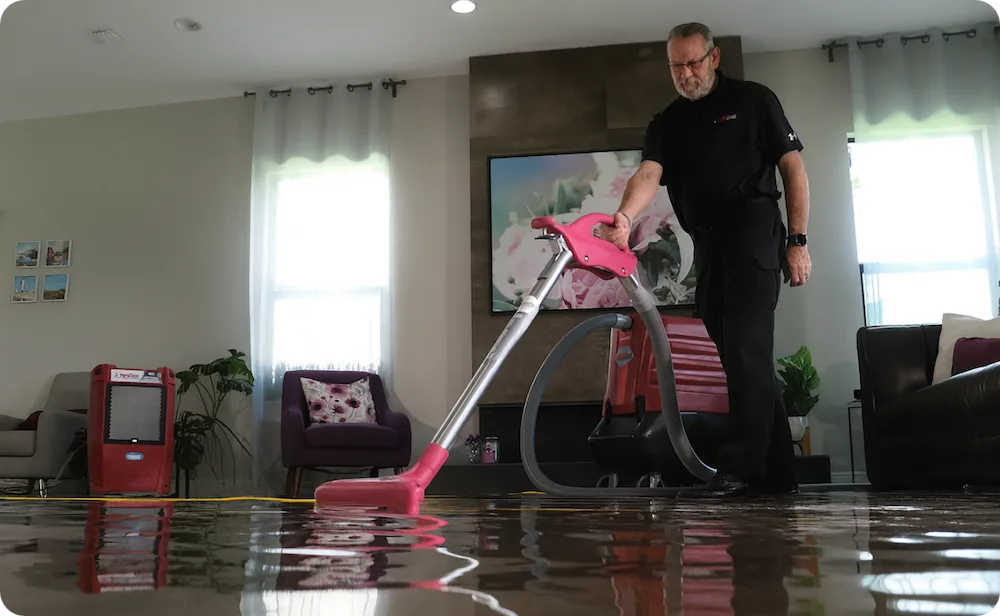
If standing water remains, professional extraction equipment may be used to remove accessible water from suitable surfaces.
Removing visible water is an important first step, but it does not establish that enclosed materials or flooring assemblies are dry.
Some affected materials may be dried and retained. Others may require selective removal because they are deteriorated, contaminated, or cannot be adequately dried in place.
For example, restoring moisture-damaged cabinetry may involve evaluating the cabinet base and surrounding components rather than automatically removing an entire row of kitchen cabinets.
Countertops, plumbing connections, electrical components, and cabinet construction may affect access and repair decisions.
When materials are appropriate to retain, structural drying may involve controlled air movement, dehumidification, and other methods suited to the affected assemblies.
Moisture trapped beneath flooring or inside cabinets may require a different approach from water affecting an open tile surface.
Drying progress should be evaluated using appropriate moisture measurements rather than appearance alone.
Depending on the project, documentation may include photographs, descriptions of affected materials, moisture readings, and records of restoration activities.
Once mitigation is complete, separate repairs or reconstruction may still be necessary for cabinets, flooring, drywall, or other damaged finishes.
Sometimes. The decision depends on the materials involved, how long they were wet, their current condition, and whether appropriate drying is possible.
Not every wet cabinet needs replacement, and not every floor can be saved simply because it still looks intact.
| Kitchen Material | What May Be Possible | When Replacement May Be Necessary |
|---|---|---|
| Solid wood cabinet components | Some components may be suitable for controlled drying if sound. | Severe deterioration, distortion, contamination, or other damage may prevent retention. |
| Plywood cabinet components | Restoration may be possible depending on construction and exposure. | Delamination, loss of integrity, or damage that cannot be adequately addressed. |
| Particleboard or fiberboard | Limited moisture exposure may not always require replacement. | Swelling, crumbling, loss of strength, or persistent damage may require replacement. |
| Vinyl plank flooring | Some installations may allow drying or selective removal and reinstallation. | Damaged planks, unsuitable underlayment, or inaccessible moisture may require removal. |
| Ceramic or porcelain tile | Tile may remain serviceable while adjoining materials are evaluated. | Damaged substrates, loss of adhesion, or other assembly problems may require work. |
| Drywall and baseboards | Some materials can be dried and retained when conditions permit. | Significant deterioration, contamination, or inability to dry adequately. |
The EPA’s cleanup guidance evaluates different materials separately, including drywall, wood surfaces, insulation, and flooring. It does not recommend automatically replacing every material affected by a clean-water leak.[3]
However, contamination changes the cleanup considerations. A dishwasher drain leak or sewage-related backup should not automatically be treated like a newly failed drinking-water supply connection.
The basic principles of kitchen water damage restoration are similar across the country. However, Port Charlotte homes have several characteristics that can influence how damage is discovered and how affected materials are evaluated.
Many residential properties in Port Charlotte are built on concrete slabs.
When water escapes from a kitchen appliance or supply connection, it may spread across the finished floor and enter areas beneath cabinets or floating flooring.
Because concrete and finished flooring assemblies respond differently to moisture, determining what is actually wet matters before repairs begin.
Not every wet floor indicates a slab leak. If plumbing beneath the foundation is suspected, a licensed plumber should investigate the source. For related restoration information, see Slab Leak Water Damage Cleanup in Port Charlotte.
Port Charlotte’s warm, humid conditions can make moisture control particularly important after water enters cabinets, flooring, or enclosed spaces.
The National Weather Service describes Southwest Florida’s typical rainy season as running from May 15 through October 15, with frequent showers, thunderstorms, and elevated humidity.[4]
Opening windows on a humid afternoon is not always an effective way to dry a kitchen. Depending on outdoor conditions, it can introduce additional moisture into the home.
An appropriate drying plan should consider indoor humidity, temperature, airflow, and the materials affected.
Some Port Charlotte homeowners spend extended periods away from their Florida properties.
A refrigerator connection or sink supply line that leaks while a home is unoccupied may continue releasing water until someone discovers the problem or the water supply is isolated.
When the duration of a leak is uncertain, the fact that a kitchen floor looks dry does not establish that cabinets, walls, or underlayment were unaffected.
Homeowners who leave their properties unoccupied for long periods may wish to discuss appropriate leak sensors, automatic shutoff devices, and seasonal plumbing precautions with a qualified professional.
Yes. If susceptible materials remain damp, conditions may support mold growth behind cabinets, beneath sinks, or inside adjoining walls.
The EPA recommends drying water-damaged materials within approximately 24–48 hours when possible to help prevent mold growth.[3]
That does not mean every kitchen leak produces mold within two days. The outcome depends on the moisture, materials, temperature, duration of exposure, and other conditions.
Persistent musty odors, visible deterioration, recurring dampness, or suspected growth behind cabinets may warrant further evaluation.
If mold has already developed, the appropriate response may include a separate mold assessment or remediation process. Learn more about mold remediation and removal in Port Charlotte.
The cost depends on the size of the affected area, the condition of the water, which materials became wet, and the work necessary to restore the property.
A small, promptly discovered sink leak that affects only an accessible surface is different from a dishwasher failure that saturates cabinet bases, flooring underlayment, and adjoining walls.
When reviewing estimates, distinguish among three potentially separate costs:
Water damage restoration estimates may also be affected by whether cabinets must be disconnected for access, how much flooring is involved, and whether electrical or other specialty work is needed.
There is no single reliable price for every kitchen water damage cleanup project. Ask for an itemized estimate based on the actual loss rather than a price that assumes all kitchens require the same work.
For published national repair and restoration cost benchmarks, see our Burst Pipe Water Damage Cleanup in Port Charlotte: 2026 Cost Guide.
Florida homeowners insurance may cover certain resulting water damage from sudden and accidental plumbing or appliance failures. However, coverage depends on the cause, policy terms, exclusions, limits, and deductible.
The failed appliance or plumbing component may be treated differently from the cabinets, flooring, or drywall damaged by escaping water.
A sudden supply-line failure may also be treated differently from a leak that developed gradually over an extended period.
The Florida Department of Financial Services advises homeowners to review policy provisions and ask questions about water damage coverage, deductibles, and claim procedures.[5]
Notify your insurer promptly if you believe the loss may be covered. Do not delay necessary safety measures or emergency mitigation simply to obtain additional photographs.
For further guidance about documenting plumbing-related losses, see Burst Pipe Insurance Claims in Florida: What’s Covered and How to Document Damage.
A kitchen is one of the most frequently used spaces in a home. When water damage occurs, you want to understand what has been affected, what can potentially be saved, and what is needed before the room can return to normal use.
PuroClean of Venice provides residential kitchen water damage restoration services in Port Charlotte and surrounding Southwest Florida communities.
Depending on the circumstances, our restoration services may include:
Not every kitchen leak requires extensive removal of cabinets or flooring. Our goal is to help identify the actual damage and determine an appropriate restoration scope based on the property’s conditions.
For broader service information, visit our Water Damage Restoration page or our Port Charlotte service-area page.
Stop using the dishwasher, avoid wet electrical equipment, and isolate the water supply if you can do so safely. Contact an appropriately qualified repair professional to address the source. If water reached cabinets, flooring, or adjoining materials, consider professional moisture assessment and cleanup.
Yes. A damaged refrigerator supply connection may release water behind the appliance and into nearby flooring or cabinet materials. A leak discovered after an extended absence may require additional investigation because the exposure duration is uncertain.
Yes. Water can reach the recessed toe-kick area, unfinished cabinet bases, and flooring beneath cabinetry. Even after visible puddles are removed, some materials may remain wet.
No. The decision depends on cabinet construction, material condition, water exposure, contamination concerns, and whether adequate drying is possible. Swollen or structurally compromised components may require replacement, while some sound materials may be retained.
Yes. Water can enter flooring assemblies through joints, transitions, and perimeter gaps. An apparently dry tile or vinyl surface does not necessarily establish that the underlying materials are dry.
Cleanup and appropriate drying should begin as soon as conditions are safe and practical. The EPA recommends drying water-damaged materials within approximately 24–48 hours when possible to help prevent mold growth.[3] This does not mean every kitchen can be completely dried within two days.
Some policies cover resulting damage from certain sudden and accidental appliance or plumbing failures. Coverage depends on the cause, policy provisions, exclusions, and deductible. Ask your insurer how the specific loss is treated.
Plumbing and appliance repairs should be completed by appropriately qualified professionals. PuroClean of Venice provides water damage restoration services to address affected building materials after the leak.
Yes. PuroClean of Venice provides residential kitchen water damage cleanup and restoration services in Port Charlotte, Florida. Call (941) 294-0404 to discuss your situation and the appropriate next steps.
These practical guides can help you recognize hidden water damage, respond to plumbing emergencies, and understand restoration and insurance considerations.
A leaking dishwasher, refrigerator connection, or sink supply line can disrupt your kitchen long after the visible water has been wiped away.
Whether you’ve found water behind your cabinets, damp flooring, or signs of concealed moisture, the next step is understanding what has been affected and what restoration work may be necessary.
PuroClean of Venice provides professional kitchen water damage cleanup in Port Charlotte, FL, including water extraction, moisture assessment, structural drying, and related restoration services.
Have the leaking appliance or plumbing connection addressed by an appropriate repair professional. If water has affected your kitchen’s cabinets, flooring, walls, or other building materials, contact PuroClean of Venice for restoration assistance.
This page provides general information about residential kitchen water damage restoration. Appropriate cleanup methods depend on the water source, affected materials, contamination concerns, and property conditions. Plumbing, electrical, and appliance repairs should be handled by appropriately qualified professionals. PuroClean of Venice provides water damage restoration services; insurance coverage and the need for reconstruction depend on the individual circumstances.
What Our Customers Say:
Find answers to common questions about our services
You can check the walls and ceilings for water stains, the floors for warping and buckling, and the pipes for corrosion, leaks, missing grout, and mold. Attics and basements may have damaged flooring, mildew or mold, dampness, and odors. Also, be sure to inspect the exterior of the home for cracked roof tiles, puddles, standing water, and whether the ground is sloping away from the house.
First, if safe, shut off the utilities in your home to avoid further damage. Don’t enter your home if it has suffered structural damage. Don’t walk through floodwater if electricity hasn’t been turned off, and avoid contaminants. Next, contact a water-damage restoration company, such as PuroClean of Venice, as soon as possible. Don’t wait, as water can cause mold and irremediable damage to the wood, walls, and carpet. Then, depending on the extent of the damage and the recommendation of the remediation company, contact your insurance provider to start the claim process.
There are many variables that determine whether a flooded property can be saved: the amount of water, and even more important, the amount of time the water was in/around the property. Every situation is different, and PuroClean of Venice expert restoration professionals can determine what can be salved once one site.
Property water damage can pose several dangers including structural instability, electrical hazards, mold and mildew growth leading to health issues, contamination from sewage or chemicals, and potential collapse of weakened structures.
Water flooding can cause extensive damage including structural damage to walls, floors, and foundations, damage to personal belongings, electrical hazards, and potential health risks from mold and bacteria growth. The longer water sits, the more severe the damage becomes.
Water damage can result from unexpected leaks, flooding from storms, plumbing failures, or appliance malfunctions. Our certified teams focus on rapid water removal, drying, and stabilization to help prevent further damage and mold growth.
 Explore Our Water Damage Mitigation Services
Even after a fire is extinguished, smoke, soot, and odor can continue to affect your home. Fire damage restoration services address visible damage while also helping reduce lingering effects that impact indoor air quality and surfaces.
Explore Our Fire and Smoke Damage Restoration Services
Mold often develops as a result of unresolved moisture or hidden water damage. Professional mold remediation helps identify affected areas, contain growth, and restore healthy indoor conditions.
Explore Our Mold Removal and Remediation Services
Biohazard situations, including crime scene cleanup and virus decontamination, require specialized cleaning and handling to protect health and safety. Biohazard cleanup services address contamination using proper protocols and professional care.
Explore Our Biohazard Cleanup Services
When water reaches production gear, refrigeration, IT, or stock, every hour matters. PuroClean of Venice stabilizes the loss fast, documents asset impacts, and manages a staged return to use so operations can resume in phases—not all at once. Commercial water damage isn’t just structural—it’s the machinery, inventory, electrical systems, and data infrastructure at stake.
Explore Our Commercial Water Damage Restoration Services
When a fire impacts one suite, the entire building can be affected by smoke migration, access restrictions, and documentation needs across tenants, ownership, and insurance. PuroClean of Venice helps property managers coordinate phased commercial fire and smoke restoration so each tenant’s path to re-occupancy is clear and documented.
Explore Our Commercial Fire Damage Restoration Services
For operations leaders and property managers, mold is an indoor air and liability event—not a housekeeping issue. PuroClean of Venice supports containment-first remediation, moisture-source correction, and clearance documentation workflows so regulated or occupancy-critical areas can reopen with defensible records.
Explore Our Commercial Mold Remediation Services
For regulated and sensitive environments, biohazard cleanup is an access-controlled response with infection-control documentation—not routine janitorial cleaning. PuroClean of Venice supports property managers and compliance stakeholders with discreet containment, approved disinfectant workflows, and clear re-entry records.
Explore Our Commercial Biohazard Cleanup Services
Water damage can result from unexpected leaks, flooding from storms, plumbing failures, or appliance malfunctions. Our certified teams focus on rapid water removal, drying, and stabilization to help prevent further damage and mold growth.
Explore Our Water Damage Mitigation Services

PuroClean of Venice
(941) 294-0404
7027 Treadway Rd., Port Charlotte, FL 33981


© 2026 PuroClean. All Rights Reserved.