24/7 Emergency Burst Pipe Water Damage Cleanup Port Charlotte Services in Venice
A burst water pipe can flood a room in minutes. Water may spread across the floor, soak into drywall, reach the cabinets, or disappear beneath flooring before you realize how far it has traveled.
Maybe a washing machine supply line failed while you were away. Maybe water is coming through the ceiling from a broken pipe. Or perhaps you’ve discovered moisture beneath the flooring of your Port Charlotte home, but you cannot see where it’s coming from.
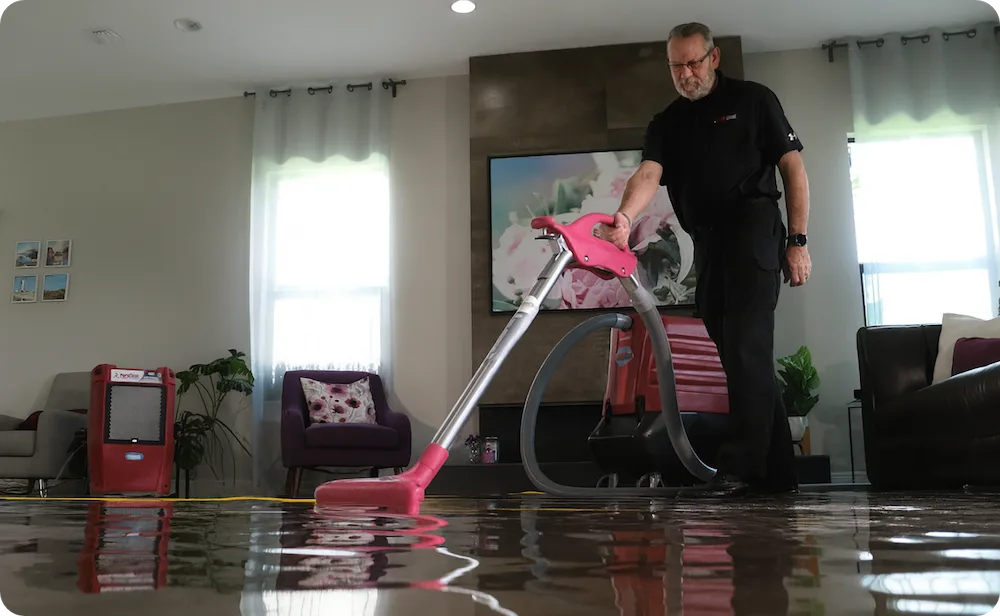
PuroClean of Venice provides burst pipe water damage cleanup in Port Charlotte, Florida, including emergency water extraction, moisture assessment, structural drying, and related restoration services.
Our focus is the water damage left behind after a plumbing failure. A licensed plumber repairs the broken pipe; our restoration services address the water that has entered your property and affected its building materials.
If water is spreading through your home, you don’t need to know the full extent of the damage before calling for help. Contact PuroClean of Venice at (941) 294-0404 to discuss your situation and the appropriate next steps.
First, make sure the area is safe. Then stop the water supply if possible, contact a plumber, document the damage, and arrange water cleanup when needed.
The first few decisions matter because water can continue moving into building materials even after the visible flow has stopped.
Do not enter standing water near electrical outlets, appliances, wiring, or an electrical panel. Keep people away from sagging ceilings or visibly unstable materials.
The Centers for Disease Control and Prevention advises against entering standing water to reach an electrical panel. Wet electrical equipment should be evaluated before being returned to service.[1]
If the leak involves a pressurized supply pipe, shutting off the appropriate valve can prevent additional water from escaping.
Some Port Charlotte homes have a homeowner-accessible shutoff near the exterior wall where the water line enters the property, in a garage, or in another utility area. The location depends on the house and plumbing configuration.
Do not force a stuck valve or operate unfamiliar utility-owned equipment. If you cannot safely locate or operate the shutoff, contact a plumber or the appropriate water utility.
The broken pipe, fitting, or supply connection must be identified and repaired.
A plumber may need to inspect an exposed supply line, open an accessible wall section, or investigate concealed plumbing to determine where the failure occurred.
When safe, photograph standing water, wet flooring, damaged cabinets, ceiling stains, and other affected areas. Record when you discovered the leak and what you did to stop it.
Move dry valuables and furniture away from affected areas if they can be moved safely. Do not enter hazardous areas or delay necessary emergency measures to take additional photographs.
Once the source is being addressed, the next priority is evaluating where the water traveled.
Water beneath flooring, inside wall cavities, or behind cabinets may require professional extraction, moisture assessment, and drying even when no standing water remains.
For a detailed homeowner checklist, read Burst Pipe in Your Port Charlotte Home? 7 Steps to Take Immediately.
Professional cleanup is more than removing puddles and placing fans in a room.
When water enters a property, the restoration process should identify the affected materials, determine which can be dried and retained, and address moisture that may not be visible.
Depending on the loss, PuroClean of Venice’s water damage restoration services may involve the following steps.
The first step is understanding what happened and which areas may be affected.
A supply line that failed beneath a bathroom sink may affect a relatively small area. A plumbing failure discovered after several days in an unoccupied home may involve multiple rooms.
Restoration professionals may use moisture meters and other appropriate assessment methods to evaluate drywall, flooring, cabinetry, and surrounding materials.
Thermal imaging can help identify temperature patterns worth investigating, but it does not directly measure moisture. Suspected wet areas require appropriate verification.
When standing water is present, removing it is generally an early priority once conditions are safe.
Depending on the affected area, professional extraction equipment may be used to remove accessible water from floors and other suitable surfaces.
Extracting water reduces the moisture that must subsequently be removed through evaporation and helps make affected areas accessible for further restoration work.
Not every material that becomes wet must be replaced.
Some drywall, flooring assemblies, framing, and other building components may be suitable for drying and retention. Other materials may be too damaged, contaminated, or difficult to restore adequately.
The decision should reflect the material’s condition, the source of the water, the duration of exposure, and whether appropriate drying is possible.
Selective removal may be needed to access concealed moisture or address materials that cannot be retained.
After accessible water is removed, moisture may remain inside drywall, wood-based materials, flooring assemblies, or enclosed spaces.
Depending on the conditions, structural drying may involve professionally positioned air movers, dehumidifiers, and other appropriate equipment.
The drying approach for a wet bathroom wall may differ from the approach required for water beneath kitchen cabinets or floating flooring.
Indoor humidity, airflow, temperature, and material characteristics all affect how water-damaged materials dry.
A room can feel dry while moisture remains in some building materials.
Moisture measurements and appropriate monitoring help evaluate drying progress and determine when established drying goals have been reached.
Depending on the project, documentation may include photographs, descriptions of affected materials, moisture readings, and records of mitigation activities.
When the restoration phase is complete, the homeowner should understand which materials were retained, what was removed, and whether separate reconstruction work remains.
One of the most frustrating parts of a plumbing emergency is discovering that the visible water was only part of the problem.
Consider a broken supply connection beneath your kitchen sink. You turn off the water, wipe out the cabinet, and mop the floor. Everything looks normal again.
But if water reached the cabinet’s unfinished base or traveled beneath the flooring, those materials may still need attention.
| Affected Area | Potential Hidden Damage | Restoration Consideration |
|---|---|---|
| Drywall and baseboards | Water may enter wall cavities or absorb into trim. | Moisture evaluation and drying or selective removal when appropriate. |
| Vinyl plank and laminate flooring | Water may travel beneath planks and into underlayment. | Evaluate concealed moisture and whether flooring can be retained. |
| Tile floors | Water may reach adjoining materials or underlying assemblies through joints and openings. | Assess affected substrates rather than judging by the tile surface alone. |
| Kitchen and bathroom cabinets | Cabinet bases, backs, and toe-kick areas may absorb moisture. | Determine whether materials can be dried or require repair. |
| Ceilings and insulation | Overhead leaks may saturate drywall and insulation before dripping becomes visible. | Evaluate the ceiling’s condition and address potentially unsafe materials. |
| Carpet and padding | Water may remain beneath the carpet or affect underlying materials. | Extraction and evaluation of padding and subfloor conditions. |
A dry-looking surface does not necessarily mean the materials beneath it are dry. That distinction is particularly important when water has reached enclosed assemblies or flooring systems.
For additional homeowner guidance, see Water Under Vinyl Plank Flooring: How to Detect Hidden Moisture and Prevent Damage.
Port Charlotte includes established residential neighborhoods, renovated homes, newer construction, and properties occupied only part of the year.
Those differences matter when investigating a plumbing failure and determining the extent of water damage.
Many Port Charlotte homes have slab-on-grade foundations.
If a plumbing line fails beneath the slab or inside a concealed wall, the source may be difficult to identify without professional investigation.
Water appearing near a baseboard or beneath flooring does not automatically prove that a slab leak has occurred. Other plumbing, drainage, and moisture sources may produce similar symptoms.
Where a slab leak has been confirmed, a licensed plumber should determine the appropriate pipe repair. If interior building materials were affected, water damage restoration may also be necessary.
Learn more about slab leak water damage cleanup in Port Charlotte.
Southwest Florida’s warm, humid weather can make moisture management more complicated after a plumbing emergency.
For example, opening windows on a humid afternoon may not improve indoor drying conditions. Depending on the weather, it can introduce additional moisture into the building.
Appropriate drying may require controlling indoor humidity while promoting evaporation from affected materials.
The U.S. Environmental Protection Agency recommends drying water-damaged areas and materials within approximately 24–48 hours when possible to help prevent mold growth.[2]
That recommendation emphasizes the importance of prompt action. It does not mean that every building can be completely dried in two days.
For homeowners who spend part of the year outside Florida, a plumbing failure may go unnoticed until a neighbor, property manager, or returning resident discovers the damage.
A supply-line leak that continues while a home is empty can expose flooring, cabinets, and drywall to water for an extended period.
By the time the problem is discovered, some visible water may have evaporated while moisture or deterioration remains inside building materials.
This is one reason seasonal Port Charlotte homeowners may benefit from appropriately installed leak-detection devices and a trusted local contact who can respond to alerts.
Sometimes a leak is concealed and the homeowner first notices an unusually high water bill.
Charlotte County Utilities provides instructions for observing residential water meters to help investigate unexplained water consumption.[3]
Continued water use when household fixtures are off may indicate a leak, but irrigation, appliances, toilets, and other equipment should also be considered.
A meter check cannot determine how far moisture has spread inside a building. It is one clue that may help a plumber locate an active water-supply problem.
For county-specific information, visit Charlotte County Utilities — Reading My Meter.
Not every plumbing leak requires extensive professional restoration.
A small amount of clean water on an accessible, nonporous surface may be manageable when the source is repaired promptly and the affected area can be safely and completely dried.
Professional evaluation becomes more important when water has reached building materials or the extent of the moisture is uncertain.
| Situation | Why Professional Assessment May Be Appropriate |
|---|---|
| Water has spread into multiple rooms. | Moisture may have reached materials beyond the original leak. |
| Flooring or underlayment is wet. | Water may remain beneath the finished surface. |
| Drywall, insulation, or cabinets are affected. | Enclosed or absorbent materials may need controlled drying or removal. |
| The leak was discovered after an extended absence. | The duration of exposure and condition of affected materials may be uncertain. |
| Standing water covers a substantial area. | Professional extraction may be necessary to remove accessible water efficiently. |
| Musty odors, visible deterioration, or suspected mold are present. | Additional investigation or specialized remediation may be appropriate. |
| Electrical equipment or a ceiling has become wet. | Safety hazards require appropriate qualified professionals before cleanup. |
Water from a broken domestic supply line may initially be relatively clean, but the water condition can change after contact with contaminated materials or surfaces.
Drain backups and sewage releases present different hazards and should not be treated as ordinary clean-water incidents.
There is no single drying timeline that applies to every burst pipe.
A limited water loss involving accessible surfaces may require relatively little drying work. A more extensive incident involving insulation, multiple rooms, or concealed moisture can take longer.
Drying time depends on several factors:
Restoration professionals should evaluate drying progress using appropriate measurements rather than assuming that equipment must run for a fixed number of days.
Plumbing repairs, structural drying, and permanent reconstruction may also occur on different schedules.
The cost depends on how much water escaped, which rooms and materials were affected, and the restoration work necessary to address the damage.
A broken connection discovered immediately may require only limited cleanup. The same failure discovered after a homeowner has been away may involve wet flooring, damaged cabinets, or multiple affected rooms.
When reviewing estimates, distinguish among three potentially separate expenses:
A useful restoration estimate should explain the affected areas, proposed equipment and monitoring, necessary material removal, and any work excluded from the quoted scope.
For published national pricing benchmarks and examples of how costs can vary, read How Much Does a Burst Pipe Cost to Repair in Port Charlotte? (2026 Cost Guide).
Homeowners insurance may cover certain resulting water damage from sudden and accidental plumbing failures. However, coverage depends on the cause of the loss, the policy’s terms, exclusions, limits, and deductible.
There is an important distinction between repairing the failed plumbing component and restoring the property damaged by escaping water.
For example, a policy may treat a deteriorated pipe differently from flooring or drywall damaged by a sudden release of water.
Do not assume every burst pipe claim will be approved or denied. Review your policy and ask your insurance company how the specific circumstances apply.
Keep a record of the date you discovered the leak, visible damage, plumbing repairs, restoration work, and communications with your insurer.
Useful documentation may include:
The Florida Department of Financial Services advises homeowners to document damage, retain receipts, and take reasonable steps to prevent further damage.[4]
Notify your insurer promptly if you believe the loss may be covered. Do not delay necessary safety measures or appropriate emergency mitigation simply to obtain additional documentation.
For more detailed guidance, see Burst Pipe Insurance Claims in Florida: What’s Covered and How to Document Damage.
When a plumbing failure damages your property, you need clear information about what happened, what is wet, and what work may be necessary.
PuroClean of Venice serves Port Charlotte and surrounding Southwest Florida communities with professional water damage restoration services.
Our restoration services focus on the problems homeowners face after water escapes from a failed pipe:
Not every burst pipe requires the same amount of restoration. Some incidents involve limited surface water, while others affect multiple rooms and concealed building materials.
The appropriate response should reflect the actual conditions—not a one-size-fits-all cleanup plan.
For broader local service information, visit PuroClean Water Damage Restoration in Port Charlotte.
First, address immediate safety hazards and shut off the water supply if you can do so safely. Contact a licensed plumber to repair the failed pipe. If water has affected flooring, drywall, cabinets, insulation, or other building materials, contact a water damage restoration provider to evaluate the resulting damage.
Cleanup should begin as soon as conditions are safe and practical. Prompt extraction and drying can reduce additional damage. The EPA recommends drying water-damaged areas and materials within approximately 24–48 hours when possible to help prevent mold growth.[2]
Not necessarily. The decision depends on the flooring system, condition of the underlayment, water source, exposure duration, and whether the affected materials can be adequately dried and retained. Some flooring can be restored, while other materials may need replacement.
Yes. When moisture remains in susceptible materials, mold growth may develop. However, mold does not automatically occur after every plumbing leak. Identifying and correcting the water source, followed by appropriate drying, helps reduce that risk.[2]
Household fans may help with limited drying in suitable conditions, but they cannot establish whether moisture remains behind drywall, beneath flooring, or inside cabinets. Professional moisture assessment may be appropriate when water has entered concealed building materials. Avoid operating electrical equipment in unsafe wet areas.
First, have the water source isolated and repaired when safe. Because the duration of the leak may be unknown, consider professional evaluation of affected flooring, walls, cabinets, and concealed materials. Notify your insurer promptly if the loss may be covered, and keep photographs and repair records.
Plumbing repairs should be performed by an appropriately licensed plumber. PuroClean of Venice provides water damage restoration services, including water extraction, moisture assessment, structural drying, and related mitigation after the plumbing failure.
Yes. PuroClean of Venice provides water damage restoration services in Port Charlotte and surrounding Southwest Florida communities. Call (941) 294-0404 or use our contact page to discuss your water damage emergency.
Whether you’re dealing with an active plumbing emergency or trying to understand a recent water loss, these homeowner guides explain what to look for, what to do next, and how to make informed decisions about repairs and restoration.
If a pipe has burst in your home, you may already have enough to deal with: a plumbing repair, damaged flooring, wet cabinets, or uncertainty about how much water has entered the walls.
You don’t have to determine the full extent of the water damage yourself.
PuroClean of Venice provides water damage restoration services in Port Charlotte, Florida, helping property owners address the moisture and damage left behind by burst pipes and other unexpected plumbing failures.
Have the failed pipe addressed by a qualified plumber. If water has affected your floors, walls, ceilings, or other building materials, contact our team to discuss the appropriate restoration work.
Information on this page is intended to help homeowners understand burst pipe water damage and restoration considerations. The condition of affected materials, appropriate cleanup methods, and insurance coverage vary by property and circumstances. Plumbing repairs and regulated electrical work should be performed by appropriately qualified professionals. PuroClean of Venice provides water damage restoration services; it does not imply that plumbing repairs are included.
What Our Customers Say:
Find answers to common questions about our services
You can check the walls and ceilings for water stains, the floors for warping and buckling, and the pipes for corrosion, leaks, missing grout, and mold. Attics and basements may have damaged flooring, mildew or mold, dampness, and odors. Also, be sure to inspect the exterior of the home for cracked roof tiles, puddles, standing water, and whether the ground is sloping away from the house.
First, if safe, shut off the utilities in your home to avoid further damage. Don’t enter your home if it has suffered structural damage. Don’t walk through floodwater if electricity hasn’t been turned off, and avoid contaminants. Next, contact a water-damage restoration company, such as PuroClean of Venice, as soon as possible. Don’t wait, as water can cause mold and irremediable damage to the wood, walls, and carpet. Then, depending on the extent of the damage and the recommendation of the remediation company, contact your insurance provider to start the claim process.
There are many variables that determine whether a flooded property can be saved: the amount of water, and even more important, the amount of time the water was in/around the property. Every situation is different, and PuroClean of Venice expert restoration professionals can determine what can be salved once one site.
Property water damage can pose several dangers including structural instability, electrical hazards, mold and mildew growth leading to health issues, contamination from sewage or chemicals, and potential collapse of weakened structures.
Water flooding can cause extensive damage including structural damage to walls, floors, and foundations, damage to personal belongings, electrical hazards, and potential health risks from mold and bacteria growth. The longer water sits, the more severe the damage becomes.
Water damage can result from unexpected leaks, flooding from storms, plumbing failures, or appliance malfunctions. Our certified teams focus on rapid water removal, drying, and stabilization to help prevent further damage and mold growth.
 Explore Our Water Damage Mitigation Services
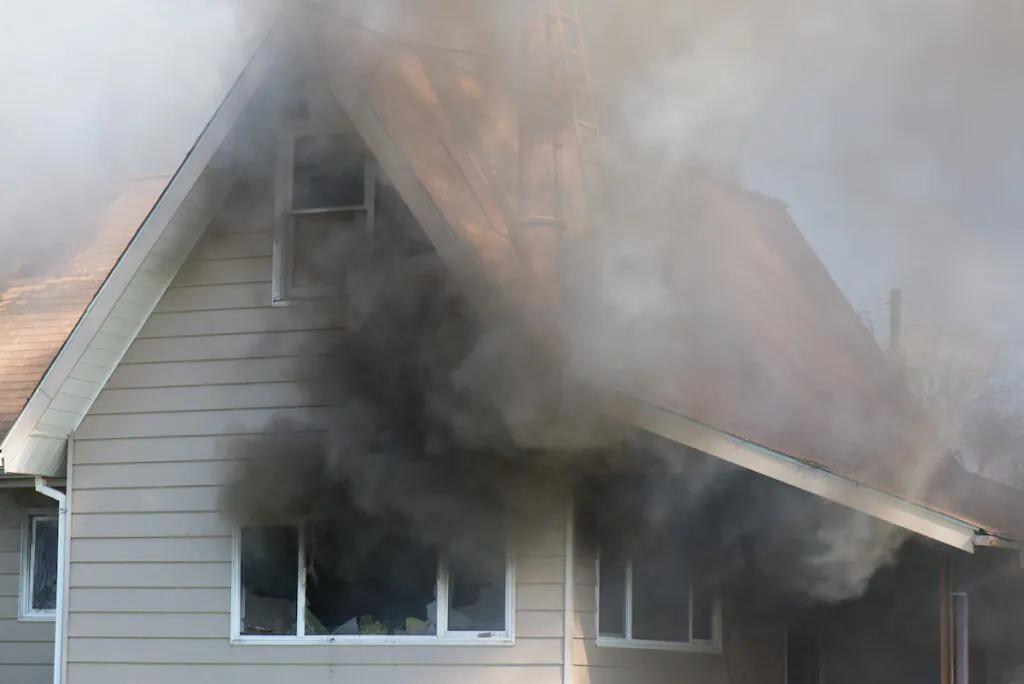
Even after a fire is extinguished, smoke, soot, and odor can continue to affect your home. Fire damage restoration services address visible damage while also helping reduce lingering effects that impact indoor air quality and surfaces.
Explore Our Fire and Smoke Damage Restoration Services
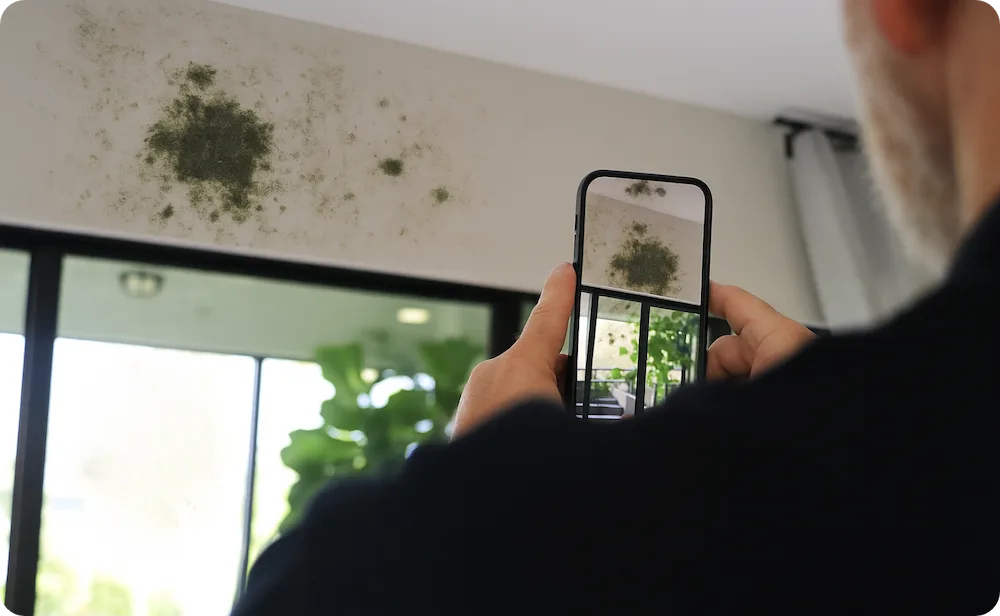
Mold often develops as a result of unresolved moisture or hidden water damage. Professional mold remediation helps identify affected areas, contain growth, and restore healthy indoor conditions.
Explore Our Mold Removal and Remediation Services
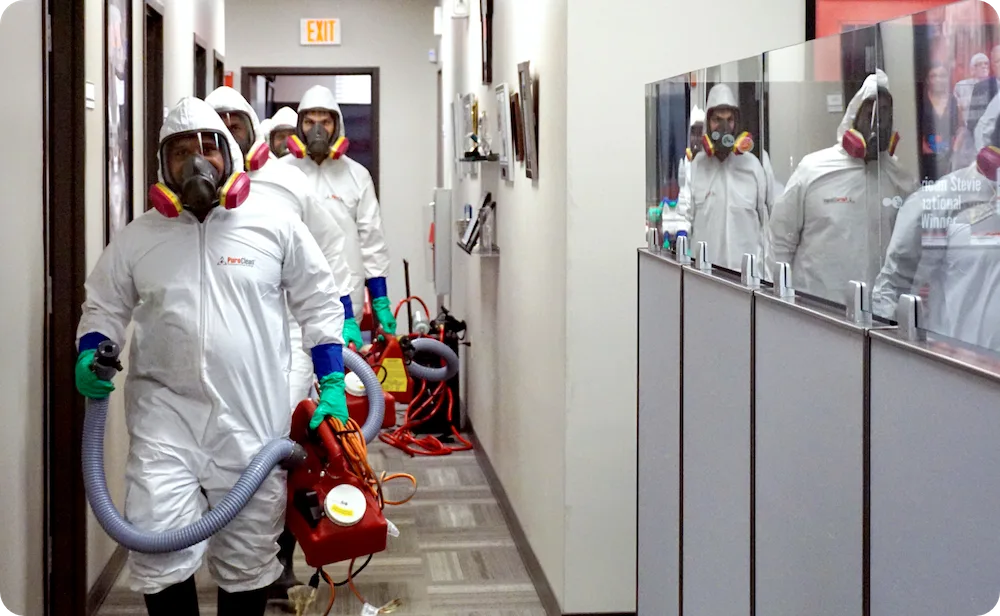
Biohazard situations, including crime scene cleanup and virus decontamination, require specialized cleaning and handling to protect health and safety. Biohazard cleanup services address contamination using proper protocols and professional care.
Explore Our Biohazard Cleanup Services
When water reaches production gear, refrigeration, IT, or stock, every hour matters. PuroClean of Venice stabilizes the loss fast, documents asset impacts, and manages a staged return to use so operations can resume in phases—not all at once. Commercial water damage isn’t just structural—it’s the machinery, inventory, electrical systems, and data infrastructure at stake.
Explore Our Commercial Water Damage Restoration Services
When a fire impacts one suite, the entire building can be affected by smoke migration, access restrictions, and documentation needs across tenants, ownership, and insurance. PuroClean of Venice helps property managers coordinate phased commercial fire and smoke restoration so each tenant’s path to re-occupancy is clear and documented.
Explore Our Commercial Fire Damage Restoration Services
For operations leaders and property managers, mold is an indoor air and liability event—not a housekeeping issue. PuroClean of Venice supports containment-first remediation, moisture-source correction, and clearance documentation workflows so regulated or occupancy-critical areas can reopen with defensible records.
Explore Our Commercial Mold Remediation Services
For regulated and sensitive environments, biohazard cleanup is an access-controlled response with infection-control documentation—not routine janitorial cleaning. PuroClean of Venice supports property managers and compliance stakeholders with discreet containment, approved disinfectant workflows, and clear re-entry records.
Explore Our Commercial Biohazard Cleanup Services
Water damage can result from unexpected leaks, flooding from storms, plumbing failures, or appliance malfunctions. Our certified teams focus on rapid water removal, drying, and stabilization to help prevent further damage and mold growth.
Explore Our Water Damage Mitigation Services

PuroClean of Venice
(941) 294-0404
7027 Treadway Rd., Port Charlotte, FL 33981


© 2026 PuroClean. All Rights Reserved.