24/7 Emergency Roof Leak Water Damage Cleanup Port Charlotte Services in Venice
It starts with a brown stain on the living room ceiling. Maybe the paint begins bubbling after an afternoon thunderstorm, or you notice water dripping near a ceiling fan. The roof looks normal from the driveway, but something above the ceiling is wet.
Sometimes the damage is more obvious. A severe storm damages the roof, rainwater enters the attic, and insulation, drywall, and flooring become saturated. Even after the rain stops, moisture may remain inside the building materials.
PuroClean of Venice provides professional roof leak water damage cleanup in Port Charlotte, Florida, helping homeowners address damaged ceilings, wet attic insulation, concealed moisture, and interior water damage caused by leaking roofs and storm-related water intrusion.
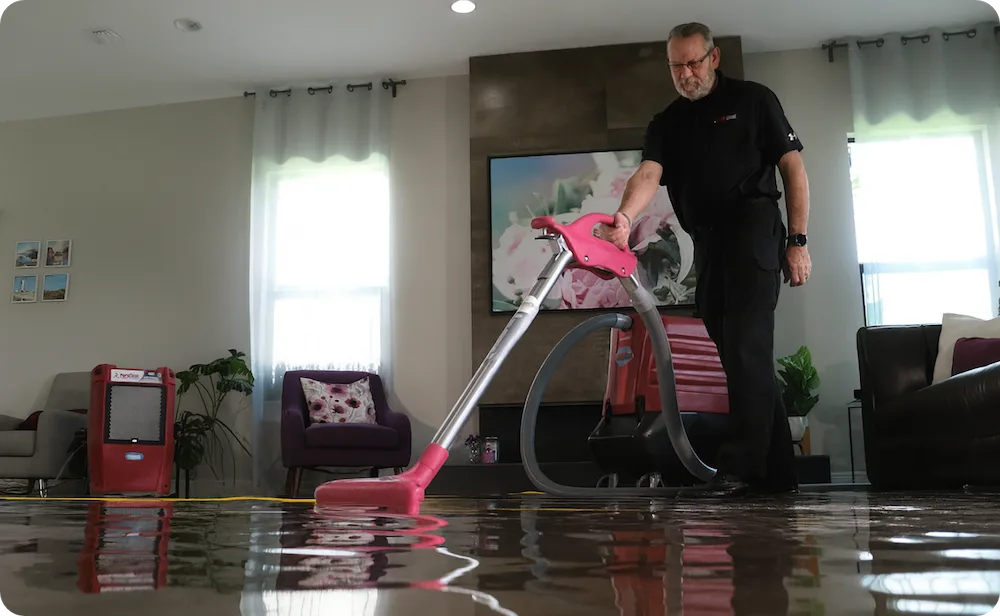
Our residential restoration services include moisture assessment, water extraction when necessary, evaluation of affected materials, structural drying, and drying progress monitoring.
Important: A qualified roofing contractor should identify and repair the source of the leak. PuroClean of Venice focuses on the resulting water damage inside your home. Both services may be necessary to prevent further damage and complete the restoration process.
If your Port Charlotte home has a leaking ceiling, wet insulation, or water damage after a storm, call (941) 294-0404 to discuss the situation and appropriate next steps.
Put safety first, stay away from damaged ceilings and wet electrical equipment, protect unaffected belongings when possible, and contact the appropriate professionals to stop the water intrusion and address the damage.
A roof leak can create hazards that aren’t obvious from the floor. Water may collect above drywall, saturate attic insulation, or travel near electrical wiring before becoming visible inside the room.
Temporary roof protection may help reduce additional water intrusion when permanent repairs cannot be completed immediately. However, climbing onto a wet or storm-damaged roof creates serious fall hazards.
Do not climb onto a damaged roof to inspect the leak or install a tarp yourself. A qualified roofing professional should determine whether temporary protection is appropriate and how it can be installed safely.
If severe weather is still underway, roof access may need to wait until conditions are safe.
Treat water near a ceiling light, fan, or electrical fixture as a potential electrical hazard. Do not operate the switch, touch the fixture, or attempt to remove it.
Keep people away from the area. If electrical power needs to be isolated and the appropriate controls cannot be reached safely, contact a qualified electrician or emergency personnel.
Likewise, never puncture a sagging or bulging ceiling to release water yourself. Trapped water and weakened materials can fall suddenly.
Repairing the roof stops the source of water intrusion. However, the materials that became wet before the repair may still require professional attention.
For example, a roofing contractor might repair damaged flashing above a bedroom. The roof may no longer leak, but insulation above the ceiling could remain saturated, and moisture may have reached adjoining drywall.
Professional roof leak water damage restoration focuses on identifying affected materials, removing unwanted water, addressing materials that cannot be retained, and drying appropriate building components.
Not every roof leak requires all of these steps. A small, promptly discovered leak may cause limited damage. A major storm-related loss involving several rooms and saturated insulation may require a more extensive restoration scope.
PuroClean of Venice provides professional water damage restoration services for homeowners throughout Port Charlotte and surrounding Southwest Florida communities.
Port Charlotte homeowners experience seasonal thunderstorms, heavy rainfall, tropical weather, and periods of wind-driven rain. These conditions can expose vulnerabilities in roofing systems that might not be apparent during dry weather.
However, a roof does not have to suffer hurricane damage to develop a leak. Ordinary rainfall can enter through compromised flashing, deteriorated roofing materials, damaged underlayment, or other openings.
Homes throughout Port Charlotte and Charlotte County have different roofing systems, including asphalt shingles, concrete or clay tiles, and metal roofing.
Each roofing system has its own components and potential points of water intrusion.
A qualified roofing contractor should determine whether the source involves damaged roofing, flashing, underlayment, or another component. PuroClean’s role is to address interior water damage resulting from that intrusion.
Some Port Charlotte roof leaks occur only during storms with rain blowing from a particular direction.
A homeowner may notice a ceiling stain after a strong summer thunderstorm, followed by several weeks without additional dripping.
That doesn’t necessarily mean the problem has resolved. The next storm may allow water to enter through the same vulnerable area.
Repeated wetting can also affect attic insulation, wood framing, and ceiling drywall before substantial interior damage becomes visible.
Some Port Charlotte homeowners spend extended periods away from their Florida properties.
If a roof begins leaking during a storm while the home is unoccupied, the water damage may remain unnoticed until a neighbor, property manager, or returning homeowner discovers it.
By that time, the original dripping may have stopped, but moisture could remain inside insulation, drywall, or other enclosed materials.
For seasonal properties, arranging appropriate monitoring and having a trusted local contact can help identify storm-related problems sooner.
Common signs include yellow or brown ceiling stains, peeling paint, damp insulation, musty odors, sagging drywall, and recurring moisture after rain.
Some roof leaks produce immediate dripping. Others allow moisture to collect inside attic or ceiling materials before homeowners notice anything unusual.
These signs do not automatically confirm a roof leak. Plumbing failures, air-conditioning condensation, and other moisture problems can produce similar symptoms.
What matters is identifying the source and determining whether moisture has affected materials beyond the visible stain.
Yes. Water may enter through the roof covering, travel along roof decking or framing, and eventually reach insulation or ceiling drywall some distance from the opening.
For example, water entering near a roof penetration may follow a framing member before creating a ceiling stain in an adjoining room.
The location of the ceiling stain does not necessarily identify the location of the roof defect.
A roofing contractor investigates the source. Water damage restoration professionals evaluate the affected interior materials.
Not every ceiling stain comes from a leaking roof. This distinction is particularly relevant in Southwest Florida, where residential air-conditioning systems operate frequently and some homes have HVAC equipment or ductwork in attic spaces.
A clogged condensate drain, leaking air handler, or moisture collecting on inadequately insulated ductwork can sometimes create damage that resembles a roof leak.
| What You Notice | Possible Source | Professional to Contact |
|---|---|---|
| Water appears or increases during rain. | Roofing or another exterior building-envelope opening. | Qualified roofing contractor. |
| Moisture appears primarily while the AC is running. | Condensate drainage or another HVAC-related problem. | Qualified HVAC technician. |
| Water appears after using an upstairs bathroom or plumbing fixture. | Supply piping, plumbing fixtures, or drainage components. | Licensed plumber. |
| A stain reappears during certain wind-driven storms. | Intermittent rainwater intrusion through a vulnerable opening. | Qualified roofing or building-envelope contractor. |
| Moisture appears without a clear pattern. | Several concealed sources may be possible. | Appropriate qualified professional based on the investigation. |
These observations provide clues rather than definitive proof. Water may remain trapped in materials after the source stops, and more than one moisture problem can exist in the same property.
Our homeowner guide, Ceiling Water Stains: Is It a Roof Leak, AC Condensation, or Plumbing Problem?, explains the differences in more detail.
Sometimes. Whether materials can be restored depends on their condition, the amount of water absorbed, the duration of exposure, contamination concerns, and whether appropriate drying is possible.
A small stain on otherwise sound ceiling drywall presents different restoration considerations from a ceiling that is sagging, softened, or holding accumulated water.
Likewise, wet attic insulation may require different treatment depending on the insulation type and the extent of damage.
Ceiling drywall can become stained, softened, or weakened after exposure to water.
If the material remains sound and can be appropriately dried, replacement may not always be necessary.
However, severely softened, sagging, contaminated, or deteriorated drywall may require controlled removal and replacement.
Do not paint over a ceiling stain until the source of moisture has been corrected and the affected materials have been evaluated. Paint cannot repair a roof defect or dry insulation concealed above the ceiling.
Attic insulation can absorb or retain water after a roof leak, sometimes without obvious staining on the finished ceiling below.
Fiberglass batts, loose-fill fiberglass, cellulose, and other insulation materials respond differently to moisture exposure.
Some insulation may remain suitable for restoration under limited conditions. Other materials may require removal because of saturation, deterioration, contamination, or an inability to dry adequately.
It is not always necessary to replace every section of attic insulation after a localized roof leak. The affected area and material condition should determine the appropriate scope.
Repeated water exposure may affect plywood roof decking, OSB sheathing, rafters, or other wood framing components.
Some sound wood materials may be suitable for professional drying. However, significant deterioration, loss of integrity, or suspected structural damage requires evaluation by an appropriately qualified roofing or structural professional.
Water damage restoration and structural roof repairs are separate scopes of work, even when both result from the same leak.
Yes. Roof leaks can create conditions that support mold growth when susceptible materials remain damp.
Attic insulation, roof decking, ceiling drywall, and other building materials may be affected when water intrusion continues or goes unnoticed.
The U.S. Environmental Protection Agency recommends drying wet building materials within approximately 24–48 hours when possible to help prevent mold growth.
That recommendation does not mean every roof leak produces mold within two days. The actual outcome depends on moisture conditions, materials, temperature, and exposure duration.
In Port Charlotte’s warm, humid environment, moisture that remains concealed inside ceiling or attic materials deserves prompt attention.
If visible growth, persistent damp odors, or suspected mold contamination is present, additional evaluation and an appropriate remediation scope may be necessary.
Learn more about our attic mold removal services in Port Charlotte and mold remediation and removal services.
The cost of roof leak water damage cleanup depends on the amount of water that entered the property, the materials affected, how long they remained wet, and the work necessary to restore the damaged areas.
A small roof leak discovered quickly may require limited moisture assessment and drying. A storm-related leak affecting several rooms, ceiling drywall, attic insulation, and flooring may require significantly more extensive restoration.
Roof repair costs and interior water damage restoration costs should be evaluated separately.
Roofing work addresses the source of the leak. Water damage mitigation addresses affected interior materials. Reconstruction may involve additional costs after drying and cleanup are complete.
A useful restoration estimate should explain the affected areas, recommended mitigation work, and any services excluded from the proposed scope.
Some roof leak water damage projects may require several days of drying, while more extensive damage can take longer.
The timeline depends on the materials affected, accessibility, moisture conditions, contamination concerns, and whether additional water can enter before the roofing system is repaired.
For example, drying a limited section of suitable ceiling materials is different from addressing several rooms with saturated insulation and damaged drywall.
Roof repairs, water mitigation, and reconstruction may also occur on different schedules.
The drying process should be evaluated using appropriate moisture measurements rather than assuming that every property will be dry after a fixed number of days.
Florida homeowners insurance may cover certain roof leak-related water damage, but coverage depends on the cause of the loss, the policy language, and applicable exclusions, limits, and deductibles.
A roof leak caused by a covered windstorm may be evaluated differently from water intrusion associated with gradual deterioration or a long-standing maintenance problem.
Coverage for the damaged roof may also differ from coverage for resulting interior damage to ceilings, drywall, insulation, flooring, and personal belongings.
For Port Charlotte homeowners, understanding the source of the water is especially important after severe weather.
Some Florida homeowners policies also have hurricane deductibles that differ from ordinary deductibles. Whether those provisions apply depends on the policy and the circumstances of the loss.
A restoration contractor can document damaged materials and mitigation work, but the insurer determines coverage under the applicable policy.
When safe, keep records that explain when the damage was discovered, the suspected source, and what work was necessary.
Do not climb onto a roof or enter an unsafe attic to collect photographs. Ask a qualified contractor to document areas that cannot be accessed safely.
Contact your insurer promptly if you intend to file a claim, and do not delay reasonable emergency measures needed to protect the property simply to gather additional documentation.
For a more detailed explanation of Florida insurance considerations, read Roof Leak Water Damage in Port Charlotte: What Does Insurance Cover?
When rainwater enters your home, repairing the roof is an important first step. But the water that reached your attic, ceiling, walls, or flooring may still require attention.
PuroClean of Venice serves homeowners in Port Charlotte and surrounding Southwest Florida communities with professional water damage cleanup and restoration services.
Our focus is on understanding the extent of the interior damage and determining what restoration work is appropriate for the affected materials.
Not every roof leak requires extensive demolition. The appropriate scope should reflect the damage that actually occurred, not an assumption that every wet ceiling or attic requires complete replacement.
For broader information about our services in the area, visit our Port Charlotte property restoration service-area page.
Start by protecting everyone inside the home. Stay away from sagging ceilings and wet electrical fixtures. Contact a qualified roofing contractor to investigate and address the source of the intrusion. If water has damaged insulation, drywall, walls, or flooring, contact a water damage restoration company to evaluate the resulting damage.
No. A small leak discovered promptly may leave limited damage. Professional restoration becomes more important when moisture reaches insulation, weakens ceilings, enters wall cavities, affects multiple rooms, or cannot be adequately evaluated through ordinary visual inspection.
Sometimes. If the drywall remains sound, the moisture source has been corrected, and the material can be adequately dried, replacement may not be necessary. Sagging, deteriorated, contaminated, or severely damaged drywall may require removal.
Not always. The decision depends on the insulation type, extent of wetting, contamination concerns, and whether the material can be adequately restored. Some affected insulation may require removal, while other materials may remain suitable for retention.
Yes, it can be. A sagging or bulging ceiling may contain accumulated water or weakened building materials. Keep people away from the affected area. Do not attempt to puncture, drain, or remove the damaged ceiling yourself.
Repairing the roof stops the identified source of water intrusion, but moisture may remain inside insulation, drywall, wood framing, or adjoining materials. Those areas may require additional evaluation, drying, or selective removal before reconstruction begins.
Some projects may require several days of appropriate drying, while larger losses can take longer. The timeline depends on moisture conditions, affected materials, access, contamination, and whether further water intrusion has been controlled.
Coverage depends on the insurance policy and the cause of the damage. Some sudden storm-related losses may be treated differently from gradual roof deterioration or recurring leakage. Contact your insurer for an explanation of how the circumstances apply to your coverage.
A qualified roofing contractor should locate and repair the source of a roof leak. PuroClean of Venice provides water damage cleanup and restoration services for affected ceilings, insulation, drywall, flooring, and other interior building materials.
Yes. PuroClean of Venice provides residential roof leak water damage cleanup and restoration services in Port Charlotte and surrounding Southwest Florida communities. Call (941) 294-0404 to discuss your situation and appropriate next steps.
Whether you’re trying to identify a ceiling stain, understand Florida homeowners insurance, or prevent recurring moisture problems in your attic, these guides from PuroClean of Venice provide additional information for Port Charlotte and Southwest Florida homeowners.
A ceiling stain may be the first sign of a small roof leak—or the visible indication of moisture that has already reached attic insulation, drywall, and adjoining materials.
Whether your home experienced sudden storm damage or you’ve noticed recurring moisture after heavy rainfall, the next step is identifying the source and understanding what was affected.
PuroClean of Venice provides professional roof leak water damage cleanup in Port Charlotte, Florida, including moisture assessment, water extraction when necessary, structural drying, and related residential restoration services.
Have the roof inspected and repaired by a qualified roofing contractor. If rainwater has affected your home’s ceilings, attic insulation, walls, flooring, or other interior materials, contact PuroClean of Venice for restoration assistance.
You don’t need to know whether your ceiling or insulation can be saved before reaching out. Tell us what you’ve noticed, whether the roof has been inspected, and which areas of your home appear affected.
What Our Customers Say:
Find answers to common questions about our services
PuroClean of Venice offers a full suite of commercial restoration services, including water, fire, mold, biohazard, and storm damage recovery. We also provide emergency board-up, structural drying, and reconstruction services.
Our teams are equipped to manage both local and large-loss commercial projects with consistent quality, safety, and communication.
PuroClean of Venice regularly collaborates with insurance carriers, TPAs, and risk management teams to manage commercial property restoration claims. We provide detailed drying logs, scope documentation, and photo/video reporting for every project in Venice.
Our Certified Priority Response (CPR) Program ensures fast contact, on-site inspection within hours, and rapid reporting, meeting the timelines insurers and clients expect for large-scale commercial losses.
PuroClean of Venice handles nearly every commercial loss scenario, including commercial water damage restoration, fire and smoke damage, mold remediation, sewage cleanup, chemical spills, and biohazard decontamination.
We can also manage full reconstruction when structural repair is needed. Our national network allows us to scale from localized events to large-loss recovery, maintaining consistent quality and communication across every project.
Yes. Our commercial restoration services can be scheduled to accommodate any occupancy or business operation needs. Our top priority is always safety and excellent customer service, so you can count on PuroClean of Venice to work with your business to restore it to pre-loss conditions and help reduce business downtime.
The cost of commercial restoration depends on factors like the extent of damage, size, and complexity of the property, and whether reconstruction or contents cleaning is required. The category of water (clean vs. contaminated) and response time also impact cost.
PuroClean of Venice provides transparent estimates, detailed scopes, and proactive communication if additional work becomes necessary.
Water damage can result from unexpected leaks, flooding from storms, plumbing failures, or appliance malfunctions. Our certified teams focus on rapid water removal, drying, and stabilization to help prevent further damage and mold growth.
 Explore Our Water Damage Mitigation Services
Even after a fire is extinguished, smoke, soot, and odor can continue to affect your home. Fire damage restoration services address visible damage while also helping reduce lingering effects that impact indoor air quality and surfaces.
Explore Our Fire and Smoke Damage Restoration Services
Mold often develops as a result of unresolved moisture or hidden water damage. Professional mold remediation helps identify affected areas, contain growth, and restore healthy indoor conditions.
Explore Our Mold Removal and Remediation Services
Biohazard situations, including crime scene cleanup and virus decontamination, require specialized cleaning and handling to protect health and safety. Biohazard cleanup services address contamination using proper protocols and professional care.
Explore Our Biohazard Cleanup Services
When water reaches production gear, refrigeration, IT, or stock, every hour matters. PuroClean of Venice stabilizes the loss fast, documents asset impacts, and manages a staged return to use so operations can resume in phases—not all at once. Commercial water damage isn’t just structural—it’s the machinery, inventory, electrical systems, and data infrastructure at stake.
Explore Our Commercial Water Damage Restoration Services
When a fire impacts one suite, the entire building can be affected by smoke migration, access restrictions, and documentation needs across tenants, ownership, and insurance. PuroClean of Venice helps property managers coordinate phased commercial fire and smoke restoration so each tenant’s path to re-occupancy is clear and documented.
Explore Our Commercial Fire Damage Restoration Services
For operations leaders and property managers, mold is an indoor air and liability event—not a housekeeping issue. PuroClean of Venice supports containment-first remediation, moisture-source correction, and clearance documentation workflows so regulated or occupancy-critical areas can reopen with defensible records.
Explore Our Commercial Mold Remediation Services
For regulated and sensitive environments, biohazard cleanup is an access-controlled response with infection-control documentation—not routine janitorial cleaning. PuroClean of Venice supports property managers and compliance stakeholders with discreet containment, approved disinfectant workflows, and clear re-entry records.
Explore Our Commercial Biohazard Cleanup Services
Water damage can result from unexpected leaks, flooding from storms, plumbing failures, or appliance malfunctions. Our certified teams focus on rapid water removal, drying, and stabilization to help prevent further damage and mold growth.
Explore Our Water Damage Mitigation Services

PuroClean of Venice
(941) 294-0404
7027 Treadway Rd., Port Charlotte, FL 33981


© 2026 PuroClean. All Rights Reserved.