


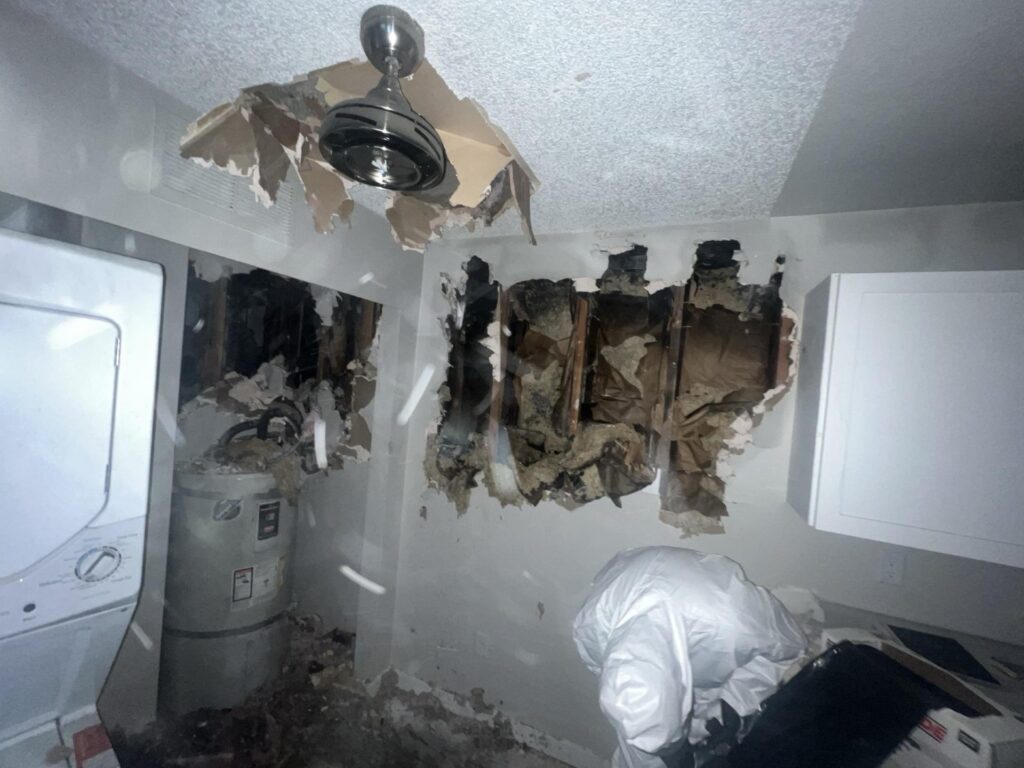
When a Woodinville homeowner called us after a fire that started in their laundry area, the structure was still standing. The inside told a different story. Our team at PuroClean of Redmond/Woodinville handled the fire damage restoration in Woodinville from the first walkthrough to the final clean handoff, treating every charred surface, smoke-soaked cavity, and soot-coated wall along the way.
What We Walked Into
The fire had started at a dryer vent and pushed heat, smoke, and soot up into the ceiling cavity before spreading to nearby rooms. By the time the fire department finished, the structure was sound. The inside was not livable.
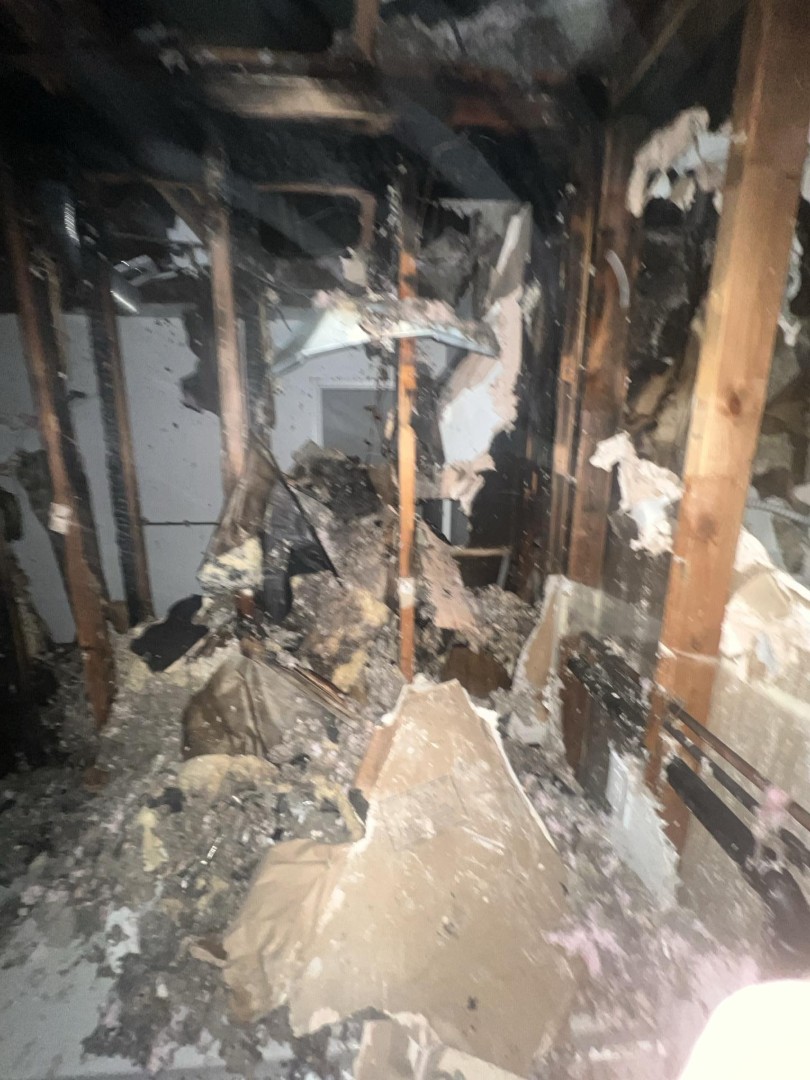
Black streaks ran across the ceilings. A fine layer of soot coated every surface in the affected rooms. Even the spaces that didn’t burn looked like they had, because smoke pushed itself into everything it could reach.
Dryer vent fires happen more often than people think. Lint builds up in places you can’t see, and a single spark can turn a quiet load of laundry into the worst kind of surprise. Our crew arrived in full PPE and respirators.
Soot is not just a cosmetic problem. It’s acidic, it drifts into HVAC ducts, and it can settle back into rooms that looked untouched. Treating it early is the difference between a clean recovery and a long-term odor problem.
A quick walkthrough tells us where smoke and heat moved through the home. That map shapes every decision afterward.
 |  |  |
Mapping the Damage First
Our first move on any fire job is a full damage check, room by room. Smoke doesn’t stay where the flames were. It follows airflow, slips through ceiling cavities, and settles in spots that look clean to the naked eye.
We mapped every area the fire and smoke had reached. Then we planned the demo path so soot wouldn’t travel back into clean zones. That order matters more than people realize.
The homeowner watched us photograph everything for their insurance file. That paper trail matters, especially for residential fire damage claims. The IICRC S700 standard calls for a full pre-loss check before any work starts on a fire job. We follow that standard every time.
What We Found
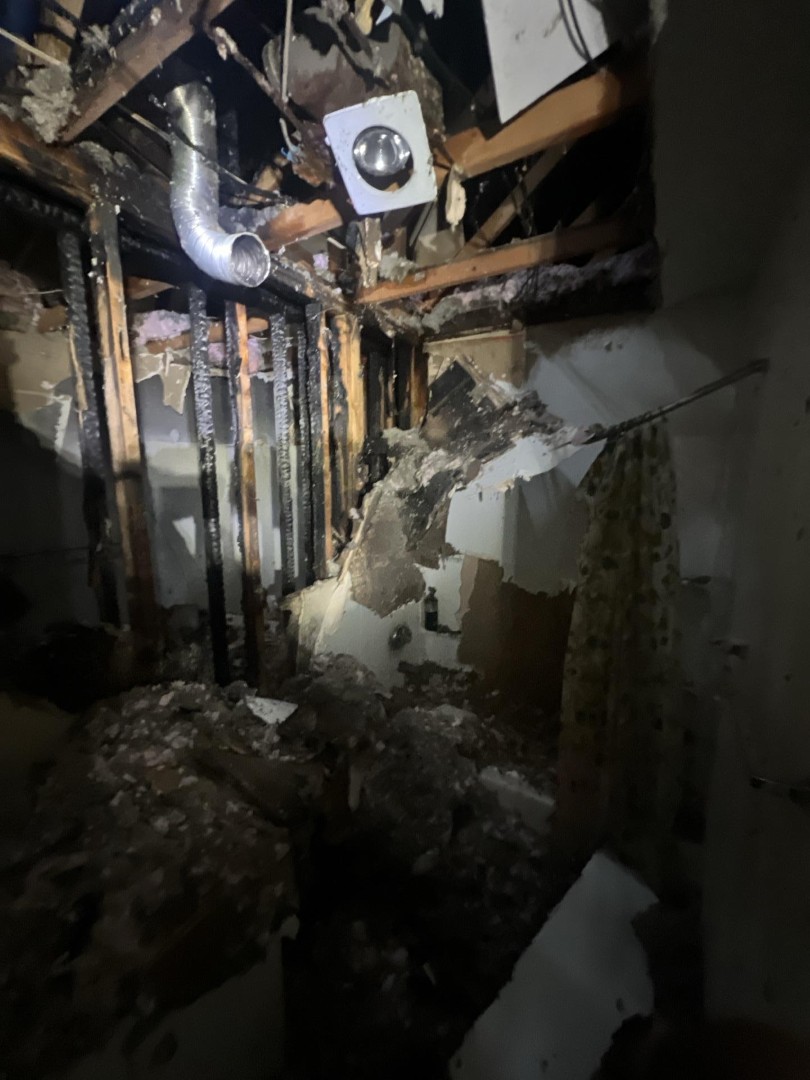
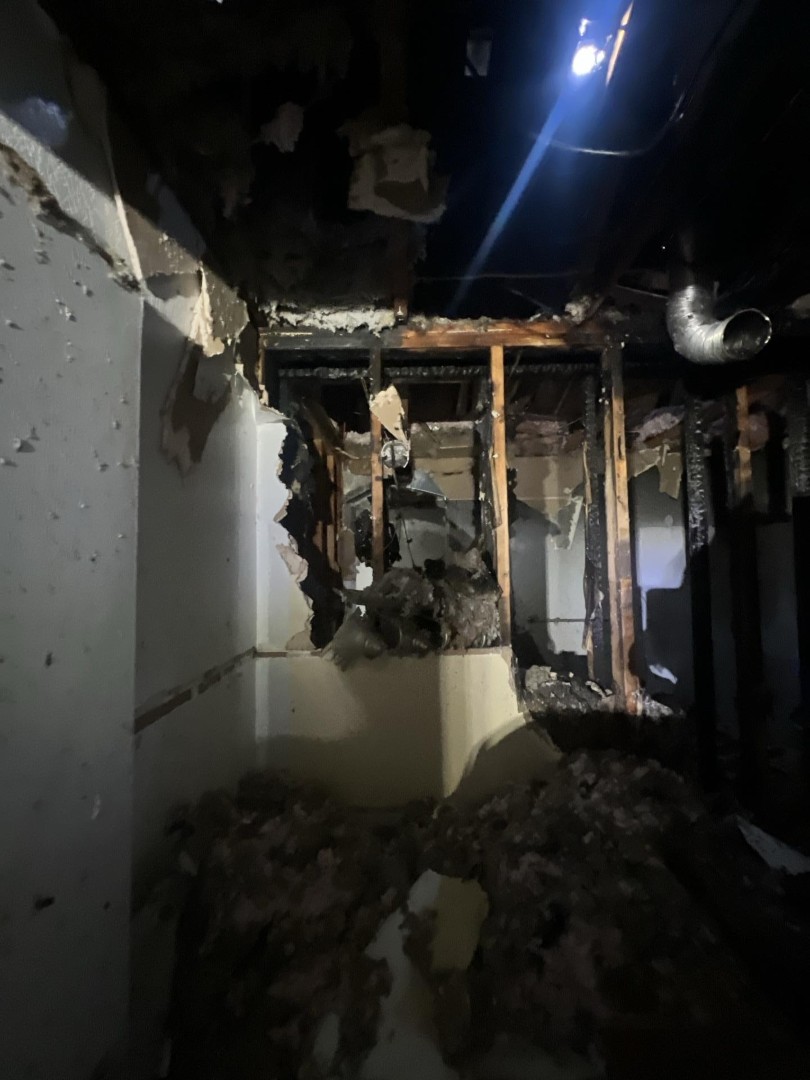
- Charred framing around the dryer vent at the fire’s start point
- Blackened drywall across the ceiling and partition walls
- Burnt insulation packed into wall and ceiling cavities
- A film of soot on every flat surface in the affected rooms
Controlled Demolition, One Section at a Time
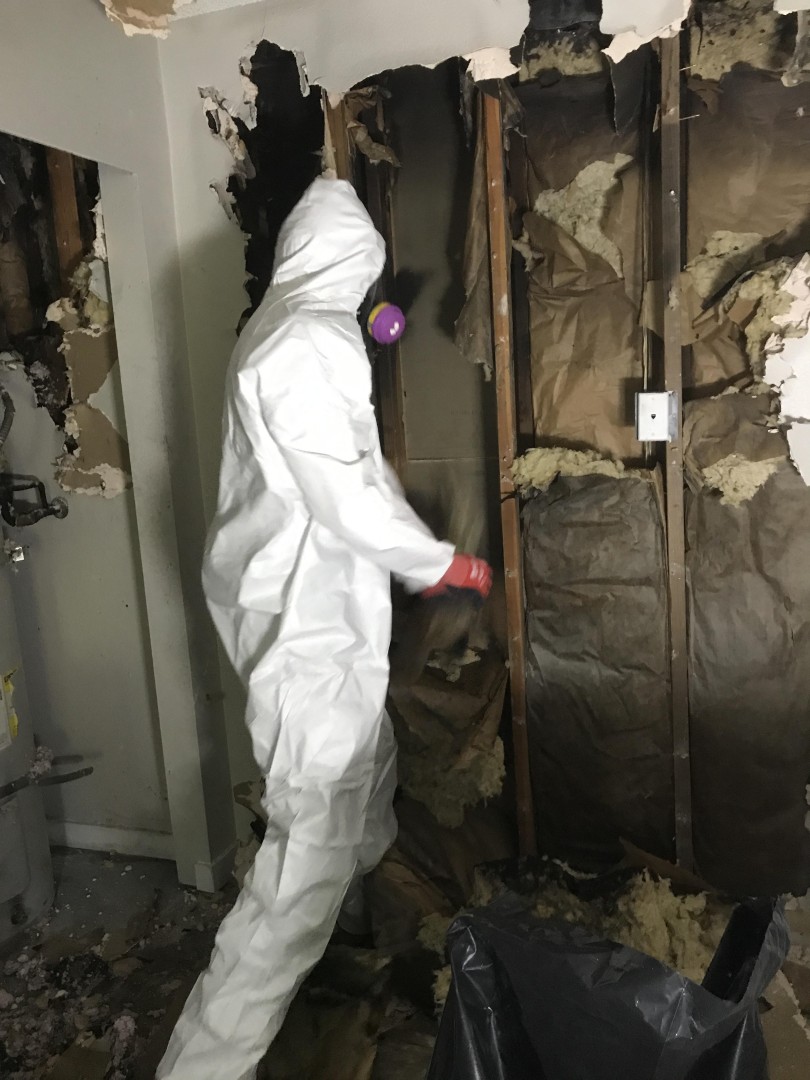
Once we knew the footprint, we moved into controlled demolition. This isn’t ripping things out just to rip them out. Every cut, every panel pulled, and every bag sealed was about stripping the home back to safe framing without spreading the mess further.
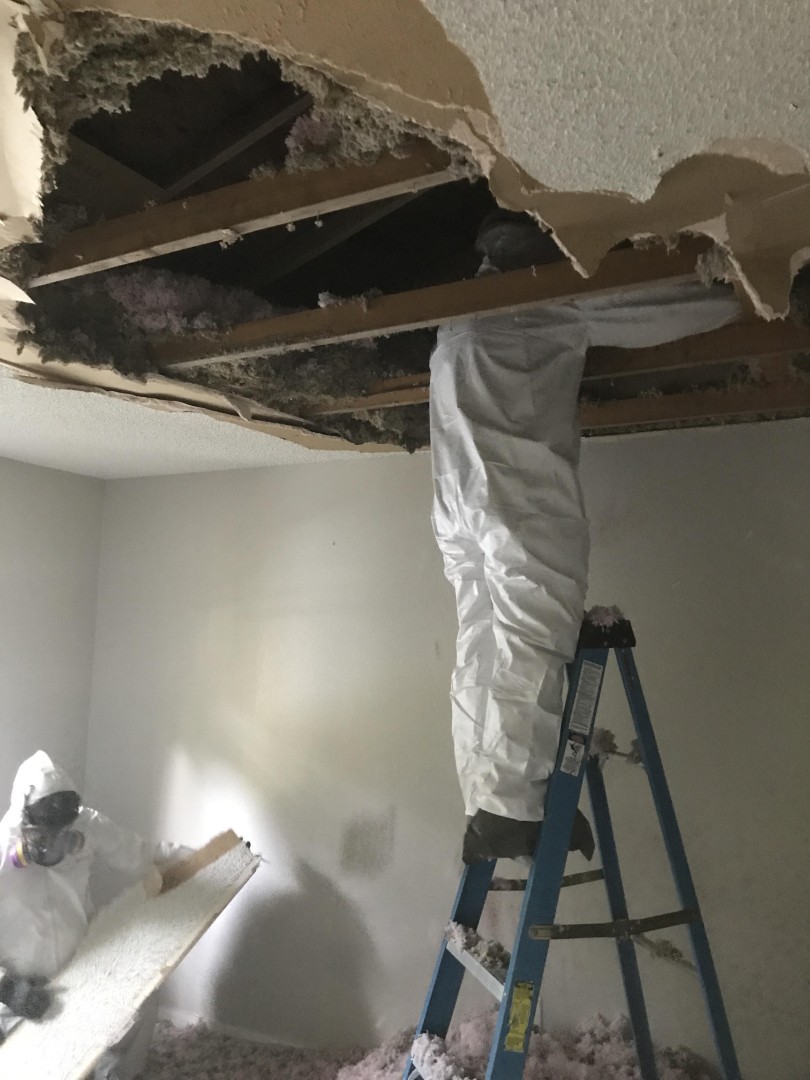
Two technicians worked the ceiling on ladders while a third bagged debris room by room. The work moved in a steady rhythm.
We pulled burnt drywall in sections, took down damaged ceiling panels, and cleared scorched insulation from inside the walls. Each bag was sealed on site before it left the room. That one step keeps soot out of hallways, stairwells, and the clean parts of the home.
 |  |  |
Hauling Out the Debris and Treating What Stayed
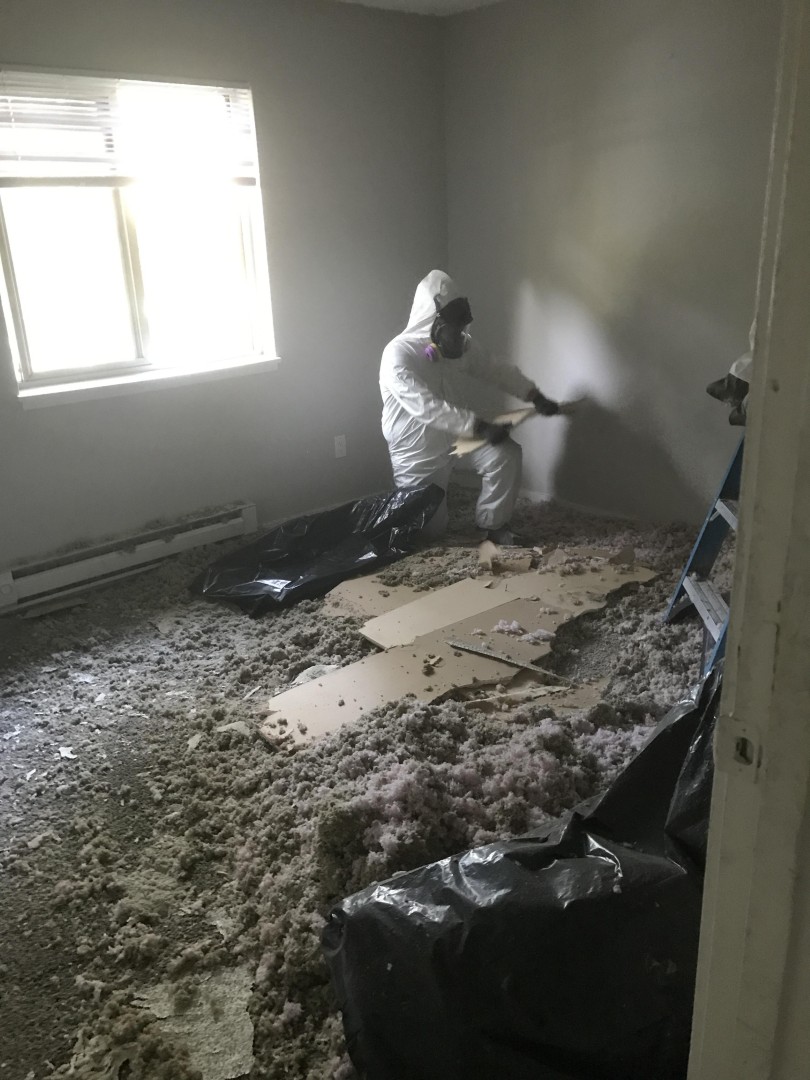
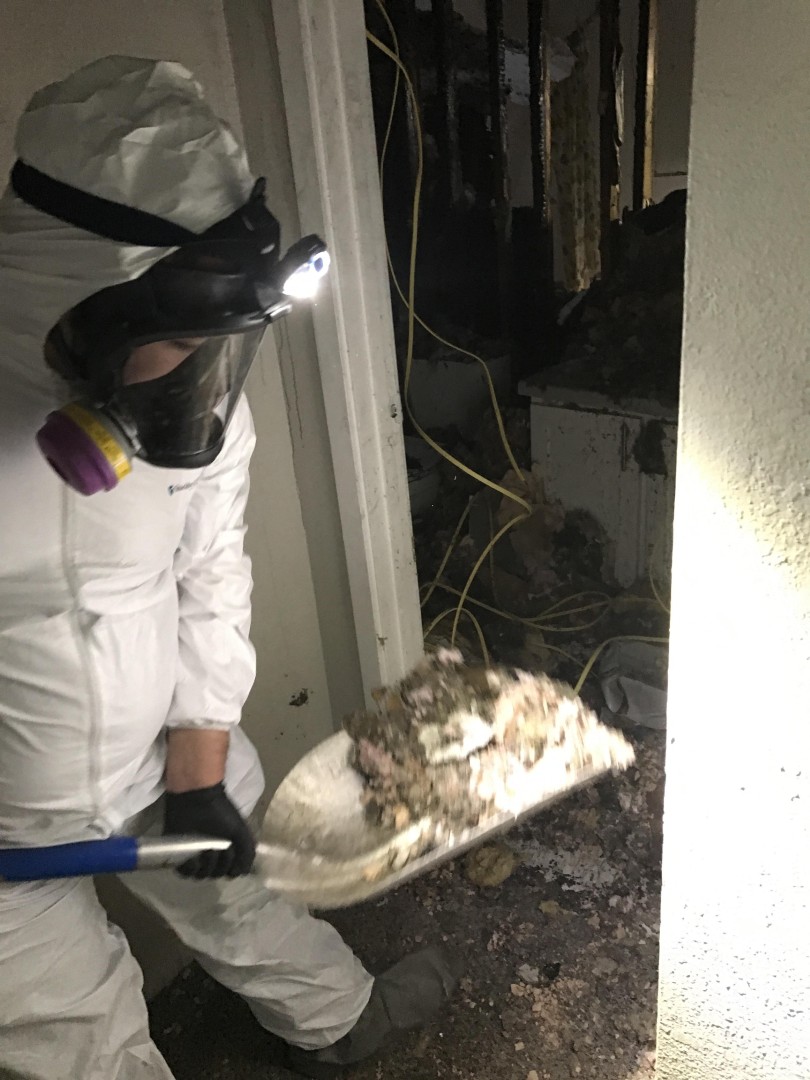
By the end of demo, we had filled dozens of contractor bags with charred materials and burnt insulation. Every bag left the property for proper disposal. Then we shifted to the cavity work. We treated the exposed wood for leftover smoke odor and deodorized the spaces inside the walls before anything got closed back up.
Smoke odor is sneaky. Skip the cavity treatment and the smell creeps back weeks later when the home warms up or the HVAC kicks on. Treating the framing while it’s still exposed is the only way to handle it right.
The USFA “After the Fire” guide walks homeowners through what to expect during recovery. Worth a read.
 |  |  |
A Clean Handoff
When we finished, the home was no longer hazardous and the air no longer carried that burnt smell. The structure was stripped back to clean framing. The space was prepped for the rebuild team. The homeowner could walk through their property without the weight of the fire following them around.
That’s the goal on every fire job we run. Get in fast. Strip the damage. Hand the property back clean, so the rebuild team can start without waiting on us.
If you want more on what items can usually be saved during a job like this, our contents cleaning after fire damage guide breaks it down. For the bigger picture of how we make these calls, our professional vs. DIY fire damage cleanup post covers the choices.
Fire or Smoke Damage in Your Woodinville Home?
We respond 24/7 across the Greater Eastside. Free estimates, IICRC-certified crews, and a calm hand when you need one most.