


Jump To:
Why Hidden Moisture Is the Real Problem
The Equipment We Use to Find Hidden Water
How We Track Drying Progress
What This Means for Your Eastside Home
Frequently Asked Questions
Pros use moisture meters and water detection equipment to find water you can’t see and to prove a home is truly dry. At PuroClean of Redmond/Woodinville, our IICRC certified technicians have used these tools on Greater Eastside homes since 2009.
Here’s the thing about water. It’s sneaky. The puddle on your floor is the obvious part, but the water inside your walls is where trouble hides. Let’s walk through how we find it.
Why Hidden Moisture Is the Real Problem
Hidden moisture causes more damage than visible water because it keeps soaking in long after the surface looks dry. Drywall, subfloors, and insulation hold water like a sponge. Without the right tools, there’s no sure way to know what’s wet.
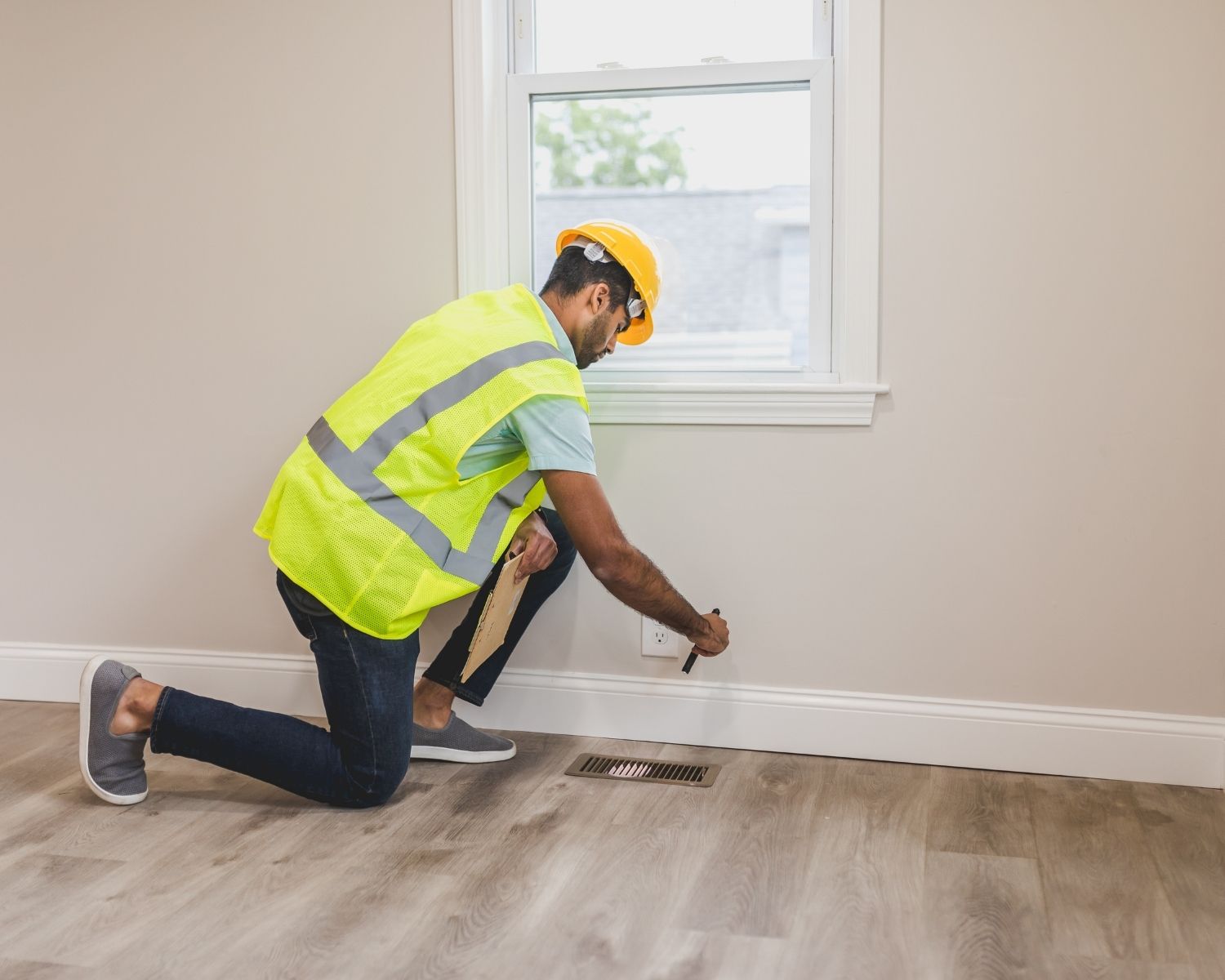
A quick surface check can look fine while the wall cavity behind it stays soaked. Meters tell the real story.
We see this constantly. A homeowner mops up a dishwasher leak and the kitchen looks great. Three weeks later the toe kicks start swelling, because water wicked under the cabinets where no towel could reach. Guessing isn’t a strategy. Measuring is.
Dealing with water damage right now? Our team is available 24/7, estimates are free, and we’ll bring the meters so nothing gets missed.Contact Our Team Today
The Equipment We Use to Find Hidden Water
Water detection relies on three main tools: moisture meters, thermal imaging cameras, and thermo-hygrometers. Each one answers a different question. Together, they map where water went and how wet everything is.
Moisture Meters: Pin and Pinless
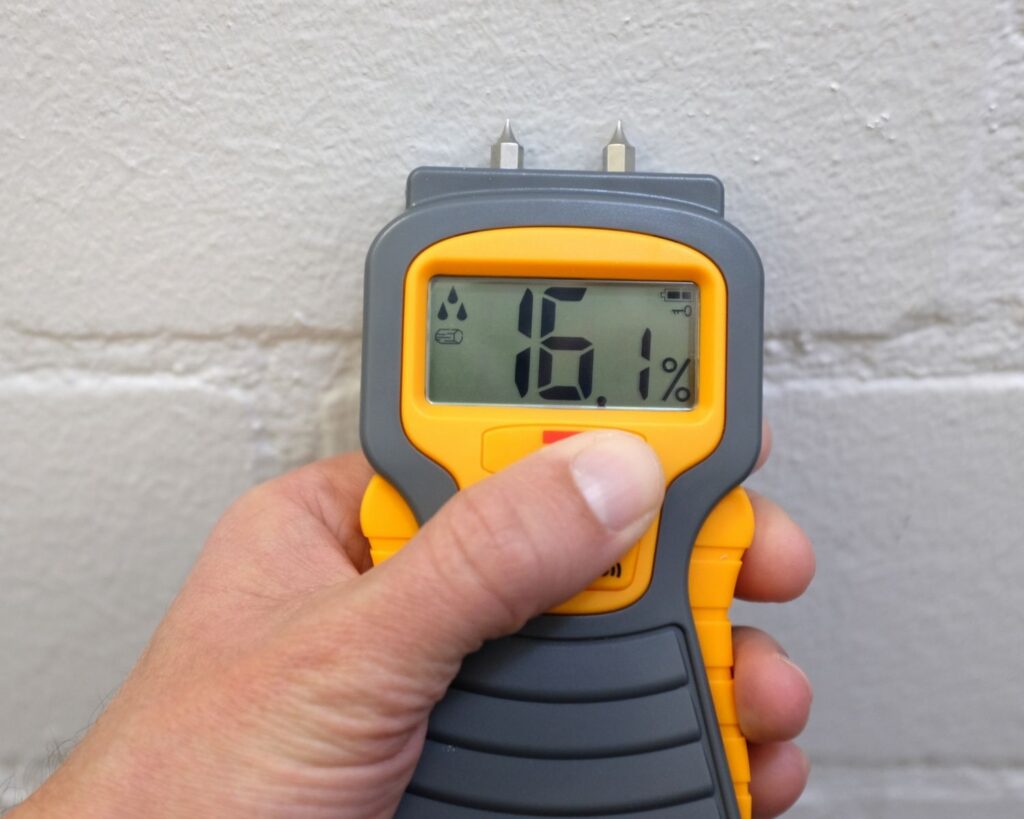
Pin meters use two small probes to test how well a material carries a tiny current. Wet wood carries it better than dry wood, so the reading shows how wet that exact spot is. Pinless meters scan about an inch deep without leaving marks. That makes them perfect for sweeping big wall sections fast.
We use both. Pinless for the broad search, pins to confirm.
Thermal Imaging Cameras
Thermal cameras don’t see water directly. They see heat, and damp spots run cooler as the water evaporates, which shows up as a clear pattern on screen. It’s a fast way to spot a wet streak from a roof leak two floors up. We still check every suspect area with a meter, because a cold spot isn’t always a wet spot.
Thermo-Hygrometers
These measure air temperature and humidity. That data shows whether drying equipment is pulling water out of the structure or just pushing damp air around.
| Tool | What It Measures | Best For |
| Pin moisture meter | Moisture content inside a material | Confirming exact readings in wood and drywall |
| Pinless moisture meter | Relative moisture up to 1 inch deep | Scanning large areas without damage |
| Thermal imaging camera | Surface temperature patterns | Tracing where water traveled |
| Thermo-hygrometer | Air temperature and humidity | Verifying drying equipment performance |
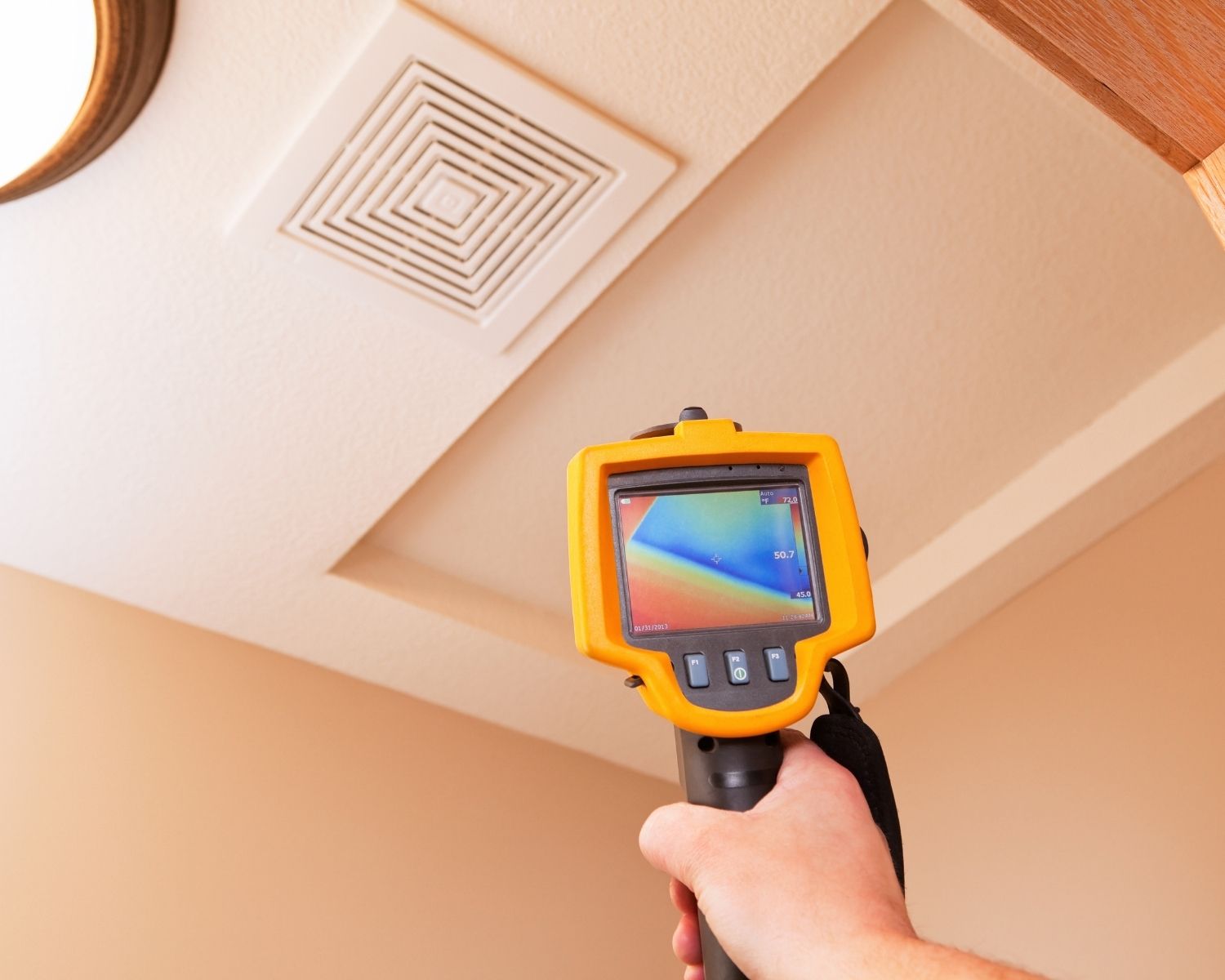
Thermal imaging spots the temperature signature of evaporating water, then a meter confirms it.
The same tools matter after a fire, by the way. Firefighting can leave hundreds of gallons of water behind, so our fire and smoke damage restoration work always starts with mapping that moisture.
How We Track Drying Progress
We track drying with daily meter readings at marked test points, compared against a dry standard from an unaffected part of your home. When wet materials match that standard, the structure is dry. Not when it looks dry. When the numbers say so.
Here’s what that looks like on a typical job:
- Day one: We map the wet areas, record starting readings, and set the dry standard.
- Daily checks: Readings at the same test points show whether materials are drying on schedule.
- Adjustments: If a reading stalls, we move air movers or add a dehumidifier.
- Final check: Every test point must match the dry standard before equipment leaves.
This isn’t just our preference. It follows the IICRC S500 standard, the industry benchmark our technicians are certified in. Those readings also serve as proof for your claim, something we covered in our guide on documenting water damage for insurance claims.
What This Means for Your Eastside Home
Detection equipment matters even more in our damp PNW climate. Months of rain keep crawl spaces, basements, and wall cavities from drying on their own. A small leak that might dry out in Arizona will sit and soak here all winter.
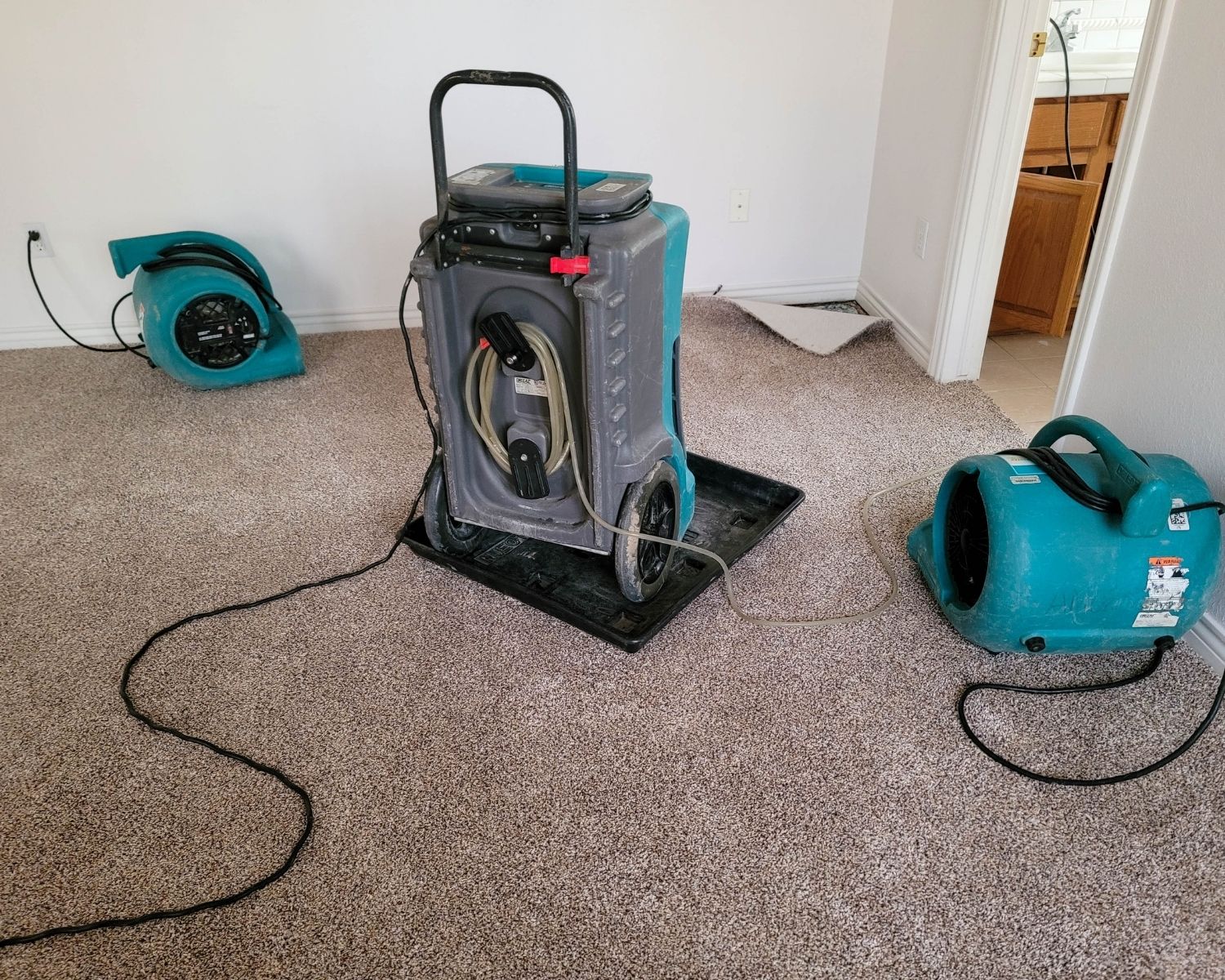
Daily meter readings track drying progress so equipment comes out the moment materials hit their dry standard.
Crawl spaces deserve special mention. Many homes from Kirkland to Snohomish sit over vented crawl spaces that stay damp for months, and we wrote about that in our post on crawl space water damage solutions for Eastside homes. Wind-driven rain is another local culprit. It pushes water through siding and window seams in ways the Insurance Institute for Business and Home Safety has studied in depth.
Local experience helps. After nearly two decades providing restoration services in Redmond and nearby towns, our team knows where water hides, from 1970s split levels to new townhomes.
Suspect hidden moisture in your home? Give PuroClean of Redmond/Woodinville a call. We answer 24/7, estimates are free, and our IICRC certified team serves the Greater Eastside and Snohomish County.
Frequently Asked Questions
Can I just buy a moisture meter at the hardware store?
You can, and it’s handy for tracking a known damp spot. The catch is reading it right. Numbers shift by material, meter type, and setup, so one reading on its own can mislead you. Pros compare readings against dry standards and use several tools to confirm.
How deep can water detection equipment see into walls?
Pinless meters read about an inch deep. Pin meters with extended probes can reach insulation inside wall cavities. Thermal cameras trace surface patterns that point to deeper problems. Combined, these tools map moisture without tearing out drywall first.
How long does it take a home to dry after water damage?
Most structures dry in three to five days with professional equipment. Dense materials like hardwood and plaster can take longer. Daily meter readings tell us exactly when your home reaches its dry standard, so nothing is left to guesswork.
Does my insurance company need these moisture readings?
Adjusters often request moisture maps and daily drying logs to support a claim. Our team records readings throughout the job and shares that paperwork. It helps claims move faster and cuts down disputes about the scope of damage.