


Introduction
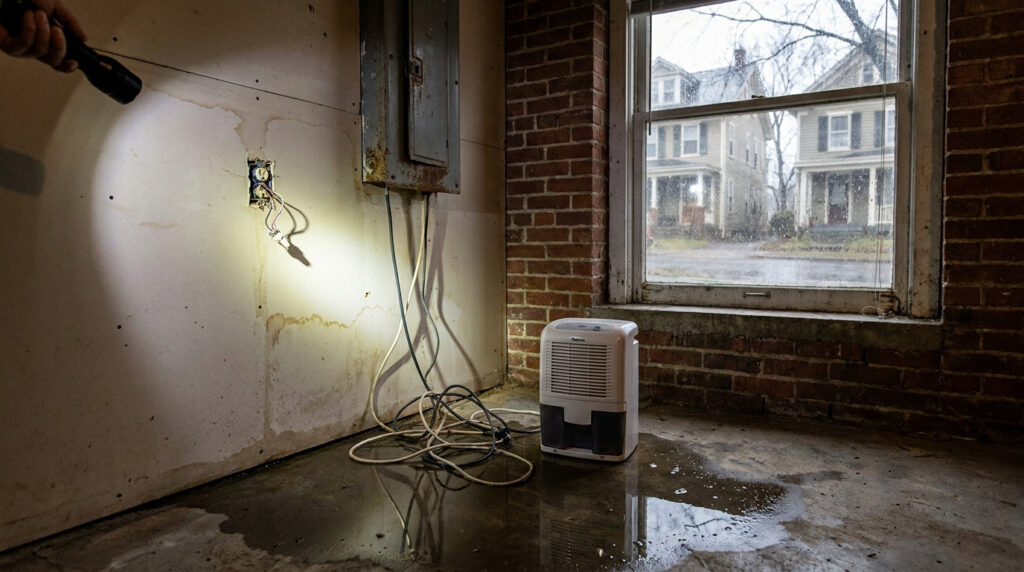
Water and electricity are a dangerous mix, and in Alexandria homes, especially older properties or those near the Potomac, water intrusion can quietly trigger serious electrical issues. Whether it’s from flooding, a burst pipe, or a slow leak, the damage doesn’t stop at soaked drywall or flooring. It can extend deep into your wiring system.
Many homeowners don’t realize the connection until something goes wrong: flickering lights, dead outlets, or even sparks. Understanding how water damage electrical problems Alexandria homeowners face actually develop can help you catch issues early and avoid expensive or dangerous consequences.
How Water Damage Affects Electrical Systems
Water doesn’t need to flood a room to cause trouble. Even small amounts can seep into electrical components and start a chain reaction.
Moisture compromises insulation around wires, allowing current to escape or arc unpredictably. It can corrode metal components inside outlets, breaker panels, and fixtures, weakening connections over time. In more severe cases, standing water can energize entire surfaces, creating shock risks.
Alexandria homes with older wiring or outdated electrical panels are especially vulnerable. Materials used decades ago are less resistant to moisture and may degrade faster after exposure.
The result isn’t always immediate failure. Often, problems build slowly, making them harder to detect until they become serious.
Common Electrical Problems Caused by Water Damage
Signs Your Electrical System Has Been Affected
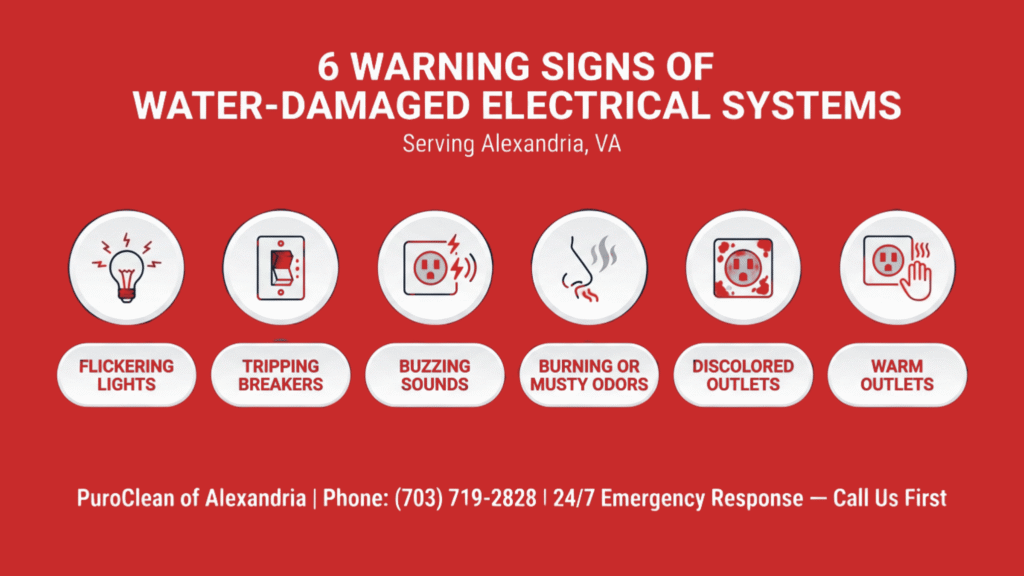
Water damage doesn’t always announce itself loudly. These warning signs often appear first.
– Flickering or dimming lights, especially in specific rooms
– Frequently tripping circuit breakers
– Buzzing sounds from outlets or switches
– Burning or musty odors near electrical fixtures
– Discolored outlets or visible corrosion
– Outlets or switches that feel warm to the touch
These symptoms indicate underlying damage that shouldn’t be ignored.
Types Of Electrical Damage You May Encounter
Once water reaches your electrical system, several types of issues can develop.
– Short circuits caused by water bridging electrical paths
– Corroded wiring that weakens conductivity
– Damaged breaker panels that fail to trip properly
– Faulty outlets that no longer provide stable power
– Appliance damage due to inconsistent voltage
Each of these problems can escalate quickly if left unaddressed.
Why Alexandria Homes Are Particularly At Risk
Alexandria’s mix of historic homes and humid climate creates a unique risk profile for electrical damage after water exposure.
Older homes often have aging infrastructure, including knob-and-tube or early-generation wiring that lacks modern protective coatings. These systems are far more susceptible to moisture intrusion.
Additionally, Alexandria’s proximity to water sources increases the likelihood of flooding during heavy storms. Basements and crawl spaces are especially prone to water accumulation, putting wiring and electrical panels at risk.
Humidity also plays a role. Even without flooding, persistent moisture in the air can gradually affect electrical components, especially in poorly ventilated areas.
This combination makes proactive inspection and maintenance more important here than in many other regions.
Immediate Dangers Of Electrical Issues After Water Damage
Key Safety Risks To Be Aware Of
Electrical problems caused by water are not just inconvenient; they can be dangerous.
– Electrical shock from energized wet surfaces
– Increased risk of electrical fires due to short circuits
– Hidden wiring damage that fails unexpectedly
– Appliance malfunctions leading to overheating
– Breaker failure that removes critical safety protection
These risks can exist even if everything appears to be working normally.
When To Treat The Situation As An Emergency
Some situations require immediate action rather than waiting for an inspection.
– Standing water near outlets or electrical panels
– Sparks, smoke, or burning smells
– Complete power loss in affected areas
– Visible damage to wiring or breaker boxes
– Repeated breaker trips after water exposure
In these cases, shut off power if it’s safe to do so and contact a professional immediately.
What To Do After Water Damage Affects Your Electrical System
Step-By-Step Actions To Take
Taking the right steps early can prevent further damage and reduce risk.
– Turn off electricity to affected areas at the main breaker
– Avoid touching wet electrical components or standing water
– Document visible damage for insurance purposes
– Contact a licensed electrician for inspection
– Begin water removal and drying as soon as possible
Quick action helps limit both structural and electrical damage.
What Not To Do
Some common mistakes can make the situation worse or more dangerous.
– Do not turn power back on without inspection
– Do not use affected outlets or appliances
– Do not assume drying alone fixes electrical damage
– Do not attempt DIY electrical repairs after water exposure
Skipping professional evaluation often leads to hidden hazards later.
How Electricians Assess Water Damage
What A Professional Inspection Includes
A licensed electrician will go beyond surface-level checks to identify hidden risks.
– Testing circuits for continuity and resistance
– Inspecting breaker panels for corrosion or failure
– Checking outlets, switches, and fixtures
– Evaluating wiring insulation integrity
– Identifying areas requiring replacement vs repair
This process ensures that no compromised component is left behind.
When Replacement Is Necessary
Not all electrical components can be salvaged after water exposure.
– Severely corroded wiring must be replaced
– Water-damaged breaker panels often require full replacement
– Outlets exposed to water are typically not reusable
– Fixtures with internal moisture may need removal
Replacing compromised components is often safer than attempting repairs.
Preventing Electrical Problems After Water Damage
Practical Prevention Tips
While you can’t always avoid water damage, you can reduce its impact on your electrical system.
– Install GFCI outlets in moisture-prone areas
– Elevate electrical panels in flood-prone basements
– Seal foundation cracks and entry points
– Maintain proper drainage around your home
– Schedule periodic electrical inspections
These steps help minimize risk and improve long-term safety.
Long-Term Upgrades Worth Considering
If your home is older, upgrades can provide added protection.
– Replace outdated wiring with modern materials
– Upgrade to a newer breaker panel with enhanced safety features
– Install surge protection systems
– Add moisture sensors near electrical areas
Investing in these improvements can prevent future issues and increase home value.
Insurance And Repair Costs In Alexandria
Electrical damage from water is often covered by homeowners insurance, but coverage depends on the source of the water. Sudden events like burst pipes are typically included, while gradual leaks or poor maintenance may not be.
Repair costs vary widely. Minor fixes like outlet replacement may be relatively inexpensive, while full rewiring or panel replacement can be a significant investment. In Alexandria, costs may also be influenced by the age of the home and the accessibility of wiring.
It’s important to document damage thoroughly and work with licensed professionals to support your claim.
When To Call A Professional
If there’s any doubt about the condition of your electrical system after water exposure, it’s time to call an expert.
Even small signs, like a single flickering light, can point to deeper issues. Waiting too long increases both safety risks and repair costs.
A qualified electrician can identify problems early, recommend solutions, and ensure your home is safe to occupy.
If your home has experienced water damage, scheduling an inspection is one of the most important steps you can take to protect your property and your safety.
Conclusion
Water damage can absolutely lead to serious electrical issues, and the risks are often hidden until they escalate. From corroded wiring to fire hazards, the consequences can be severe if ignored.
Homeowners dealing with electrical hazards after water damage VA properties should act quickly, prioritize safety, and rely on professional inspections to ensure everything is functioning properly. If you’ve experienced water intrusion, don’t wait; get your electrical system checked and restore your home with confidence.
FAQs
Q: Can I use electricity after minor water damage?
A: No, even minor water exposure can damage electrical components. It’s best to shut off power and have a professional inspect the system before using it again.
Q: How long after water damage do electrical problems appear?
A: Some issues appear immediately, while others develop over days or weeks as corrosion and moisture spread through components.
Q: Are all water-damaged outlets unsafe?
A: Yes, outlets exposed to water should be replaced rather than reused, as internal damage may not be visible but can still pose a risk.