


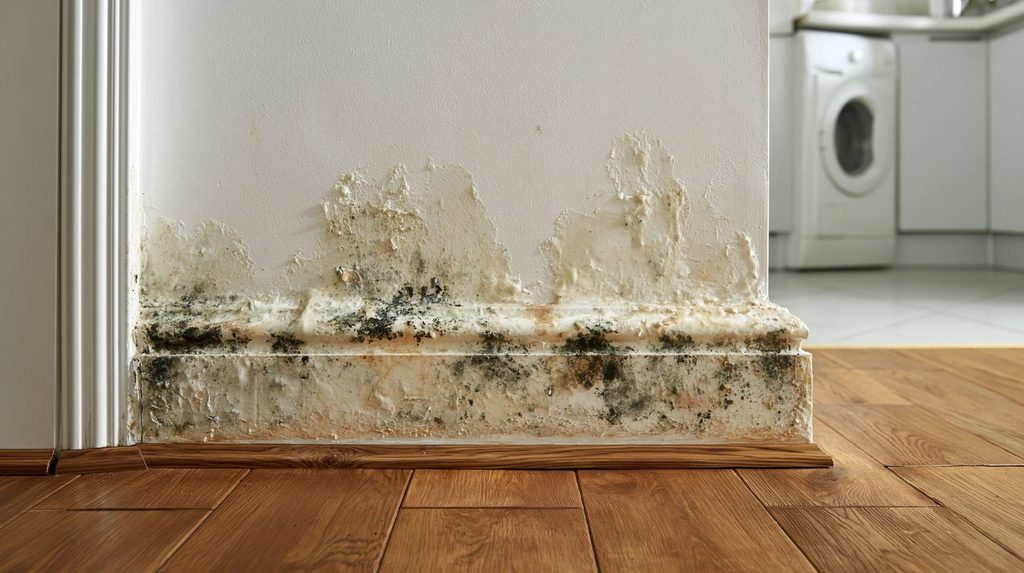
Pier-and-beam water damage is easy to miss because it starts in the crawl space, out of sight. When a pipe leaks or heavy rain drains toward the house, water can pool on the soil, soak the insulation, and dampen the wood framing under the floor. The first clues usually show up indoors as soft spots, cupped hardwood, or a musty smell.
This guide from PuroClean Property Savers – Austin covers where that water comes from, what to look for, and when a crawl space needs professional drying. For a broader storm checklist, see how to spot hidden water damage after a thunderstorm.
Key Takeaways
- Plumbing leaks, poor drainage, and condensation can put water under a raised floor with no sign upstairs at first.
- Soft or bouncy floors, cupped hardwood, and a musty odor are common indoor clues that moisture is building below.
- After heavy rain or a leak, look into the crawl space from the access opening with a flashlight. Stay out if water is near wiring.
- Wet insulation, damp framing, and any water from a drain or sewer line usually need professional drying or cleanup.
Why Water Damage Hides Under Older Central Austin Homes
A pier-and-beam home rests on wood beams supported by piers, which leaves a crawl space between the ground and the floor. If you own an older home in central Austin, including in neighborhoods such as Hyde Park, it may sit on piers rather than a concrete slab.
You can usually tell from outside. Look for vents or skirting along the base of the house, a crawl space access door or hatch, and a floor that sits a few steps above the yard.
That raised design is why water damage stays hidden. Under the floor, a leak drips onto soil or collects in low spots that nobody checks. Insulation between the floor joists can hold moisture against the wood long before the floor above shows a problem.
The upside is access. Pipes, ducts, and framing can be reached from the crawl space, so damage can often be inspected and dried directly instead of through walls or concrete.
How Water Ends Up Under a Raised Floor
Water under a pier-and-beam home usually comes from one of four places.
- Plumbing leaks. Supply and drain lines often run through the crawl space. A slow drip from a joint or an aging pipe can wet the soil and framing for a long time before anyone notices.
- Heavy rain and drainage. When the yard slopes toward the house or downspouts empty next to the foundation, rainwater can run under the house and pool. Central Texas can get intense downpours that overwhelm poor drainage quickly.
- Condensation. In humid weather, moist air in a vented crawl space can condense on cooler ductwork, pipes, and the underside of the floor. A clogged or disconnected AC condensate line can add water directly.
- Freeze damage. During a hard freeze, pipes in a vented crawl space are more exposed to cold air than pipes in heated walls. A pipe that splits may not leak until it thaws, which is one of the ways frozen pipes cause water damage.
Signs of Pier-and-Beam Water Damage Inside Your Home
Moisture under the house tends to show up indoors as changes in how the floor looks, feels, or smells. Watch for these signs:
- Soft, spongy, or bouncy spots, especially near bathrooms, the kitchen, or the water heater.
- Cupping, where hardwood boards rise at the edges because the underside has absorbed more moisture than the top.
- Vinyl, laminate, or tile that lifts, bubbles, or comes loose.
- A musty or earthy odor, sometimes stronger near floor registers when ducts run through the crawl space.
A musty smell can mean mold has started growing on damp wood or insulation below. Once the water source is fixed, professional mold removal may be needed to deal with what has already grown.
What to Check After Heavy Rain or a Plumbing Leak
A careful look from outside and from the crawl space opening can tell you a lot without going under the house. Work through these steps in order:
- Walk the perimeter. Look for standing water against the foundation, downspouts that empty next to the house, and soil that slopes toward it.
- Look in from the access opening. Use a flashlight to check for standing water, dark or wet soil, and dripping pipes.
- Check the insulation and wood. Insulation that sags between the joists may be holding water. Dark stains on joists, beams, or the subfloor can point to a long-running leak.
- Note the likely source. A leak near a toilet, tub, or kitchen drain may involve contaminated water rather than clean supply water.
- Take photos. Pictures of the water, the source, and any damage upstairs help with repair planning and insurance questions.
Stay out of the crawl space if there is standing water near wiring, outlets, or equipment. Shut off power at the breaker first, and only if you can reach the panel from a dry spot. Call 911 if you see sparking or smell burning, and if you smell gas, leave the house and call 911 or your gas utility.
Water from a drain or sewer line is contaminated, so don’t try to clean it up yourself. PuroClean Property Savers – Austin provides sewage cleanup for this kind of loss.
When Crawl Space Water Damage Needs Professional Drying
Call a professional if you find any of the following:
- Standing water in the crawl space
- Wet insulation, or a damp subfloor, joists, or beams
- Water from a toilet, drain, or sewer line
- A musty odor or visible mold
- Floors that stay soft or keep cupping after the leak is repaired
Timing matters. According to the EPA’s guide to mold and moisture, “it is important to dry water-damaged areas and items within 24-48 hours to prevent mold growth.” A crawl space can be slow to dry on its own because air moves slowly under the house.
This first stage is water mitigation: stopping the damage before any repairs. Technicians measure moisture in the framing and subfloor, extract standing water, remove soaked insulation, and set up dehumidifiers and air movers. Readings continue until the materials are dry. Starting early can limit what has to be replaced, as this post on fast water damage response explains.

How PuroClean Property Savers – Austin Can Help
If you’ve found pier-and-beam water damage or signs of it upstairs, PuroClean Property Savers – Austin can use moisture mapping to find out how far the moisture has spread. The team serves homeowners across central Austin, including Hyde Park, and offers water extraction, dehumidification, and reconstruction when repairs are needed.
To talk through what you’ve found, call the team at (512) 956-5700 or learn more about water damage restoration in Austin.
Frequently Asked Questions
What Affects the Cost of Water Damage Repair Under a House?
Cost depends on how much water there was, how long it sat, whether it was clean or contaminated, and what has to be dried or replaced. This guide to water damage restoration costs in Austin explains the main factors.
Should I Insulate the Pipes in My Crawl Space Before Winter?
Pipes in a vented crawl space can be exposed to cold air, so some protection may help before a hard freeze. The right approach depends on your plumbing, so ask a licensed plumber which lines are most at risk and what fits your home. For other cold-weather steps, see how to winterize your house.
Can Damaged Floor Joists or Subfloor Be Repaired?
It depends on what an inspection finds. Wood that is wet but still sound may be dried in place. Framing or subfloor that has rotted, delaminated, or grown mold may need to be replaced, which moves the job from mitigation into reconstruction.
Will Homeowners Insurance Cover Water Damage Under My House?
It depends on your policy and on what caused the water. Ask your insurance agent how your policy applies before work begins, and keep photos of the source and the damage.