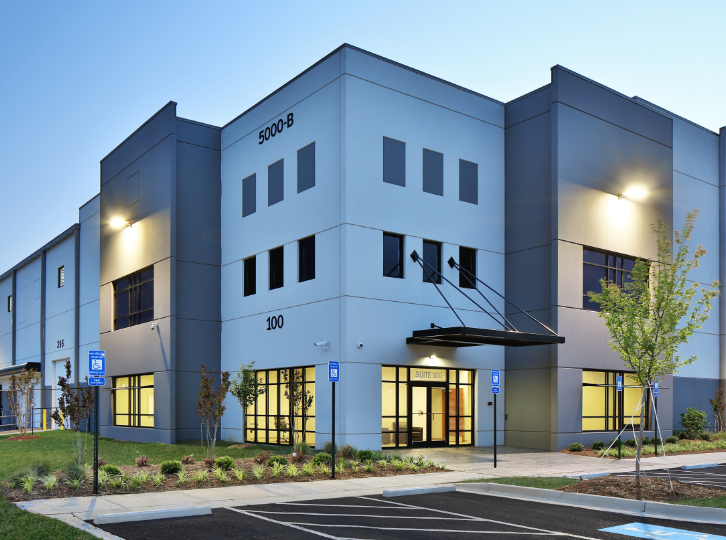
PuroClean of Columbus — 2967 E 6th Ave. Ste 100, Columbus, OH 43219
Riverlea is one of Ohio’s smallest incorporated villages — fewer than 500 residents on a narrow strip of land along the east bank of the Olentangy River, bounded by Olentangy River Road to the east, Sharon Springs Road to the north, and Longfellow Avenue to the south. Incorporated in 1940, the village developed primarily in the 1940s and 1950s as a residential enclave for Columbus-area professionals. The homes along Riverview Drive, Tennyson Road, Kipling Road, and Longfellow Avenue are modest mid-century ranch homes and Cape Cods — most with full or partial basements and concrete block foundations that are now reaching the age at which original waterproofing, drain tile, and plumbing systems fail in earnest.
The Olentangy River runs the full length of Riverlea’s western boundary, and the homes on Riverview Drive sit on lots that in some cases extend within a few dozen feet of the active channel. Upstream, Hoover Reservoir — Columbus’s primary drinking water supply, managed by the Columbus Division of Water — introduces a flood risk dynamic that sets Riverlea apart from other Olentangy communities: controlled reservoir releases during extended rain events can cause the river to rise hours after local rainfall has stopped, catching homeowners off guard. Away from the river, the interior streets face a different but related problem — mid-century foundations at the age where chronic moisture intrusion, blocked perimeter drains, and mold are predictable outcomes without active intervention.
Damage types we handle throughout Riverlea:
PuroClean of Columbus dispatches from 2967 E 6th Ave., Ste 100, approximately 10 to 12 miles from Riverlea. Our technicians typically arrive within 25 to 35 minutes — faster overnight when I-270 traffic is light.
Our primary route heads north on I-71 from the I-670 interchange, west on I-270 to the US-23 North/Worthington exit, then north briefly before turning west onto Olentangy River Road — which runs the full length of Riverlea’s eastern edge and connects directly to Longfellow Avenue, Tennyson Road, and Kipling Road. An alternate route up High Street through Clintonville and Worthington avoids the I-270 interchange entirely and can be faster during peak daytime hours.
For Riverview Drive properties on the river-facing lots, we approach from Olentangy River Road via the cross streets and stage equipment on the street side. During active Olentangy flooding, we confirm access with the Village of Riverlea and Franklin County Emergency Management before dispatching. Emergency response in Riverlea is provided by the Worthington Fire Division under a service agreement — a department our crews coordinate with regularly on joint responses.
The Hoover Reservoir dynamic is the most distinctive element of Riverlea’s flood risk. When the Columbus Division of Water increases controlled releases to manage reservoir capacity after extended rain events, elevated flows arrive in the Riverlea reach of the Olentangy 12 to 24 hours after local rain has ended. Homeowners who aren’t monitoring the USGS stream gauge (03225500) can be caught off guard by a rising river on a clear day. Riverview Drive properties in FEMA Zone AE face mandatory flood insurance requirements under the NFIP — losses from Olentangy overflow are excluded from standard HO-3 policies regardless of whether the rise is natural runoff or managed release.
The soils along Riverview Drive are Carlisle muck and Sloan silty clay loam — organic alluvial deposits with near-zero infiltration capacity that saturate rapidly and create chronic hydrostatic pressure against foundation walls. On the interior streets, Chagrin silt loam soils carry a seasonal high water table that rises to within 18 inches of the surface during wet springs, directly threatening the basement floor elevations common in Riverlea’s mid-century homes.
Concrete block foundations from the 1940s and 1950s are the dominant structural vulnerability in the village. Original portland cement mortar joints deteriorate over 70 to 80 years, and the single-coat tar parging applied to exterior foundation walls at original construction — with a service life of 20 to 40 years — has been functionally degraded for decades in most unremediated homes. The chronic wall seepage that results creates the persistent elevated basement humidity that supports mold colonization on wood framing, stored materials, and finished surfaces. Root intrusion from Riverlea’s mature oak and maple canopy into original clay tile sewer laterals compounds the risk, producing Category 3 sewage backup during the same rain events that are already stressing foundation drainage.
Owned & Operated by Rick Gutridge
2967 E 6th Ave. Ste 100, Columbus, OH, 43219
(614) 309-5739
Water damage can result from unexpected leaks, flooding from storms, plumbing failures, or appliance malfunctions. Our certified teams focus on rapid water removal, drying, and stabilization to help prevent further damage and mold growth.
 Explore Our Water Damage Mitigation Services
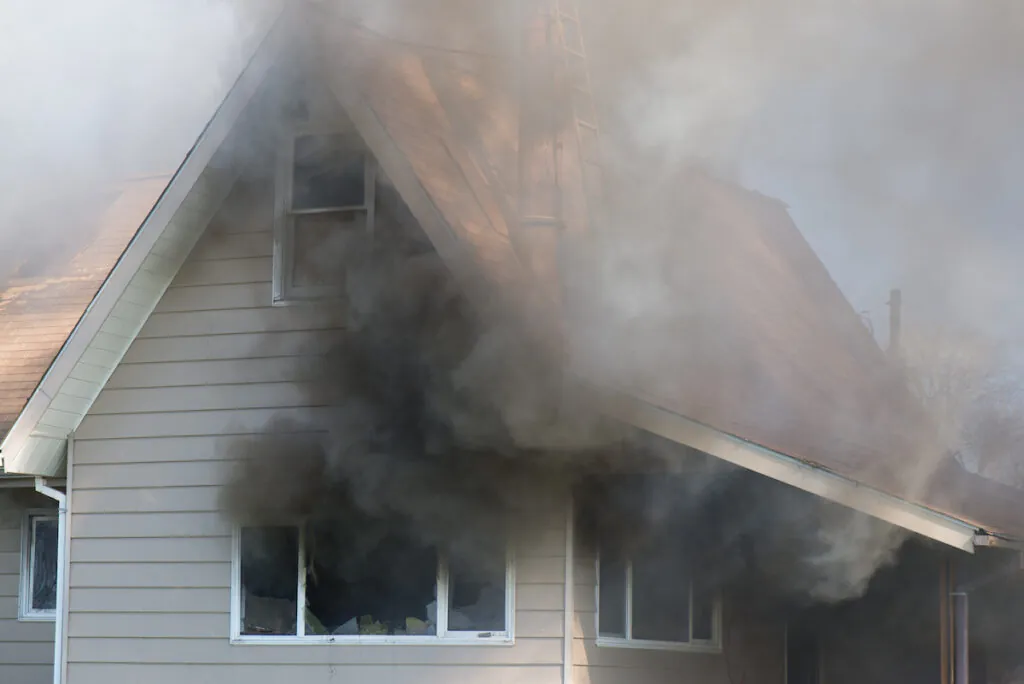
Even after a fire is extinguished, smoke, soot, and odor can continue to affect your home. Fire damage restoration services address visible damage while also helping reduce lingering effects that impact indoor air quality and surfaces.
Explore Our Fire and Smoke Damage Restoration Services
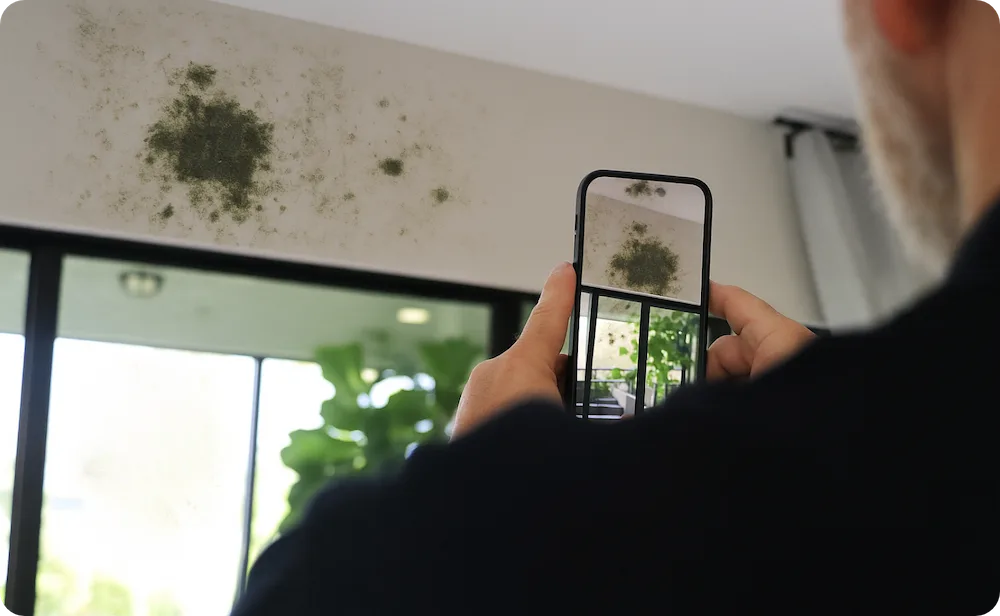
Mold often develops as a result of unresolved moisture or hidden water damage. Professional mold remediation helps identify affected areas, contain growth, and restore healthy indoor conditions.
Explore Our Mold Removal and Remediation Services
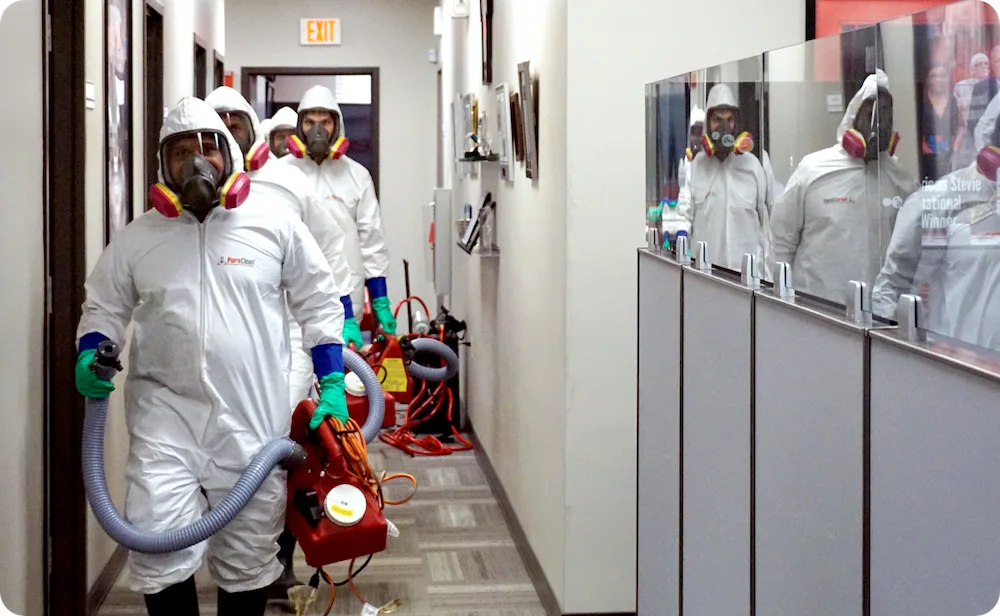
Biohazard situations, including crime scene cleanup and virus decontamination, require specialized cleaning and handling to protect health and safety. Biohazard cleanup services address contamination using proper protocols and professional care.
Explore Our Biohazard Cleanup Services
In some cases, property damage requires repairs beyond cleanup and mitigation. Reconstruction services help restore damaged areas of the home after water, fire, or other incidents, supporting a smoother transition from damage to recovery.
Explore Our Reconstruction Services Services
PuroClean provides 24/7 commercial property damage restoration services for businesses and facilities across the United States.
Explore Our Commercial Services
Water damage can result from unexpected leaks, flooding from storms, plumbing failures, or appliance malfunctions. Our certified teams focus on rapid water removal, drying, and stabilization to help prevent further damage and mold growth.
Explore Our Water Damage Mitigation Services
Answers to questions we hear from Riverlea homeowners about river flooding, aging foundations, and mid-century home restoration.
Whether the Olentangy rises from direct storm runoff or managed reservoir releases, any water that enters your home from river overflow is a flood loss — excluded from your HO-3 homeowner’s policy and covered only by a separate NFIP flood policy or private flood insurance. Riverview Drive properties in FEMA Zone AE may have a mandatory flood insurance requirement if the property carries a mortgage. PuroClean documents the source and pathway of all water intrusion, which is essential for separating flood-origin loss from any HO-3-covered components — such as a sump pump failure that contributed independently — in a mixed-source loss scenario.
A consumer dehumidifier removes airborne moisture but does nothing about water entering through deteriorated mortar joints — and in a basement with years of chronic wall seepage, mold is almost certainly present on framing, stored materials, or finished surfaces, even without visible colonies. PuroClean’s assessment uses thermal imaging and non-invasive moisture meters to map the full extent of intrusion and identify any mold. Remediation addresses what’s already there; the underlying waterproofing failure requires a waterproofing contractor for a permanent fix. We can refer you to reputable firms working in the Olentangy corridor.
Yes — materially. Water standing for two weeks has almost certainly progressed to Category 2 or 3 contamination through microbial growth, requiring significantly more extensive demolition and remediation than a freshly discovered loss. Insurers can also invoke the policy’s duty-to-mitigate provision to limit payouts where a prolonged absence contributed to damage severity. That said, a vacation absence is generally treated more sympathetically than negligent inaction. PuroClean’s documentation establishes the full damage baseline for your adjuster, and if your carrier applies a significant mitigation reduction, a public adjuster can help challenge that determination.
Let your adjuster know upfront that PuroClean uses Xactimate estimating software — the same platform adjusters use — which eliminates friction from proprietary pricing formats. We also provide a full documentation package: moisture readings, equipment logs, daily drying reports, and a completion certificate. For reconstruction, note that Riverlea issues its own building permits through the village administration, not Columbus or Worthington — our project manager handles permit coordination and keeps your adjuster informed of any timeline implications.
Water mitigation is the emergency stabilization phase — extraction, material removal, drying equipment deployment, and daily moisture monitoring to IICRC S500 standards, typically completed in three to five days. Water restoration is the reconstruction phase — replacing drywall, flooring, insulation, and finishes to return the property to pre-loss condition. Most HO-3 policies cover both phases under dwelling coverage. PuroClean manages both under a single project management umbrella, which eliminates the coordination gap that occurs when a mitigation-only company hands off to a separate general contractor and gives your adjuster a single point of contact for the complete claim scope.
Whether the Olentangy rises from direct storm runoff or managed reservoir releases, any water that enters your home from river overflow is a flood loss — excluded from your HO-3 homeowner’s policy and covered only by a separate NFIP flood policy or private flood insurance. Riverview Drive properties in FEMA Zone AE may have a mandatory flood insurance requirement if the property carries a mortgage. PuroClean documents the source and pathway of all water intrusion, which is essential for separating flood-origin loss from any HO-3-covered components — such as a sump pump failure that contributed independently — in a mixed-source loss scenario.
A consumer dehumidifier removes airborne moisture but does nothing about water entering through deteriorated mortar joints — and in a basement with years of chronic wall seepage, mold is almost certainly present on framing, stored materials, or finished surfaces, even without visible colonies. PuroClean’s assessment uses thermal imaging and non-invasive moisture meters to map the full extent of intrusion and identify any mold. Remediation addresses what’s already there; the underlying waterproofing failure requires a waterproofing contractor for a permanent fix. We can refer you to reputable firms working in the Olentangy corridor.
Yes — materially. Water standing for two weeks has almost certainly progressed to Category 2 or 3 contamination through microbial growth, requiring significantly more extensive demolition and remediation than a freshly discovered loss. Insurers can also invoke the policy’s duty-to-mitigate provision to limit payouts where a prolonged absence contributed to damage severity. That said, a vacation absence is generally treated more sympathetically than negligent inaction. PuroClean’s documentation establishes the full damage baseline for your adjuster, and if your carrier applies a significant mitigation reduction, a public adjuster can help challenge that determination.
Let your adjuster know upfront that PuroClean uses Xactimate estimating software — the same platform adjusters use — which eliminates friction from proprietary pricing formats. We also provide a full documentation package: moisture readings, equipment logs, daily drying reports, and a completion certificate. For reconstruction, note that Riverlea issues its own building permits through the village administration, not Columbus or Worthington — our project manager handles permit coordination and keeps your adjuster informed of any timeline implications.
Water mitigation is the emergency stabilization phase — extraction, material removal, drying equipment deployment, and daily moisture monitoring to IICRC S500 standards, typically completed in three to five days. Water restoration is the reconstruction phase — replacing drywall, flooring, insulation, and finishes to return the property to pre-loss condition. Most HO-3 policies cover both phases under dwelling coverage. PuroClean manages both under a single project management umbrella, which eliminates the coordination gap that occurs when a mitigation-only company hands off to a separate general contractor and gives your adjuster a single point of contact for the complete claim scope.
What Our Customers Say:
When you need water damage restoration services near you, call the experts at PuroClean. We are here day or night, 24/7, to help remove any standing water quickly and begin your water restoration service. We monitor the drying process so you can rest assured that your property is dried thoroughly. We offer commercial water restoration services for businesses and residential water damage restoration for homeowners.

PuroClean Fire & Water Experts
(614) 309-5739
2967 E 6th Ave. Ste 100, Columbus, OH 43219


© 2026 PuroClean. All Rights Reserved.