


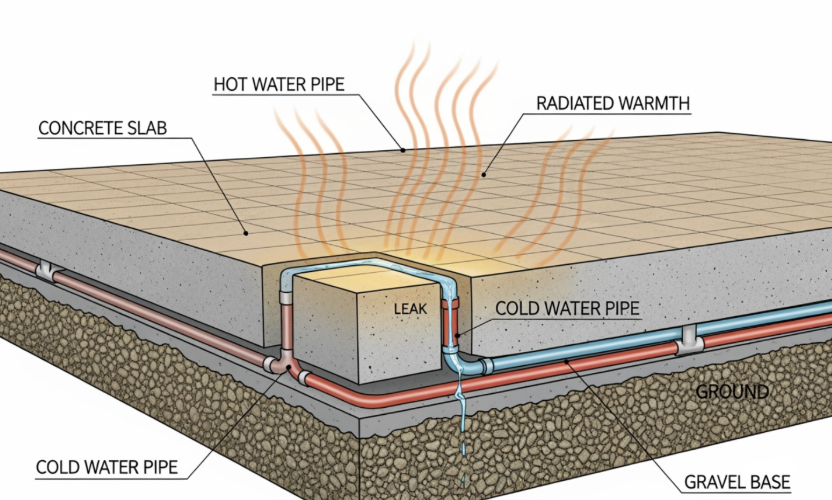
Warm Spot on the Floor: Could It Be a Slab Leak?
A warm spot on the floor can indicate a leaking hot-water pipe beneath a concrete slab, especially when the area remains warm, expands, or appears with unexplained water use, running-water sounds, damp flooring, or reduced water pressure. However, sunlight, HVAC ducts, appliances, radiant heating, and normally operating hot-water lines can also create warm flooring.
A warm spot alone does not confirm a slab leak or identify the precise location of a failed pipe. Water and heat can travel through concrete and surrounding materials before being noticed at the finished floor. A qualified plumbing professional should evaluate the system before anyone removes flooring or opens the slab.
If a concealed leak has already damaged flooring, drywall, cabinets, or belongings, PuroClean of Fort Worth provides professional slab leak water damage restoration in Fort Worth.
Warm Floor and Slab Leak Guide
- Does a Warm Floor Mean You Have a Slab Leak?
- Why Does a Hot-Water Slab Leak Warm the Floor?
- What Signs Make a Slab Leak More Likely?
- Check for Unexplained Water Use
- How to Check the Water Meter
- What Else Can Cause a Warm Floor?
- How Warm Spots Appear on Different Flooring
- Is the Leak Directly Beneath the Warm Spot?
- How Professionals Locate a Hot-Water Slab Leak
- What Damage Can a Hot-Water Slab Leak Cause?
- What to Do When You Find a Warm Floor Spot
- Does Insurance Cover the Damage?
- Frequently Asked Questions
- Related Fort Worth Services
- References and Helpful Resources
Warm Floor FAQs
- Can a warm floor confirm a slab leak?
- Can hot-water pipes normally make a floor warm?
- Will the water meter move during a slab leak?
- Could electricity or an appliance cause the heat?
- Is the leaking pipe directly below the warmest spot?
- Should I shut off the water?
- Is a warm floor spot an emergency?
Does a Warm Floor Mean You Have a Slab Leak?
A persistent warm floor can be an early sign of a hot-water slab leak, but it is not proof by itself. The likelihood increases when the warm area is accompanied by one or more plumbing or moisture symptoms.
| Observed Condition | How Strong Is the Slab Leak Signal? | Recommended Next Step |
|---|---|---|
| One warm spot that appears in direct sunlight | Weak | Compare the area at different times of day |
| Warm area near an operating appliance or HVAC duct | Weak to moderate | Determine whether the warmth follows equipment operation |
| Persistent warmth with unexplained water use | Strong | Check the meter and request plumbing evaluation |
| Warmth with damp, swollen, or discolored flooring | Strong | Arrange leak detection and moisture assessment |
| Warmth, meter movement, and running-water sounds | Very strong | Request prompt professional diagnosis |
Look for a pattern rather than relying on surface temperature alone. Note when the warmth appears, whether it changes after hot-water use, and whether the area is becoming larger.
Why Does a Hot-Water Slab Leak Warm the Floor?
A hot-water supply line beneath the foundation carries heated water under pressure. If the pipe or fitting fails, escaping water can warm nearby concrete and flooring.
The temperature noticed indoors depends on:
- The temperature of the escaping water
- The size of the leak
- The pipe’s depth and location
- The thickness of the concrete
- The flooring and underlayment
- How long the water has been escaping
- The path taken by the water beneath the slab
- Room temperature and airflow
Tile often transfers temperature changes more noticeably than carpet or wood. A warm area beneath carpet may feel less distinct even when the underlying slab is affected.
A leaking hot-water line may also cause the water heater to operate more frequently. This symptom can be difficult to recognize without comparing normal equipment behavior and utility use.
What Signs Make a Slab Leak More Likely?
A warm spot becomes more concerning when it appears with other indications of an active or concealed plumbing leak.
Unexplained Water Usage
A pressurized hot-water line can leak even when faucets are off. The water meter or Fort Worth MyH2O data may show continuous or unusual use.
Running-Water or Hissing Sounds
Water escaping beneath the slab may produce sounds that travel through concrete, pipes, walls, and flooring. Check that toilets, appliances, irrigation, and water-treatment equipment are not operating.
Damp or Discolored Flooring
Moisture may eventually move upward through cracks, joints, or flooring assemblies. Carpet can feel damp, wood can darken, and laminate may begin swelling at its edges.
Reduced Hot-Water Pressure
A substantial hot-water line leak may reduce flow at fixtures. Pressure changes can have other causes, including valves, mineral buildup, or water-heater problems.
Musty Odors
Moisture trapped beneath flooring or inside lower walls can create persistent odors. A musty smell does not identify the source, but it can indicate that materials remain damp.
Swollen Baseboards or Lower Drywall
Water can migrate horizontally before wicking into baseboards, drywall, cabinets, and door trim. Visible damage may appear away from the warmest floor area.
Check for Unexplained Water Use
Review the current water bill and compare it with previous months and the same season in earlier years. Account for irrigation, guests, pool use, appliance changes, and other legitimate increases.
The EPA recommends investigating significant increases in water use and checking the meter during a period when no water is being used.[1]
Fort Worth Water customers can use MyH2O to review previous-day usage in hourly increments and establish alerts for continuous flow that may indicate a leak.[2]
Continuous use does not prove that the leak is beneath the slab. Toilets, irrigation systems, appliances, hose bibs, and exposed plumbing should also be checked.
How to Check the Water Meter for a Possible Leak
- Turn off faucets and water-connected appliances.
- Make sure toilets are not refilling.
- Pause irrigation, pool equipment, and water-treatment cycles.
- Record the meter reading or leak indicator.
- Avoid using water during the observation period.
- Check the meter again for a change.
If the meter changes when no known water user is operating, water may be moving somewhere on the private plumbing system. A professional must still determine whether the source is beneath the slab, inside a wall, outdoors, or connected to a fixture.
The EPA notes that flow-monitoring and leak-detection devices can identify irregular water use or unexpected moisture and may help reduce water loss and property damage.[3]
What Else Can Cause a Warm Spot on the Floor?
Several ordinary or unrelated conditions can warm a floor.
- Direct sunlight: Sunlight through a window can heat tile, wood, or vinyl for several hours.
- HVAC ducts: Heated air moving through a duct beneath or near the floor can create a warm area.
- Radiant floor heating: An operating radiant system intentionally warms the flooring.
- Water-heater location: Heat from a nearby water heater or mechanical closet may transfer into adjacent finishes.
- Refrigerators and appliances: Compressors, motors, and exhaust heat can affect surrounding surfaces.
- Hot-water pipes: A normally operating line can temporarily warm a small area during hot-water use.
- Electrical equipment: Certain electrical problems can generate heat and require prompt professional evaluation.
- Outdoor temperature: Sun-heated exterior concrete can influence flooring near doors and windows.
A possible electrical source should not be treated as a plumbing experiment. If the floor is unusually hot, smells scorched, or is near electrical equipment, keep away and contact an appropriately qualified electrical professional.
How Warm Spots Appear on Different Flooring
| Flooring Type | Possible Signs |
|---|---|
| Tile | Noticeable temperature difference, discoloration, loose tile, or grout changes |
| Hardwood | Warmth, darkening, cupping, crowning, or finish damage |
| Laminate | Warmth, edge swelling, buckling, or delamination |
| Carpet | Subtle warmth, damp padding, staining, or musty odors |
| Vinyl plank | Warmth, lifting edges, adhesive changes, or trapped moisture beneath planks |
Do not assume that a hard-surface floor is dry simply because no water is visible. Moisture may remain between the finished flooring and the concrete.
Is the Leak Directly Beneath the Warm Spot?
Not necessarily. The warmest floor area may be near the pipe failure, but heat and escaping water can travel beneath the slab before reaching the surface.
The apparent location can be affected by:
- Cracks and joints in the concrete
- Changes in slab thickness
- Flooring and underlayment
- The slope beneath the foundation
- Pipe depth
- Nearby plumbing penetrations
- Cabinets, walls, and other heat barriers
Opening the floor at the warmest point without professional diagnosis can create unnecessary damage and still miss the failed section.
When Should a Warm Floor Spot Be Treated as Urgent?
Request prompt assistance when the warm area is accompanied by:
- Continuous water-meter movement
- Rapidly increasing water use
- Standing water
- Damp or buckling flooring
- Water near electrical outlets or appliances
- Sudden pressure loss
- Running-water sounds that do not stop
- Swollen cabinets, walls, or baseboards
- Loss of normal hot-water service
If active damage is occurring and the private water shutoff can be accessed safely, shutting off the supply may limit additional water release. Avoid entering standing water near electrical components.
How Professionals Locate a Hot-Water Slab Leak
Professional slab-leak detection uses plumbing-system testing and specialized equipment to narrow the location of a concealed pipe failure. The purpose is to identify the affected line and reduce unnecessary demolition before a repair method is selected.
An investigation may include:
- Reviewing the location and timing of the warm floor area
- Checking water-use and utility-bill history
- Confirming water-meter movement
- Inspecting visible fixtures and plumbing connections
- Testing water pressure
- Isolating hot- and cold-water lines
- Using acoustic listening equipment
- Evaluating surface-temperature differences
- Reviewing the property’s plumbing layout
- Testing applicable portions of the plumbing system
Tell the plumbing provider whether the warm area changes after hot-water use, whether the water heater operates more frequently, and whether other symptoms have appeared. These observations may help guide the investigation but do not replace diagnostic testing.
Leak Detection vs. Thermal Imaging
Temperature differences can help identify an area requiring further investigation, but thermal information does not allow someone to see directly through concrete. A temperature pattern can be affected by sunlight, HVAC systems, appliances, floor coverings, and moisture movement.
Professional diagnosis may combine thermal observations with acoustic testing, pressure testing, system isolation, and water-use evidence. No single tool should be expected to answer every question about a concealed pipe.
Leak Detection vs. Moisture Detection
| Assessment | Primary Purpose | Typical Result |
|---|---|---|
| Plumbing leak detection | Identifies which plumbing line is leaking and narrows the failure location | A recommended plumbing repair, reroute, or replacement scope |
| Restoration moisture detection | Identifies flooring, walls, cabinets, and belongings affected by water | An extraction, drying, cleaning, and restoration scope |
A plumber may stop the leak while a restoration company addresses the water that escaped before the repair. Both services may be required.
What Damage Can a Hot-Water Slab Leak Cause?
A hot-water slab leak can affect more than the plumbing line. Released water may move through concrete, flooring systems, lower walls, cabinets, and adjoining rooms.
Possible damage includes:
- Saturated carpet and padding
- Cupped or stained hardwood
- Swollen laminate or engineered flooring
- Loose tile or damaged setting material
- Moisture beneath vinyl flooring
- Swollen baseboards and trim
- Wet lower drywall
- Damaged cabinets and vanities
- Musty odors
- Damage to furniture and stored belongings
The affected area may extend beyond the warmest spot. Water can move beneath continuous flooring and become visible in a nearby room, closet, or wall.
Where Hidden Moisture Can Remain
- Between flooring and concrete
- Inside carpet padding
- Beneath floating floors
- Behind baseboards
- Inside lower wall cavities
- Under cabinets and appliances
- Inside adjoining closets
- Around plumbing penetrations
- Within boxes or belongings placed on the floor
The IICRC S500 standard provides an industry framework for professional water-damage restoration, including inspection, extraction, building and material science, drying technology, and restoration procedures.[4]
Can a Hot-Water Slab Leak Cause Mold?
A slab leak can create conditions that support mold growth when moisture reaches carpet, drywall, wood, cabinets, dust, or other organic materials. Repairing the pipe does not remove moisture already absorbed by these materials.
Possible mold-related warning signs include:
- Persistent musty odors
- Recurring dampness after plumbing repair
- Discoloration near flooring or baseboards
- Bubbling or peeling paint
- Visible growth beneath flooring or behind finishes
- Continued indoor humidity
Not every slab leak causes mold. Mold remediation should be based on the conditions found at the property rather than included automatically in every cleanup project.
If mold-related conditions are identified, PuroClean provides professional mold remediation in Fort Worth.
What to Do When You Find a Warm Floor Spot
- Check for an obvious heat source. Consider sunlight, HVAC ducts, radiant heating, appliances, and nearby mechanical equipment.
- Review water use. Look for an unexpected increase or continuous-flow alert.
- Check the meter. Confirm that known water users are off before observing the reading.
- Look for additional damage. Inspect flooring, baseboards, cabinets, and adjoining rooms.
- Listen for water movement. Note persistent hissing or running-water sounds.
- Document the conditions. Photograph damage and record when each symptom appeared.
- Shut off the water if necessary. If active damage is occurring and the private shutoff is safely accessible, stop the supply.
- Call a qualified plumbing professional. Request targeted leak detection before opening the slab.
- Request a water-damage assessment. Wet building materials may require extraction and drying.
- Notify the insurer when applicable. Ask about claim and documentation requirements.
Do not use a household vacuum to collect standing water. Do not remove flooring or break concrete based only on the temperature of the floor.
How Hot-Water Slab Leak Damage Is Restored
After the plumbing source is stopped, the restoration process focuses on moisture that entered the building.
The work may include:
- Inspecting the affected rooms
- Identifying moisture boundaries
- Extracting standing water
- Evaluating flooring and interior materials
- Removing materials that cannot be restored when necessary
- Installing air movement and dehumidification equipment
- Monitoring drying progress
- Cleaning applicable affected surfaces
- Documenting the work performed
- Planning flooring and interior repairs
For significant standing water, PuroClean provides emergency water extraction in Ft Worth.
For damage affecting multiple materials or rooms, review PuroClean’s professional water damage restoration services.
Does Homeowners Insurance Cover Hot-Water Slab Leak Damage?
Homeowners insurance may cover resulting water damage from a sudden and accidental hot-water slab leak, but it may not cover the failed pipe itself. Coverage for leak detection, plumbing access, flooring, foundation damage, mold, and reconstruction depends on the policy.
The Texas Department of Insurance explains that most homeowners policies cover sudden and accidental water damage while commonly excluding damage associated with gradual leakage or seepage.[5]
After discovering damage:
- Photograph the flooring and affected rooms.
- Record when the warm area and other symptoms were discovered.
- Notify the insurance carrier promptly.
- Keep leak-detection findings and plumbing invoices.
- Preserve the failed pipe when requested.
- Save moisture readings and drying documentation.
- Do not discard damaged materials before documenting them.
- Keep plumbing, mitigation, and reconstruction estimates separate.
Only the insurance carrier can determine whether an individual claim is covered.
Can Fort Worth Water-Use Data Help Document the Leak?
Fort Worth MyH2O data may help establish a pattern of continuous or unusual water use. Save screenshots or records showing when the abnormal use appeared and when it returned to normal after repair.
Fort Worth Water also offers a leak-repair adjustment process for certain qualifying customers. Its current guidance states that some hidden leaks beneath a foundation or inside a wall may qualify when required repair documents are submitted within the applicable deadline.[6]
Eligibility and program requirements are determined by Fort Worth Water. The adjustment process is separate from an insurance claim.
Frequently Asked Questions About Warm Floors and Slab Leaks
Can a warm floor confirm a slab leak?
No. A warm floor is a warning sign rather than proof. Sunlight, HVAC ducts, appliances, radiant heating, and normal hot-water use can also create warm areas. Professional testing is needed to confirm a concealed plumbing failure.
Can hot-water pipes normally make a floor warm?
Yes. A normally operating hot-water line can temporarily warm a small area during water use. Persistent or expanding warmth accompanied by unexplained water use, dampness, or water sounds is more concerning.
Will the water meter move during a slab leak?
A pressurized supply-line leak may cause meter movement when known water users are off. Meter movement does not prove the leak is beneath the slab because toilets, irrigation, appliances, and other lines can also use or lose water.
Could electricity or an appliance cause the heat?
Yes. Appliances and some electrical problems can generate heat. If the floor is unusually hot, smells scorched, or is near electrical equipment, keep away and contact an appropriately qualified electrical professional.
Is the leaking pipe directly below the warmest spot?
Not necessarily. Heat and water can travel through concrete and beneath flooring before becoming noticeable. Use professional leak detection before selecting an access point.
Should I shut off the water?
If active damage is occurring and the private water shutoff can be accessed safely, stopping the supply may limit additional water release. Consider occupants and equipment that depend on water service.
Is a warm floor spot an emergency?
It becomes urgent when accompanied by active water damage, standing water, electrical exposure, rapid meter movement, severe pressure loss, or unsafe flooring. A persistent unexplained warm area should still be evaluated promptly.
Key Takeaways
- A warm floor can indicate a hot-water slab leak, but it is not proof.
- Sunlight, HVAC ducts, appliances, and radiant heating can cause similar warmth.
- Unexplained water use makes an active plumbing leak more likely.
- A moving meter cannot identify the leak’s precise location.
- The warmest floor area may not be directly above the failed pipe.
- Leak detection identifies the plumbing problem; moisture detection identifies property damage.
- Repairing the pipe does not automatically dry wet building materials.
- Do not open the slab without targeted professional diagnosis.
Related Fort Worth Water Damage Services
- Slab Leak Repair Fort Worth
- Emergency Water Extraction in Ft Worth
- Emergency Water Extraction Arlington
- Water Damage Restoration
References and Helpful Resources
-
U.S. EPA WaterSense: Home Maintenance and Leak Checks.
↩ -
City of Fort Worth: MyH2O Water-Use Monitoring and Leak Alerts.
↩ -
U.S. EPA WaterSense: Leak Detection and Flow-Monitoring Devices.
↩ -
IICRC: Professional Water Damage Restoration Standard Overview.
↩ -
Texas Department of Insurance: When Are Water Damage and Mold Covered?.
↩ -
City of Fort Worth: Water Leak Repair and High-Usage Bill Adjustments.
↩
Found a Persistent Warm Spot on Your Fort Worth Floor?
If a suspected hot-water slab leak has damaged flooring, drywall, cabinets, or belongings, PuroClean of Fort Worth can evaluate the resulting water damage. Services may include extraction, moisture detection, structural drying, monitoring, cleaning, and restoration documentation.
Use a qualified plumbing professional to locate and repair or reroute the failed line. If water damage is active, coordinate plumbing repair with professional mitigation so concealed moisture is not overlooked.