


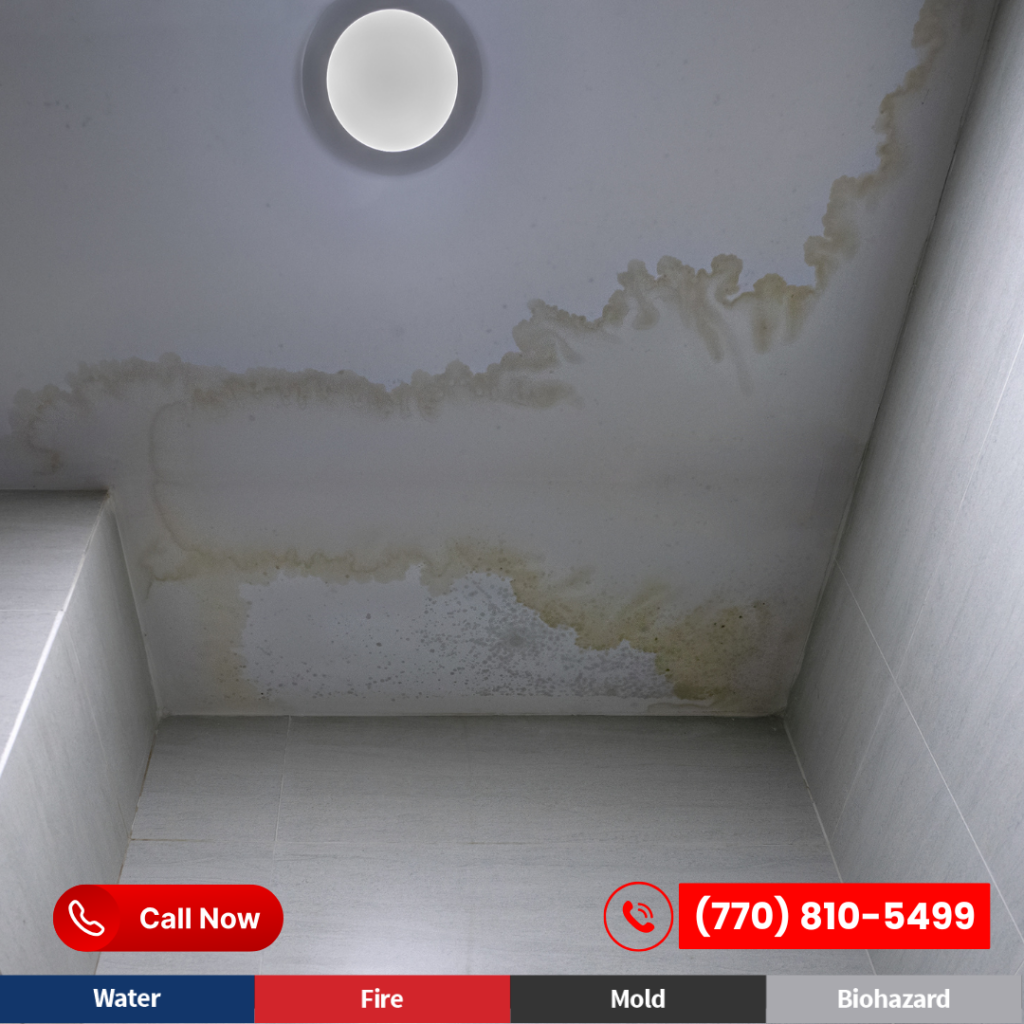
Commercial water damage restoration in Lawrenceville is not just an emergency service—it is a risk mitigation strategy for property managers overseeing multi-tenant buildings. When water spreads across units, hallways, and shared systems, downtime multiplies and liability exposure increases.
If you have had water damage in your commercial property, please call (770) 810-5499
For property managers in Lawrenceville, fast response, structured mitigation, and tenant communication are essential to protecting both physical assets and long-term occupancy rates.
Table of Contents
What Is Commercial Water Damage Restoration?
Commercial water damage restoration is the professional process of mitigating, drying, sanitizing, and restoring commercial properties after water intrusion.
It typically includes:
- Emergency water extraction
- Moisture mapping and damage assessment
- Industrial structural drying
- Mold prevention or remediation
- Reconstruction and repairs
For multi-tenant buildings, restoration must address shared infrastructure, vertical water migration, and coordinated tenant access.
Read More: Preventing Commercial Water Damage in Lawrenceville: A Maintenance Checklist for Business Owners
Why Multi-Tenant Buildings in Lawrenceville Face Higher Water Damage Risk
Multi-tenant properties—such as office complexes, retail centers, medical plazas, and apartment-style commercial spaces—carry elevated exposure due to infrastructure complexity.
1. Shared Plumbing Systems
Vertical pipe stacks, interconnected supply lines, and sprinkler systems mean one failure can impact multiple floors or units. A burst pipe in one suite can quickly affect neighboring tenants.
2. Flat Roof & HVAC Vulnerabilities
Many commercial buildings in Gwinnett County use flat roofing systems and rooftop HVAC units. These systems are prone to:
- Drain blockages
- Ponding water
- Condensate overflow
- Flashing failures
Heavy rainfall common in North Georgia increases infiltration risk.
3. Tenant Density & Liability Exposure
Water damage in multi-tenant properties can trigger:
- Business interruption claims
- Lease disputes
- Tenant property loss
- Insurance complications
Delayed response amplifies legal and financial exposure.
Common Causes of Commercial Water Damage in Multi-Tenant Properties
Understanding the root causes allows property managers to prioritize prevention.
- Burst or frozen pipes
- Roof membrane failure
- HVAC condensate drain blockage
- Fire sprinkler discharge
- Sewer backups
- Stormwater intrusion
- Appliance or supply line failures
According to the Insurance Information Institute, water damage and freezing remain among the most common commercial insurance claims nationwide.
The Financial Impact of Delayed Water Damage Response
When restoration is delayed, costs escalate exponentially.
Business Interruption
Tenants may be forced to suspend operations. In retail or medical environments, even a 24–48 hour shutdown can result in significant revenue loss.
Mold Development Timeline
Mold can begin growing within 24–48 hours in humid environments. Georgia’s climate accelerates microbial growth if structural drying is not initiated immediately.
Structural & Insurance Consequences
Unmitigated moisture can cause:
- Warped framing
- Compromised drywall
- Electrical hazards
- Subfloor deterioration
Insurance carriers may also scrutinize delayed mitigation efforts when evaluating claims.
Emergency Response Checklist for Property Managers
When commercial water damage occurs, structured action reduces loss severity.
Step 1: Stop the Water Source
- Shut off main water valves
- Isolate affected zones
- Secure electrical systems if necessary
Step 2: Document Everything
- Photograph affected areas
- Log tenant communications
- Record time of discovery
- Preserve damaged materials for claim documentation
Step 3: Contact a 24/7 Commercial Restoration Company
Searches for “commercial water damage restoration near me” spike during emergencies. Pre-selecting a qualified partner before disaster strikes ensures faster mobilization.
Step 4: Communicate with Tenants
- Provide clear updates
- Outline expected restoration timelines
- Coordinate temporary workspace solutions if needed
Transparent communication preserves tenant trust.
The Commercial Water Damage Restoration Process for Multi-Tenant Buildings
Professional restoration follows a structured mitigation protocol.
1. Damage Assessment & Moisture Mapping
Technicians use:
- Infrared thermal imaging
- Digital moisture meters
- Hygrometers
This identifies hidden moisture behind walls, ceilings, and flooring.
2. Water Extraction
Industrial-grade pumps and truck-mounted extraction systems remove standing water quickly to prevent secondary damage.
3. Structural Drying & Dehumidification
Air movers and commercial dehumidifiers stabilize the building environment. Proper drying reduces mold risk and protects structural integrity.
4. Cleaning & Sanitization
Affected areas are cleaned and disinfected to prevent microbial contamination—especially critical after Category 2 or 3 water losses.
5. Restoration & Reconstruction
Damaged drywall, insulation, flooring, and ceiling systems are repaired or replaced to return the building to pre-loss condition.
Preventative Strategies for Property Managers in Lawrenceville
While restoration is critical, prevention reduces frequency and severity of losses.
Implement:
- Quarterly plumbing inspections
- Biannual roof evaluations
- Annual sewer line inspections
- Smart water leak detection systems
- HVAC condensate maintenance
- Emergency vendor agreements
Proactive facility management reduces insurance claims and operational disruption.
Choosing the Right Commercial Restoration Partner in Lawrenceville
Not all restoration providers are equipped to manage multi-tenant properties.
Property managers should evaluate:
- 24/7 emergency availability
- Experience with commercial and multi-floor buildings
- Insurance documentation expertise
- Industrial drying equipment capacity
- Local response time
Local knowledge matters when dealing with municipal regulations and regional weather patterns.
Why Lawrenceville Property Managers Trust PuroClean of Lawrenceville
When water damage impacts multiple tenants, response speed and coordination determine outcome.
PuroClean of Lawrenceville specializes in commercial water damage restoration for multi-tenant properties across Gwinnett County.
Our services include:
- 24/7 emergency response
- Rapid water extraction and structural drying
- Advanced moisture mapping
- Commercial-grade dehumidification systems
- Mold remediation
- Full reconstruction services
- Insurance claim documentation support
For property managers, this means:
- Faster building stabilization
- Reduced tenant downtime
- Coordinated restoration across units
- Streamlined insurance communication
Partnering with an experienced local commercial restoration provider ensures your property is protected when unexpected water events occur.
How quickly should commercial water damage be addressed?
Immediately. The first 24 hours are critical for minimizing structural damage and preventing mold growth. Delayed action increases both restoration cost and tenant disruption.
Can water from one unit affect multiple floors?
Yes. In multi-tenant buildings, water can travel vertically through wall cavities, pipe chases, and elevator shafts, impacting several units.
Does commercial insurance cover tenant property?
Coverage varies. Building policies often cover structural damage, while tenant improvements and contents may require separate coverage.
How long does commercial water damage restoration take?
Timeline depends on severity. Minor losses may take several days; larger multi-floor events can require multiple weeks including reconstruction.
How can property managers reduce liability exposure?
Implement preventative maintenance, document inspections, respond immediately to leaks, and maintain a pre-arranged emergency restoration partnership.
Protect Your Multi-Tenant Property Before the Next Emergency
Commercial water damage in Lawrenceville multi-tenant buildings can escalate quickly—but proactive planning and rapid response limit impact.
Property managers who prioritize:
- Structured maintenance
- Emergency preparedness
- Trusted restoration partnerships
Protect tenant relationships, maintain occupancy stability, and reduce long-term operational risk.
If your building needs a commercial water damage response plan—or immediate emergency mitigation—partner with a local restoration expert who understands multi-tenant complexities.