


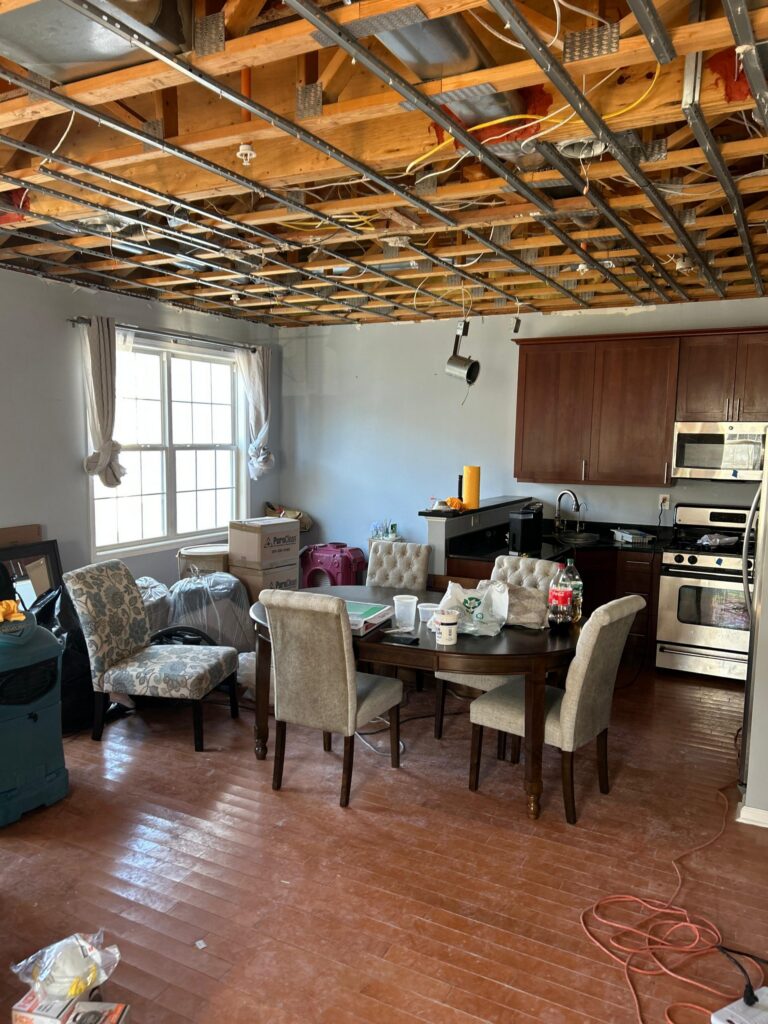
When floodwaters recede, many homeowners in Loganville believe the worst is over. Standing water is gone, surfaces look dry, and life begins returning to normal. But in reality, secondary water damage often begins after the initial flooding event.
Secondary damage refers to the hidden, progressive deterioration that occurs when moisture is not fully removed from structural materials. In Loganville’s humid Georgia climate, this type of damage can escalate quickly — leading to mold growth, structural weakening, and expensive reconstruction.
Here’s what homeowners need to know.
Table of Contents
What Is Secondary Water Damage?
Primary damage is the immediate impact of flooding — soaked carpet, wet drywall, and visible water intrusion.
Secondary damage occurs when:
- Moisture remains trapped in materials
- Humidity levels stay elevated
- Drying is incomplete or delayed
- Materials continue absorbing residual moisture
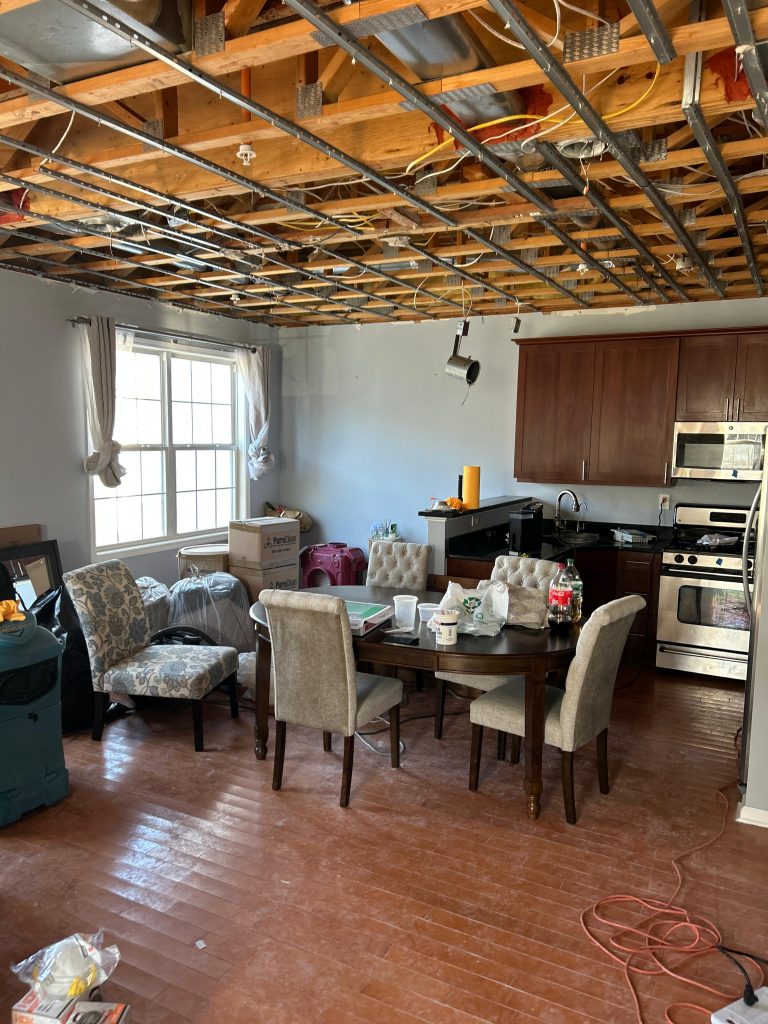
Because it develops gradually, many homeowners don’t recognize secondary damage until the repairs become more extensive.
Why Loganville Homes Are Especially Vulnerable
Loganville’s warm temperatures and high humidity create ideal conditions for moisture retention.
After a flood:
- Wood framing absorbs moisture
- Insulation traps water vapor
- Drywall retains internal saturation
- Flooring systems hold moisture beneath the surface
Without professional structural drying, these materials may never fully return to normal moisture content levels.
10 Signs of Secondary Water Damage After a Flood
Below are the most common warning signs Loganville homeowners should monitor in the days and weeks following a flood.
1. Persistent Musty Odors
A lingering damp or musty smell often indicates hidden moisture behind walls, under flooring, or inside ceiling cavities.
Odors typically signal early microbial growth — even before visible mold appears.
2. Warped or Buckling Floors
Hardwood may begin cupping or crowning. Laminate flooring may swell at the seams.
These issues often develop days or weeks after surface drying, once moisture migrates upward from the subfloor.
3. Bubbling or Peeling Paint
Moisture trapped behind drywall causes paint to:
- Bubble
- Crack
- Peel
- Separate from the surface
This is a strong indicator of elevated moisture inside the wall cavity.
4. Staining That Reappears
Water stains may initially fade but return as moisture continues wicking through materials.
Recurring discoloration on ceilings or walls suggests incomplete drying.
5. Soft or Spongy Drywall
Press lightly on previously affected areas. If drywall feels soft, crumbly, or unstable, internal saturation may still be present.
Over time, this can lead to structural weakening or collapse.
6. Increased Indoor Humidity
If your home feels damp despite air conditioning running normally, residual moisture may still be evaporating from structural materials.
Elevated indoor humidity accelerates mold growth and wood deterioration.
7. Mold Growth
Visible mold may appear as:
- Black, green, or gray spotting
- Fuzzy or powdery surface patches
- Growth along baseboards or ceiling corners
In Loganville’s climate, mold can begin developing within 24–48 hours if moisture remains.
8. Baseboard Separation
As drywall and framing expand from moisture absorption, baseboards may pull away from walls or appear misaligned.
This subtle sign often indicates hidden wall cavity moisture.
9. Electrical Issues
Moisture inside walls or ceilings can affect wiring and fixtures, leading to:
- Flickering lights
- Tripped breakers
- Malfunctioning outlets
Water and electrical systems should always be professionally evaluated.
10. Gradual Structural Shifting
Doors that suddenly stick or windows that become difficult to open may indicate wood framing expansion due to prolonged moisture exposure.
Left unresolved, this can compromise structural integrity.
Why Secondary Damage Becomes More Expensive Over Time
Water damage compounds exponentially.
What begins as a simple drying project can escalate into:
- Mold remediation
- Subfloor replacement
- Drywall removal
- Structural framing repairs
- Full flooring replacement
In many cases, the majority of restoration costs stem from delayed response, not the initial flood itself.
How Professionals Prevent Secondary Water Damage
Proper mitigation in Loganville homes includes:
Moisture Mapping
Using thermal imaging and moisture meters to detect hidden saturation.
Commercial-Grade Extraction
Removing water from carpets, padding, and subfloors.
Structural Drying
Deploying air movers and low-grain refrigerant (LGR) dehumidifiers.
Daily Monitoring
Tracking moisture levels until materials return to normal equilibrium moisture content.
Antimicrobial Treatments
Reducing microbial risk in vulnerable areas.
Surface drying with household fans is not sufficient to prevent secondary damage.
When to Schedule a Post-Flood Inspection
Even if visible water is gone, homeowners should schedule a professional moisture inspection if:
- Any of the warning signs above appear
- Drying equipment was not professionally installed
- Insurance documentation was incomplete
- The flood involved significant water intrusion
Early detection can significantly reduce reconstruction costs.
Protecting Your Loganville Home Long-Term
After any flood event:
- Monitor affected areas weekly for at least 30 days
- Run dehumidifiers during humid weather
- Maintain HVAC filters
- Inspect baseboards and flooring regularly
- Address minor symptoms immediately
Water damage rarely resolves on its own. Hidden moisture continues causing deterioration until properly mitigated.
Secondary water damage after a flood in Loganville is common — especially when structural drying is incomplete or delayed. Because the signs often appear gradually, homeowners may underestimate the risk until damage becomes significant.
Recognizing early warning signs such as musty odors, warped flooring, bubbling paint, and mold growth allows for timely intervention and reduced repair costs.
Flood recovery doesn’t end when the water disappears. The real protection comes from ensuring your home is completely dry — not just visibly dry.