Published: October 15, 2026
Quick answer: Palmetto is a small, older town — incorporated in 1854, with 5,071 residents in the 2020 census — set in rolling country that drains west to the Chattahoochee River. Georgia EPD stream listings place White Oak Creek and Bear Creek among the Chattahoochee tributaries in this part of south Fulton, and those creek bottoms cross farm parcels, wooded lots, and the edges of town. Homes here are a mix of nineteenth- and early-twentieth-century houses and later rural builds, many over crawlspaces or on pier foundations, and a creek-bottom lot can take water quietly long before a creek is visibly out of its banks. If water is entering your Palmetto home, call PuroClean of East Cobb at (770) 627-0900. We answer 24/7 with a live person and respond in 60 minutes or less.
About PuroClean of East Cobb
Who is PuroClean of East Cobb?
PuroClean of East Cobb provides 24/7 water, fire and mold restoration in Marietta, GA, with a 60-minute-or-less response. Since 2022, the team has completed more than 4,000 restoration jobs across metro Atlanta. Technicians hold IICRC certifications in water restoration (WRT), fire and smoke restoration (FSRT), applied structural drying (ASD), and applied microbial remediation (AMRT), plus EPA Lead-Safe certification.
What does restoration cost?
National averages run $1,300–$5,600 for water damage restoration and about $12,900 for fire damage restoration (Forbes). Every job is documented with photos and video, and you approve the restoration plan before work begins — no fine print.
Who answers when I call?
A live person, 24 hours a day, 7 days a week. One project manager owns your job from assessment and stabilization through restoration, finishing with a final walkthrough together. Call (770) 627-0900 any time.
The Georgia General Assembly incorporated Palmetto as a town in 1854, and the community was named after the Palmetto Regiment of the Mexican–American War. The town that grew up along the railroad kept a small-town scale: it spans about 12 square miles across Fulton and Coweta counties, much of it still wooded or in pasture, with an in-town core of older homes — the Thomas P. Arnold House on South Main Street, built in 1906 and listed on the National Register of Historic Places in 1984, is the best-known example.
Rolling land, bottom land
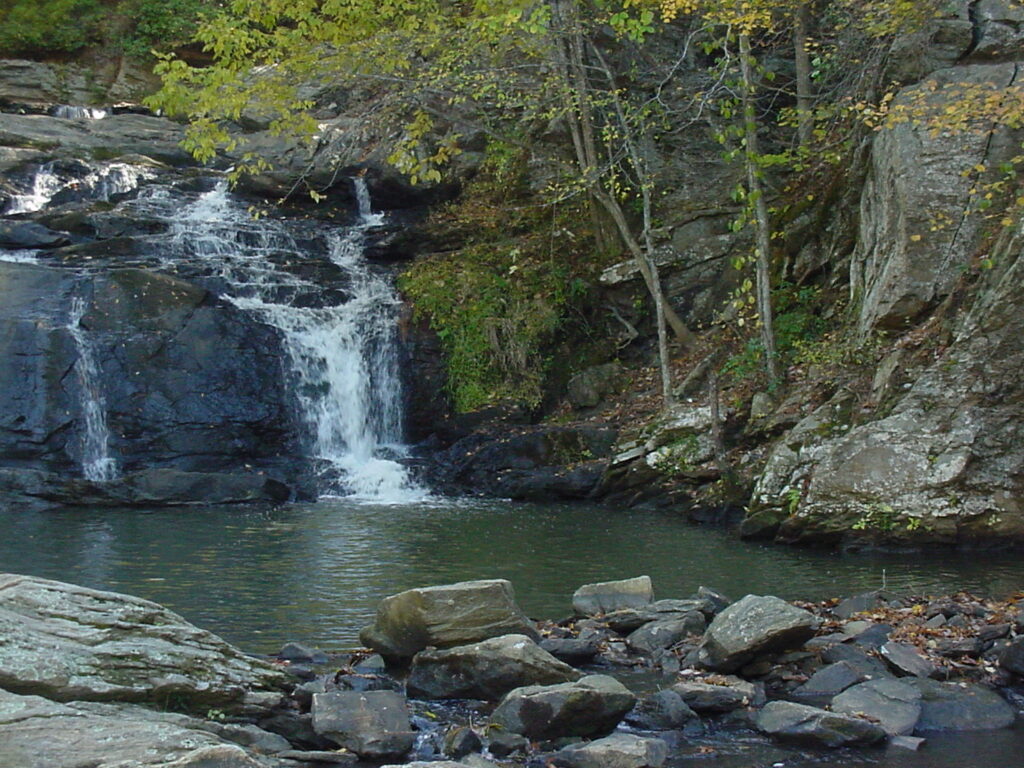
Palmetto’s water risk is written into its terrain. Ridges shed rain into shallow valleys, and the valleys carry it toward the Chattahoochee through creeks like White Oak Creek and Bear Creek. A home on a ridge lot may never see standing water; a home a few hundred yards away, set in or beside a bottom, can take runoff from the whole slope above it. Farm ponds, field ditches, and driveway culverts all redirect that water, and a blocked culvert in a storm can send a bottom’s worth of runoff across a yard that normally stays dry.
Groundwater follows the same pattern. Bottom lots sit closer to the water table, so crawlspaces there stay damp through wet seasons, and a heavy rain raises moisture under the house even when no creek reaches the lot. That chronic dampness is its own problem: it softens subflooring over time, corrodes ductwork and plumbing from the outside in, and keeps mold pressure on the home year-round.
Older houses, mixed systems
Palmetto’s older homes were built before modern grading and drainage standards, often on pier or stone foundations with open crawlspaces. Their plumbing reflects their age and their additions — original runs joined to newer work as bathrooms and kitchens were added over the decades. Many properties outside the town core also rely on private wells and septic systems, which adds failure modes a city-water home does not have: a well pump or pressure tank failure inside the house, and a saturated septic field in the same storms that raise the creeks.
Whatever the source, the first 24 to 48 hours decide the outcome. Water in a crawlspace wicks into subflooring and framing, wet insulation holds moisture against wood, and mold growth on damp drywall and joists starts within that same window.
What to do in the first hour
1. Know your bottom. If your lot sits in or beside a creek bottom or below a long slope, move belongings off the floor and out of the crawlspace access area before the heaviest rain arrives.
2. Stop the source if you can do it safely. For a plumbing or well-system failure, close the fixture valve, the main shutoff, or the pump breaker; for stormwater coming in, keep clear, especially near electrical panels and outlets.
3. Document everything before anything dries. Photos and video of water lines, entry points, and damaged belongings protect your claim.
4. Call (770) 627-0900. Professional extraction and drying reach crawlspaces, walls, and floors that fans cannot, and creek water needs proper cleaning, not just drying.
PuroClean of East Cobb has completed 4,000+ restoration jobs since 2022 — 54% water damage, 30% reconstruction, 7% mold. Learn more about PuroClean of East Cobb — our company facts, certifications, and track record.
Palmetto has been a town since before the Civil War, and its creeks have been running through the bottoms for far longer. If water is entering your Palmetto home right now — or a past storm left damage you never fully dried out — call (770) 627-0900. We’re based in Marietta and available 24/7.
Learn more about our service areas and water damage restoration services. Related reading: A Young City on an Old River: South Fulton’s Two Kinds of Water Risk. Austell faces the same creek-bottom risk — see our guide to creek flooding and water damage in Austell, GA.