24/7 Emergency Services For Water, Fire, Mold and Biohazard in Dunwoody
Dunwoody’s housing is mostly 1960s–80s construction — solid homes, but their plumbing and drainage are aging together. Finished basements in 1970s split-levels sit below aging water heaters, pre-buffer-era grading funnels runoff toward foundations, and sewer laterals run under forty-year-old hardwoods. One project manager runs your job from the first moisture reading to the final walkthrough.
Dunwoody is right in our service area — PuroClean of East Cobb’s IICRC-certified technicians assess each home on its actual construction, and we return properties to pre-loss condition: documented, verified dry, and ready.
(770) 627-0900 — tap to call
A live person answers 24 hours a day, 7 days a week — weekends and holidays included. We respond in 60 minutes or less across Dunwoody and nearby communities.
What happens when you call: we take your address, talk you through what to do (and what not to do) while help is on the way, and dispatch a team — one project manager stays with your job from first assessment to final walkthrough. No phone trees. No voicemail during an emergency. Se habla español.
Dunwoody’s water risks: nine drainage basins’ worth of stormwater pressure on older grading and gutters, 1960s–80s supply lines and water heaters at end of life, and sewer laterals under mature tree canopy. Finished basements — common in Dunwoody split-levels and ranches — raise the stakes of every intrusion.
Dunwoody’s subdivisions predate the stream-buffer protections that now keep new construction back from waterways, so heavy rain hits harder here than in newer suburbs. After a big storm, check basement window wells, walkout door thresholds, and anywhere grading slopes toward the house. Local creeks and tributaries run through these neighborhoods — if yours backs up in a storm, assume the next one will too, and call early.
Dunwoody’s 1970s two-stories and split-levels put laundry rooms and hall baths above finished space, with 40-year-old rubber washer hoses and original supply valves — a burst waiting for its moment. When an upstairs hose lets go while everyone’s at work, it rains through two floors before anyone gets home. Braided-steel hoses and a labeled main shutoff are the fix.
Dunwoody’s 1960s–80s build era means original supply lines are now 40 to 60 years old, water heaters are frequently past warranty, and sewer laterals run beneath decades of root growth. A camera scope of the sewer lateral tells you what material is actually down there — fiber-pipe laterals from the 1940s–70s era deform and collapse with age. A camera scope of your lateral is the cheapest insurance a Dunwoody homeowner can buy.
Dunwoody’s split-levels and ranches often route plumbing through crawlspaces and unheated garage walls — exactly where freezes strike. Before the first hard freeze, insulate exposed lines, disconnect hoses, and confirm everyone in the house knows where the main shutoff is.
Dunwoody drains nine ways — the city sits across nine Upper Chattahoochee drainage basins, and most of its subdivisions were built before modern stream-buffer rules existed. That means stormwater, aging pipes, and 1960s–80s housing stock define the water risk here. PuroClean of East Cobb answers Dunwoody calls 24/7 with IICRC-certified technicians and a 60-minutes-or-less response.
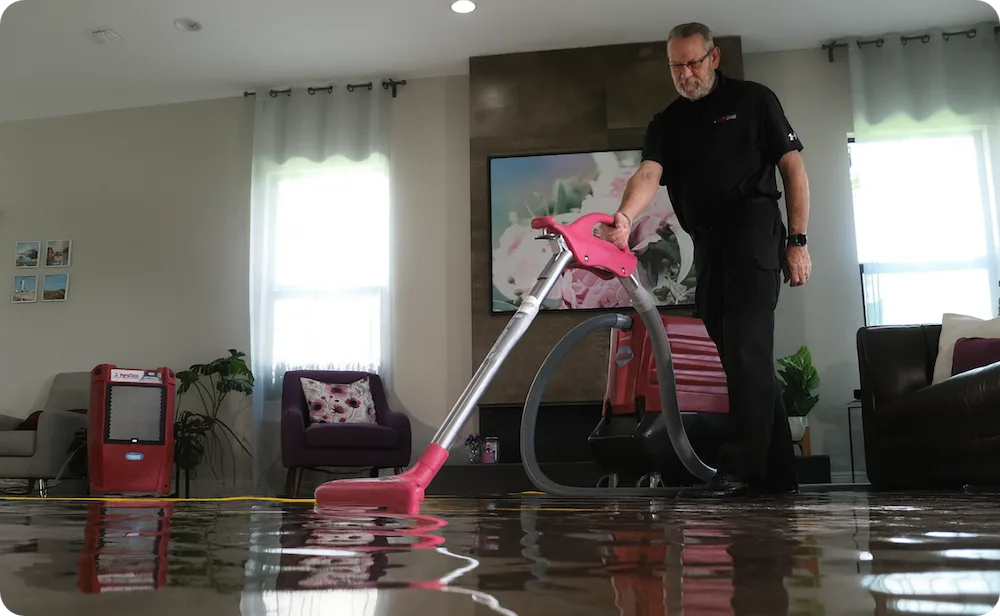
Our 24/7 emergency line is answered by a live person, day or night. Once on site in Dunwoody, our technicians assess with thermal imaging and moisture meters, extract standing water, and set a drying plan — then monitor it until readings confirm the structure is truly dry.
We work directly with your insurance company on the Dunwoody claim — photo and video documentation from day one and moisture logs — while handling any mold remediation and repairs the water caused.
PuroClean of East Cobb also handles these emergencies 24/7 — every call answered by a live person:
• Water Heater Leak & Failure Cleanup
• Sink & Toilet Overflow Cleanup
Our Dunwoody home was built in the 1960s. Should we worry about Orangeburg pipe?
It’s worth checking. A camera scope of the lateral tells you definitively whether fiber pipe is present; if a lateral has failed, that’s a plumber’s replacement, and any resulting backup is our cleanup.
Our water heater is in the attic. Is that a problem?
It’s one of the most common sources of major water damage in two-story Dunwoody homes. An attic water heater that fails can pour water through ceilings on two floors before anyone notices. A drain pan with a working drain line — and a water heater past its expected service life replaced proactively — prevents the worst version of this.
We live in a split-level. Where does water usually cause the most damage?
The lower level — it’s where water collects, whether from a failed water heater, a washing machine hose, or stormwater finding its way in. Split-levels also hide plumbing runs inside walls between levels, so a leak can travel before it shows. If you see staining on a lower-level ceiling, the source is often a floor above.
Our neighborhood has a lot of mature trees. Does that affect our plumbing?
It can affect the sewer lateral. Tree roots seek out moisture in older clay or cast-iron sewer lines and can infiltrate joints over time. If multiple drains are slowing down at once, get the line scoped before it becomes a backup — a sewage backup is a Category 3 loss, not a DIY project.
Do Dunwoody homes get frozen pipes?
During hard freezes, yes — especially homes with plumbing in crawl spaces, attics, garages, or exterior walls. Dunwoody’s mix of 1960s–80s homes and newer construction means risk varies house to house. Insulate exposed pipe before winter, and know where your main shutoff is before you need it.
Water or fire — it starts with one call: (770) 627-0900. Answered live, 24/7.
Last updated: September 26, 2026
We also provide fire damage restoration in Dunwoody — available 24/7.
Owned & Operated by Sam Springer
1080 Cobb Pkwy N, Marietta, GA, 30062
(770) 627-0900
Water damage can result from unexpected leaks, flooding from storms, plumbing failures, or appliance malfunctions. Our certified teams focus on rapid water removal, drying, and stabilization to help prevent further damage and mold growth.
 Explore Our Water Damage Mitigation Services
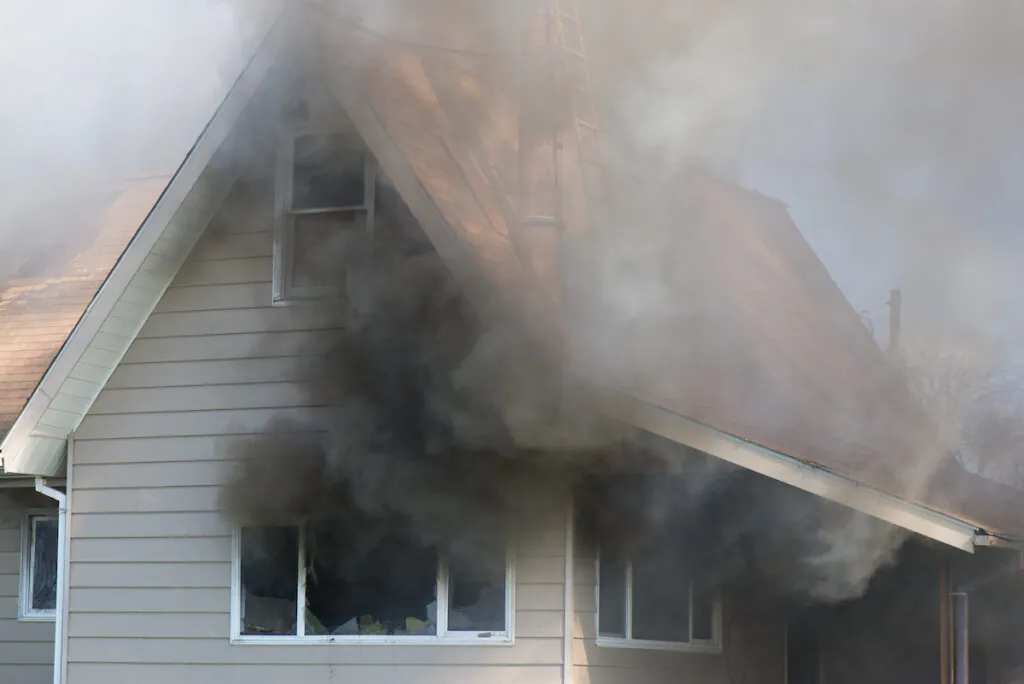
Even after a fire is extinguished, smoke, soot, and odor can continue to affect your home. Fire damage restoration services address visible damage while also helping reduce lingering effects that impact indoor air quality and surfaces.
Explore Our Fire and Smoke Damage Restoration Services
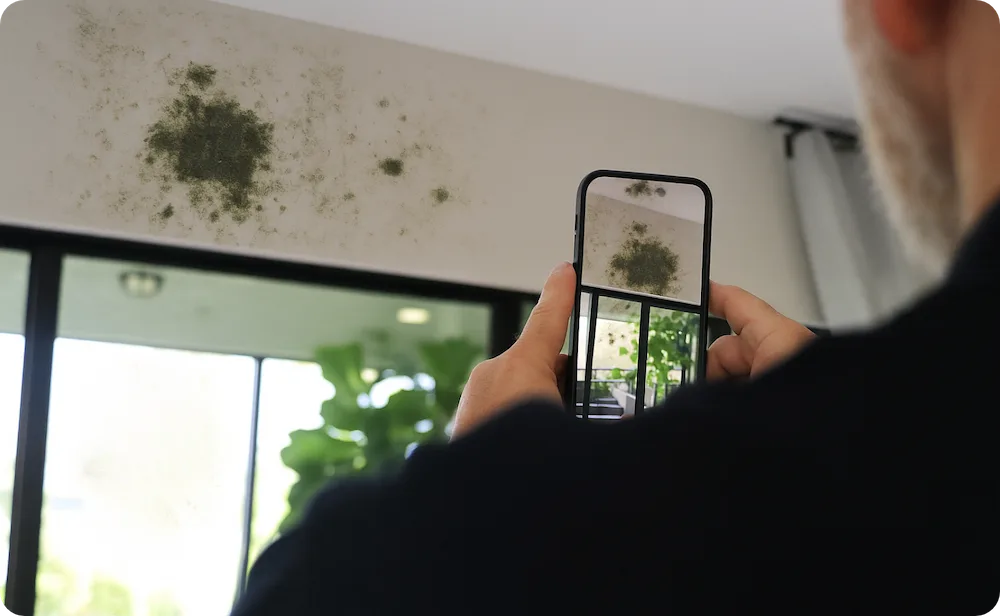
Mold often develops as a result of unresolved moisture or hidden water damage. Professional mold remediation helps identify affected areas, contain growth, and restore healthy indoor conditions.
Explore Our Mold Removal and Remediation Services
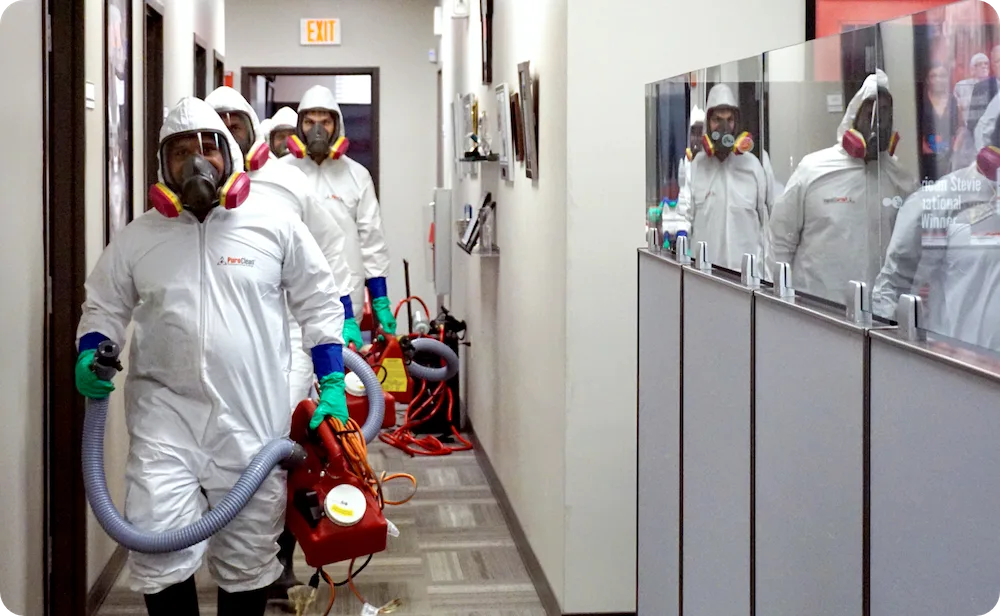
Biohazard situations, including crime scene cleanup and virus decontamination, require specialized cleaning and handling to protect health and safety. Biohazard cleanup services address contamination using proper protocols and professional care.
Explore Our Biohazard Cleanup Services
In some cases, property damage requires repairs beyond cleanup and mitigation. Reconstruction services help restore damaged areas of the home after water, fire, or other incidents, supporting a smoother transition from damage to recovery.
Explore Our Reconstruction Services
PuroClean provides 24/7 commercial property damage restoration services for businesses and facilities across the United States.
Explore Our Commercial Services
Water damage can result from unexpected leaks, flooding from storms, plumbing failures, or appliance malfunctions. Our certified teams focus on rapid water removal, drying, and stabilization to help prevent further damage and mold growth.
Explore Our Water Damage Mitigation Services
Find answers to common questions about our services
Property water damage can pose several dangers including structural instability, electrical hazards, mold and mildew growth leading to health issues, contamination from sewage or chemicals, and potential collapse of weakened structures. Prompt water damage restoration is the best way to prevent these hazards from worsening.
Start your water damage detection by checking the walls and ceilings for water stains, the floors for warping and buckling, and the pipes for corrosion, leaks, missing grout, and mold. Attics and basements may have damaged flooring, mildew or mold, dampness, and odors. Also, be sure to inspect the exterior of the home for cracked roof tiles, puddles, standing water, and whether the ground is sloping away from the house.
There are many variables that determine whether a flooded property can be saved: the amount of water, and even more important, the amount of time the water was in/around the property. Every situation is different, and PuroClean of East Cobb experts providing water damage restoration services can determine what can be salvaged once on site.
Water flooding can cause extensive damage including structural damage to walls, floors, and foundations, damage to personal belongings, electrical hazards, and potential health risks from mold and bacteria growth. The longer water sits, the more severe the damage becomes, which is why beginning our water damage restoration process as soon as possible is critical.
First, if safe, shut off the utilities in your home to avoid further damage. Don’t enter your home if it has suffered structural damage. Don’t walk through floodwater if electricity hasn’t been turned off, and avoid contaminants. Next, contact a water damage restoration company, such as PuroClean of East Cobb, as soon as possible. Don’t wait, as water can cause mold and irremediable damage to the wood, walls, and carpet. Then, depending on the extent of the damage and the recommendation of the remediation company, contact your insurance provider to start the claim process.
What Our Customers Say:
When you need water damage restoration services near you, call the experts at PuroClean. We are here day or night, 24/7, to help remove any standing water quickly and begin your water restoration service. We monitor the drying process so you can rest assured that your property is dried thoroughly. We offer commercial water restoration services for businesses and residential water damage restoration for homeowners.

PuroClean of East Cobb
(770) 627-0900
1080 Cobb Pkwy N, STE B, Marietta, GA 30062


© 2026 PuroClean. All Rights Reserved.