Published: September 28, 2026
Do i need a mold inspection before mold remediation in georgia? Start with an independent assessment before any cleanup begins. Quick answer: Yes — get a mold inspection (assessment) before mold remediation in Georgia. The inspection identifies where the mold is, how far it has spread, and most importantly what moisture source is feeding it. Remediating without that map means guessing at the scope, and remediating without fixing the moisture source means the mold comes back. One caution: anyone can offer mold inspections, so vet whoever you hire carefully — and be skeptical of free inspections from companies that profit from finding a problem.
Watch: Can You Stay in Your Home During Mold Remediation?
Assessment vs. remediation: two different jobs
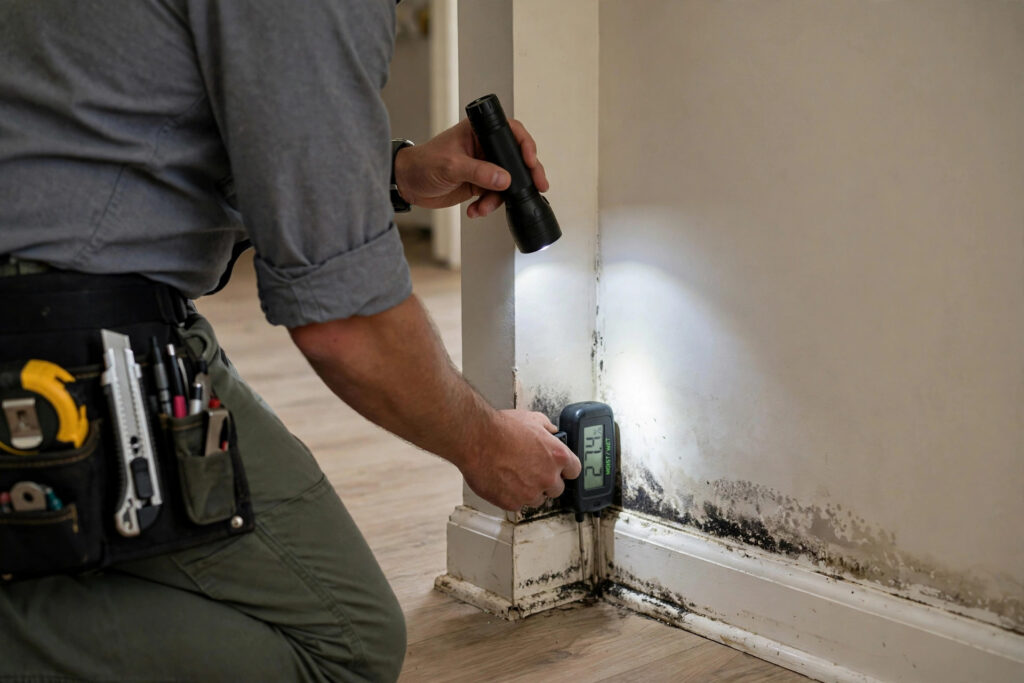
People use “mold inspection” and “mold remediation” interchangeably, but they’re distinct. An assessment answers: Is it actually mold? Where is it? How extensive is it? What’s the moisture source? A good assessment includes a visual inspection, moisture mapping with meters (mold needs moisture — find the water, find the mold), and sometimes air or surface sampling. Remediation is the removal: containment, HEPA filtration, removal of contaminated materials, cleaning, and fixing the moisture problem so it doesn’t recur.
The assessment should drive the remediation plan. Without it, a contractor is either over-scoping (tearing out more than necessary) or under-scoping (missing mold inside wall cavities or under flooring, which then regrows).
How to vet a mold inspector in Georgia
Anyone can print a “mold inspector” business card, so ask direct questions before you hire. Look for nationally recognized certifications — IICRC Applied Microbial Remediation Technician (AMRT) is the industry standard for remediation work — and ask: Do you both inspect and remediate? (Ideally, the assessment comes from someone without a financial stake in the remediation scope.) What does your inspection include — moisture mapping, or just a visual walkthrough? Will I get a written report with findings and recommendations?
The conflict of interest deserves emphasis: a company offering a free inspection makes its money on the remediation it “finds.” An independent assessment, or at minimum a paid inspection with a written report you can take to any contractor, protects you.
Fix the water first — always
This is the step that gets skipped most often. Mold is a moisture problem wearing a mold costume. In Cobb County homes, the usual suspects are roof leaks that went unnoticed, plumbing leaks inside walls, condensation on ductwork in hot attics, and poor drainage against foundations. Remediation that doesn’t resolve the moisture source is a temporary cosmetic fix — the mold returns, sometimes within months. Any remediation plan worth paying for starts with “here’s where the water is coming from and here’s how we stop it.”
When does mold testing actually matter?
Not every situation needs lab samples. Testing is most useful when: occupants have health concerns they’re discussing with their doctor and want documentation; you need post-remediation verification that the job worked (“clearance testing”); or there’s a dispute — with a seller, landlord, or insurer — about whether mold is present. For a straightforward visible-mold-plus-moisture-source situation, a thorough visual assessment with moisture mapping is often sufficient, and anyone insisting on expensive testing for every job should explain exactly what decision the results will change.
What professional mold remediation includes
- Containment of the work area so spores don’t spread through the home during removal.
- HEPA air filtration running throughout the work.
- Removal of contaminated porous materials (drywall, insulation, carpet) that can’t be cleaned.
- Cleaning of remaining surfaces with HEPA vacuuming and antimicrobial treatment.
- Moisture source repair — the leak, drainage, or humidity problem that started it.
- Verification that moisture levels are back to normal before rebuild.
PuroClean of East Cobb has completed 4,000+ restoration jobs since 2022 — 54% water damage, 30% reconstruction, 7% mold. Learn more about PuroClean of East Cobb — our company facts, certifications, and track record.
A related video answers whether you can stay home during mold remediation and what to expect while the work runs.
If you suspect mold in your Georgia home, call PuroClean of East Cobb at (770) 627-0900 — 24/7, answered by a live person. We’ll take an honest look, find the moisture source, and only recommend remediation you actually need.