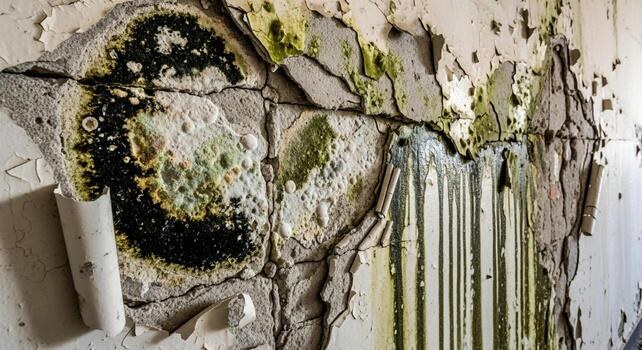
Mold myths vs. facts: what Cobb County homeowners get wrong starts with bleach and hidden mold. Quick answer: Bleach doesn’t kill mold roots in porous materials — it only discolors mold on hard, non-porous surfaces, and affected porous material usually needs to be removed rather than wiped. Mold also hides where you can’t see it (inside wall cavities, under flooring, behind vanities, in crawl spaces), and drying alone doesn’t solve it — you must fix the moisture problem that caused it. If you suspect mold in your Marietta-area home, call PuroClean of East Cobb at (770) 627-0900 for a mold assessment and remediation.
Published September 21, 2026 · Last updated September 2026
Georgia humidity and mold go together like summer and sweet tea. But most of what homeowners believe about mold is wrong — and the wrong beliefs lead to the wrong fixes. Let’s clear it up. Prefer to read? See the Black Mold in Your Bathroom video full transcript.
Watch: Mold Remediation Cost in Georgia — What Actually Drives the Price
Myth: A little bleach kills mold
Fact: Bleach can discolor mold on hard, non-porous surfaces, but it doesn’t kill mold roots in porous materials like drywall or wood — and the water in bleach can actually feed the problem. If mold is growing in a material rather than on it, that material usually needs to be removed, not wiped.
Myth: If I can’t see it, it’s not there
Fact: Mold loves the places you don’t look: inside wall cavities, under flooring, behind vanities, in crawl spaces. A musty smell with no visible growth is a classic sign. This is why we use thermal imaging and moisture meters — the problem is often bigger than what’s visible, and guessing wrong means it comes back. Learn how to tell if mold is in your walls.
Myth: Mold is always dangerous / mold is never dangerous
Fact: Neither. Most mold exposure causes irritation — allergies, respiratory discomfort — and some people are far more sensitive than others. A small patch in a shower is a cleaning issue. Widespread growth after water damage is a remediation issue. The size and the moisture source determine the response, not panic and not dismissal. Wondering about a specific type? See what white mold is and whether it’s dangerous.
Myth: Once it’s dry, the mold is dead and the problem is over
Fact: Drying stops active growth, but dead mold can still cause allergic reactions, and the conditions that grew it will grow it again. Remediation means removing the growth and fixing the moisture problem that caused it. Skip the second half and you’re scheduling a repeat visit.
Myth: I can handle any mold job myself
Fact: A small surface patch? Sure — with proper protection (mask, gloves, ventilation). But anything covering more than about ten square feet, anything inside walls or HVAC, or anything after flooding or sewage — that’s professional territory. Disturbing a large colony without containment spreads spores through the whole house.
PuroClean of East Cobb has completed 4,000+ restoration jobs since 2022 — 54% water damage, 30% reconstruction, 7% mold. Learn more about PuroClean of East Cobb — our company facts, certifications, and track record.
A musty smell is often the first warning sign — here is how to tell when it means mold in a Powder Springs home.
Suspect mold in your Marietta-area home? We provide mold assessments and remediation across Cobb County and the surrounding area, and we answer 24/7. Call PuroClean of East Cobb at (770) 627-0900.