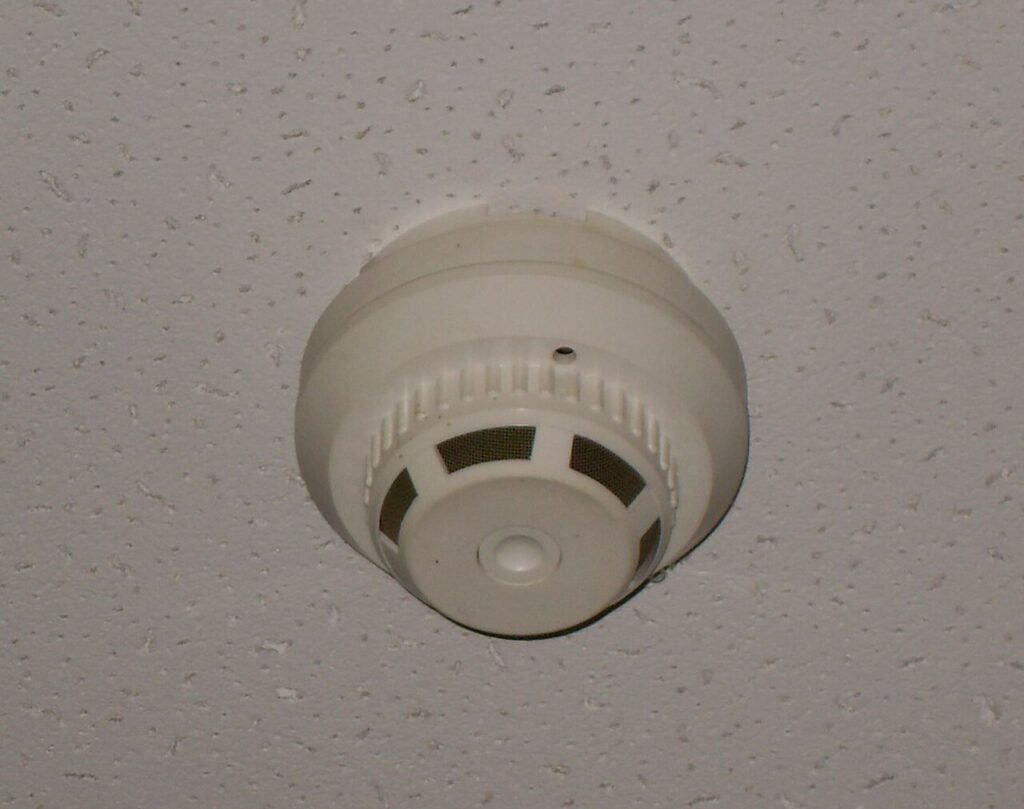
Smoke alarms for people with hearing impairments need strobes and vibrating pads, not just a standard high-pitched alarm. Quick answer: People who are deaf or hard of hearing may not hear a standard high-frequency smoke alarm (3,100 Hz, 85 dB at three meters), so use specialized alarms with strobe lights and vibrating pads. Install a smoke alarm in every bedroom, outside each sleeping area, and on every level of your home, place specialized alarms in the bedrooms of people who are deaf or hard of hearing, interconnect all alarms so they all sound together, and test monthly. Also make sure someone in the household — or a nearby neighbor — is assigned to help anyone who is deaf or hard of hearing in a fire.
Published October 9, 2014 · Last updated September 2026
Smoke alarms save lives. However, people who suffer from hearing impairment may not be able to depend on a traditional smoke alarm to alert them to a fire. The good news is that specialized alarms — along with smart placement and planning — can make sure everyone in your Marietta home gets the warning they need.
Why Standard Smoke Alarms Aren’t Enough
The standard high-frequency smoke alarm (3,100 Hz, 85 dB at a distance of three meters) is suitable for waking most mild to moderately hard-of-hearing people. People who are deaf or have a severe hearing loss (who cannot hear sounds below 85 dB) may have difficulty hearing conventional smoke alarms and evacuation systems. The ability to hear high-pitched sounds also decreases as people age. Research has shown that a loud, mixed low-pitched sound is more effective for waking people of all ages than the loud high-pitched sound of a traditional smoke alarm.
Specialized Alarms: Strobe Lights and Vibrating Pads
There are specialized smoke alarms available for people who are deaf or hard of hearing. These have a strobe light and/or a vibrating pad that can be placed under the pillow, which activates when the smoke alarm sounds. These units can be interconnected with conventional audible alarms in different locations within the home: if one alarm senses smoke, all alarms sound, the strobe flashes, and the vibrating pad vibrates. Bed shakers are also helpful for waking people who are deaf or hard of hearing. People who are hard of hearing may also find helpful smoke alarm alert devices (called accessories) that produce a loud, mixed low-pitched sound. This equipment is activated by the sound of the smoke alarm and is usually installed next to the bed.
Where to Install Smoke Alarms
- Install a smoke alarm in every bedroom, outside each sleeping area, and on every level of your home.
- Place specialized strobe or vibrating alarms in the bedrooms of people who are deaf or hard of hearing.
- Interconnect all alarms so that when one sounds, they all sound.
- Test alarms monthly, replace batteries at least once a year, and replace the alarms themselves every 10 years.
Who to Call for Help
Make sure someone in the household — or a nearby neighbor — is assigned to help anyone who is deaf or has a severe hearing loss escape in an emergency, and practice your home fire escape plan together. Contact your local fire department to ask about smoke alarm installation assistance programs for seniors and residents with disabilities. Home safety goes beyond fire alerts — learn about the most dangerous household chemicals.
PuroClean of East Cobb has completed 4,000+ restoration jobs since 2022 — 54% water damage, 30% reconstruction, 7% mold. Learn more about PuroClean of East Cobb — our company facts, certifications, and track record.
After a Fire, Call PuroClean of East Cobb
If a fire damages your home, our fire damage restoration team can help get your life back to normal. Call PuroClean of East Cobb at (770) 627-0900 — we are available 24/7 and proudly serve Marietta and Cobb County.