Published: October 19, 2026
When the storm goes down the sewer: overflow risk in McDonough is exactly what Hurricane Helene exposed in 2024. Quick answer: McDonough’s hardest recent water lesson arrived with Hurricane Helene in September 2024. The Henry County Water Authority reported that rainfall reaching 10 inches across parts of Georgia strained the system: four sewer overflows occurred, including a major one at the Big Cotton Indian Lift Station on Crumbley Road in McDonough, where an estimated 1.05 million gallons of combined storm water and untreated wastewater flowed from a manhole into Big Cotton Indian Creek over about nine hours, after inflow exceeded the capacity of all five of the station’s pumps. That one station collects sanitary sewage from approximately 20 percent of the county’s land mass. When a storm can push a facility that size past its limit, the low points of the home sewer network are where trouble can surface. If sewage or storm water is entering your McDonough home, call PuroClean of East Cobb at (770) 627-0900. We answer 24/7 with a live person and respond in 60 minutes or less.
Watch: Sewage Backup Cleanup in Marietta — why it’s a biohazard job
About PuroClean of East Cobb
Who is PuroClean of East Cobb?
PuroClean of East Cobb provides 24/7 water, fire and mold restoration in Marietta, GA, with a 60-minute-or-less response. Since 2022, the team has completed more than 4,000 restoration jobs across metro Atlanta. Technicians hold IICRC certifications in water restoration (WRT), fire and smoke restoration (FSRT), applied structural drying (ASD), and applied microbial remediation (AMRT), plus EPA Lead-Safe certification.
What does restoration cost?
National averages run $1,300–$5,600 for water damage restoration and about $12,900 for fire damage restoration (Forbes). Every job is documented with photos and video, and you approve the restoration plan before work begins — no fine print.
Who answers when I call?
A live person, 24 hours a day, 7 days a week. One project manager owns your job from assessment and stabilization through restoration, finishing with a final walkthrough together. Call (770) 627-0900 any time.
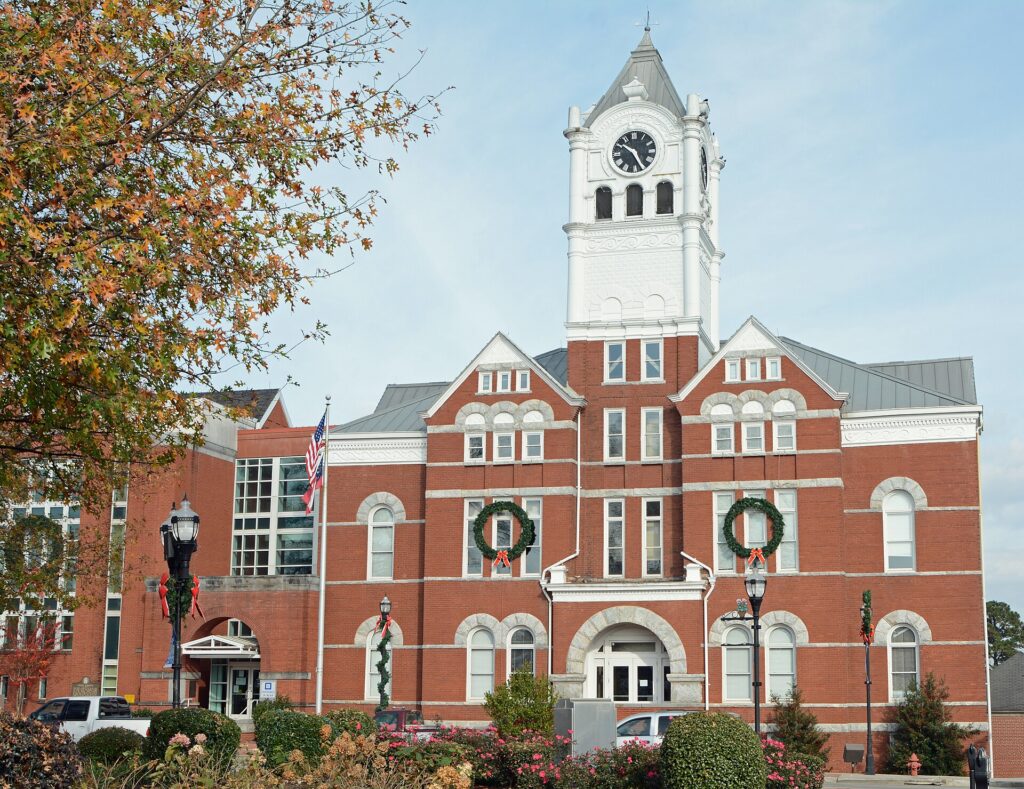
McDonough has been Henry County’s seat since the county was created in 1821; the city was incorporated on December 17, 1823, and the 1897 Romanesque Revival courthouse on its square — designed by J.W. Golucke and placed on the National Register of Historic Places in 1980 — still anchors downtown. Around that historic core, Henry County grew to 240,712 residents by the 2020 census. The sewers grew with it, and they follow the creeks: archaeological surveys for the county’s Upper Walnut Creek and Birch Creek sewer interceptor lines, west and northwest of McDonough, trace the corridors where the big pipes run, because gravity collection has always followed the low ground.
Why big storms push sewers backward
A sanitary sewer is built for wastewater, not weather. In an extreme rain, storm water finds its way in — through manhole covers in flooded streets, aging joints, and connections that were never meant to carry runoff. Engineers call it inflow and infiltration, and Helene showed what it does at county scale: the water authority’s crews worked overtime, lift stations pumped against the inflow, and at Big Cotton Indian the inflow simply won for about nine hours. A homeowner does not need a lift station to fail to have a problem. When the main in the street is running beyond capacity, the lowest fixture in a low-lying home — a basement toilet, a floor drain, a shower — can become the relief point. That is a different event from a clog, and it calls for a different response.
Sewage changes the first hour
Water from a sewer is contaminated water. It is not a mop-and-bucket job, and materials it soaks — carpet, pad, drywall, upholstered furniture — generally cannot be cleaned in place. Treat the first hour as containment, not cleanup.
1. Keep people and pets out of the affected area. Do not walk through sewage water and track it into clean rooms.
2. Stop adding water to the system. No flushing, no laundry, no running drains until the backup clears — everything you send down can come back up.
3. Document from a dry doorway. Photograph the fixtures involved and the extent of the spread for the claim file, without entering the water.
4. Call (770) 627-0900. Sewage events need extraction, removal of contaminated materials, disinfection, and verified drying — in that order, with protective equipment.
Helene was an extreme storm, and McDonough’s system held service through it — the authority reported no interruption of water or sewer service even while crews managed the overflows. The lesson for homeowners is narrower: in the biggest rains, your home’s lowest drain is part of the system too. If your McDonough home has a backup or storm water that will not dry, call (770) 627-0900. We’re based in Marietta and available 24/7.
PuroClean of East Cobb has completed 4,000+ restoration jobs since 2022 — 54% water damage, 30% reconstruction, 7% mold. Learn more about PuroClean of East Cobb — our company facts, certifications, and track record.
Learn more about our service areas and water damage restoration services. Related reading: Reeves Creek Runs Through It: Water Damage in Stockbridge.