Winter water damage prevention in Reno starts before freezing temperatures arrive. Protecting exposed pipes, repairing small plumbing leaks, and checking drainage now can help you avoid water damage and a disruptive cleanup later.
For Northern Nevada homeowners, preparing for colder temperatures and reducing winter water damage means looking beyond outdoor faucets. Plumbing in garages, crawl spaces, and exterior walls deserves attention, along with slow leaks that may already be affecting your home.
PuroClean of South Reno shares these practical steps to help reduce the risk of frozen pipes, plumbing leaks, and winter water damage.
Start with water lines in unheated or drafty spaces, including garages, crawl spaces, and areas near exterior walls. Both hot and cold water pipes can be vulnerable.
1. Protect exposed pipes before freezing weather arrives
Have accessible pipes insulated with materials designed for plumbing. Repair weatherstripping and seal appropriate gaps that allow cold air to reach water lines. Keep garage doors closed when plumbing runs through the garage.
Do not block combustion air openings or required ventilation for your furnace or water heater. If you are unsure how to protect a particular area, ask a licensed plumber.
2. Disconnect hoses and winterize outdoor plumbing
Remove garden hoses, drain them, and put them away before freezing weather. A hose left connected can trap water and interfere with drainage, even on some frost-free faucets.
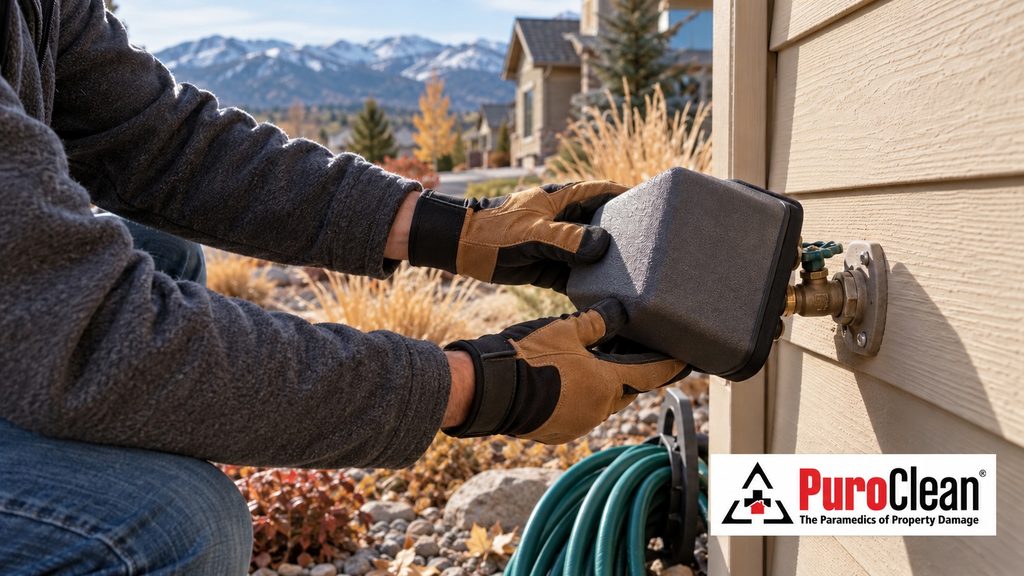
Where your plumbing has a dedicated indoor shutoff for outdoor faucets, follow the fixture’s winterization instructions to shut off and drain the line. Insulated faucet covers can provide added protection, but they do not replace proper draining.
Have your irrigation system winterized according to its design. A qualified irrigation professional can help prevent freeze damage to sprinkler lines and backflow equipment.
3. Find small plumbing leaks before they become larger problems
Cold weather preparation and reducing winter water damage is also a good reason to check for existing leaks. Look under sinks, around toilets, behind accessible appliances, and near the water heater.
Watch for:
- Drips or moisture around connections.
- Stains, swelling, or softness in cabinet bottoms and flooring.
- Peeling paint or discolored drywall.
- Musty odors or unexplained increases in water use.
A slow, weeping plumbing connection may not leave a puddle where you can see it. Water can soak into subflooring, insulation, and framing over time. Have a plumber repair the source and arrange a moisture assessment if surrounding materials are damp or damaged.
4. Keep heat consistent during cold snaps
Avoid large overnight thermostat setbacks during very cold weather. If you travel, leave the heat on rather than shutting it off.
The American Red Cross recommends a setting of at least 55°F while away. That is a baseline, not a guarantee: plumbing in poorly insulated spaces may need additional protection.
During severe cold, opening sink cabinet doors can help warmer room air reach plumbing. Move cleaning products out of reach of children and pets. For particularly vulnerable pipes, ask your plumber whether allowing a small trickle of cold water during freezing conditions is appropriate.
5. Check gutters, drainage, and crawl spaces
Winter water damage does not always start with a burst pipe. Rain and melting snow also need a clear path away from your home.
Arrange safe gutter and downspout cleaning, check that downspouts discharge away from the foundation, and keep drainage paths clear. Have roof leaks or damaged flashing evaluated before storms.
From a safe, accessible location, look for standing water, wet insulation, or staining near crawl-space plumbing. Avoid entering flooded or unsafe crawl spaces. Recurring moisture needs a source investigation rather than repeated surface cleanup.
6. Know your water shutoff and consider leak sensors
Locate your home’s main water shutoff before an emergency. Make sure household members know where it is and how to use it. If the valve is stuck, inaccessible, or unfamiliar, have a plumber inspect it.
Consider water-leak sensors near the water heater, washing machine, and under sinks. Connected sensors can alert you while away; an automatic shutoff system may provide additional protection.
Before winter travel, arrange for someone to check the property, especially during freezing weather or a power outage.
What should you do if a pipe freezes or starts leaking?
Little or no water from a faucet during freezing weather can signal a frozen pipe. Contact a licensed plumber promptly. Never use a torch or open flame to thaw plumbing.
If a pipe bursts or you discover an active leak:
- Shut off the main water supply if you can reach it safely.
- Stay out of water near electrical outlets, appliances, or wiring. Do not enter water to reach a breaker panel.
- Contact a plumber to stop and repair the leak.
- Call a water damage restoration professional to assess affected materials.
- Photograph the damage when safe and contact your insurer to discuss coverage.
A floor that looks dry may still have moisture underneath it or inside nearby walls. Professional moisture assessment helps determine where drying or damaged-material removal is needed.
Act quickly to reduce the risk of mold
Stopping the leak is the first step. Drying the affected building materials matters just as much.
EPA guidance recommends drying water-damaged areas and items within 24–48 hours to help prevent mold growth. Do not wait for a musty smell or visible mold before addressing wet drywall, flooring, or insulation.
Water Damage Restoration in South Reno
A little preparation now can help reduce the chance of an unexpected winter cleanup. Protect exposed plumbing, repair slow leaks, and make sure you know what to do if water starts flowing where it should not.
If a burst pipe, plumbing leak, or flooded crawl space damages your property, contact PuroClean of South Reno for water damage assessment, water removal, and structural drying. Our team can help identify affected areas and develop a cleanup plan so you can move forward.