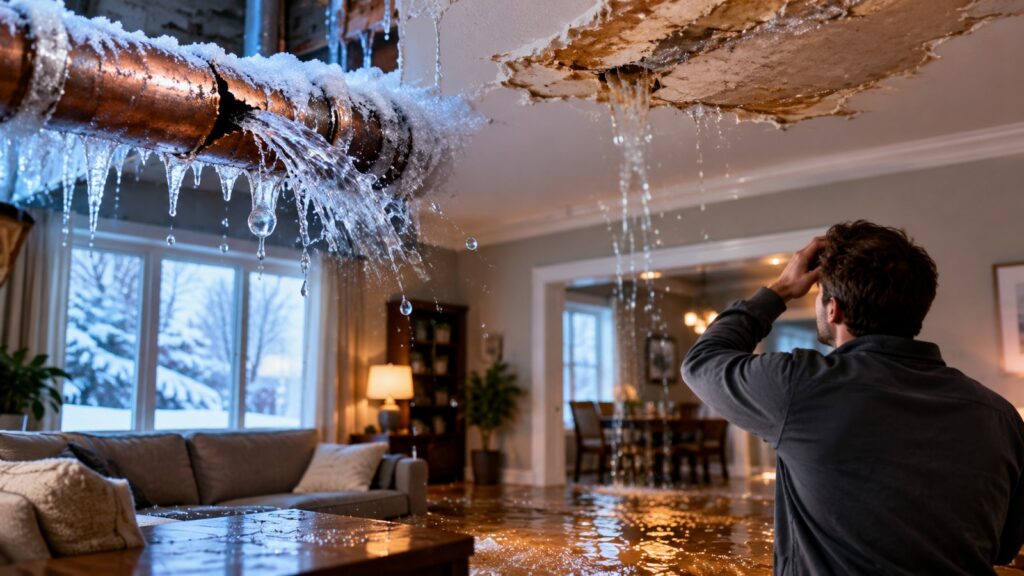
A burst pipe, leaking appliance, or flooded basement can leave you wondering what to do first—and how much damage may be hidden behind the walls or beneath the flooring.
At PuroClean Professional Restoration, we help homeowners and businesses in Saugerties, NY, address water damage through professional cleanup, moisture assessment, structural drying, and restoration.
Whether you’ve discovered standing water or signs of a leak that may have gone unnoticed, the first priorities are protecting everyone in the building, stopping additional water from entering when possible, and understanding how far the moisture has spread.
Need assistance with water damage in Saugerties? Call our Kingston-based team at (845) 481-9060.
1. What to Do Immediately After Discovering Water Damage
When water enters your property, a few careful decisions can help prevent additional damage. However, your safety should always come before protecting belongings or starting cleanup.
Stop the Water Source If It’s Safe
If a pipe, appliance connection, or plumbing fixture is leaking, shut off its supply valve. For a larger plumbing failure, you may need to close the building’s main water valve.
Don’t attempt to access a shutoff valve if doing so requires entering an electrically hazardous or otherwise unsafe area.
Keep Away From Electrical Hazards
Avoid entering standing water that may be in contact with outlets, power cords, appliances, or electrical equipment.
Only turn off electricity at a breaker panel if you can reach it safely without walking through water. If you’re uncertain, leave the area and contact a qualified electrician or your utility provider.
Avoid Potentially Contaminated Water
Sewage backups and water entering from outdoor flooding can carry contaminants. Keep children and pets away, and don’t attempt to enter or clean these areas yourself.
Protect Belongings When Possible
If an area is safe, move important documents, photographs, portable electronics, and smaller valuables away from affected surfaces.
Avoid lifting heavy furniture or moving materials that could expose you to electrical hazards, contamination, or unstable building components.
Document the Damage
Photograph or record affected rooms, damaged belongings, and visible water conditions when safe. These records may be helpful when speaking with your insurance company.
You don’t need to determine the full extent of the damage yourself before contacting a restoration professional.
2. Why Water Damage Can Be More Extensive Than It Looks
One of the challenges with water damage is that the visible water doesn’t always show how far the moisture has traveled.
Water can move underneath flooring, behind baseboards, into drywall, and through insulation or framing. Even after a puddle has been removed, building materials may remain damp.
For example, a leaking washing machine may leave an obvious wet floor while allowing moisture to reach the subfloor underneath. A plumbing leak inside a wall may affect surrounding materials before a stain becomes visible.
Prolonged moisture can contribute to swollen flooring, weakened drywall, damaged furnishings, and conditions that support mold growth.
The U.S. Environmental Protection Agency recommends addressing water damage and drying affected materials promptly—generally within 24 to 48 hours when feasible—to help reduce the risk of mold growth.
That doesn’t mean every damp surface will develop mold. It does mean that visible surface drying isn’t always enough to establish that a structure has dried appropriately.
Professional moisture assessment helps determine which materials are affected and what drying methods may be necessary.
3. Water Damage Considerations for Saugerties Properties
Saugerties includes a range of residential and commercial properties, from established homes and village buildings to properties used seasonally.
The circumstances surrounding water damage can differ considerably between those buildings.
Heavy Rain and Water Entering From Outside
Saugerties is located near the Hudson River and Esopus Creek. During periods of heavy rainfall or high water, some properties may experience water intrusion, depending on their location, elevation, drainage, and building conditions.
If water has entered from outdoors, don’t assume it can be handled like a clean-water plumbing leak. Floodwater may contain contaminants that affect cleanup procedures and decisions about which materials can be retained.
A property’s proximity to a waterway alone does not establish its flood risk. Actual conditions need to be evaluated.
Winter Plumbing Problems
Cold weather can create problems when plumbing is exposed to freezing conditions.
Pipes in inadequately heated or insulated areas may freeze and rupture, sometimes causing significant damage before the leak is discovered.
If a pipe has failed, stopping the water source and arranging appropriate plumbing repairs are important. The resulting moisture may also require professional assessment and drying.
Water Damage in Seasonal or Unoccupied Homes
If you own a property in the Saugerties area that isn’t occupied every day, a leak may go unnoticed longer than it would in a full-time residence.
That can make it difficult to know how long materials have been wet.
When you discover damage after an extended absence, avoid assuming that a dry-looking floor or wall means the problem has resolved. Moisture assessment can help identify affected materials and determine what work is appropriate.
Older Building Materials
Some older properties contain plaster, original wood flooring, distinctive trim, or other materials that may require careful evaluation after water exposure.
Not every wet material needs to be removed, and not every material can be saved.
The appropriate approach depends on the water source, material condition, contamination concerns, and whether drying can be accomplished safely.
Where renovation work may disturb lead-based paint in qualifying older buildings, applicable lead-safe requirements also matter.
4. What Happens During Professional Water Damage Restoration?
When you contact PuroClean Professional Restoration, we’ll discuss the situation and help determine the appropriate next steps.
Every water loss is different, but professional restoration commonly involves the following activities.
Damage Assessment
We evaluate the affected areas and work to understand where the moisture has traveled.
This includes considering the water source, any safety or contamination concerns, and which materials may require drying, cleaning, or removal.
For more information, explore our professional water damage mitigation services.
Water Extraction
When standing water is present, professional extraction equipment can remove substantial amounts of liquid water before structural drying begins.
Not every project requires extraction. A hidden leak without standing water may call for a different restoration plan.
Structural Drying
Moisture remaining inside building materials may require professional air movement and dehumidification.
The equipment and drying approach depend on the materials affected and the conditions found during assessment.
Moisture Monitoring
A surface can feel dry while the material underneath still contains moisture.
We monitor drying progress to evaluate whether affected materials are reaching appropriate drying goals and whether adjustments are needed.
Repairs and Restoration
Sometimes water-damaged materials can be dried and retained. Other situations require material removal or repairs.
We discuss the findings and next steps, including reconstruction needs where applicable, so you can understand the scope of work.
5. What About Restoration Costs and Insurance?
Cost is one of the first concerns many property owners have after discovering water damage.
Unfortunately, there’s no responsible way to give an accurate restoration price based only on the size of a visible puddle or stain.
The scope of work depends on factors such as the water source, contamination, affected materials, extent of moisture, and whether removal or repairs are necessary.
Insurance coverage also varies. A sudden plumbing failure may be treated differently under a policy from water entering during an outdoor flood.
Before filing or proceeding with a claim, review your policy and speak with your insurance provider about coverage, deductibles, and documentation requirements.
Photographs, records of damaged belongings, and information about the restoration work can help you maintain an accurate account of the loss.
We can explain the restoration work being considered, but your insurer determines whether particular expenses are covered.
Frequently Asked Questions
Should I call a plumber or a water damage restoration company first?
If water is actively escaping from a plumbing system, stopping the source is the priority. You may need a plumber to repair the failed pipe or fixture.
Our team addresses the resulting property damage, including water extraction when needed, structural drying, and restoration. Depending on the situation, plumbing repairs and water damage mitigation may need to be coordinated.
Does Every Wet Wall or Floor Need to Be Replaced?
No. Some materials can be dried successfully, while others may need removal because of damage, contamination, or the difficulty of drying them safely.
We assess the affected materials before recommending an approach. Decisions depend on actual site conditions rather than assuming that every wet surface must be demolished.
How Long Does Structural Drying Usually Take?
There is no single timeline that applies to every property.
Drying time depends on the amount of water, how long materials were exposed, their composition, and conditions within the affected space.
Moisture monitoring helps us evaluate progress and determine when appropriate drying goals have been reached.
Can Mold Develop After a Small Leak?
Yes. A small leak can create conditions suitable for mold growth if affected materials remain damp.
The visible amount of water doesn’t always reveal how much moisture has reached concealed spaces. Addressing the source and drying affected materials promptly helps reduce the risk.
Need Water Damage Restoration in Saugerties, NY?
When water damages your home or business, you need to understand the problem and what it will take to address it.
At PuroClean Professional Restoration, our Kingston-based team serves Saugerties and surrounding communities. Our business holds IICRC certification, and we provide restoration services for residential and commercial properties.
Whether you’re dealing with a plumbing leak, water intrusion after a storm, or moisture discovered in an unoccupied property, we’re here to discuss your situation and the next steps.
Learn more about our restoration services in Saugerties, NY.
Call PuroClean Professional Restoration at (845) 481-9060.
PuroClean Professional Restoration
625 NY-28
Kingston, NY 12401