PuroClean of Rocklin — 2351 Sunset Blvd, Suite 170-323, Rocklin, CA 95765
Auburn Lake Trails is a private, gated equestrian and residential community tucked into the Sierra Nevada foothills of eastern Placer County, sitting at elevations ranging from approximately 2,000 to 2,800 feet. Accessed primarily via Sliger Mine Road off Highway 193 east of Cool, the community is known for its horse-friendly lots, miles of internal trail easements, and the wooded seclusion that draws buyers away from the dense suburban corridors of Rocklin and Roseville. The Auburn Lake Trails Owners Association (ALTOA) maintains internal roads, recreational facilities, and a small lake — Auburn Lake itself — that gives the community its name and serves as a visual centerpiece of the development. Neighboring landmarks include the Olmstead Loop trail system of Auburn State Recreation Area and the American River canyon, which lies just to the south and west.
The character of Auburn Lake Trails creates a distinctive property damage profile. Homes here are predominantly custom or semi-custom construction on large parcels, many built between the 1970s and the 1990s, with a range of construction quality and maintenance histories. The combination of age, elevation, and rural infrastructure — nearly all properties rely on private wells and septic systems rather than municipal water and sewer — means that when something goes wrong, it tends to go wrong without the early-warning systems that utility monitoring provides in urban areas. A slow-leaking water line or a failing septic leach field can cause significant subsurface and structural damage over weeks or months before any interior sign appears. Crawl spaces, common in the foothill ranch-style construction prevalent in Auburn Lake Trails, are frequent sites of chronic moisture accumulation, wood rot, and hidden mold growth that goes undetected until a sale inspection or renovation project exposes it.
Equestrian properties present additional considerations — outbuildings, tack rooms, hay storage structures, and covered arenas carry their own moisture and fire risk profiles that differ from standard residential construction. PuroClean of Rocklin responds to the full range of property damage events across Auburn Lake Trails, including:
From our Rocklin base at 2351 Sunset Blvd, the primary route to Auburn Lake Trails runs approximately 30 to 35 miles and typically takes 35 to 50 minutes depending on conditions. We travel northbound on Interstate 80 to the Auburn area, then pick up Highway 49 south through Old Town Auburn toward Cool, turning east on Highway 193. From Highway 193, Sliger Mine Road is the main entry corridor into Auburn Lake Trails, with the community gate accessed near the intersection of Sliger Mine Road and Winslow Road.
Once inside the gated community, routing depends on the specific address within Auburn Lake Trails’ internal road network. The community’s internal roads include Auburn Lake Trails Drive, Saddle Road, Winslow Road, and a network of named easement roads serving individual parcels. Our dispatch team confirms gate access procedures and internal routing with the property owner at the time of the emergency call, as gated community entry protocols require advance coordination. We carry gate access information for Auburn Lake Trails on file and update it regularly to avoid delays on emergency calls.
In winter weather conditions, Sliger Mine Road and Highway 193 above Cool can experience ice, snow accumulation, and reduced visibility when storms push below the 2,500-foot snow level. Our crews monitor Caltrans road condition reports for the Highway 193 corridor before and during dispatch to this community and carry appropriate equipment for winter road conditions. For properties in the upper elevation sections of Auburn Lake Trails near 2,700 to 2,800 feet, we confirm road accessibility before dispatching heavy equipment vehicles to avoid access issues on steep internal easement roads.
Auburn Lake Trails’ position at 2,000 to 2,800 feet in the Sierra Nevada foothills places it in one of Placer County’s most environmentally active zones for property damage risk. The interaction between elevation, precipitation, geology, and the wildland-urban interface creates a set of conditions that directly shape the frequency and severity of water, mold, and fire damage events in this community.
Precipitation and snowpack: Auburn Lake Trails regularly receives snow during winter months, a condition largely absent from lower Placer County communities. Annual precipitation at this elevation often exceeds 45 to 55 inches, and during significant Sierra Nevada snowpack years, the community can receive multiple measurable snowfall events between November and March. Snow accumulation on roofs creates load stress on older framing systems and, critically, generates melt-water infiltration events when ice dams form at eave lines or when warm daytime temperatures cause rapid snowmelt that overwhelms gutters and drainage systems. Properties with flat or low-slope roof sections — common on 1970s and 1980s ranch designs — are particularly susceptible to standing melt-water intrusion.
Freeze-thaw exposure: At this elevation, freeze-thaw cycles are not occasional winter anomalies — they are a seasonal pattern occurring repeatedly from December through February and occasionally into March. Supply lines running through unheated crawl spaces, in exterior walls without adequate insulation, or serving outbuildings and detached structures like horse barns and tack rooms face significant freeze risk. Well pressure tanks and pump houses are also common freeze-damage sites. The thaw phase of these events — often within 24 to 36 hours of the freeze — is when structural water damage occurs, and the delay between freeze and visible water release frequently catches homeowners off guard.
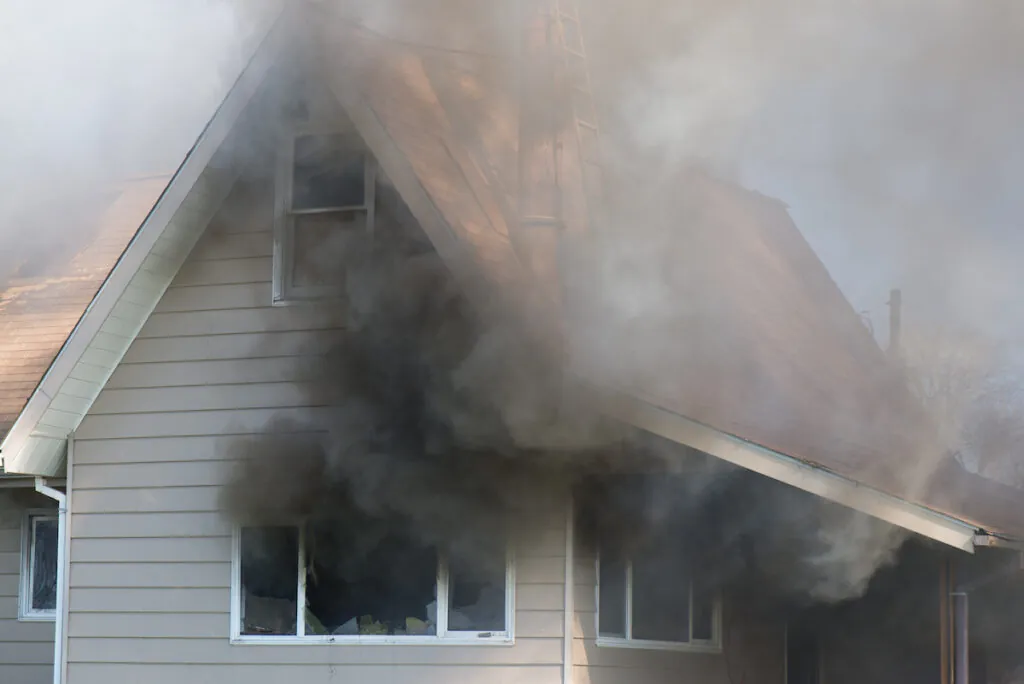
Wildland-urban interface fire risk: Auburn Lake Trails occupies classic WUI terrain — mixed conifer and oak woodland on rolling terrain with accumulated dry fuel loads during late summer and autumn. The El Dorado and Placer County portions of the American River canyon, which border the community to the south, have been active fire corridors in recent fire seasons. Homes in Auburn Lake Trails are generally wood-frame with wood or composite roofing and are situated on large, heavily vegetated parcels with significant fire exposure. Beyond direct structural fire risk, smoke infiltration into unoccupied homes during regional fire events causes secondary damage to HVAC systems, contents, and interior finishes that may not be immediately apparent to owners who evacuated. Soil instability following nearby fire events also increases erosion, drainage alteration, and hillside groundwater movement that can affect foundations in subsequent wet seasons.
Owned & Operated by Mike McIntire
6518 Lonetree Blvd, Rocklin, CA, 95765
(916) 409-6911
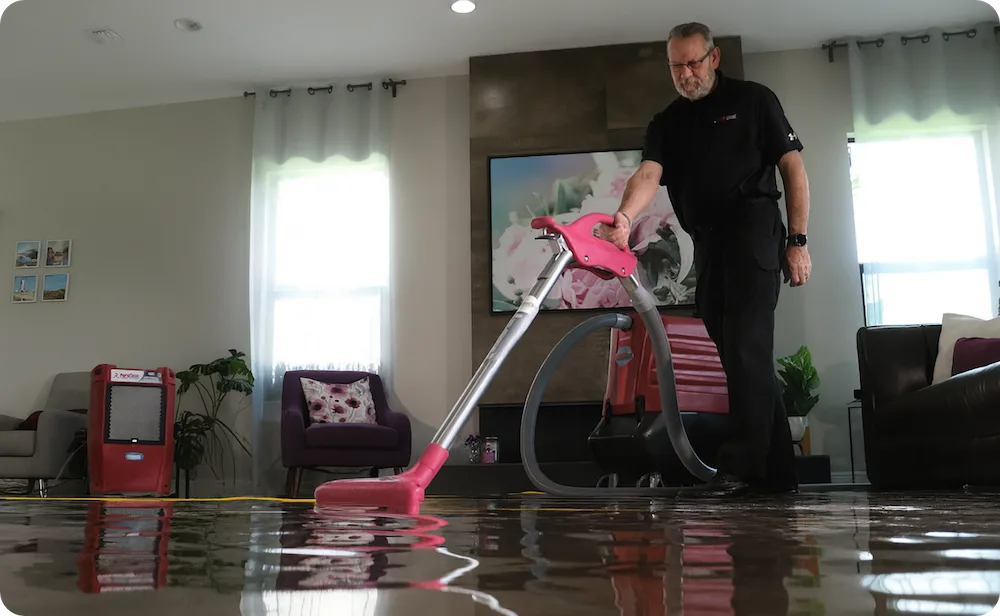
Water damage can result from unexpected leaks, flooding from storms, plumbing failures, or appliance malfunctions. Our certified teams focus on rapid water removal, drying, and stabilization to help prevent further damage and mold growth.
 Explore Our Water Damage Mitigation Services
Even after a fire is extinguished, smoke, soot, and odor can continue to affect your home. Fire damage restoration services address visible damage while also helping reduce lingering effects that impact indoor air quality and surfaces.
Explore Our Fire and Smoke Damage Restoration Services
Mold often develops as a result of unresolved moisture or hidden water damage. Professional mold remediation helps identify affected areas, contain growth, and restore healthy indoor conditions.
Explore Our Mold Removal and Remediation Services
Biohazard situations, including crime scene cleanup and virus decontamination, require specialized cleaning and handling to protect health and safety. Biohazard cleanup services address contamination using proper protocols and professional care.
Explore Our Biohazard Cleanup Services
When water impacts offices or retail spaces, every hour without extraction expands the drying footprint and increases downtime. PuroClean of Rocklin focuses on rapid stabilization, verified drying, and phased re-occupancy planning to help property managers reopen faster and with clearer documentation.
Explore Our Commercial Water Damage Restoration in Rocklin, CA Services
When mold appears in a commercial setting, the risk is liability, indoor air quality, and repeated downtime—not just visible staining. PuroClean of Rocklin helps property managers remediate to protocol, document conditions, and support re-occupancy decisions with evidence-based scope control. In commercial properties, mold is a liability issue tied to occupant health, lease obligations, and indoor air quality across shared air and building assemblies.
Explore Our Commercial Mold Remediation in Rocklin, CA Services
When fire, soot, or wildfire smoke impacts a commercial building, restoration has to be sequenced—protecting HVAC, contents, and adjacent suites while documenting each phase for stakeholders and insurance. Commercial fire losses rarely stop at what you can see—soot, residue, and odor can migrate into HVAC returns, porous finishes, and contents, creating re-occupancy and indoor-air concerns.
Explore Our Commercial Fire Damage Restoration in Rocklin, CA Services
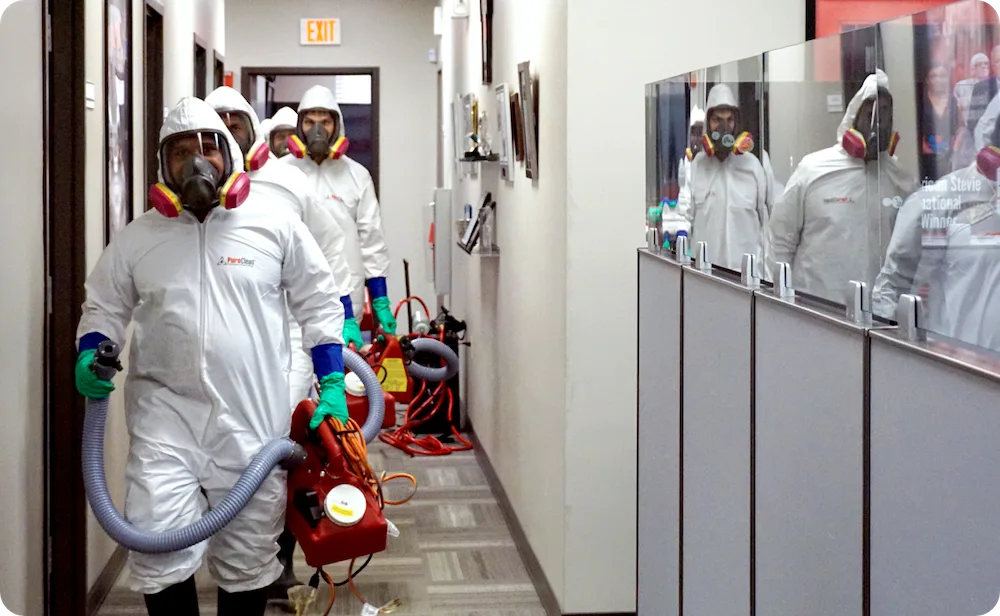
When a workplace contamination event restricts access, you need a safety-first team that can control the scene, protect occupants, and document clearance for stakeholders. PuroClean of Rocklin helps Rocklin-area businesses return to use with professional containment, sanitation, and re-entry coordination. Biohazard events in commercial spaces aren’t “messy cleanups”—they’re access-controlled safety incidents that can create exposure risk, privacy concerns, and liability.
Explore Our Commercial Biohazard Cleanup in Rocklin, CA Services
Water damage can result from unexpected leaks, flooding from storms, plumbing failures, or appliance malfunctions. Our certified teams focus on rapid water removal, drying, and stabilization to help prevent further damage and mold growth.
Explore Our Water Damage Mitigation Services
Common questions from Auburn Lake Trails property owners about water damage, mold, and restoration services.
Ceiling staining following a snow event at Auburn Lake Trails elevations is almost always an active moisture intrusion that warrants same-day attention. Melt-water infiltration through eave ice dams, failed ridge flashing, or low-slope roof sections can continue releasing moisture into wall cavities and ceiling assemblies long after the snow melts. Under IICRC S500 Category 1 classification, this is clean water damage — but Category 1 events can degrade to Category 2 within 24 to 48 hours as bacteria and organic matter in building materials interact with standing moisture. Regarding insurance: most HO-3 policies cover sudden and accidental roof leak damage from storm events, but gradual or maintenance-related leak damage may be excluded. We document the event carefully using thermal imaging and moisture meters to support the adjuster’s determination.
Freeze damage to plumbing systems including well pressure tanks can be covered under standard HO-3 homeowner’s policies, but coverage often hinges on whether the outbuilding is listed as an ‘other structure’ on the policy and whether the insurer determines that reasonable winterization measures were in place. Properties on private wells in Auburn Lake Trails should review their policy’s other structures coverage limit — typically 10% of the dwelling coverage amount under a standard HO-B form — to understand the applicable cap. We document all affected areas, including the pressure tank housing, associated piping, and any water-damaged flooring or walls in the outbuilding, using Xactimate line items accepted by all major carriers, so your adjuster can evaluate the full scope of the loss.
Gate access is a legitimate operational consideration for emergency response in gated communities like Auburn Lake Trails, and we plan for it specifically. When you call our 24/7 emergency line, our dispatcher confirms gate access procedures — including any after-hours entry codes or ALTOA security contact protocols — during the intake call so our crew has the information they need before arriving at the gate. We also maintain updated access information on file for communities where we have established service history. The goal is zero delay at the gate. If your community entry procedure has changed, let us know when you call and we’ll coordinate accordingly.
Smoke infiltration into unoccupied homes during nearby wildfire events is a genuine restoration issue, not just an odor nuisance. Fine particulate matter and volatile organic compounds (VOCs) from wildfire smoke penetrate HVAC systems, settle into ductwork, impregnate soft contents like upholstery and drapery, and deposit soot residue on interior surfaces — all of which continue to off-gas long after the fire event. IICRC FSRT-certified technicians assess smoke infiltration with the same protocols used for structural fire damage: HVAC decontamination, hydroxyl or ozone odor neutralization, surface cleaning, and contents evaluation. This type of loss is often covered under the fire and smoke damage provisions of a standard HO-3 policy, and we document it for adjuster review using Xactimate scope items.
Pre-listing mold findings in Auburn Lake Trails crawl spaces are more common than most sellers expect, given the age of much of the housing stock and the chronic moisture conditions in foothill crawl spaces. The standard remediation process begins with air and surface sampling by an independent Indoor Environmental Professional (IEP) to establish a baseline and confirm the mold species and concentration levels. Remediation under IICRC S520 protocols typically includes containment, HEPA air scrubbing, physical removal of affected materials to below-contamination thresholds, and antimicrobial treatment of remaining wood substrates. Upon completion, the IEP returns for post-remediation verification (PRV) sampling. The PRV clearance report — from an independent IEP, not the remediating contractor — is the documentation that satisfies buyer due diligence, real estate agent disclosure requirements, and California Civil Code obligations for seller disclosure.
What Our Customers Say:
When you need water damage restoration services near you, call the experts at PuroClean. We are here day or night, 24/7, to help remove any standing water quickly and begin your water restoration service. We monitor the drying process so you can rest assured that your property is dried thoroughly. We offer commercial water restoration services for businesses and residential water damage restoration for homeowners.

PuroClean of Rocklin
(916) 409-6911
6518 Lonetree Blvd, Suite 2034, Rocklin, CA 95765

© 2026 PuroClean. All Rights Reserved.