PuroClean of Rocklin — 2351 Sunset Blvd, Suite 170-323, Rocklin, CA 95765
Cameron Park is a master-planned community in western El Dorado County, positioned along the US-50 corridor between El Dorado Hills to the west and Shingle Springs to the east. Developed primarily during the 1960s and 1970s by the Cameron Park Company — which also gave the community its airpark, Cameron Park Airport (O61), one of the few residential airpark communities in Northern California — the area grew into a large, established suburb that today houses roughly 18,000 residents across a diverse mix of neighborhoods. Cameron Park Lake, a centerpiece amenity maintained by the El Dorado County Service Area, anchors the community’s recreational identity alongside Bass Lake and Meder Road Park. The surrounding street grid reflects its planned origins: long curving residential streets named after Scottish highlands — Cameron Park Drive, Bass Lake Road, Oxford Road, Coach Lane, Country Club Drive — wind through hillside terrain that drops toward Bass Lake Creek and its tributaries.
That hillside terrain is central to Cameron Park’s property damage profile. Unlike the flat grid of Rocklin or Roseville, Cameron Park’s residential lots sit on rolling, graded terrain with significant grade changes between neighboring parcels. Drainage easements cross many lots, concentrating storm runoff in ways that create localized flooding risk during atmospheric river events. The community’s original construction era — the 1960s through 1980s — means a substantial portion of the housing stock carries aging plumbing infrastructure, including galvanized steel supply lines with documented corrosion failure rates, older copper with soldered joints prone to stress cracking, and HVAC systems that generate condensation moisture in unconditioned attic and crawl space environments. Cameron Park’s commercial corridor along Coach Lane and Cameron Park Drive includes medical offices, retail centers, and professional services that face the added complexity of Category 2 and Category 3 loss events in occupied commercial spaces.
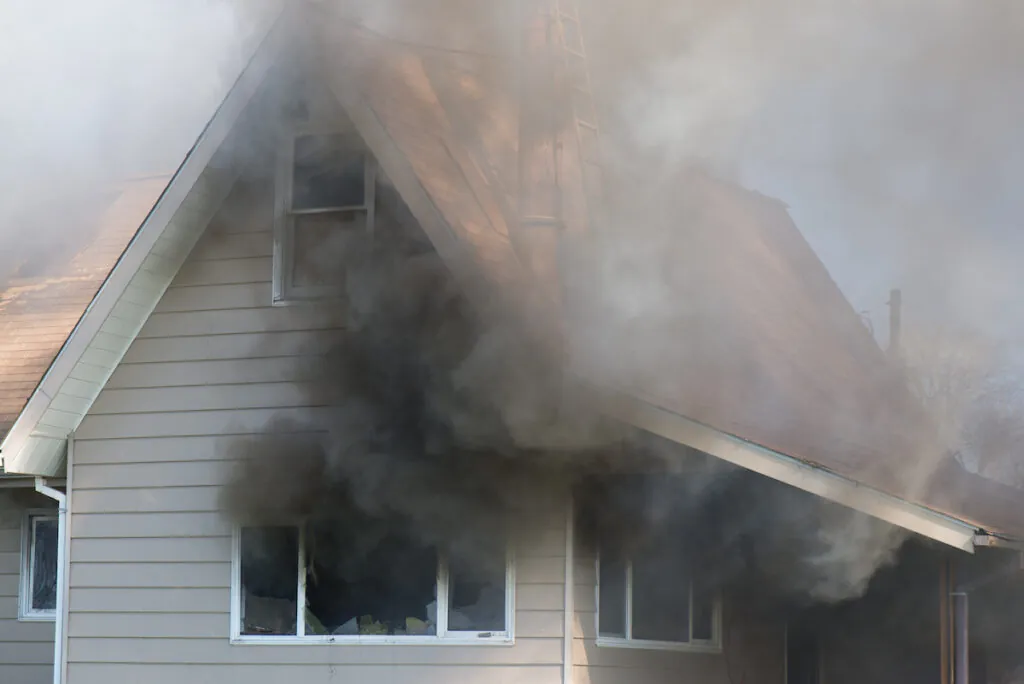
Cameron Park also sits at the edge of El Dorado County’s expanding wildland-urban interface zone, where dry summers and dense oak woodland on undeveloped hillsides create meaningful fire risk for properties bordering open space. PuroClean of Rocklin responds to the full range of residential and commercial property damage events across Cameron Park, including:
From our base in Rocklin at 2351 Sunset Blvd, Cameron Park is a direct and efficient drive of approximately 25 to 30 miles, typically taking 28 to 40 minutes depending on US-50 traffic conditions. We travel southbound on Interstate 80 from Rocklin to the US-50 interchange near Sacramento, then eastbound on US-50 into El Dorado County. Cameron Park’s primary access exits from US-50 are Cambridge Road (Exit 40) and Bass Lake Road (Exit 41), which serve the community’s western and central neighborhoods respectively. Oxford Road (Exit 43) provides access to the eastern portions of Cameron Park and the Oxford Road commercial area.
From the Cambridge Road exit, Cameron Park Drive runs north through the community’s heart, connecting to Coach Lane, Country Club Drive, and the residential streets serving the hillside neighborhoods above Cameron Park Lake. For calls in the northern sections of Cameron Park near the airpark or the Coach Lane commercial corridor, Bass Lake Road provides a more direct internal route. Properties in the southern reaches of Cameron Park — those closer to Bass Lake Creek and the El Dorado Hills boundary — are accessible via the Bass Lake Road exit and south on Bass Lake Road itself.
US-50 eastbound traffic from Sacramento can be a variable during peak commute hours, particularly between the Sunrise Boulevard interchange and the El Dorado Hills Boulevard exit. For emergency calls, our dispatch team monitors real-time traffic conditions and will route via Folsom Boulevard or the Douglas Boulevard surface street corridor if freeway congestion would materially delay response. Cameron Park receives the same 24/7 emergency dispatch priority as our core Placer County service area, with fully equipped service vehicles deploying directly from Rocklin without intermediate staging stops.
Cameron Park occupies a transitional zone between the Sacramento Valley floor and the Sierra Nevada foothills, sitting at elevations generally between 500 and 1,200 feet above sea level. This position creates a weather and environmental profile that differs from both the flat valley communities to the west and the higher-elevation foothill communities to the east — and those differences directly shape the types of property damage events that occur here with regularity.
Atmospheric river precipitation and drainage concentration: Cameron Park receives considerably more annual precipitation than Sacramento — typically 28 to 35 inches per year compared to roughly 18 inches on the valley floor — and the community’s hillside terrain amplifies the effect of that rainfall. When atmospheric river systems deliver 2 to 4 inches of rain in 24 hours, water concentrates in drainage easements that run through residential lots, overtops engineered retention features, and pools against foundation walls on downhill-facing lot faces. Bass Lake Creek and its upstream tributaries, which drain the central portion of the community, can rise rapidly during storm events, affecting properties in the creek corridor along Bass Lake Road and the lower reaches of the drainage system. The original 1960s and 1970s grading and drainage infrastructure in older Cameron Park neighborhoods was designed for precipitation volumes that California’s increasingly intense atmospheric river cycles now routinely exceed.
Expansive soils and slab movement: El Dorado County’s western foothill zone — including Cameron Park — contains significant areas of expansive clay and adobe soil that swell when saturated and shrink and crack during dry seasons. This cyclical movement exerts stress on concrete slab foundations, causing cracking, joint separation, and the development of subsurface voids beneath slabs where pressurized hot and cold water lines run. Slab leaks are a consistent damage category in Cameron Park’s older concrete slab construction, and because the moisture releases beneath the slab rather than visibly inside the home, they can cause extensive subfloor saturation before the homeowner notices any symptom — typically a warm spot on the floor, an unexplained spike in the water bill, or, eventually, buckled hardwood or lifted tile.
Summer heat and HVAC moisture: Cameron Park’s summer temperatures regularly reach 95 to 105 degrees Fahrenheit, driving heavy air conditioning loads from June through September. This sustained HVAC operation creates meaningful condensate volume in air handler systems — a properly functioning 3-ton system can produce 15 to 20 gallons of condensate per day during peak summer operation. When condensate drain lines clog, secondary drain pans overflow, or air handler units develop refrigerant issues that cause coil icing and subsequent melt-water release, the resulting water damage inside attic air handler closets and ceiling assemblies can be significant. These are among the most common warm-season water damage calls we receive from Cameron Park residential clients.
Owned & Operated by Mike McIntire
6518 Lonetree Blvd, Rocklin, CA, 95765
(916) 409-6911
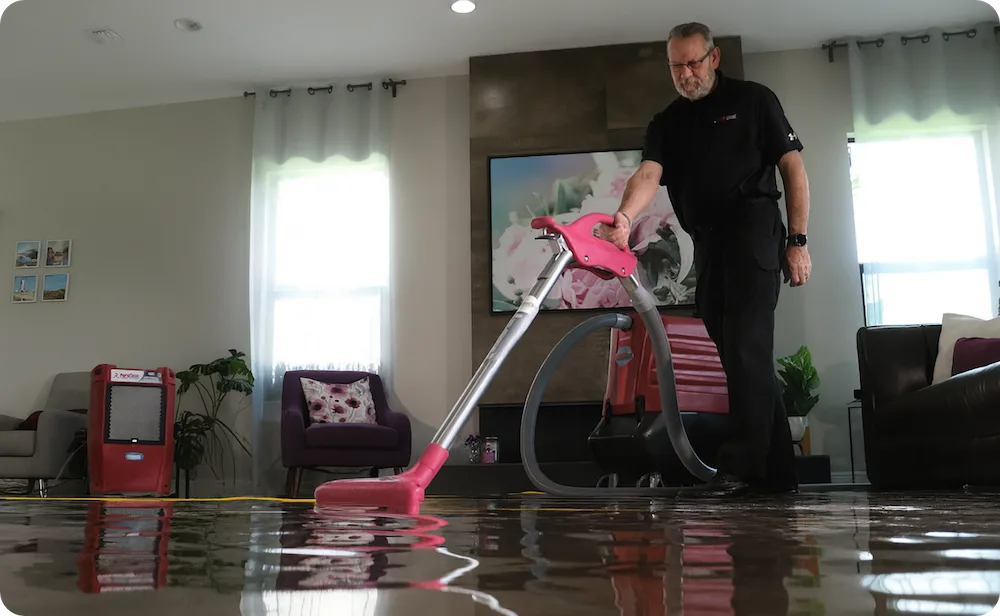
Water damage can result from unexpected leaks, flooding from storms, plumbing failures, or appliance malfunctions. Our certified teams focus on rapid water removal, drying, and stabilization to help prevent further damage and mold growth.
 Explore Our Water Damage Mitigation Services
Even after a fire is extinguished, smoke, soot, and odor can continue to affect your home. Fire damage restoration services address visible damage while also helping reduce lingering effects that impact indoor air quality and surfaces.
Explore Our Fire and Smoke Damage Restoration Services
Mold often develops as a result of unresolved moisture or hidden water damage. Professional mold remediation helps identify affected areas, contain growth, and restore healthy indoor conditions.
Explore Our Mold Removal and Remediation Services
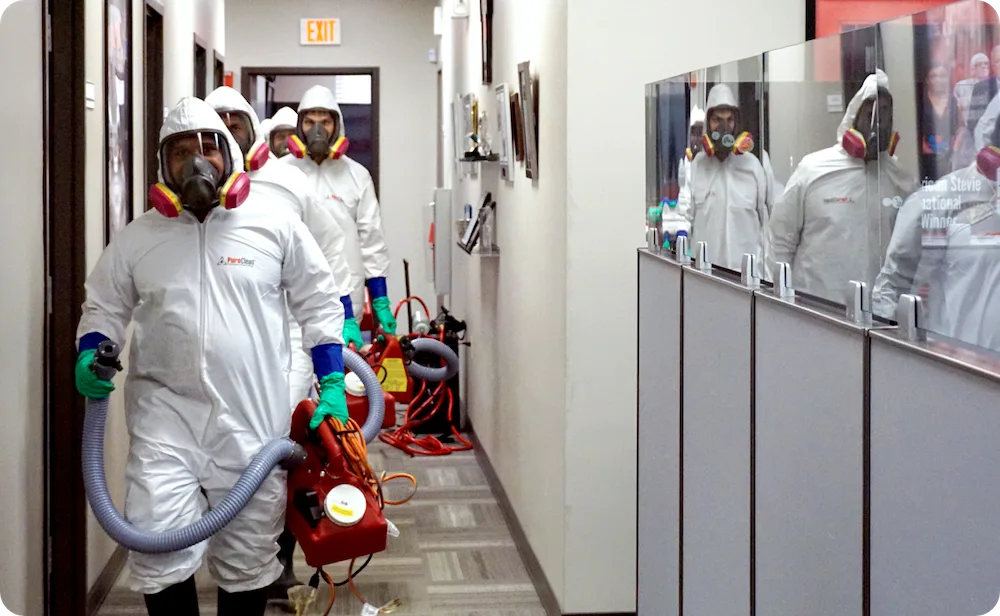
Biohazard situations, including crime scene cleanup and virus decontamination, require specialized cleaning and handling to protect health and safety. Biohazard cleanup services address contamination using proper protocols and professional care.
Explore Our Biohazard Cleanup Services
When water impacts offices or retail spaces, every hour without extraction expands the drying footprint and increases downtime. PuroClean of Rocklin focuses on rapid stabilization, verified drying, and phased re-occupancy planning to help property managers reopen faster and with clearer documentation.
Explore Our Commercial Water Damage Restoration in Rocklin, CA Services
When mold appears in a commercial setting, the risk is liability, indoor air quality, and repeated downtime—not just visible staining. PuroClean of Rocklin helps property managers remediate to protocol, document conditions, and support re-occupancy decisions with evidence-based scope control. In commercial properties, mold is a liability issue tied to occupant health, lease obligations, and indoor air quality across shared air and building assemblies.
Explore Our Commercial Mold Remediation in Rocklin, CA Services
When fire, soot, or wildfire smoke impacts a commercial building, restoration has to be sequenced—protecting HVAC, contents, and adjacent suites while documenting each phase for stakeholders and insurance. Commercial fire losses rarely stop at what you can see—soot, residue, and odor can migrate into HVAC returns, porous finishes, and contents, creating re-occupancy and indoor-air concerns.
Explore Our Commercial Fire Damage Restoration in Rocklin, CA Services
When a workplace contamination event restricts access, you need a safety-first team that can control the scene, protect occupants, and document clearance for stakeholders. PuroClean of Rocklin helps Rocklin-area businesses return to use with professional containment, sanitation, and re-entry coordination. Biohazard events in commercial spaces aren’t “messy cleanups”—they’re access-controlled safety incidents that can create exposure risk, privacy concerns, and liability.
Explore Our Commercial Biohazard Cleanup in Rocklin, CA Services
Water damage can result from unexpected leaks, flooding from storms, plumbing failures, or appliance malfunctions. Our certified teams focus on rapid water removal, drying, and stabilization to help prevent further damage and mold growth.
Explore Our Water Damage Mitigation Services
Common questions from Cameron Park, CA homeowners and business owners about water damage, mold, and restoration services.
A warm spot on a concrete slab floor is one of the most reliable early indicators of a hot water line slab leak, and in Cameron Park’s older construction stock it’s a call we receive regularly. The warm spot forms where heated water is escaping a pressurized line beneath the slab and conducting heat upward through the concrete. By the time the surface is warm to the touch, moisture has often been saturating the soil beneath the slab and wicking upward into flooring materials for weeks. Our thermal imaging cameras and penetrating moisture meters can confirm slab leak moisture intrusion without destructive testing. Restoration involves coordinating with a licensed plumber for line repair or rerouting, followed by IICRC S500-compliant structural drying of the affected flooring assembly and subfloor materials to bring moisture content below acceptable thresholds before any flooring replacement proceeds.
Drainage easement flooding is a coverage gray area that depends significantly on the water’s origin and pathway. Standard HO-3 homeowner’s policies exclude flooding from external surface water sources — which is how most insurers classify overland drainage easement flow — but may cover resulting interior water damage if the water entered the structure through a sudden breach rather than gradual seepage. Flood coverage for surface water events typically requires a separate NFIP policy or private flood endorsement. If the water entered through a drain backup, a separate water backup endorsement may apply. We document the intrusion pathway thoroughly — including entry points, water category classification, and affected material inventory — so your adjuster can evaluate coverage accurately. Many Cameron Park homeowners in drainage easement corridors are underinsured for this specific risk.
Household fans are insufficient for achieving the moisture content thresholds required by IICRC S500 standards in attic and ceiling assemblies. A typical box fan or oscillating fan evaporates surface moisture without addressing moisture that has wicked into ceiling drywall, attic insulation, and wood framing — materials that hold moisture internally long after their surface feels dry to the touch. IICRC guidelines recognize that mold colonization can begin within 24 to 48 hours in warm, moist conditions, and Cameron Park’s summer attic temperatures — which can exceed 140 degrees — actually accelerate mold growth rates once moisture is present. A non-invasive thermal imaging scan and moisture meter assessment will confirm whether residual moisture remains in the assembly. If readings are elevated above the 16% threshold for wood substrates, professional structural drying and a mold clearance inspection are warranted before the ceiling is repaired.
Medical office restoration carries specific requirements beyond standard commercial water damage work. Toilet overflow events in healthcare settings are classified as Category 2 (gray water) or Category 3 (black water) contamination under IICRC S500, requiring EPA-registered disinfectants, proper biohazard material handling, and documentation adequate for both insurance and regulatory purposes. Medical facilities must also consider HIPAA implications if patient records or devices were in the affected area, and California Department of Public Health guidelines may apply to re-occupancy timelines for licensed healthcare spaces. We carry the appropriate EPA-registered hospital-grade disinfectants used in healthcare environments, document the full scope with Xactimate line items accepted by commercial carriers, and coordinate around your patient scheduling to minimize practice downtime. Business interruption coverage under your commercial policy may also apply.
Residual smoke damage from wildfire events is not self-resolving — the volatile organic compounds and fine particulate matter embedded in HVAC ductwork, insulation, wall cavities, and soft contents do not dissipate on their own over time. In fact, VOC off-gassing from smoke-impregnated building materials can persist for years and may be contributing to ongoing indoor air quality issues your household has normalized. A professional indoor air quality assessment, including air sampling for smoke-related particulates and VOCs, can determine whether actionable contamination is present. If so, IICRC FSRT remediation protocols — including duct cleaning, hydroxyl treatment, and surface cleaning of affected finishes — are still effective on aged smoke infiltration. The more important issue for past-event smoke damage is the insurance timeline: most HO-3 policies require timely reporting of losses, so a claim from a prior fire season event would likely not be coverable today.
What Our Customers Say:
When you need water damage restoration services near you, call the experts at PuroClean. We are here day or night, 24/7, to help remove any standing water quickly and begin your water restoration service. We monitor the drying process so you can rest assured that your property is dried thoroughly. We offer commercial water restoration services for businesses and residential water damage restoration for homeowners.

PuroClean of Rocklin
(916) 409-6911
6518 Lonetree Blvd, Suite 2034, Rocklin, CA 95765

© 2026 PuroClean. All Rights Reserved.