PuroClean of Rocklin — 2351 Sunset Blvd, Suite 170-323, Rocklin, CA 95765
Lake of the Pines is a private, gated lake community in western Nevada County, situated between Auburn to the southwest and Grass Valley to the northeast, with access primarily via Combie Road and the Lake of the Pines main gate off Highway 49. Developed beginning in the late 1960s by Boise Cascade’s real estate division, the community was designed around a central 185-acre reservoir — Lake of the Pines itself — that serves as both the community’s recreational anchor and its visual identity. Today the Lake of the Pines Association (LOPA) maintains the lake, internal road network, tennis and recreation facilities, and the gate security infrastructure that defines daily life for the community’s approximately 3,000 residents. Neighboring landmarks include the Combie Lake water supply reservoir to the south and the Bear River watershed that defines the broader topographic region.
The community’s founding era is central to understanding its property damage profile. The majority of Lake of the Pines homes were constructed between the late 1960s and the early 1990s, placing them squarely in an age range that restoration professionals flag for predictable infrastructure vulnerabilities. Galvanized steel supply lines — common in construction through the mid-1970s — corrode from the inside out, narrowing flow and eventually failing at fittings and joints without visible exterior warning. Copper supply systems installed in the 1970s and 1980s can develop pitting corrosion accelerated by the slightly acidic water chemistry common in Sierra Nevada foothill well and reservoir-sourced water systems. Many homes in Lake of the Pines also feature post-and-beam or raised foundation construction that creates accessible but moisture-prone crawl space environments beneath living areas — spaces that, when poorly ventilated or subject to hillside groundwater intrusion, become chronic mold incubation zones that affect indoor air quality for months or years before detection.
The lakefront and near-lake properties present additional considerations. Homes on or near the lake shoreline face persistent ambient humidity from water surface evaporation, groundwater proximity, and the seasonal rise and fall of the lake level managed by LOPA. Subfloor and crawl space moisture in waterfront properties is a chronic condition, not an episodic one, and the long-term wood degradation and mold colonization that results often surprises owners who have not had a professional moisture assessment in several years. PuroClean of Rocklin responds to the full range of property damage events across Lake of the Pines, including:
From our base at 2351 Sunset Blvd in Rocklin, Lake of the Pines is approximately 25 to 30 miles northeast, with a typical drive time of 35 to 45 minutes. The primary routing takes us northbound on Interstate 80 to the Auburn area, where we pick up Highway 49 northbound through Old Town Auburn and continue northeast through the foothill corridor toward Grass Valley. The Lake of the Pines community entrance is accessed via Combie Road off Highway 49, with the main gate located on Lake of the Pines Drive just inside the Combie Road turn. An alternate approach from the north uses the Grass Valley / Nevada City Highway 49 corridor southbound to Combie Road, which can be advantageous when Highway 49 south of Auburn is congested near the Auburn Boulevard or Foresthill Road intersections.
Once through the LOPA gate, the community’s internal road network branches from Lake of the Pines Drive into a series of named residential streets — Lakeshore Drive, Peninsula Drive, Lariat Trail, Comanche Trail, and numerous cul-de-sac courts — that serve the lakefront, mid-community, and upper-elevation parcels. Our dispatch team confirms gate access codes and internal routing with the property owner at the time of the emergency call. LOPA gate security protocols require advance coordination for after-hours entry, and we maintain current access procedures on file for this community to avoid any delay at the gate during emergency response.
Highway 49 between Auburn and the Lake of the Pines entrance is a two-lane highway with grade changes and curves through the foothill terrain that requires attentive driving, particularly at night or during winter storm conditions when fog and ice can develop in low-elevation sections between Auburn and the Combie Road intersection. Our crews are familiar with this corridor and account for it in drive time estimates. For properties in the upper-elevation sections of Lake of the Pines, we confirm access road conditions before dispatching heavy equipment vehicles following significant storm events.
Lake of the Pines sits at elevations ranging from approximately 1,500 to 1,900 feet above sea level in the Bear River watershed of western Nevada County. This position places it in a climatically active zone that receives substantially more precipitation than the Sacramento Valley floor, experiences genuine winter freeze conditions, and carries significant wildfire exposure during dry seasons — a combination that creates a demanding environment for residential structures of the age found throughout this community.
Precipitation and lake-level dynamics: Annual precipitation at Lake of the Pines averages 38 to 48 inches, with significant year-to-year variability driven by Sierra Nevada weather patterns. During atmospheric river events, the community can receive 3 to 6 inches of rain within 48 hours — volumes that overwhelm the drainage capacity of lots graded in the 1960s and 1970s for average, not extreme, precipitation events. The lake itself adds a layer of complexity: LOPA manages lake levels within defined ranges, and during sustained high-precipitation periods, lake levels rise and the shoreline expands, placing waterfront properties’ lowest-elevation structures — docks, boat storage areas, lakeside patios, and in some cases finished basement or lower-level living spaces — in direct contact with rising water. Properties on the interior drainage network, particularly those adjacent to the seasonal creek channels that feed the lake from the northern and eastern parcels, experience concentrated runoff that can surcharge French drains and crawl space vapor barriers within hours of storm onset.
Freeze-thaw cycles and elevation exposure: At 1,500 to 1,900 feet, Lake of the Pines is positioned in the freeze-thaw zone where temperatures drop below 32 degrees Fahrenheit on multiple occasions each winter but rarely stay frozen for extended periods. This pattern — freeze overnight, thaw by midday — is particularly damaging to plumbing systems because it repeats across many nights within a single season rather than occurring as a single prolonged freeze event. Supply lines in unheated crawl spaces, in garages, and in the exterior walls of additions constructed without adequate insulation are at elevated risk. Well pump systems and pressure tanks serving the community’s private-well properties are also vulnerable, as pump houses and utility enclosures in older construction often lack sufficient insulation for the overnight temperature drops common at this elevation.
Wildland-urban interface fire risk: Lake of the Pines is embedded in classic WUI terrain — mixed conifer, oak woodland, and manzanita chaparral on rolling terrain with significant accumulated dry fuel loads by late summer. Nevada County’s fire history includes the 2021 Beckwourth Complex and the ongoing risk profile of the broader Sierra Nevada foothills WUI zone. Homes in Lake of the Pines are predominantly wood-frame with wood or composition roofing, situated on parcels with mature trees in close proximity to structures. Smoke infiltration during regional fire events — even from fires not directly threatening the community — deposits fine particulates and volatile organic compounds in HVAC systems, attic spaces, and soft furnishings that require professional remediation to fully address.
Owned & Operated by Mike McIntire
2351 Sunset Blvd, Rocklin, CA, 95765
(916) 409-6911
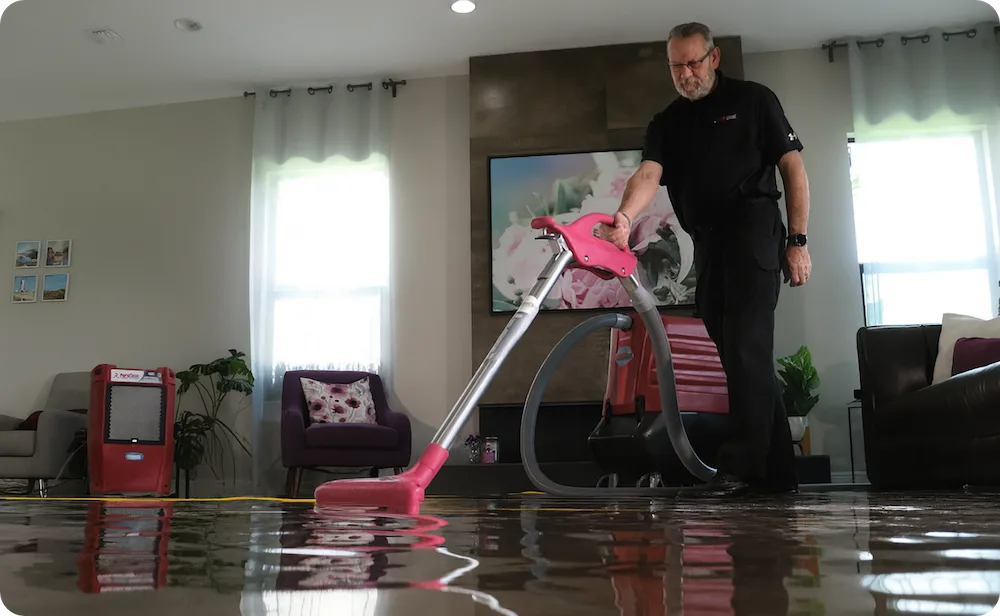
Water damage can result from unexpected leaks, flooding from storms, plumbing failures, or appliance malfunctions. Our certified teams focus on rapid water removal, drying, and stabilization to help prevent further damage and mold growth.
 Explore Our Water Damage Mitigation Services
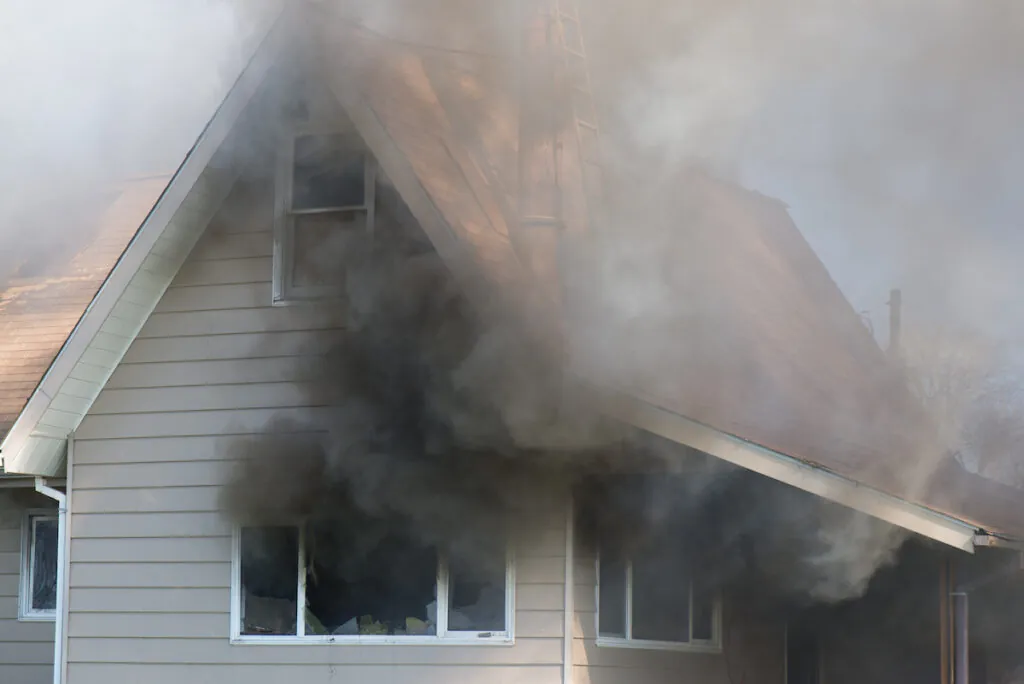
Even after a fire is extinguished, smoke, soot, and odor can continue to affect your home. Fire damage restoration services address visible damage while also helping reduce lingering effects that impact indoor air quality and surfaces.
Explore Our Fire and Smoke Damage Restoration Services
Mold often develops as a result of unresolved moisture or hidden water damage. Professional mold remediation helps identify affected areas, contain growth, and restore healthy indoor conditions.
Explore Our Mold Removal and Remediation Services
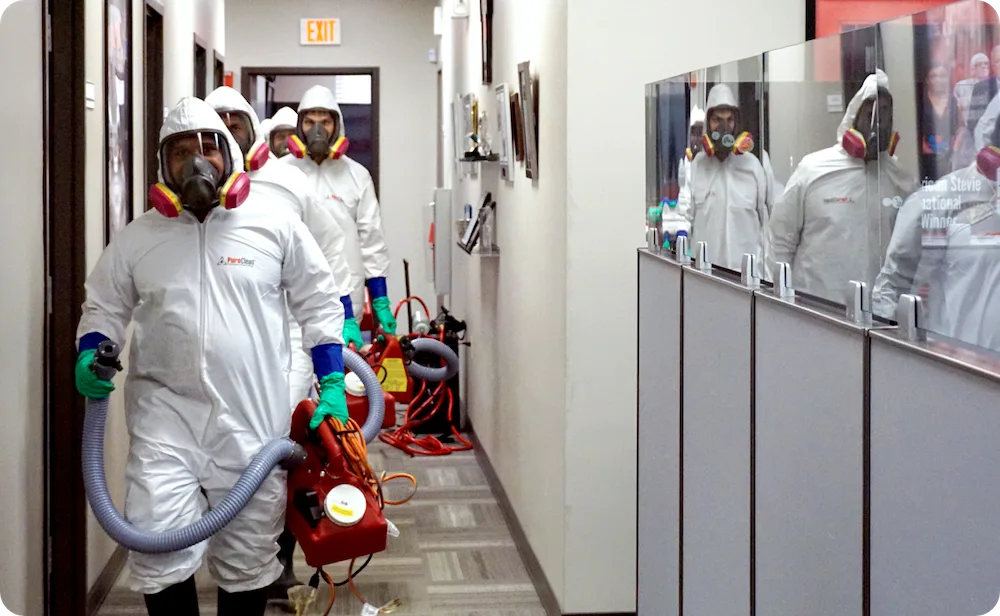
Biohazard situations, including crime scene cleanup and virus decontamination, require specialized cleaning and handling to protect health and safety. Biohazard cleanup services address contamination using proper protocols and professional care.
Explore Our Biohazard Cleanup Services
Expert commercial water damage restoration for Rocklin, CA businesses. PuroClean of Rocklin provides rapid water extraction, structural drying, and damage
Explore Our Commercial Water Damage Restoration in Rocklin, CA Services
Certified commercial mold remediation and prevention for Rocklin, CA businesses. PuroClean of Rocklin provides mold assessment, contained removal, and mold cleanup
Explore Our Commercial Mold Remediation in Rocklin, CA Services
Professional commercial fire and smoke damage restoration for Rocklin, CA businesses. PuroClean of Rocklin provides fire damage cleanup, smoke odor removal,
Explore Our Commercial Fire Damage Restoration in Rocklin, CA Services
Licensed commercial biohazard cleanup and decontamination for Rocklin, CA businesses. PuroClean of Rocklin provides biohazard remediation, trauma scene
Explore Our Commercial Biohazard Cleanup in Rocklin, CA Services
Water damage can result from unexpected leaks, flooding from storms, plumbing failures, or appliance malfunctions. Our certified teams focus on rapid water removal, drying, and stabilization to help prevent further damage and mold growth.
Explore Our Water Damage Mitigation Services
Common questions from Lake of the Pines property owners about water damage, mold, and restoration services.
Persistent crawl space dampness in lakefront Lake of the Pines homes is not a condition to normalize — it is an active moisture problem with a predictable endpoint. IICRC S500 standards establish that wood substrates above 19% moisture content are in the elevated risk zone for fungal growth, and wood consistently above that threshold will develop mold colonization, rot, and structural degradation over time regardless of whether visible mold has appeared yet. A professional moisture assessment using penetrating meters on floor joists, rim joists, and subfloor sheathing — combined with air sampling to detect elevated spore counts — will tell you exactly where you stand. In many lakefront homes we assess, the crawl space has been in the mold-active range for one to three years before the homeowner calls. Addressing it at the elevated-moisture stage is substantially less costly than addressing it after structural wood members require replacement.
This is a question with both insurance and legal dimensions specific to Lake of the Pines. From an insurance standpoint, water intrusion caused by lake level rise is almost always classified as flooding from an external surface water source — which standard HO-3 homeowner’s policies exclude. Coverage for this type of event typically requires a separate NFIP flood policy or a private flood endorsement, and NFIP policies have specific coverage limits for basement and below-grade spaces. The LOPA dimension is a separate question: the Association manages lake levels within parameters set by their water management permit, and whether those management decisions create liability exposure for shoreline property damage is a matter for your attorney to evaluate based on LOPA’s governing documents and California water law. We document the intrusion pathway, water category, and full affected material inventory to support whatever coverage determination or legal review follows.
Your insurance agent is raising a legitimate concern. Many carriers writing homeowner’s policies in California’s foothill communities have begun scrutinizing galvanized plumbing during underwriting renewals, and some will exclude coverage for water damage resulting from galvanized pipe failure — or decline to renew the policy altogether — if the system is over a certain age or in documented deteriorating condition. Galvanized steel pipes corrode from the inside, building up scale and rust that restrict flow before eventual failure at joints and fittings. The failure mode is typically sudden rather than gradual, which means the resulting water damage can be extensive before it is discovered. We frequently assess Lake of the Pines homes where a galvanized line failure has saturated walls, subfloors, and crawl spaces over days or weeks. If your policy has a galvanized exclusion and a failure occurs, the restoration costs become entirely out-of-pocket.
Gate access for after-hours emergency response at Lake of the Pines is something we plan for specifically. When you call our 24/7 emergency line, our dispatcher collects gate access information during the intake call — including any after-hours entry codes, LOPA security contact numbers, or guest registration procedures — before our crew departs Rocklin. We maintain current LOPA gate access procedures on file from prior service calls and update them regularly. In situations where gate access cannot be pre-confirmed, our crew will contact you directly for real-time guidance at the gate. The goal is that our technicians are moving through the gate and toward your address without any delay from access coordination. If you are calling from inside the community, staying available by phone during our drive ensures we can reach you the moment we arrive at the gate.
A pre-sale property assessment in Lake of the Pines typically focuses on the areas most likely to reveal latent moisture or mold issues during a buyer’s inspection: the crawl space, attic, bathrooms and laundry areas, and any wall or ceiling surfaces adjacent to plumbing. We use thermal imaging cameras and penetrating moisture meters to map moisture conditions throughout these areas without destructive testing, and we can arrange independent air sampling through a third-party Indoor Environmental Professional (IEP) if elevated mold risk is indicated. If issues are found, addressing them before listing — with full PRV clearance documentation — gives you a clean disclosure position, eliminates buyer negotiation leverage on discovered defects, and avoids the compressed timelines and limited vendor options that come with addressing mold or water damage during an escrow period. California Civil Code disclosure obligations make documented, remediated conditions far preferable to undisclosed ones.
What Our Customers Say:
When you need water damage restoration services near you, call the experts at PuroClean. We are here day or night, 24/7, to help remove any standing water quickly and begin your water restoration service. We monitor the drying process so you can rest assured that your property is dried thoroughly. We offer commercial water restoration services for businesses and residential water damage restoration for homeowners.

PuroClean of Rocklin
(916) 409-6911
2351 Sunset Blvd, Suite 170 - 323, Rocklin, CA 95765

© 2026 PuroClean. All Rights Reserved.