24/7 Emergency Attic Mold Removal Port CharlotteAttic Mold Removal Port Charlotte Services in Venice
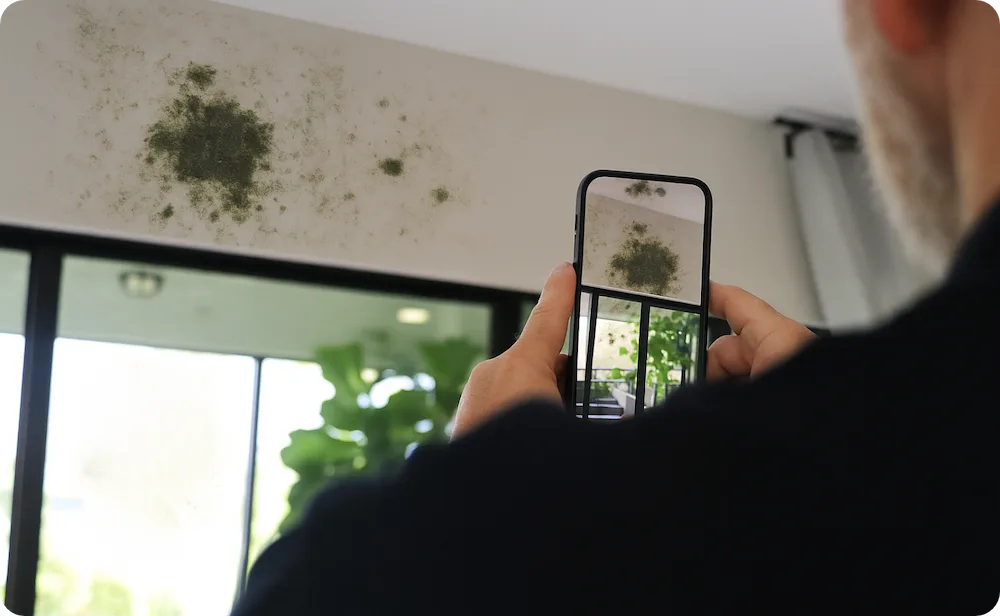
You open the attic access, shine a flashlight toward the roof, and notice dark spots scattered across the plywood. Maybe there’s a musty smell near the hallway ceiling, or a home inspector has identified suspected mold on the rafters.
Now you’re wondering whether the discoloration is mold, how far it extends, and whether you’ll need to replace your roof or attic insulation.
PuroClean of Venice provides professional attic mold removal and remediation in Port Charlotte, Florida, helping homeowners address mold contamination affecting roof sheathing, wood framing, insulation, and other attic materials.
Our approach focuses on more than cleaning visible discoloration. Effective attic mold remediation involves understanding which materials are affected, selecting appropriate cleanup methods, and identifying the moisture conditions that allowed mold to develop.
Depending on the circumstances, remediation may involve containment, controlled cleaning of suitable wood surfaces, removal of contaminated insulation, HEPA vacuuming, and coordination of necessary moisture-related repairs.
Finding mold in your attic does not automatically mean your roof or roof decking needs replacement. Some materials can be professionally remediated when they remain structurally suitable. Others may require removal because of contamination, water damage, or deterioration.
If you’ve discovered suspected attic mold in your Port Charlotte home, call (941) 294-0404 to discuss the problem and appropriate next steps.
Professional attic mold remediation generally involves evaluating affected materials, establishing appropriate work-area controls, cleaning or removing contaminated materials, and addressing the moisture conditions that caused the growth.
The appropriate process depends on the attic’s construction, the extent of contamination, the condition of the materials, and any assessment or remediation protocol applicable to the project.
For example, cleaning a limited section of accessible roof sheathing is different from remediating an attic where contamination affects multiple roof slopes, framing members, and insulation.
Not every attic requires extensive containment, complete insulation removal, or replacement of roof decking. The remediation plan should reflect the actual conditions rather than applying the same approach to every property.
The objective is to address existing contamination and the conditions that allowed it to develop—not simply make darkened wood look lighter.
Some homeowners assume that applying bleach, spraying a chemical treatment, or painting over stained plywood will resolve an attic mold problem.
However, a surface that looks cleaner does not necessarily indicate that contamination has been adequately addressed.
Appropriate remediation considers the material, contamination, cleaning method, and moisture source. A surface may retain some discoloration after proper remediation, while a freshly coated surface can conceal an unresolved problem.
Applying a coating should not be treated as a substitute for necessary cleaning, removal of unsuitable materials, or moisture correction.
Common signs of possible attic mold include irregular dark spotting on roof sheathing, discoloration on rafters, persistent musty odors, damp insulation, and evidence of roof leaks or condensation.
Many homeowners discover these conditions during a roof inspection, insulation project, renovation, or property transaction rather than through everyday use of the home.
Not every dark spot is mold. Water staining, dust, aged wood, construction-related marks, and other conditions can resemble microbial growth.
Likewise, mold cannot be reliably identified by species or health risk from its color alone.
If you suspect a problem, avoid disturbing the materials and arrange appropriate professional evaluation.
No. The term “black mold” is often used to describe any dark-colored growth, but many types of mold can appear black or dark gray.
Appearance alone cannot identify a species or determine the potential health effects of exposure.
The practical concern is whether mold contamination is present, what materials are affected, and which moisture conditions allowed it to develop.
Mold growth requires suitable moisture conditions. In an attic, those conditions may develop because of roof leaks, condensation, uncontrolled air movement, improperly routed exhaust ducts, or moisture associated with attic HVAC equipment.
Port Charlotte’s warm, humid climate and seasonal heavy rainfall make moisture management especially important. However, outdoor humidity alone does not establish that an attic has a mold problem.
Different attic designs respond differently to heat, humidity, ventilation, and air movement. The source of the moisture must be investigated rather than assumed.
| Potential Moisture Source | What May Happen | Appropriate Next Step |
|---|---|---|
| Roof leaks | Rainwater reaches roof decking, framing, or insulation through damaged roofing, flashing, or penetrations. | Have the roofing system investigated and repaired by a qualified roofing contractor. |
| Wind-driven rain | Storm conditions allow water to enter through vulnerable roofing or exterior details. | Investigate the source and evaluate affected attic materials. |
| HVAC condensation | Moisture collects on inadequately insulated ductwork or near leaking air-conditioning components. | Have a qualified HVAC professional address the mechanical or insulation problem. |
| Bathroom exhaust problems | Humid air is discharged into the attic instead of outdoors. | Have the exhaust system evaluated and appropriately routed. |
| Air leakage | Uncontrolled movement of air between conditioned rooms and attic spaces contributes to moisture problems. | Evaluate air sealing and the intended attic assembly. |
| Ventilation or attic-design problems | Moisture accumulates because the roof assembly is not functioning as intended. | Identify the attic design and investigate the underlying condition before making modifications. |
These problems can overlap. A Port Charlotte home may have experienced a previous roof leak while also having a separate condensation problem around attic ductwork.
That distinction matters because cleaning mold without resolving the moisture source may allow growth to recur.
Southwest Florida homes can experience heavy thunderstorms, tropical storms, and wind-driven rain. Roof damage or compromised flashing may allow water to reach the attic before a visible ceiling leak develops.
Water can travel along roof decking and framing, sometimes affecting materials away from the original point of entry.
If the roof leak has also damaged ceilings, walls, or flooring, professional water damage mitigation may be necessary in addition to mold remediation.
Learn more about Roof Leak Water Damage Cleanup in Port Charlotte, FL.
Air-conditioning equipment and ductwork can create additional moisture considerations in Southwest Florida homes.
When humid attic air contacts a sufficiently cold surface, condensation may develop. Damaged duct insulation, air leakage, or condensate drainage problems can contribute to moisture around nearby building materials.
In these situations, adding roof vents or replacing roof sheathing may not solve the original problem.
A qualified HVAC or building-envelope professional should evaluate the actual cause before recommending corrective work.
Some mold-affected attic materials can be professionally cleaned and retained. Others may require removal because of contamination, deterioration, or an inability to restore them adequately.
The decision depends on the material involved, the extent of contamination, its current condition, and whether the underlying moisture problem has been addressed.
Roof sheathing is the plywood or oriented strand board (OSB) beneath the exterior roofing materials.
When the underside of roof sheathing remains damp, mold may develop on the exposed wood surface.
If the material remains structurally suitable, professional remediation may be possible without replacing the entire roof deck.
However, sheathing that has experienced substantial swelling, deterioration, delamination, or other damage may require evaluation by a qualified roofing or structural professional.
Removing mold from suitable roof sheathing is different from determining whether damaged roof sheathing must be replaced.
Attic framing can develop surface contamination when moisture repeatedly affects wood components.
Not every affected rafter or framing member needs replacement. Some structurally sound wood can be professionally cleaned using methods appropriate to the project.
If significant deterioration or structural concerns are present, additional qualified evaluation may be necessary.
Insulation presents different challenges because it may conceal moisture, trap debris, or become contaminated in ways that cannot be adequately addressed through ordinary surface cleaning.
Depending on the insulation type and condition, affected materials may require selective or more extensive removal.
Replacing all attic insulation is not automatically necessary when contamination is limited to a particular area.
On the other hand, installing new insulation over unresolved moisture problems or contaminated materials is not an adequate remediation strategy.
| Affected Material | When Cleaning May Be Possible | When Removal or Replacement May Be Necessary |
|---|---|---|
| Plywood roof decking | The material remains sound and the contamination can be appropriately addressed. | Substantial deterioration or structural damage requires additional repair or replacement. |
| OSB roof sheathing | Condition and contamination allow suitable professional remediation. | Swelling, breakdown, or deterioration affects its suitability for retention. |
| Wood rafters and framing | Structurally suitable wood can be cleaned according to the established scope. | Structural deterioration or other significant damage requires separate evaluation. |
| Fiberglass insulation | Retention depends on whether the material remains suitable and is not inadequately cleanable or contaminated. | Contamination, water damage, or inability to restore the material adequately. |
| Blown-in insulation | Unaffected material may remain in place when appropriate. | Contaminated or deteriorated portions may require removal. |
| Ceiling drywall | Material remains sound and contamination or moisture can be appropriately addressed. | Significant deterioration, contamination, or concealed damage requires removal. |
A remediation proposal should explain which materials can be retained, which require removal, and why.
This helps homeowners avoid both unnecessary demolition and incomplete cleanup.
Attic mold should be taken seriously, but discovering suspected growth above your ceiling does not automatically mean the entire home is unsafe.
Exposure depends on the extent of contamination, whether affected materials are disturbed, the home’s air pathways, and individual sensitivities.
Mold exposure can cause allergic reactions or irritation in some people. Individuals with asthma, mold allergies, or weakened immune systems may have additional concerns.
However, the appearance or color of a mold colony cannot determine whether it caused a particular person’s symptoms.
A mold remediation contractor addresses building contamination; medical symptoms and diagnoses should be discussed with a healthcare professional.
Homeowners should also avoid brushing, sanding, scraping, or otherwise disturbing suspected mold without suitable controls because those activities can release contaminated dust and particles.
Avoid disturbing the suspected growth, document what you can safely observe, investigate known moisture problems, and arrange appropriate professional evaluation.
You do not need to determine the mold species yourself before taking sensible precautions.
Do not assume that bleaching visible wood, installing additional attic vents, or replacing all the insulation is automatically the correct solution.
The first step is understanding what is affected and why the attic became damp.
The cost of attic mold removal depends on the extent of contamination, access conditions, material type, containment requirements, and whether insulation or damaged building materials must be removed.
Two attics with similar-looking dark spots may require very different remediation work.
One home may have limited contamination on accessible plywood beneath a repaired roof leak. Another may have widespread growth across roof sheathing, difficult working conditions, contaminated insulation, and unresolved condensation problems.
There is no reliable flat price for every attic mold remediation project. A meaningful estimate should be based on the actual conditions and the work required.
Homeowners should ask whether the remediation estimate includes containment, material cleaning, removal and disposal, final cleanup, and documentation.
Also clarify whether roof repairs, new insulation, structural repairs, or independent assessment services are excluded.
The timeline depends on the affected area, accessibility, material removal requirements, and whether the moisture source has been corrected.
A limited cleanup involving suitable, accessible wood surfaces may take less time than a project involving widespread contamination, insulation removal, or difficult attic access.
Additional time may be needed for moisture-related repairs, independent verification, or insulation replacement.
Homeowners should distinguish the actual mold-remediation work from the broader timeline for roof repairs, HVAC work, or reconstruction.
The most important step is controlling the moisture conditions that supported the original growth.
Professional remediation addresses existing contamination according to the project scope, but it cannot prevent future growth if water continues entering the attic or new moisture problems develop.
For Port Charlotte homeowners, preventive measures may involve roof maintenance, properly routed exhaust systems, HVAC condensate management, appropriate air sealing, and attention to the home’s attic design.
Not necessarily.
Some attics are designed to exchange air with the outdoors. Others use conditioned or unvented roof assemblies with different insulation and moisture-control requirements.
Adding more vents without considering the home’s construction may not resolve condensation, air leakage, or an active roof leak.
In Southwest Florida’s humid climate, a ventilation change should be based on the actual attic assembly and moisture problem rather than assuming that increased airflow is always beneficial.
Florida regulates certain professional mold assessment and remediation activities through the Department of Business and Professional Regulation (DBPR).
Under Chapter 468, Part XVI, Florida Statutes, regulated mold assessment and mold remediation are distinct professional activities. The law establishes definitions, licensing requirements, restrictions, and exemptions.
A licensed mold assessor may evaluate a suspected contamination problem and develop a remediation protocol. A licensed mold remediator performs regulated remediation work within the applicable scope.
Florida generally restricts regulated assessment and remediation activities from being performed by the same professional or company on the same structure within a 12-month period, subject to statutory exceptions.
Homeowners should verify applicable professional credentials, understand who is responsible for assessment and remediation, and ask whether independent post-remediation verification is part of the project.
Not every visual observation requires laboratory testing, and not every mold-related situation requires the same assessment procedure. The appropriate approach depends on the conditions and applicable requirements.
Florida mold-related licensing information and credential verification are available through the Florida DBPR Mold-Related Services program.
For a more detailed explanation of the distinction between assessment and cleanup, see Attic Mold Testing in Port Charlotte: Is It Necessary?.
Florida homeowners insurance may cover certain mold-related damage when it results from a covered cause of loss, but coverage depends on the policy, exclusions, limits, and circumstances.
For example, mold associated with certain covered storm-related roof damage may be evaluated differently from mold resulting from gradual roof deterioration, long-term condensation, or unresolved maintenance problems.
Some homeowners policies contain specific mold-related limits or endorsements. Coverage for the source of water damage may also differ from coverage for resulting mold contamination.
Homeowners should not assume that attic mold is automatically covered—or automatically excluded—without reviewing the applicable policy and loss circumstances.
Notify your insurer promptly if you believe the damage may be covered. Do not enter an unsafe attic or delay necessary safety measures simply to obtain photographs.
A remediation contractor can document the work performed, but insurance coverage decisions are governed by the policy and the insurer’s evaluation of the loss.
When you discover suspected attic mold, you need more than a company willing to spray a treatment over stained plywood.
You need to understand what is affected, what can reasonably be cleaned, what may require removal, and which moisture problems need correction.
PuroClean of Venice is a locally operated property restoration business serving Port Charlotte and surrounding Southwest Florida communities. The business is led by owner John O’Grady and provides mold remediation alongside water damage restoration and other property restoration services.
The team’s published qualifications include IICRC restoration training and applied mold remediation training. Florida licensing requirements for regulated mold work should be verified for the professionals assigned to the specific project.
Our goal is to help homeowners make informed decisions about attic mold remediation without assuming that every dark stain requires extensive demolition.
Learn more about our team on the PuroClean of Venice About Us page, or explore our broader Mold Remediation and Removal Services in Port Charlotte.
Yes. Attic mold remediation does not automatically require roof replacement. When affected roof decking and framing remain structurally suitable, professional cleaning may be possible. A qualified roofer or structural professional should evaluate materials with significant deterioration or damage.
Not necessarily. Some mold-affected plywood can be professionally remediated when the material remains suitable for retention. Replacement may be needed when the sheathing has substantial water damage, deterioration, or structural problems.
The color of suspected mold cannot reliably identify its species or determine a person’s health risk. Mold exposure can cause allergic reactions or irritation in some people, and certain individuals may be more susceptible. The appropriate response is to evaluate contamination and moisture conditions rather than relying on color alone.
Bleach or other surface treatments are not substitutes for appropriate remediation and moisture correction. Attic work also presents fall, electrical, heat, and contamination hazards. Avoid disturbing suspected mold in an unsafe attic and seek professional guidance when the affected area or cleanup requirements are uncertain.
Not every attic mold problem requires laboratory testing. When visible contamination is present, the need for cleanup may already be apparent. However, an independent assessment may be appropriate when the extent is uncertain, a formal remediation protocol is necessary, or regulated work requires a qualified assessor.
The cost depends on the extent of contamination, attic access, material condition, containment requirements, and whether insulation or damaged components must be removed. A site-specific evaluation is needed to determine an appropriate scope and estimate.
Yes. Mold can develop again if roof leaks, condensation, or other moisture conditions recur. Remediation should be paired with correction of the original moisture problem and appropriate ongoing maintenance.
Suspected attic mold may become an issue during a home inspection or real estate transaction. Buyers, sellers, insurers, and lenders may request different documentation. Appropriate assessment, remediation records, and evidence of moisture-source correction can help clarify the work performed. Consult qualified real estate or legal professionals regarding transaction-specific disclosure obligations.
Yes. PuroClean of Venice provides professional attic mold removal and remediation services for homeowners in Port Charlotte, Florida, and surrounding Southwest Florida communities. Call (941) 294-0404 to discuss suspected contamination and appropriate next steps.
Trying to identify dark spots on attic plywood, understand whether insulation needs replacement, or estimate the cost of professional remediation? These guides from PuroClean of Venice provide additional information about attic mold, moisture problems, cleanup methods, and homeowner decisions.
Discovering suspected mold in your attic doesn’t mean you have to guess whether your roof needs replacement, whether your insulation can be saved, or how extensive the cleanup will be.
The next step is understanding which materials are affected, what caused the moisture conditions, and what professional remediation may be necessary.
PuroClean of Venice provides attic mold removal and remediation in Port Charlotte, Florida, helping homeowners address contamination affecting roof sheathing, rafters, framing, insulation, and other attic materials.
Whether the problem developed after a roof leak, was discovered during a home inspection, or appeared alongside recurring condensation or moisture issues, our team can discuss the situation and appropriate next steps.
Tell us what you’ve noticed, whether there has been a recent water intrusion problem, and which attic materials appear affected. You don’t need to identify the mold species or decide which materials require replacement before contacting us.
What Our Customers Say:
Find answers to common questions about our services
Mold returning after DIY remediation is likely if the underlying moisture problem is not. Professional remediation includes moisture control measures and post-remediation verification to reduce this risk significantly.
A small, contained project may take only a few days, while large-scale contamination can take weeks. The timeline depends on the extent of damage, materials affected, and whether reconstruction is required.
Mold remediation may require partial relocation or temporary closure of affected areas. Containment zones and HEPA air scrubbers minimize disruption, and many properties remain partially usable during the process
Professional technicians at PuroClean of Venice use tools such as moisture meters, infrared cameras, and air sampling to detect moisture where mold colonies may be found. Identifying hidden mold is critical, as untreated areas can continue to spread contamination.
Early indicators include musty odors, visible patches of discoloration on walls or ceilings, and unexplained allergy-like symptoms among occupants. Mold may also hide behind wallpaper, under flooring, or inside HVAC systems
Water damage can result from unexpected leaks, flooding from storms, plumbing failures, or appliance malfunctions. Our certified teams focus on rapid water removal, drying, and stabilization to help prevent further damage and mold growth.
 Explore Our Water Damage Mitigation Services
Even after a fire is extinguished, smoke, soot, and odor can continue to affect your home. Fire damage restoration services address visible damage while also helping reduce lingering effects that impact indoor air quality and surfaces.
Explore Our Fire and Smoke Damage Restoration Services
Mold often develops as a result of unresolved moisture or hidden water damage. Professional mold remediation helps identify affected areas, contain growth, and restore healthy indoor conditions.
Explore Our Mold Removal and Remediation Services
Biohazard situations, including crime scene cleanup and virus decontamination, require specialized cleaning and handling to protect health and safety. Biohazard cleanup services address contamination using proper protocols and professional care.
Explore Our Biohazard Cleanup Services
When water reaches production gear, refrigeration, IT, or stock, every hour matters. PuroClean of Venice stabilizes the loss fast, documents asset impacts, and manages a staged return to use so operations can resume in phases—not all at once. Commercial water damage isn’t just structural—it’s the machinery, inventory, electrical systems, and data infrastructure at stake.
Explore Our Commercial Water Damage Restoration Services
When a fire impacts one suite, the entire building can be affected by smoke migration, access restrictions, and documentation needs across tenants, ownership, and insurance. PuroClean of Venice helps property managers coordinate phased commercial fire and smoke restoration so each tenant’s path to re-occupancy is clear and documented.
Explore Our Commercial Fire Damage Restoration Services
For operations leaders and property managers, mold is an indoor air and liability event—not a housekeeping issue. PuroClean of Venice supports containment-first remediation, moisture-source correction, and clearance documentation workflows so regulated or occupancy-critical areas can reopen with defensible records.
Explore Our Commercial Mold Remediation Services
For regulated and sensitive environments, biohazard cleanup is an access-controlled response with infection-control documentation—not routine janitorial cleaning. PuroClean of Venice supports property managers and compliance stakeholders with discreet containment, approved disinfectant workflows, and clear re-entry records.
Explore Our Commercial Biohazard Cleanup Services
Water damage can result from unexpected leaks, flooding from storms, plumbing failures, or appliance malfunctions. Our certified teams focus on rapid water removal, drying, and stabilization to help prevent further damage and mold growth.
Explore Our Water Damage Mitigation Services

PuroClean of Venice
(941) 294-0404
7027 Treadway Rd., Port Charlotte, FL 33981