


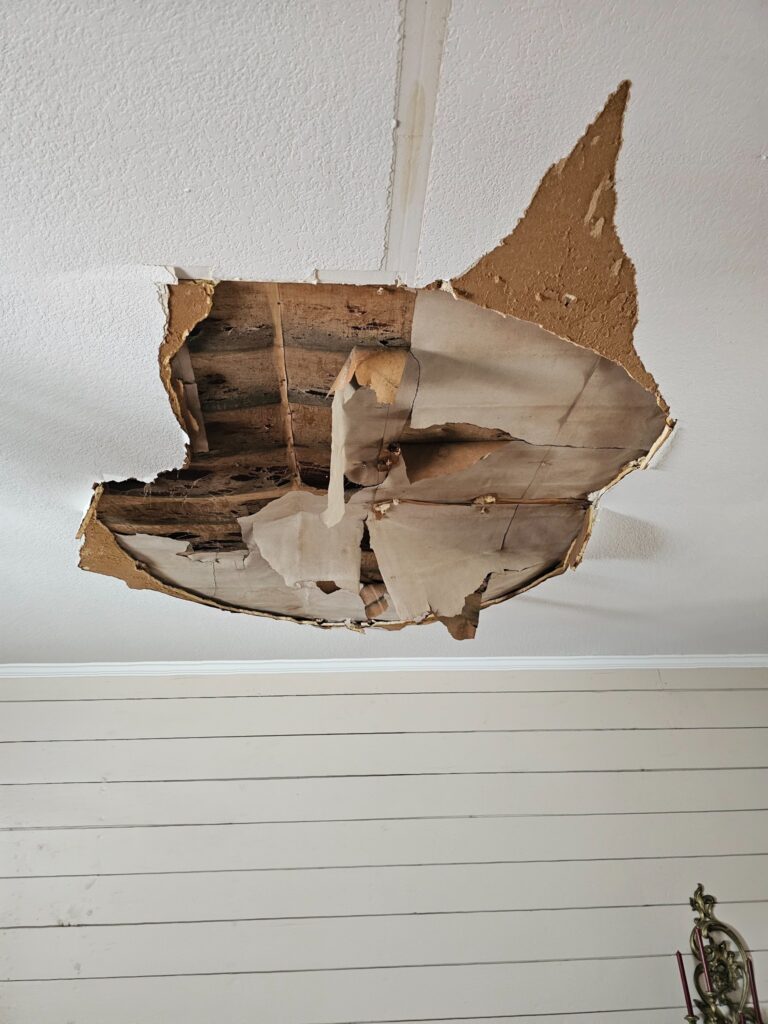
Water Stain on Your Ceiling? Here’s What It Could Mean
Have you recently noticed a water stain on your ceiling? While it may seem like nothing more than a cosmetic issue, a ceiling water stain is often the first visible sign of a much larger problem hidden above the drywall. What appears to be a small discolored spot can actually indicate an active leak, saturated insulation, or moisture trapped inside your home’s structure.
Whether the cause is a leaking roof, burst plumbing pipe, overflowing bathroom, malfunctioning HVAC system, or an appliance failure, addressing a water stain quickly can help minimize repair costs and prevent more serious damage from developing.
Homeowners throughout Midlothian, Waxahachie, Red Oak, Ennis, and the surrounding Ellis County communities frequently discover ceiling stains days—or even weeks—after a leak begins. Because water can travel a surprising distance before becoming visible, the location of the stain isn’t always where the problem started.
What Causes a Water Stain on a Ceiling?
Water naturally follows the path of least resistance. It can move through attic insulation, roof decking, floor joists, or wall cavities before finally soaking through the drywall and creating a visible water stain.
Some of the most common causes include:
- Roof leaks caused by hail, wind, or aging shingles
- Burst or leaking plumbing pipes
- Overflowing bathtubs, showers, or toilets
- Clogged HVAC condensate drain lines
- Water heater leaks or failures
- Washing machine supply line failures
- Refrigerator water line leaks
- Ice damming or flashing failures around chimneys and vents
Because the water often travels before becoming visible, locating the actual source requires more than simply repairing the stained area.
Why You Should Never Ignore a Water Stain
Many homeowners assume that if the water stain has dried, the problem has resolved itself. Unfortunately, that’s rarely the case.
Even after the visible moisture disappears, water may still be trapped above the ceiling inside insulation, framing, or drywall. Building materials can remain damp for days without professional drying equipment, creating ideal conditions for additional damage.
Ignoring a ceiling water stain can lead to:
- Sagging or collapsing drywall
- Peeling paint or bubbling ceiling texture
- Warped framing materials
- Mold growth inside ceiling cavities
- Damaged insulation that loses its effectiveness
- Corrosion of metal fasteners and HVAC components
- Damage to recessed lighting or electrical wiring
- Higher restoration costs if the leak continues unnoticed
The sooner the source is identified and corrected, the more likely it is that extensive repairs can be avoided.
How Professionals Locate Hidden Water Damage
One of the biggest misconceptions about a water stain is that the stain shows the full extent of the damage. In reality, the visible discoloration often represents only a small portion of the affected area.
Professional restoration companies use specialized equipment to determine exactly where moisture has spread, including:
- Moisture meters to measure water content in drywall, framing, and flooring
- Thermal imaging cameras that identify temperature differences caused by hidden moisture
- Hygrometers to monitor indoor humidity levels
- Inspection tools that help locate leaks behind walls and ceilings
These tools allow technicians to identify moisture that cannot be seen with the naked eye and create a drying plan that addresses the entire affected area—not just the visible stain.
What Should You Do If You Notice a Water Stain?
If you discover a water stain on your ceiling, taking the right steps immediately can help reduce further damage.
- Identify the source if it is safe to do so. Check upstairs bathrooms, appliances, the attic, or your roof for obvious signs of a leak.
- Stop the water source whenever possible. Shutting off the water supply or containing the leak can prevent additional damage.
- Document everything. Take photographs of the water stain and any damaged belongings. These photos may be helpful during the insurance claims process.
- Watch for changes. If the stain grows larger, becomes darker, or your ceiling begins to sag, the damage may be worsening.
- Do not puncture sagging drywall. A bulging ceiling may contain a significant amount of water. Attempting to drain it yourself can create additional damage or present safety hazards.
- Schedule a professional inspection. Even if the stain appears dry, hidden moisture may still be present inside the structure.
Can a Water Stain Lead to Mold?
Yes. One of the biggest concerns after a leak is mold growth.
When building materials remain damp for an extended period, mold can begin developing in as little as 24 to 48 hours under the right conditions. Because much of this growth occurs above ceilings or inside walls, homeowners often don’t realize there’s a problem until odors develop or visible mold appears.
Prompt drying by trained restoration professionals significantly reduces the likelihood of mold becoming a secondary issue.
Trust PuroClean of Waxahachie for Professional Water Damage Restoration
A water stain may seem minor today, but it can quickly become a much larger restoration project if the underlying cause isn’t addressed. At PuroClean of Waxahachie, we provide 24/7 emergency water damage restoration services for homeowners and businesses throughout Midlothian, Waxahachie, Red Oak, Ennis, Mansfield, and surrounding Ellis County communities.
Using advanced moisture detection equipment, thermal imaging technology, and professional structural drying methods, our IICRC-certified technicians identify hidden moisture, stop further deterioration, and restore your property as efficiently as possible.
If you’ve noticed a water stain on your ceiling or suspect hidden water damage, don’t wait for the problem to grow worse. Contact PuroClean of Waxahachie today to schedule a professional inspection and let our experienced team help restore your home with the care and expertise you deserve.