Published: October 12, 2026
High water on the Hooch, leaks from above: Sandy Springs’ two water threats means watching both the river and the plumbing overhead. Quick answer: Sandy Springs carries two different water risks. On its western edge, the Chattahoochee River has a documented record: in September 2009, Georgia Power opened eight flood gates at Morgan Falls Dam as the river surged to 28.6 feet and 51,000 cubic feet per second — and the NWS gauge at Highway 41 crested at 28.59 feet, topping a 1990 record. Inland, the risk shifts to the city’s dense stock of condos, apartments, and high-rises around the Perimeter, where a failed supply line on an upper floor can damage every unit below. If water is entering your Sandy Springs home or unit, call PuroClean of East Cobb at (770) 627-0900. We answer 24/7 with a live person and respond in 60 minutes or less.
About PuroClean of East Cobb
Who is PuroClean of East Cobb?
PuroClean of East Cobb provides 24/7 water, fire and mold restoration in Marietta, GA, with a 60-minute-or-less response. Since 2022, the team has completed more than 4,000 restoration jobs across metro Atlanta. Technicians hold IICRC certifications in water restoration (WRT), fire and smoke restoration (FSRT), applied structural drying (ASD), and applied microbial remediation (AMRT), plus EPA Lead-Safe certification.
What does restoration cost?
National averages run $1,300–$5,600 for water damage restoration and about $12,900 for fire damage restoration (Forbes). Every job is documented with photos and video, and you approve the restoration plan before work begins — no fine print.
Who answers when I call?
A live person, 24 hours a day, 7 days a week. One project manager owns your job from assessment and stabilization through restoration, finishing with a final walkthrough together. Call (770) 627-0900 any time.
Sandy Springs is Georgia’s seventh-largest city — 108,080 residents at the 2020 census, incorporated December 1, 2005 — and it has two water personalities. One is the Chattahoochee, which traces the city’s western edge through the Morgan Falls and Island Ford parklands. The other is the stacked, vertical city around the Perimeter, where thousands of people live above and below one another’s plumbing. Both have flooded. Only one of them waits for rain.
What September 2009 taught the river corridor
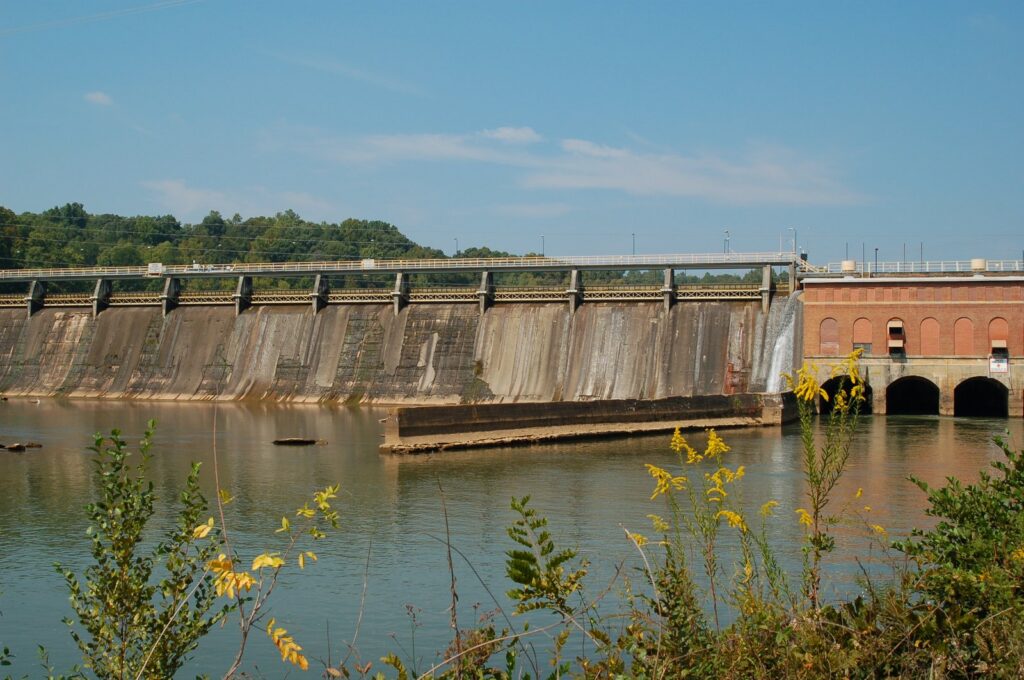
The numbers from the September 2009 floods are the reference point for everything along the Hooch. With up to 20 inches of rain falling in the metro area, Georgia Power opened eight flood gates at Morgan Falls Dam — and the river below the dam reached 28.6 feet, moving 51,000 cubic feet per second. Normal is about 5 feet and 1,900 cfs. A short drive downstream, the National Weather Service gauge at Highway 41 crested at 28.59 feet on September 22, 2009, shattering the previous record of 23.65 feet set in March 1990.
Riverside neighborhoods near the Morgan Falls overlook and the Island Ford unit of the Chattahoochee River National Recreation Area sit close to that history. If your home is anywhere near the river’s floodplain — or downhill of a creek that feeds it — the 2009 record is worth taking personally, not as trivia.
The leak that never waits for rain
The other Sandy Springs water threat strikes on dry, sunny days. The Perimeter corridor packs in condos, apartment communities, and high-rise residences, and in vertical housing, water moves down. A washing-machine supply line that lets go on the sixth floor soaks the fifth, fourth, and third. A water heater in an upper-floor utility closet fails and the unit below gets the ceiling. Aging plumbing stacks and original supply lines in 1970s–1990s-era buildings are frequent sources of the slow leaks that turn into sudden ones.
Multi-unit water losses also come with a coordination problem: the unit owner, the downstairs neighbor, and the HOA or property manager all have a stake, and the drying has to reach every affected unit — not just the one where the leak started.
What to do in the first hour
1. Stop the source if you can do it safely. Know where your unit’s water shutoff is — and in a condo or apartment, know whether you need building management to kill the riser.
2. Protect what’s below. If water is coming through your ceiling, move furniture and electronics, and tell the neighbor underneath. Gravity is working on their unit too.
3. Document everything before anything dries. Photos and video of every affected room protect both your claim and your neighbor’s.
4. Call (770) 627-0900. Water inside walls and under floors starts growing mold within 24 to 48 hours. Professional drying equipment pulls moisture out of materials that fans and open windows never reach.
PuroClean of East Cobb has completed 4,000+ restoration jobs since 2022 — 54% water damage, 30% reconstruction, 7% mold. Learn more about PuroClean of East Cobb — our company facts, certifications, and track record.
Whether it’s river water at the foundation line or a burst supply line on the floor above, the rule is the same: fast, documented, professional drying. If water is entering your Sandy Springs home right now — or the last storm left damage you never fully dried out — call (770) 627-0900. We’re based in Marietta and available 24/7.
Learn more about our service areas and water damage restoration services. Related reading: Heavy Rain in Vinings? Why Hillside Runoff and the Chattahoochee Are a Double Water Risk.