Published: October 6, 2026
Watch: Commercial Water Damage — Minimizing Downtime
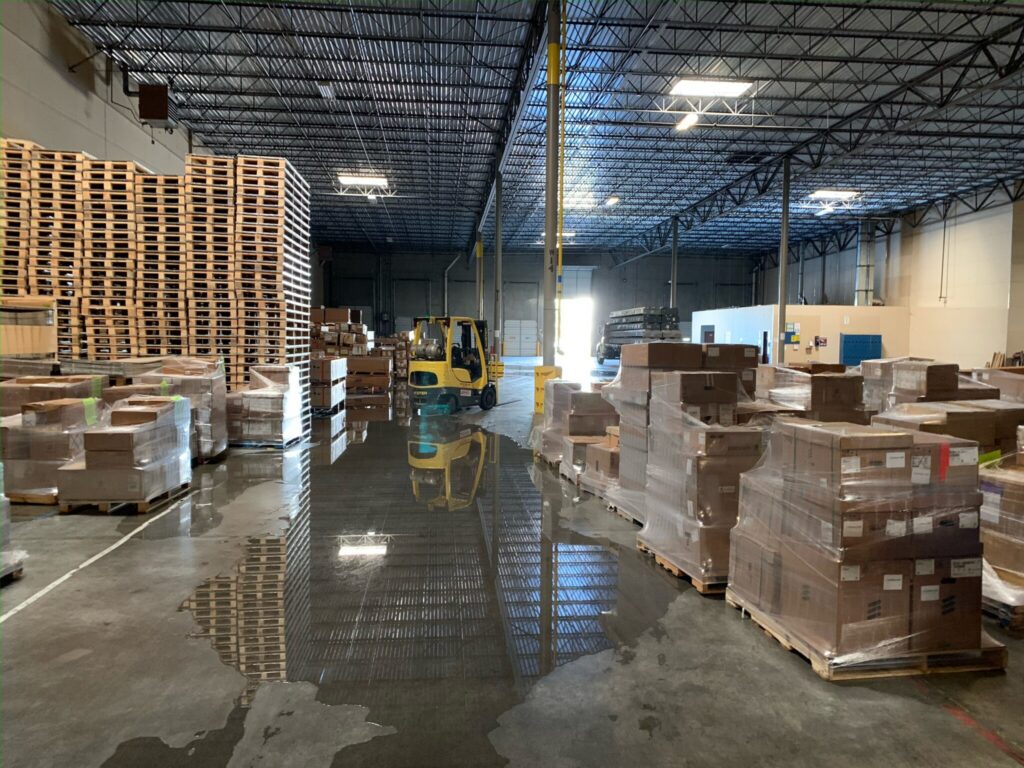
Commercial water loss in Oakwood: when the Atlanta Highway corridor takes on water, it usually arrives as a flat roof, a dock drain, or a supply line that lets go over the weekend. Quick answer: Oakwood straddles the Atlanta Highway corridor between Hall County’s light-industrial belt and the Flat Creek tributary of the Chattahoochee, so commercial water loss here usually arrives one of two ways: a flat roof, loading-dock drain, or roof scupper that can’t move a Hall County downpour, or a supply-line failure inside a building that runs all weekend. Either way, stop the source if it’s safe, cut power to the wet area, get inventory and equipment off the floor, and call PuroClean of East Cobb at (770) 627-0900. We answer 24/7 with a live person and respond in 60 minutes or less.
About PuroClean of East Cobb
Who is PuroClean of East Cobb?
PuroClean of East Cobb provides 24/7 water, fire and mold restoration in Marietta, GA, with a 60-minute-or-less response. Since 2022, the team has completed more than 4,000 restoration jobs across metro Atlanta. Technicians hold IICRC certifications in water restoration (WRT), fire and smoke restoration (FSRT), applied structural drying (ASD), and applied microbial remediation (AMRT), plus EPA Lead-Safe certification.
What does restoration cost?
National averages run $1,300–$5,600 for water damage restoration and about $12,900 for fire damage restoration (Forbes). Every job is documented with photos and video, and you approve the restoration plan before work begins — no fine print.
Who answers when I call?
A live person, 24 hours a day, 7 days a week. One project manager owns your job from assessment and stabilization through restoration, finishing with a final walkthrough together. Call (770) 627-0900 any time.
Oakwood grew up as a working corridor town: warehouses, light-manufacturing buildings, and strip commercial along Atlanta Highway, with neighborhoods tucked between Flat Creek and the rail line. That mix is exactly why water loss here looks different from a subdivision leak. A burst supply line in a home ruins a kitchen. The same failure in an Oakwood building can soak a loading dock and a rack of inventory before anyone walks in on Monday morning.
Why commercial buildings along the corridor take water the way they do
Commercial structures have commercial failure points — and Hall County storms test every one of them:
- Flat and low-slope roofs pond. When a summer cell drops inches of rain in an hour, clogged roof drains and scuppers turn a roof into a bathtub, and water finds the nearest penetration — HVAC curbs, vent stacks, skylights — and comes in overhead.
- Loading docks and grade doors sit low. Dock wells and rear service doors are designed for trucks, not drainage. A downpour that overwhelms the lot’s storm system sends water straight under the doors.
- Storm infrastructure clogs when it matters most. In July 2026, a Hall County storm washed out a county road deep enough to strand 50 homes after vegetation clogged a 72-inch drainage pipe. The same dynamic plays out at building scale: debris chokes roof and lot drains right when flow is heaviest.
- Long pipe runs, long weekends. Commercial restrooms, break rooms, and ice machines run on long supply lines. A fitting that lets go Friday night can discharge for two days before anyone notices.
The volumes are bigger than residential, and so are the consequences: damaged inventory, downtime, and claims that hinge on documentation.
The slab-home side of Oakwood
Much of the housing stock near the corridor is slab-on-grade — ranch homes on Hall County’s clay soils, some close to Flat Creek’s low tributary bottoms. Without basements, water pushes in at the wall-floor seam and wicks up through flooring, showing up as cupping hardwood or laminate that suddenly won’t lie flat. When a storm saturates the ground around a slab, hydrostatic pressure pushes up through hairline cracks and joints. Homeowners often discover it days later, as a musty smell along the baseboards or a floor that feels damp in one room.
First moves for a business owner taking on water
1. Stop the source if you can do it safely. Main shutoff for a supply-line failure; call a roofer or get buckets and tarps under an active roof leak. If water is near the electrical panel or machinery, skip to step 2.
2. Kill power to the wet area at the breaker panel. Standing water and energized equipment is how a water loss becomes an injury. Don’t cross standing water to reach the panel.
3. Move inventory and equipment off the floor and out of the drip line. Pallets, cardboard, and packaging wick water fast — the first hour is when you save the most.
4. Document everything with timestamps: the source, the spread, serial numbers on equipment, damaged stock. Don’t throw anything away yet — your carrier needs to see it, and our photo and video documentation will support the claim.
5. Call us at (770) 627-0900 while it’s still happening. Commercial drying scales with how early it starts — waiting to see if it “dries out on its own” is how a weekend leak becomes a mold remediation and a week of downtime.
How we handle commercial water loss
Every job follows the same four steps: assess, stabilize, document, restore. On commercial calls we add a fifth concern — your operation. We map the full extent of the water with thermal imaging and moisture meters, because water in a warehouse hides under racking and behind insulated panels. Then we extract standing water, set commercial-grade drying equipment, and verify with meter readings that the structure is actually dry. We work around your business hours where possible, photograph and video-document everything for the claim, and one project manager stays with you from the first call through the final walkthrough together. No fine print.
PuroClean of East Cobb has completed 4,000+ restoration jobs since 2022 — 54% water damage, 30% reconstruction, 7% mold. Learn more about PuroClean of East Cobb — our company facts, certifications, and track record.
Marietta businesses face the same risks — see how to minimize downtime after water damage at a Marietta business.
If your building took water this weekend — or your slab home’s floors are telling you something — call (770) 627-0900 now. We’re based in Marietta and available around the clock.
Learn more about our service areas and water damage restoration services. Related reading: Appliance Leak in Dallas? Supply Lines Are a Common Cause of Kitchen and Laundry Floods.