Published: October 13, 2026
Quick answer: Lithonia’s name means “city of stone,” and stone is its water story. The city sits among granite monadnocks that shed rain instead of absorbing it, so runoff reaches local creeks and the South River quickly. In September 2009, the National Weather Service recorded the South River at Lithonia cresting at 13.55 feet against a flood stage of 12 feet — the fourth-highest reading on record at that gauge. Around the historic core, older granite-built and early-1900s homes add aging plumbing and crawlspaces to the risk. If water is entering your Lithonia home, call PuroClean of East Cobb at (770) 627-0900. We answer 24/7 with a live person and respond in 60 minutes or less.
About PuroClean of East Cobb
Who is PuroClean of East Cobb?
PuroClean of East Cobb provides 24/7 water, fire and mold restoration in Marietta, GA, with a 60-minute-or-less response. Since 2022, the team has completed more than 4,000 restoration jobs across metro Atlanta. Technicians hold IICRC certifications in water restoration (WRT), fire and smoke restoration (FSRT), applied structural drying (ASD), and applied microbial remediation (AMRT), plus EPA Lead-Safe certification.
What does restoration cost?
National averages run $1,300–$5,600 for water damage restoration and about $12,900 for fire damage restoration (Forbes). Every job is documented with photos and video, and you approve the restoration plan before work begins — no fine print.
Who answers when I call?
A live person, 24 hours a day, 7 days a week. One project manager owns your job from assessment and stabilization through restoration, finishing with a final walkthrough together. Call (770) 627-0900 any time.
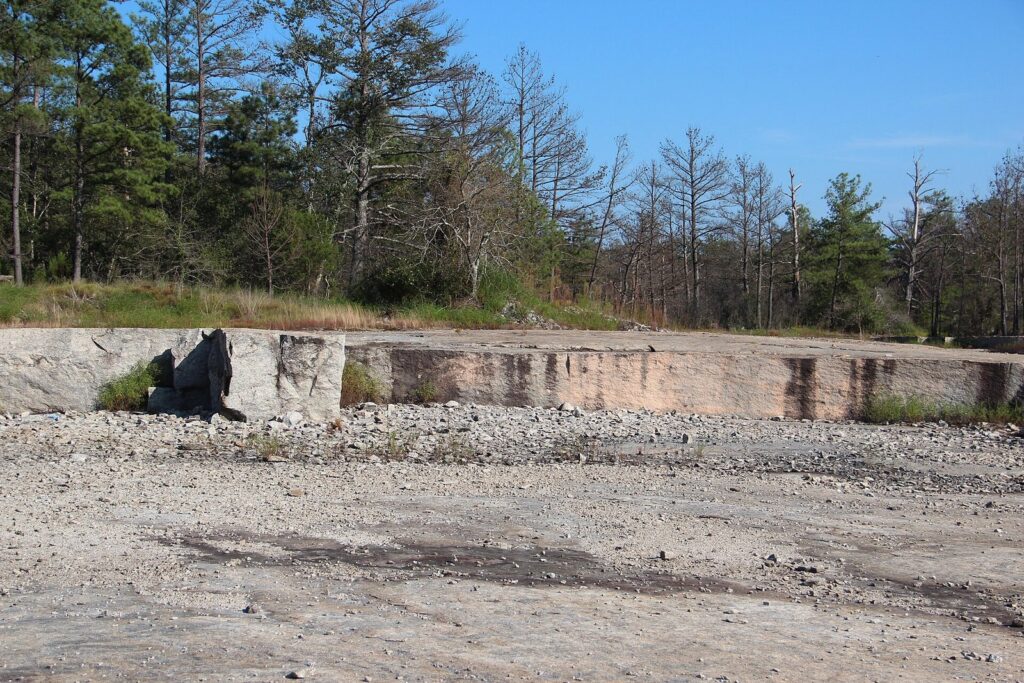
Lithonia lies at the heart of the Arabia Mountain National Heritage Area, where the National Park Service notes the Arabia and Panola monadnocks formed about 400 million years ago. Quarries at and around Arabia Mountain made Lithonia a bustling quarry town, and its granite was shipped off to build structures such as the U.S. Naval Academy in Annapolis, Maryland. That same stone is still at or near the surface across much of the area — beautiful ground, but ground that does not drink rain.
What the South River did in September 2009
The National Weather Service’s crest records for September 2009 give Lithonia a precise benchmark. The South River at Lithonia rose above its 12-foot flood stage on the evening of September 21 and stayed there into the morning of September 22, cresting at 13.55 feet at 10:30 p.m. — the fourth-highest reading on record at the gauge. Those are not the biggest numbers from that week in the region, and that is the point: the South River is a smaller river, and it does not need a record crest to push water into the low ground along its banks and the tributary creeks that feed it.
Granite makes the timeline shorter. Rain that falls on exposed rock, thin soils, parking lots, and rooftops has nowhere to go but downhill, and the creeks below the outcrops can rise in hours. Homes in the low ground along the river and its creeks — and any home downhill of a long slope of rock and pavement — should treat a multi-day rain forecast as a reason to check the crawlspace and the lowest rooms before the water arrives, not after.
Older stone, older systems
Lithonia’s housing comes in two broad eras, and each fails differently. Around the historic core are older homes from the quarry era and the early 1900s — houses with crawlspaces, aging supply and drain lines, and foundations built long before modern waterproofing. A slow supply-line leak in a crawlspace can run for weeks before it shows inside. In the subdivisions beyond the core, slab construction and aging water heaters, washing-machine hoses, and refrigerator lines are the more common sources — quieter failures, but ones that spread water under flooring before anyone notices.
In both eras, the damage multiplier is time. Water that reaches framing, insulation, and subflooring and stays there becomes a mold problem on a 24-to-48-hour clock, whatever the source was.
What to do in the first hour
1. Stop the source if you can do it safely. If a pipe, heater, or appliance is feeding the water, shut off its valve — or the main — before you move anything.
2. Keep clear of floodwater. If the South River or a creek is the source, treat the water as contaminated and keep it off skin and out of the house where you can.
3. Document everything before anything dries. Photos and video of water lines, entry points, and damaged belongings are what your claim will stand on.
4. Call (770) 627-0900. Professional drying equipment pulls moisture out of crawlspaces, walls, and floors that fans never reach, and mold can start within 24 to 48 hours.
PuroClean of East Cobb has completed 4,000+ restoration jobs since 2022 — 54% water damage, 30% reconstruction, 7% mold. Learn more about PuroClean of East Cobb — our company facts, certifications, and track record.
Whether it is river water at the foundation or a failed line under the slab, the rule in stone country is the same: stop it fast, document it, and dry it professionally. If water is entering your Lithonia home right now — or the last storm left damage you never fully dried out — call (770) 627-0900. We’re based in Marietta and available 24/7.
Learn more about our service areas and water damage restoration services. Related reading: When the Yellow River Topped 27 Feet: Flood Risk Around Stone Mountain.