Published: October 7, 2026
Polybutylene pipe failure in Duluth: the gray pipe in your walls is the hidden risk in many 1980s and 1990s homes. Quick answer: If your Duluth home was built between 1978 and 1995, there is a real chance its water supply lines are polybutylene — a gray, flexible plastic pipe once marketed as the “pipe of the future” that turned out to deteriorate from the inside out. Chlorinated water breaks the material down, producing pinhole leaks and sudden ruptures that often stay hidden until sheetrock, flooring, and framing are soaked. The failures led to a class action lawsuit in the late 1990s, but millions of feet of the pipe are still in service — including in Duluth’s big 1980s and 1990s subdivisions. If you find gray plastic pipe with crimped fittings under a sink or at your water heater, call PuroClean of East Cobb at (770) 627-0900. We answer 24/7 with a live person and respond in 60 minutes or less.
About PuroClean of East Cobb
Who is PuroClean of East Cobb?
PuroClean of East Cobb provides 24/7 water, fire and mold restoration in Marietta, GA, with a 60-minute-or-less response. Since 2022, the team has completed more than 4,000 restoration jobs across metro Atlanta. Technicians hold IICRC certifications in water restoration (WRT), fire and smoke restoration (FSRT), applied structural drying (ASD), and applied microbial remediation (AMRT), plus EPA Lead-Safe certification.
What does restoration cost?
National averages run $1,300–$5,600 for water damage restoration and about $12,900 for fire damage restoration (Forbes). Every job is documented with photos and video, and you approve the restoration plan before work begins — no fine print.
Who answers when I call?
A live person, 24 hours a day, 7 days a week. One project manager owns your job from assessment and stabilization through restoration, finishing with a final walkthrough together. Call (770) 627-0900 any time.
Duluth grew fast in the 1980s and 1990s, and the subdivisions built in those decades were plumbed with whatever was cheap and easy to install at the time. For millions of homes across the country, that was polybutylene: a gray plastic pipe that went in quickly, cost less than copper, and — as homeowners later learned — had a habit of failing without warning. Metro Atlanta plumbers still flag it routinely, and it generates water emergencies year-round in Gwinnett County — no storm required. The pipe in your walls may be the reason.
What polybutylene is and why it is in your walls
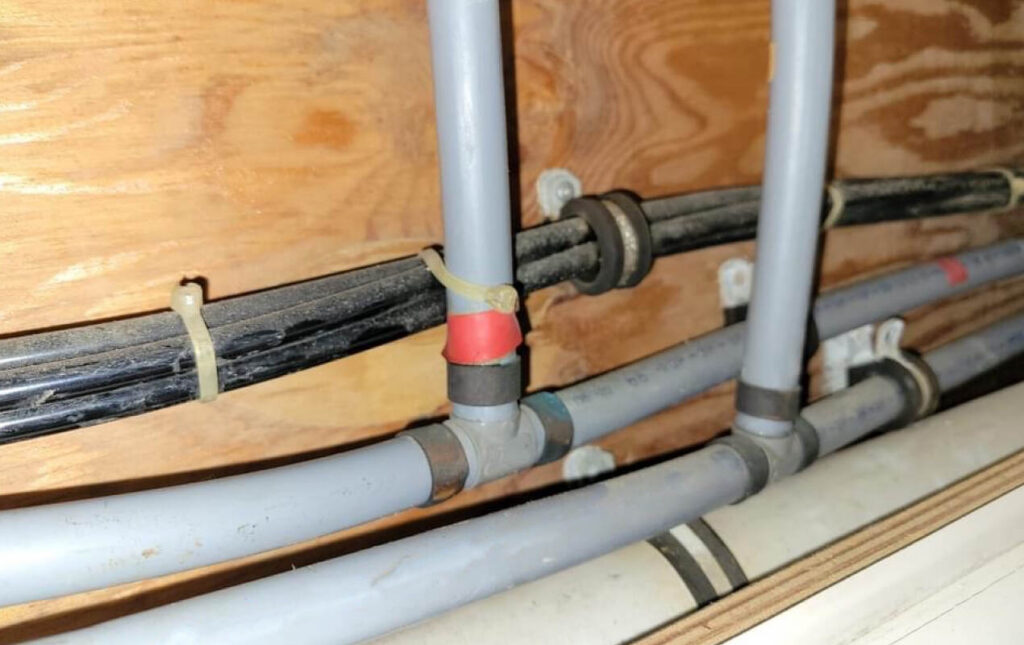
Polybutylene (often stamped “PB”) is a gray, flexible plastic supply pipe installed in most U.S. homes built between 1978 and 1995. Builders loved it: it snaked through walls easily, needed fewer fittings than copper, and cut plumbing costs substantially.
The problem is chemistry. The oxidants used to treat municipal water react with the pipe from the inside, making it brittle over years of exposure — and the damage is invisible from the outside. Failures show up as pinhole leaks that spray inside wall cavities, cracked fittings at crimped joints, and full splits that release a large volume of water fast. The pattern led to a class action lawsuit in the late 1990s — but the pipe was never removed from the homes that have it.
How to tell if your home has it
You do not need to open a wall to check. Look under sinks, at toilets, at the water heater, and near the main shutoff — exposed runs are easy to identify by the gray color and the “PB” or “PB2110” stamping. Gray flexible tubing with crimped metal bands at the fittings is the classic sign. Gray pipe with plastic (acetal) fittings is the highest-risk combination, since those fittings can crack under the stress of the crimp rings — but the pipe itself deteriorates regardless of fitting type.
Warning signs before the burst
Polybutylene rarely announces itself, but there are clues worth taking seriously:
- A leak that was “fixed” once already. One polybutylene leak is often the first of several. Plumbers generally treat three or more leaks in a short window as a sign the whole system is going — spot repairs stop solving the problem at that point.
- Flaking or scaling at fittings. White or crusty buildup where the pipe meets a fitting can mean a slow weep that has been going on for a while.
- Unexplained moisture. A damp spot on drywall, a warped baseboard, or a musty smell near a bathroom or kitchen — polybutylene pinholes spray inside the wall, so the first visible sign is usually secondary damage.
- A home inspection that flagged it. If your inspection report mentioned polybutylene and the seller did not repipe, the clock has been running since. The honest long-term answer is a full repipe — most whole-home jobs complete in two to three working days. The short-term answer is knowing where your main shutoff is and watching for the signs above.
What to do when a polybutylene line lets go
1. Shut the water off at the main. This is the single most important step. A split polybutylene line can discharge an enormous amount of water while you look for the right valve — find your main shutoff this weekend, before you need it.
2. Kill power to wet areas at the breaker panel if water is near outlets, appliances, or the panel itself. Do not cross standing water to reach it.
3. Move belongings out of the water’s path. Pinholes spray; splits flood. Get furniture, rugs, and electronics clear.
4. Document the damage with photos and video — the failed pipe, the spread, everything wet. Do not throw the failed section away; your insurer and your plumber both want to see it.
5. Call (770) 627-0900 immediately. Polybutylene failures soak wall cavities and framing that look dry from the outside. We map the moisture with thermal imaging, extract and dry the structure to verified readings, and document everything for your claim — with one project manager from the first call through the final walkthrough together. No fine print.
PuroClean of East Cobb has completed 4,000+ restoration jobs since 2022 — 54% water damage, 30% reconstruction, 7% mold. Learn more about PuroClean of East Cobb — our company facts, certifications, and track record.
If your Duluth home was built in the polybutylene era and you have never checked what is in the walls, check the accessible spots this week. And if a line has already let go, call (770) 627-0900. We’re based in Marietta and available 24/7.
Learn more about our service areas and water damage restoration services. Related reading: Appliance Leak in Dallas? Supply Lines Are a Common Cause of Kitchen and Laundry Floods. Related reading: old-home plumbing problems in Norcross, GA. Copper lines fail differently — see our guide to copper pinhole leaks in Dunwoody, GA.