


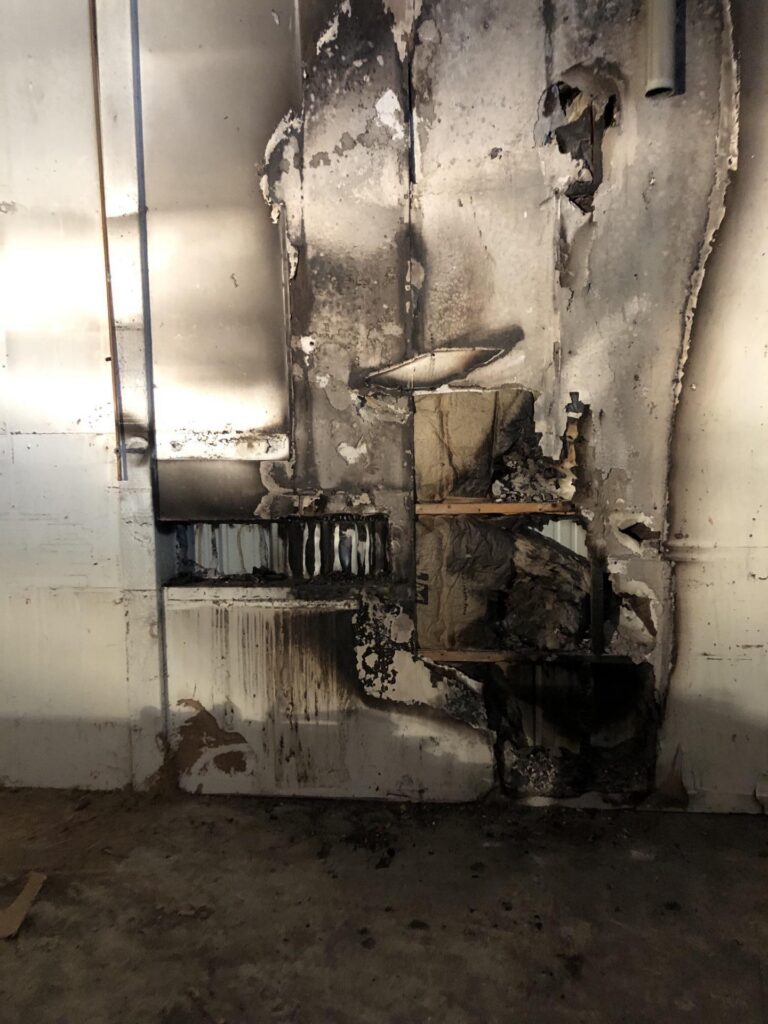
A woodworking shop on a normal day is loud, dusty, and organized in a way only the people who work there fully understand. On a bad day it is a burned wall assembly, black ductwork, and a crew standing in the parking lot wondering whether the business is finished. That was the call we picked up from a commercial shop in Seattle, WA. Our commercial fire damage restoration team was on site while the smell still hung in the air.
The fire started at a wall-mounted mechanical unit. Burn patterns radiated up and out from that one spot, which usually points to an equipment or electrical failure. Flames stayed almost entirely inside that wall assembly. The smoke went everywhere.
What We Found Inside the Shop
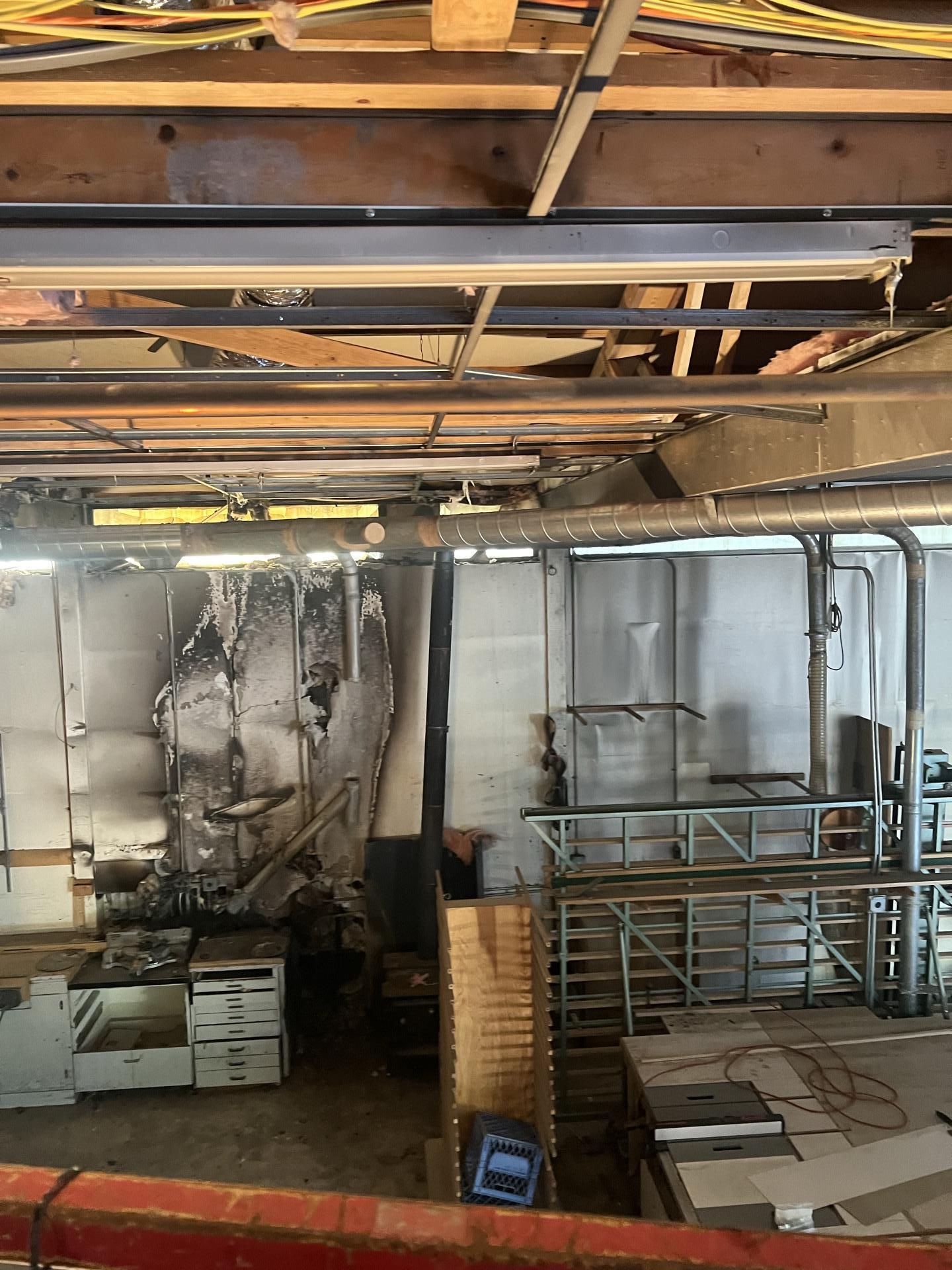
Soot had traveled the full length of the building, coating exposed steel framing, ductwork, production machinery, and lumber stock. The batt insulation overhead was saturated with smoke. Residue had carried into the adjoining office and restroom, and even the exterior metal siding was streaked black. The fire was contained, but the damage was not.
Open-frame buildings are great for workflow and terrible at holding smoke. There are no interior ceilings to stop it and no wall cavities to slow it down. Soot goes wherever the air goes. In a shop, that means straight into the machinery.
The owner’s first question was the one we hear most often: can any of this equipment be saved? Usually yes, if somebody gets to it fast.
The first stretch of the job.
 |  |  |
How We Cleaned Soot Off Steel, Ductwork, and Machinery
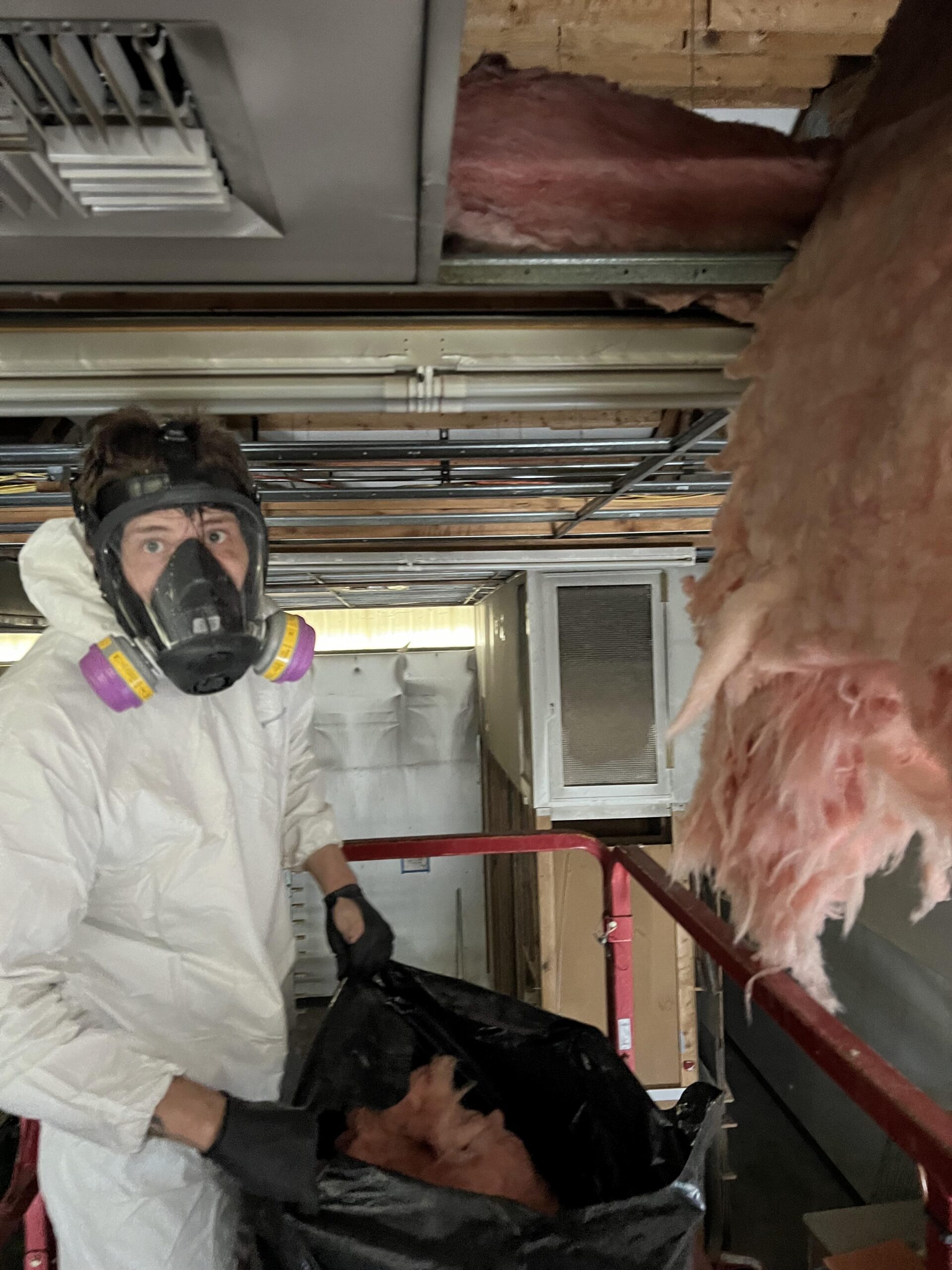
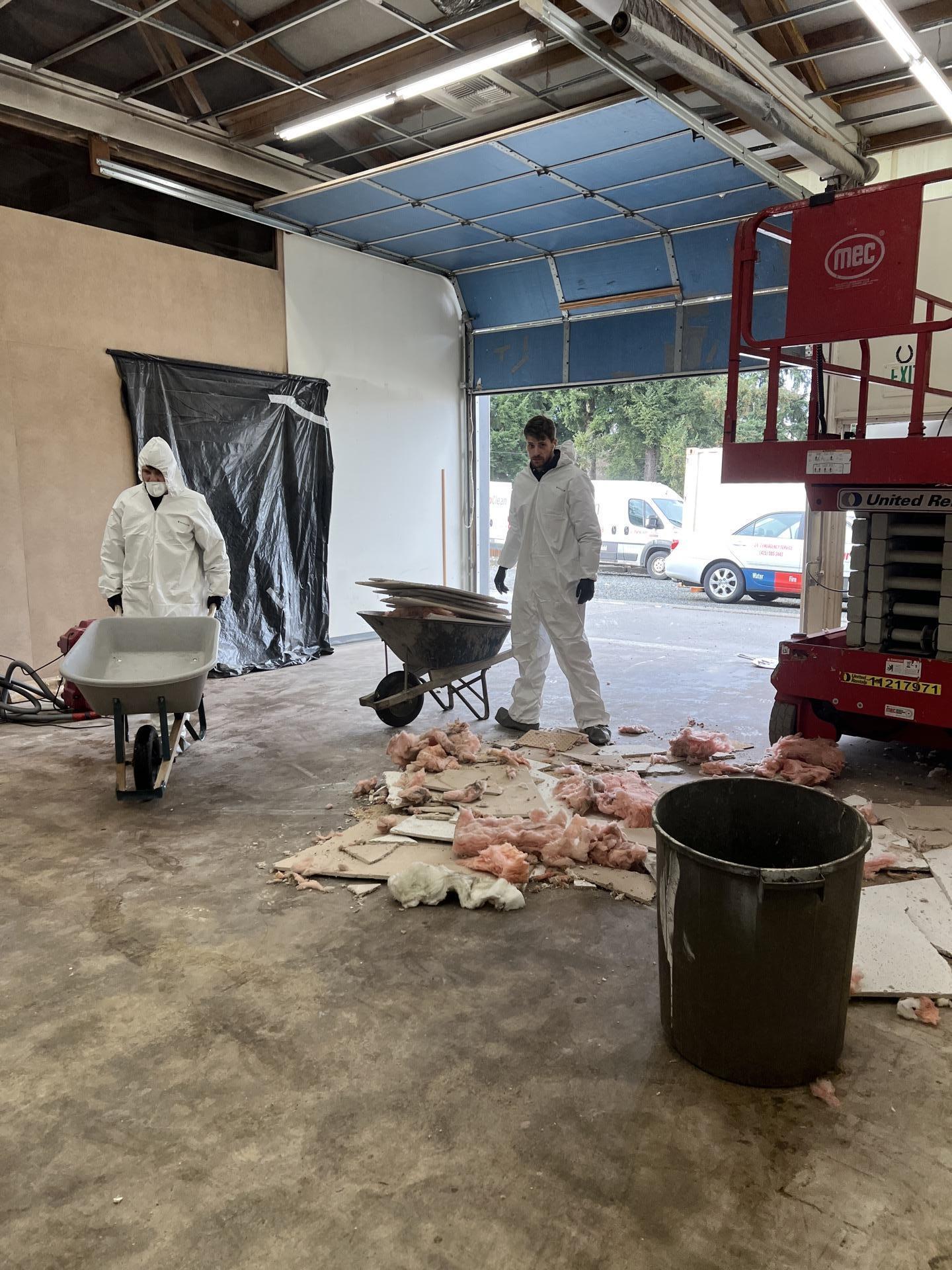
The work went in a set order: contain first, remove what cannot be saved, then clean from the top down. Crews in full PPE built containment before anything else. They stripped out contaminated insulation, scorched wall panels, and ceiling materials, hauling debris out by the wheelbarrow load. Air scrubbers and air movers ran the entire time.
Running that air equipment throughout is not optional. Cleaning stirs soot back into the air, and without scrubbers pulling it out you spend all afternoon undoing the morning.
The slow part
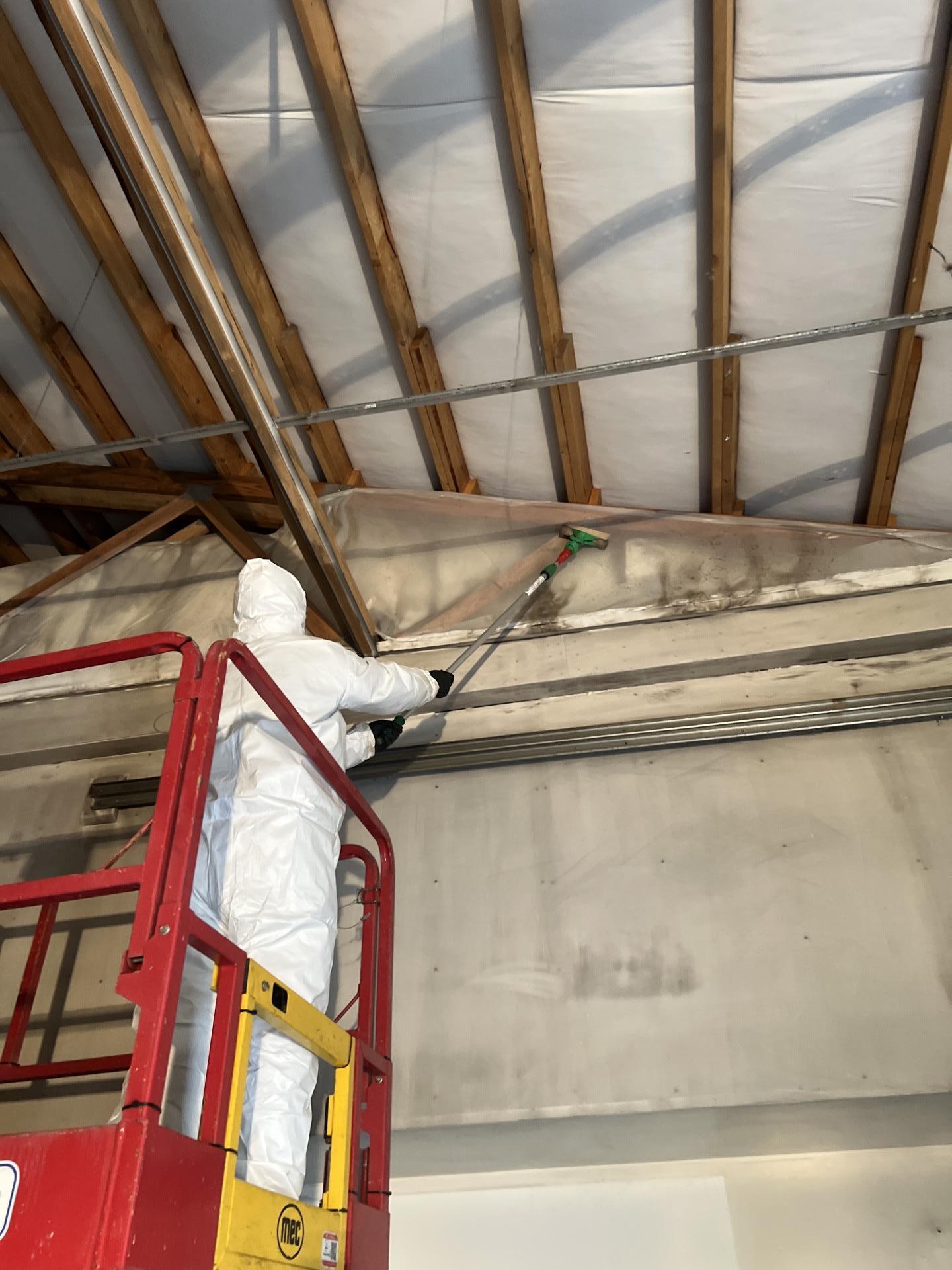
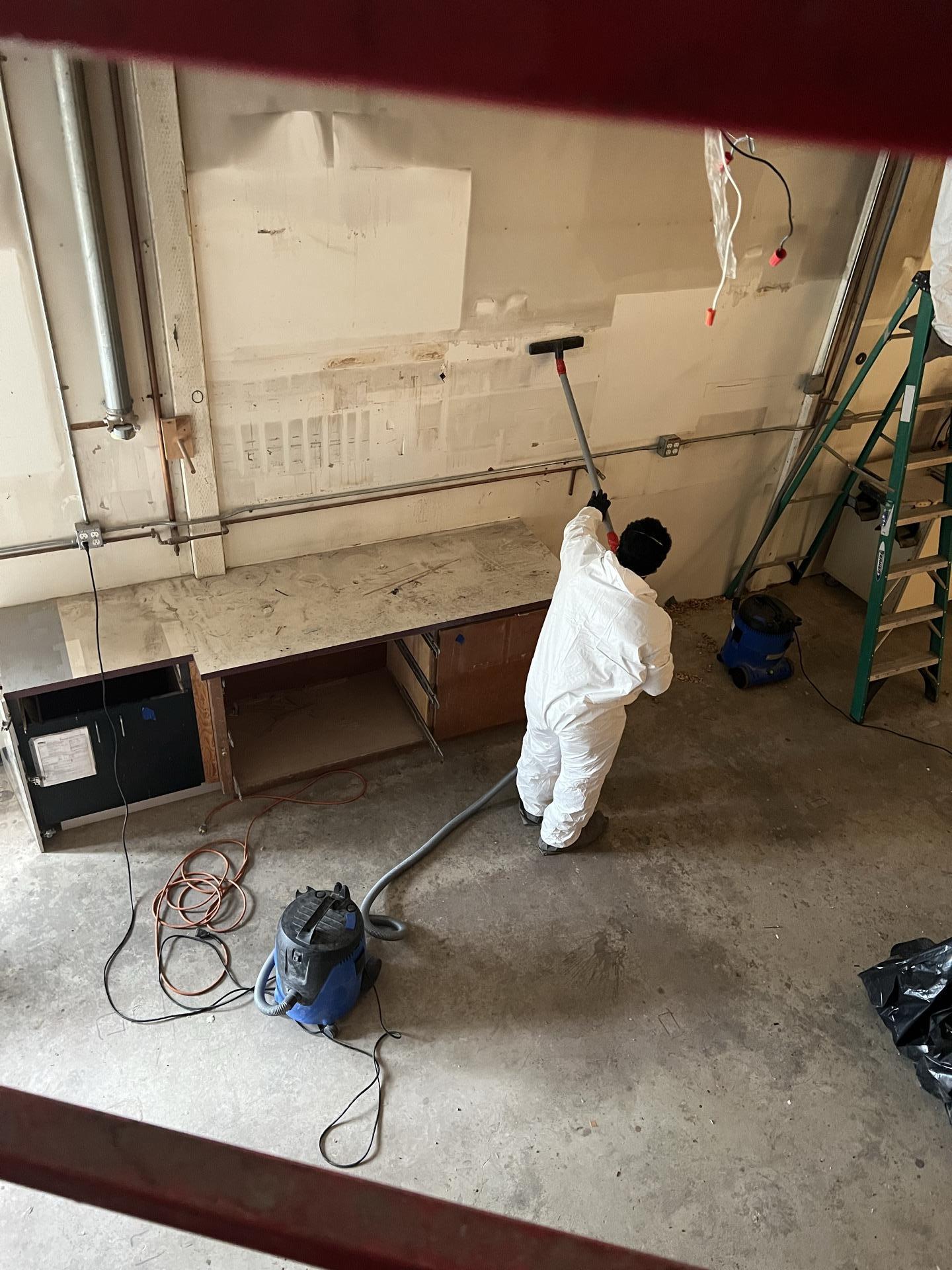
Technicians HEPA-vacuumed and hand-cleaned every surface in the building. Ceiling structure and ductwork meant working from lifts, one section at a time, looking straight up for hours. Not anybody’s favorite shift. Skipping it is exactly how odor comes back on the first warm day.
Machinery, tools, and hardware
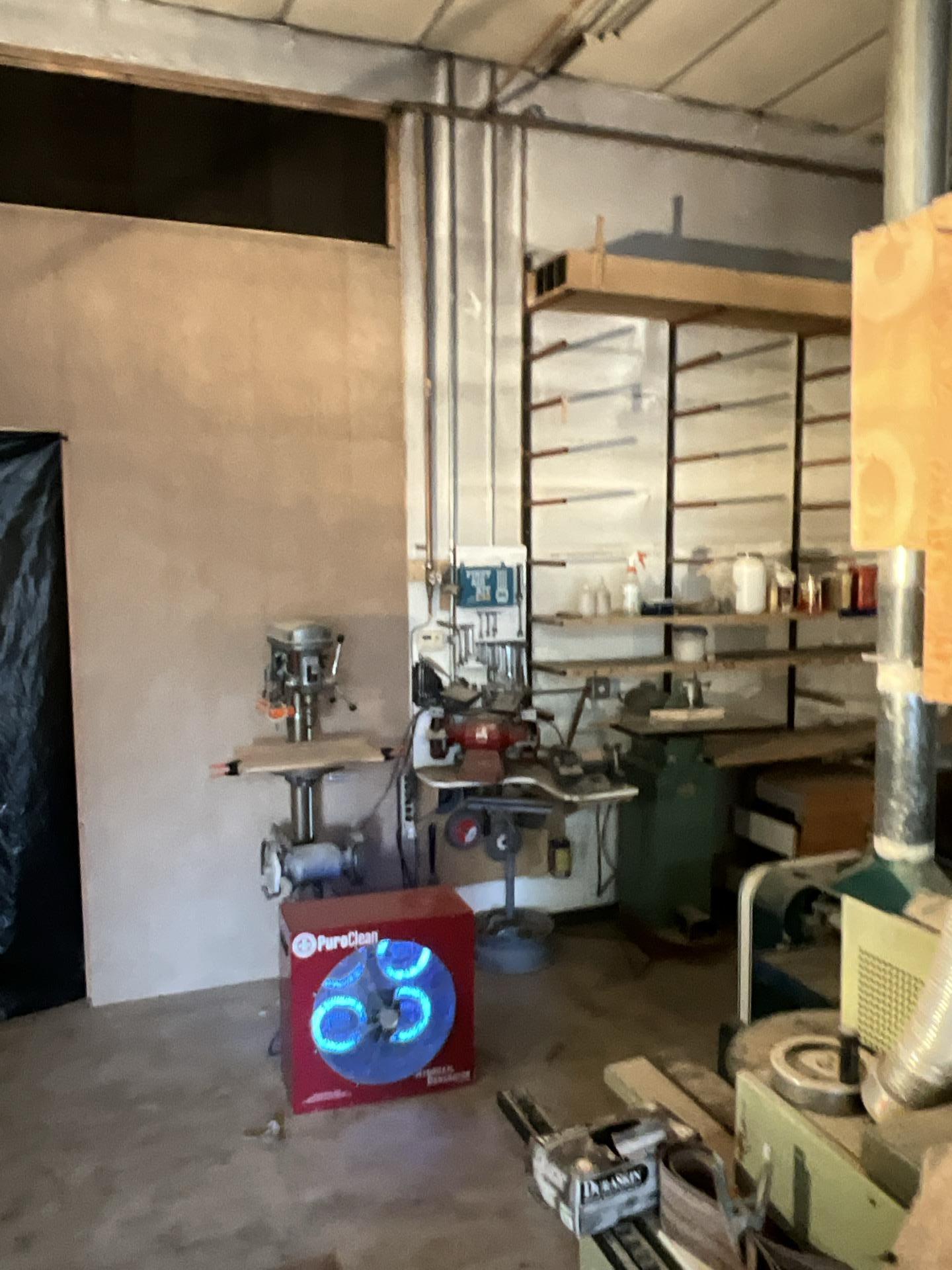
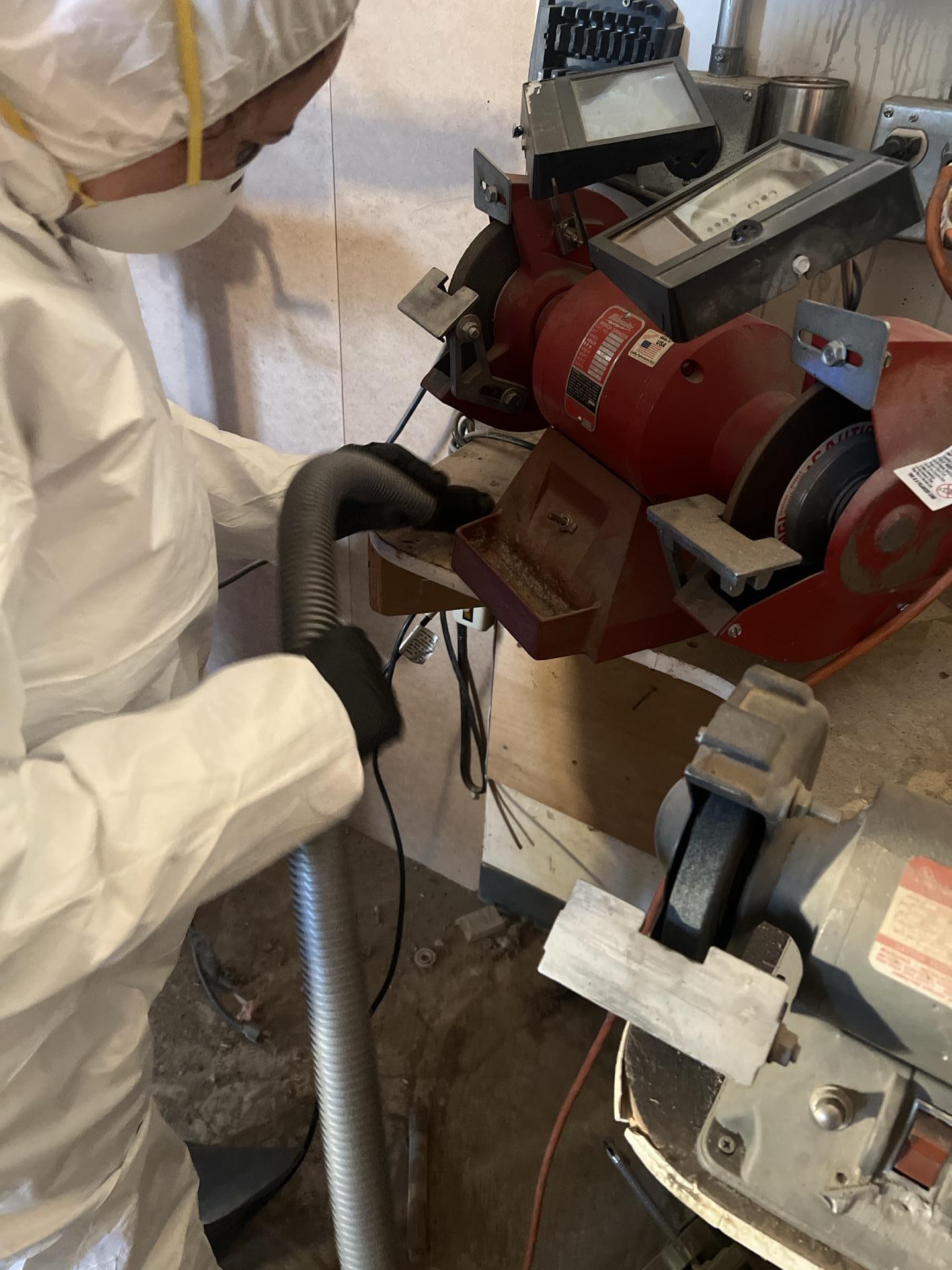
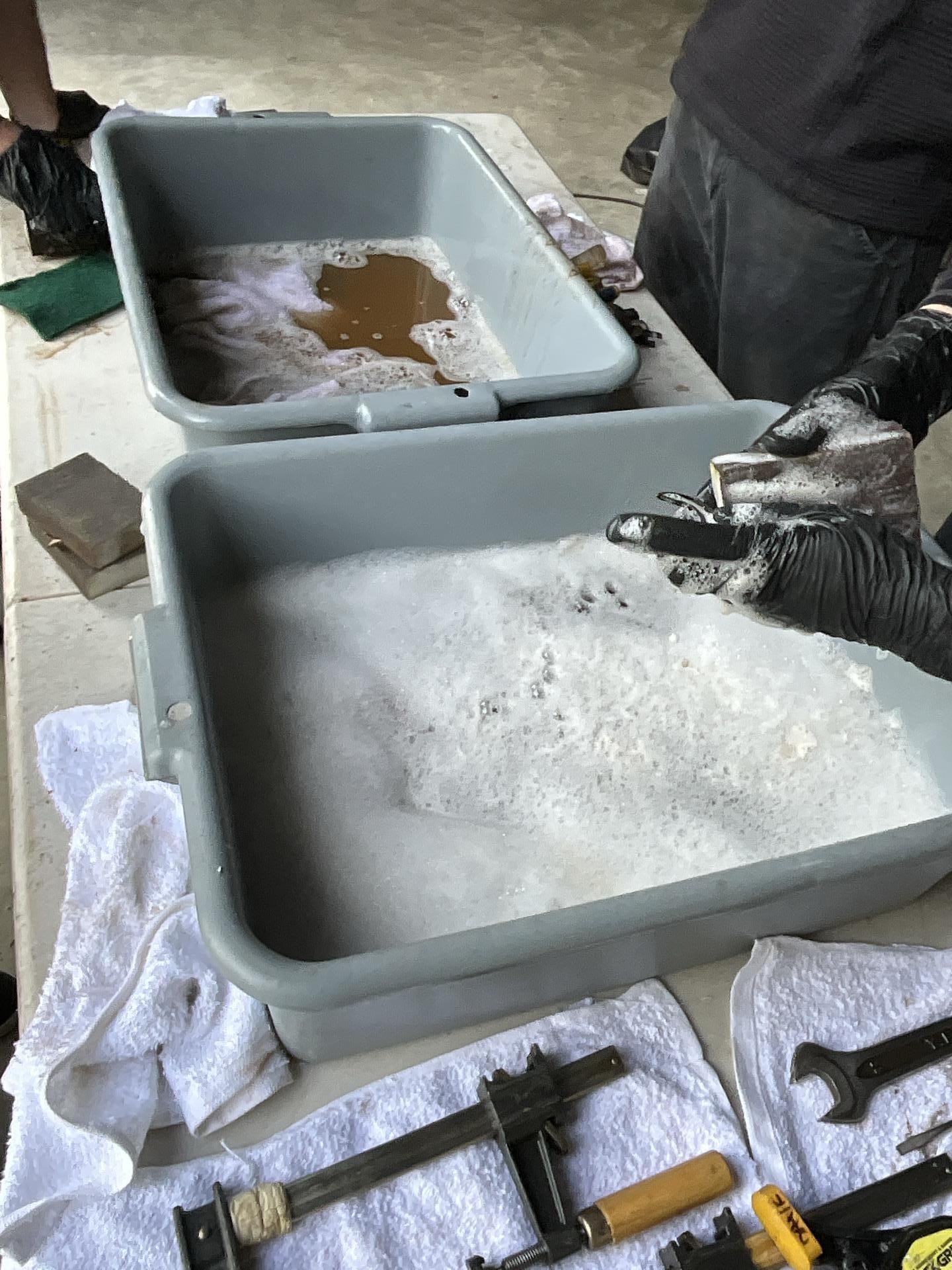
Equipment moved to a dedicated contents station and got cleaned piece by piece. Small hardware was immersion cleaned. Saws, jointers, and dust collection were vacuumed and wiped by hand. Blowing soot off with compressed air just moves the problem into the next machine.
Air equipment, surface cleaning, and the contents station.
 |  |  |
 |  |  |
Why Smoke Odor Takes More Than Cleaning
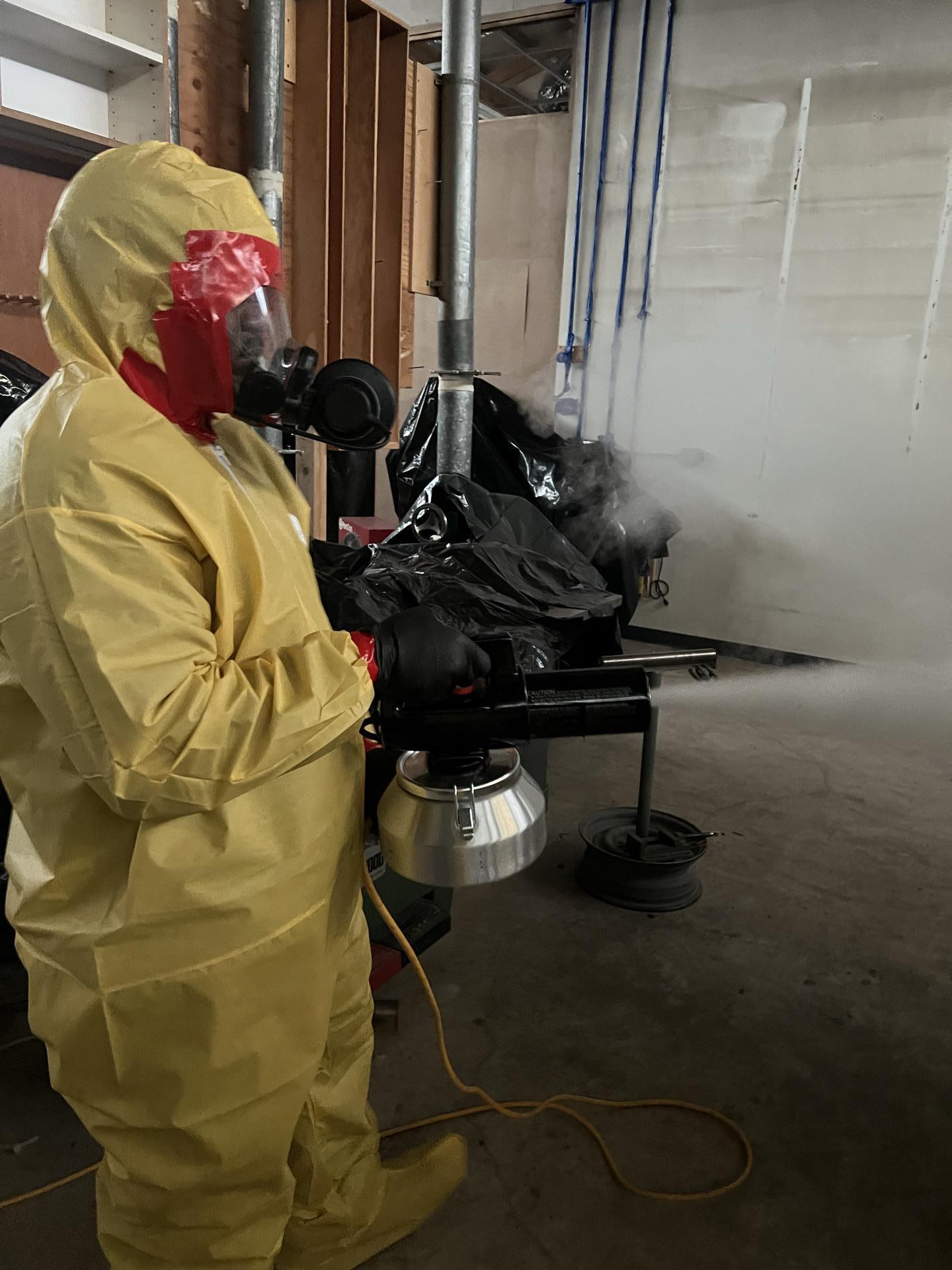
Odor settles into porous materials that surface cleaning cannot reach, which is why the job ends with thermal fogging. The fog carries a deodorizing agent into the same pores the smoke got into and neutralizes it there. IICRC S700 standards for fire and smoke restoration treat odor management as its own phase of the work.
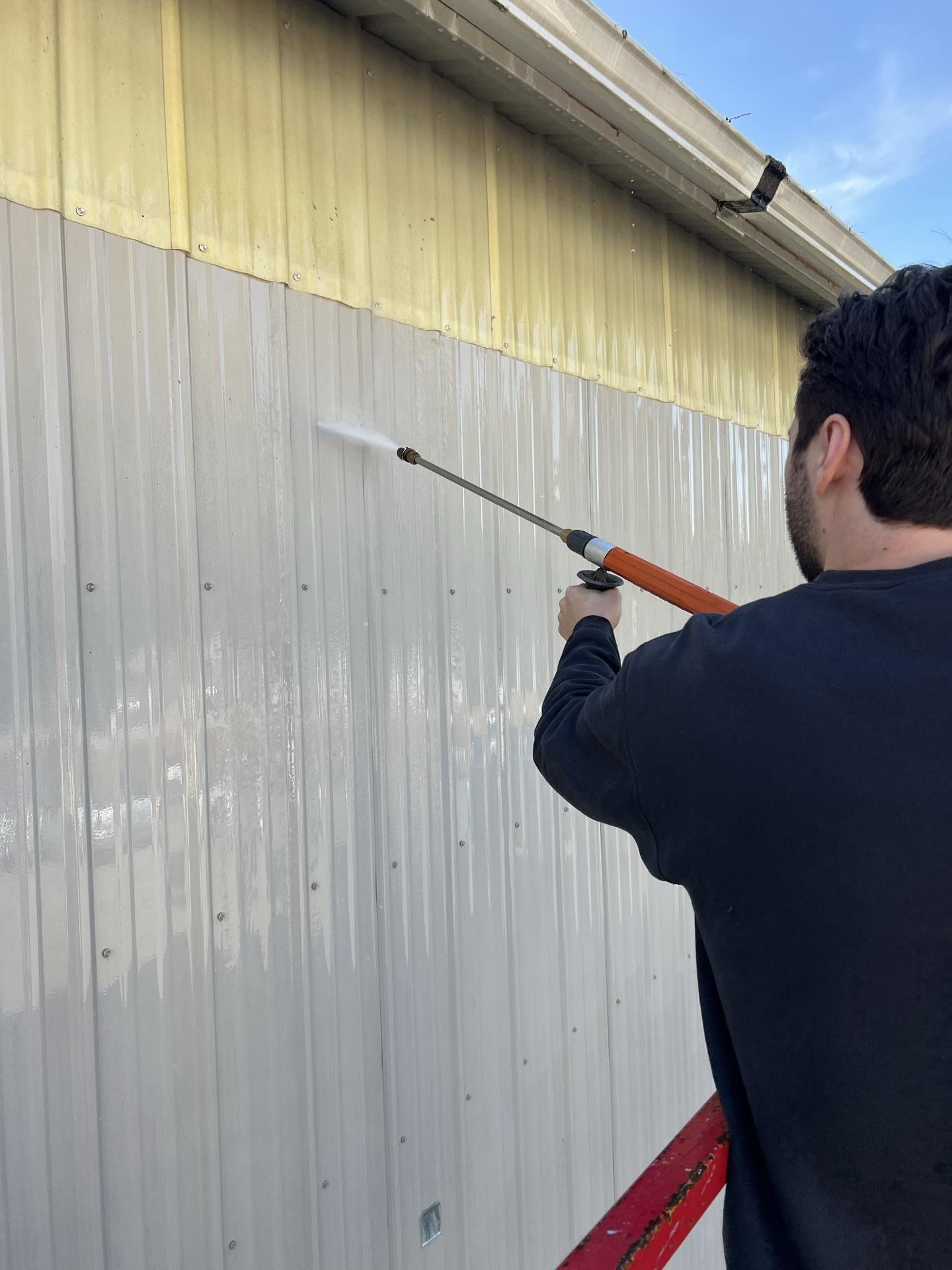
Outside, the metal siding was pressure washed back to clean metal. The office and restroom got cleaned and deodorized too, since soot pays no attention to doorways.
Firefighting water is the quiet half of most fire losses, and it was here as well. Soaked insulation and standing water need their own water damage mitigation plan. A dry building is what keeps a clean building clean.
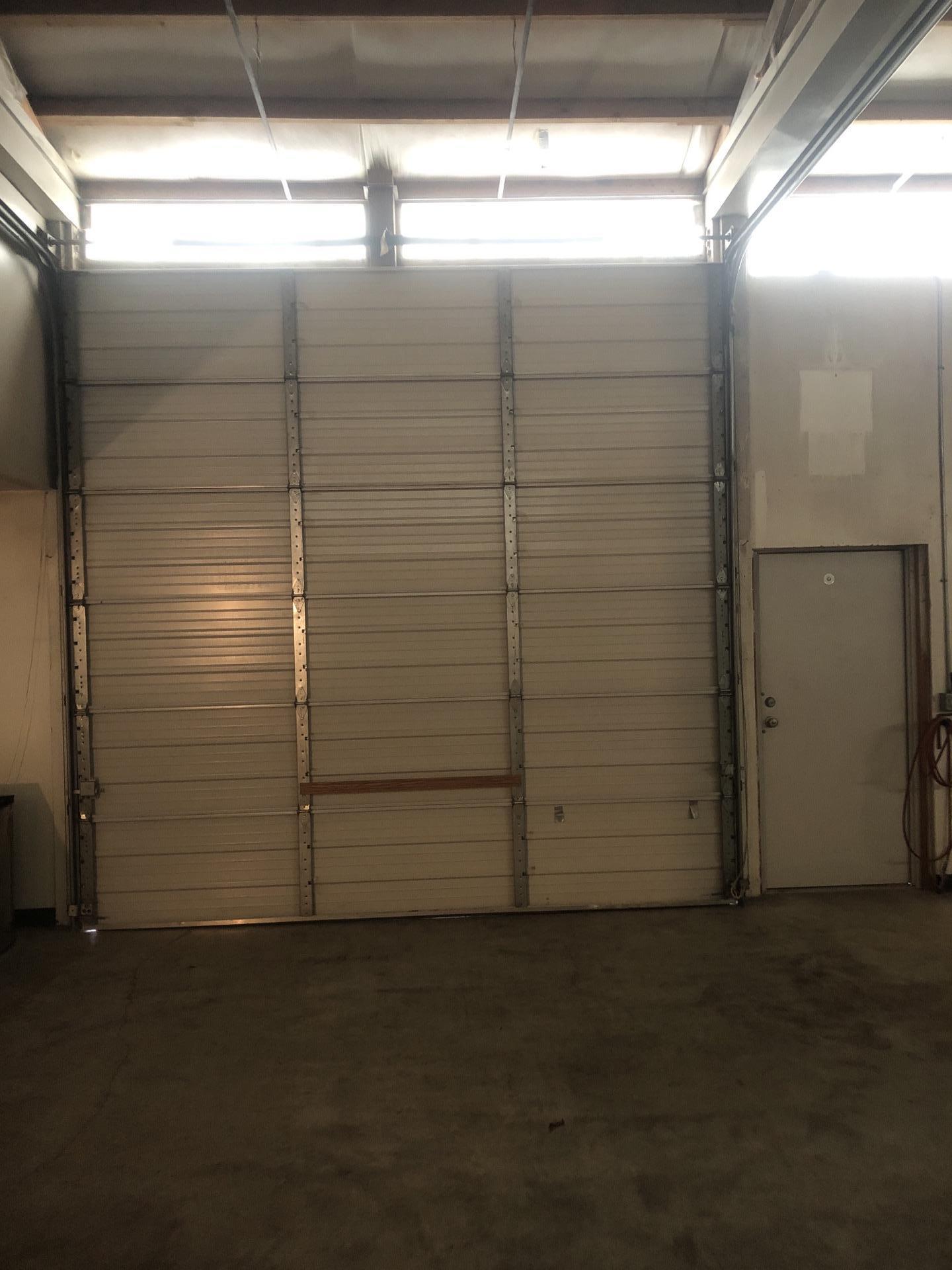
The final walkthrough happened with the owner, lights on, nose test included.
Odor treatment, exterior washing, and the finished shop bay.
 |  |  |
What Business Owners Should Know After a Commercial Fire
The first 48 hours after a fire decide how much of your equipment survives. Soot is acidic. Left sitting on bare metal it etches, and inside a motor housing it corrodes. Fast professional cleaning is often the difference between cleaning a machine and buying a new one.
- Do not run machinery before it is cleaned. Soot inside a housing turns into abrasive grit.
- Do not wipe soot with a wet rag. Water drives residue deeper into the surface.
- Photograph everything before anyone touches it. Your adjuster will ask for it.
- Save every receipt tied to keeping the business running.
- Wait for an all-clear before letting staff back on the floor.
The USFA guide After the Fire: Returning to Normal lays out the recovery steps in plain language. Most of it applies to a shop as much as a house.
More on this kind of work. We documented a garage fire at a family home in Everett, WA. We broke down professional soot removal and what to leave to a pro. We also covered how a fire damage structural assessment decides whether a building is safe to enter.
Fire Damage at Your Business? Let’s Get You Back to Work
We answer the phone 24/7, every day of the year, and estimates are free. Our team at PuroClean of Redmond/Woodinville has served the Greater Eastside since 2009. We are IICRC certified in fire and water restoration. We brought over 45 years of combined experience into this shop, and mitigation is what we do.
Production floor, office suite, or warehouse. Give us a call and we will walk the building with you first. No pressure, no sales pitch. We handle commercial property restoration across Seattle, the Greater Eastside, and Snohomish County.
| Step | What happens |
|---|---|
| 1. You call | We take the details and dispatch, day or night |
| 2. We walk it | Free on-site walk and a written scope |
| 3. We mitigate | Containment, cleaning, drying, and odor control |