Jump To
- What Changes Between Commercial and Residential Water Damage
- Why Scale Rewrites the Whole Job
- Business Interruption: The Cost Nobody Invoices You For
- The Equipment Gap Between Homes and Buildings
- What Eastside Buildings Add to the Job
- What Happens After You Call Us
- Frequently Asked Questions
Two burst pipes, two completely different jobs. Commercial water damage restoration in Redmond deals with bigger square footage, stricter deadlines, and a building full of people waiting to get back to work. A flooded home needs speed and care. A flooded business needs all of that plus a plan for staying open.
Our team at PuroClean of Redmond/Woodinville handles both. The playbook is not the same.
We have worked losses on the Eastside since 2009. The pattern holds up. Homeowners ask us how long the drying will take. Business owners ask us how much of the floor they can still use on Monday.

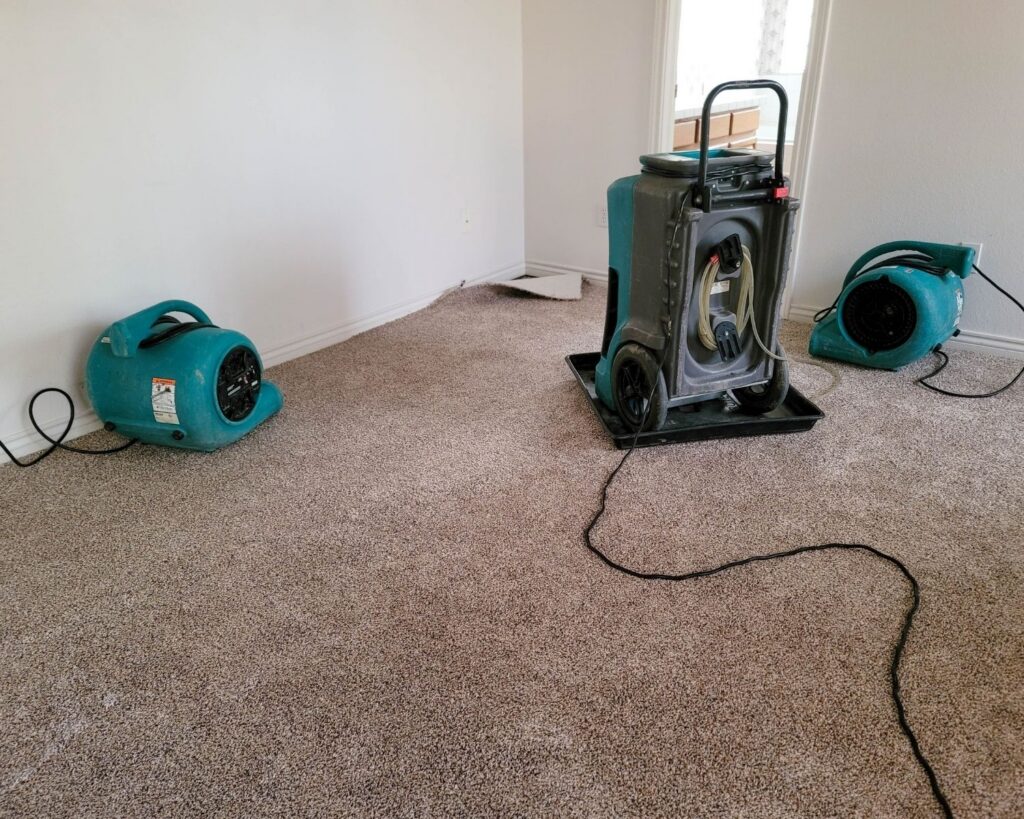
Open commercial floor plans let water spread sideways fast, which is why the first hour matters so much.
What Changes Between Commercial and Residential Water Damage
The science of drying does not change. Water still moves toward dry material, and wet building materials still have to hit a target moisture level. What changes is scale, building type, who signs off, and how much a single lost day costs. Those four things drive every decision on a commercial job.
Think of it this way. A home is one problem with one owner. A building is one problem with a lease, a tenant, a manager, and a payroll clock ticking in the background. Every extra party adds a step before work can start.
Timing matters in both cases. If you are still weighing your options, our guide on how long you can wait before calling water damage professionals lays out the clock in plain terms.
| Factor | Residential Job | Commercial Job |
|---|---|---|
| Typical affected area | One or two rooms, a crawl space, a basement | Whole floors, shared walls, several tenant units |
| Who decides | The homeowner, often on the spot | Owner, property manager, tenant, adjuster |
| Work window | Daytime, family schedule permitting | Nights and weekends to protect operations |
| Equipment load | Portable units on household power | Large drying systems, sometimes external power |
| Paperwork | One claim, one policy | Daily logs, tenant notices, layered coverage |
Why Scale Rewrites the Whole Job
Scale is not just more water. It is more air to condition, more materials to read, and more places for water to hide. A 400 square foot bedroom and a 9,000 square foot warehouse both get wet. Only one of them needs a load calculation before we plug anything in.
Bigger air volume means bigger math
Drying is a numbers game. We measure the wet area, the class of loss, and how much water the air can still hold. Then we size the equipment to match.
Guess low on a big building and the drying stalls. Guess high and you burn power for nothing. Homes rarely need that math on paper. Buildings almost always do.
Open ceilings, exposed ductwork, and tall storage racks all change the numbers. So does a loading dock door that opens forty times a day.
Commercial materials behave differently
Homes are mostly wood framing, drywall, carpet pad, and hardwood. Buildings bring concrete slabs, glued-down carpet tile, sealed floor coatings, metal studs, and drop ceilings. Each one releases water at its own pace, and a few of them trap it underneath.
Flooring choices drive a lot of the outcome either way. Our breakdown of water damaged hardwood flooring and when to repair or replace it shows how much the material itself dictates the plan.
Water crosses lines you cannot see
In a house, water usually stays in the house. In a strip mall or an office building, it walks under demising walls into the neighbor’s suite. Now two businesses have a problem and two insurance carriers have a file.
That is why we map the full footprint before setting equipment. The residential version of this work is more contained, and our water damage mitigation for homes reflects that smaller footprint. For homeowners handling early cleanup themselves, the EPA guidance for flooded homes is a solid starting point on safety and priorities.
Water spreading through your building right now?
We answer around the clock, every day of the year, and estimates are free. The sooner we get eyes on the loss, the smaller the affected area stays.Get Emergency Help Now
Business Interruption: The Cost Nobody Invoices You For
Business interruption is the money a company loses while it cannot operate normally. On a commercial loss it often costs more than the drying itself. Lost sales, idle staff, canceled appointments, and spoiled inventory all stack up while the building sits wet. Homeowners feel disruption too, but nobody bills them for a closed day.
So we plan around operations from the first walkthrough. Sometimes that means containing one half of a floor so the other half keeps running. Sometimes it means working overnight so a dental office can see patients at eight.
Five moves that protect your revenue
- Shut off the water source and pull power to any wet area only if the panel is safe to reach.
- Photograph everything before anyone moves a chair or a box.
- Call us and your carrier in the same ten minutes, not the same afternoon.
- Move inventory and files off the floor, starting with whatever cannot be replaced.
- Tell staff and tenants what to expect, in writing, so nobody guesses.
Documentation is the other half of the money talk. Business interruption coverage needs proof of the timeline. So we keep daily moisture logs, equipment records, and photos from day one. That file protects the claim.
Adjusters ask sharper questions on commercial files. They want to see why a wall came out and why a dryer sat in one spot for four days. Good notes answer that before anyone has to ask twice.
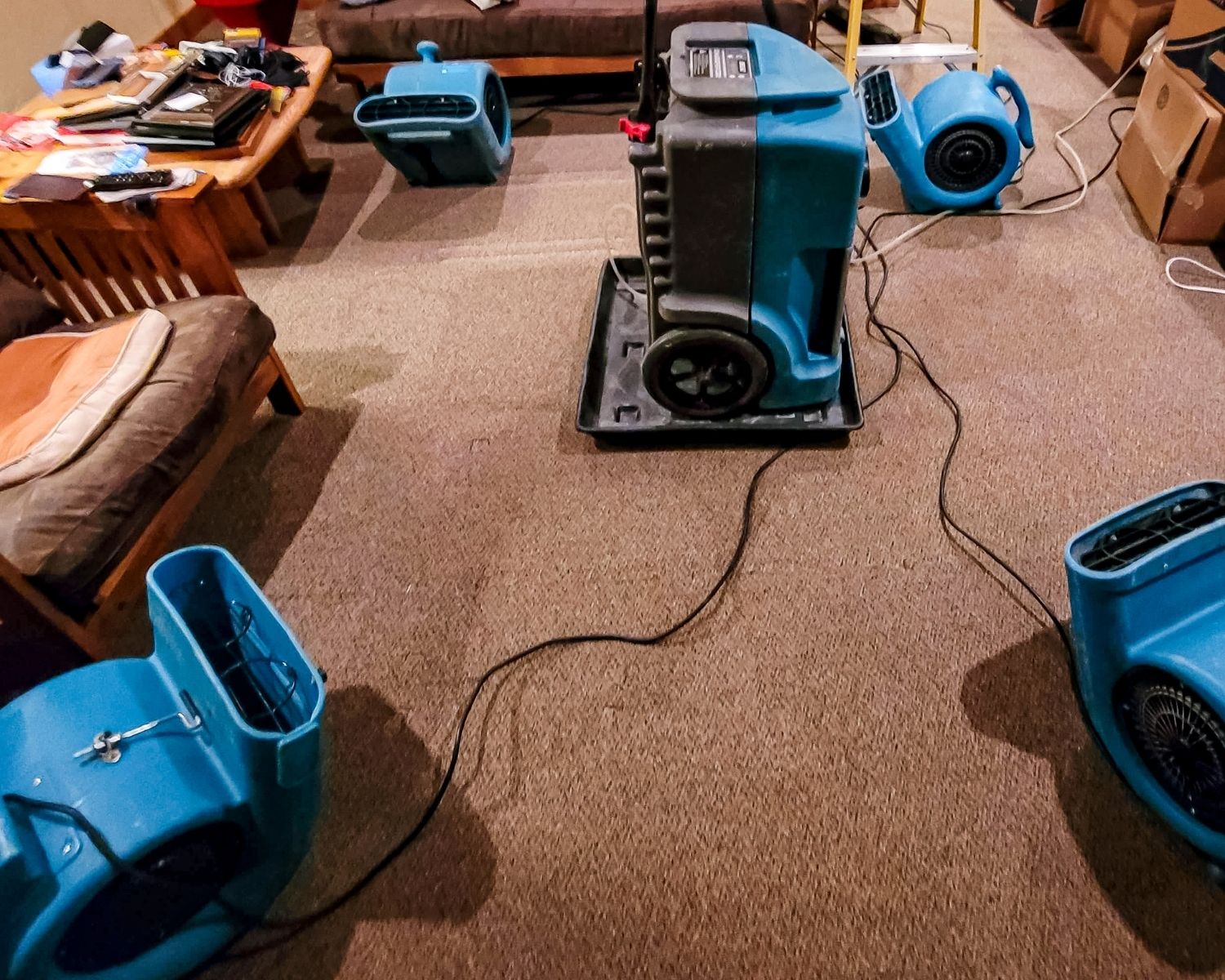
Commercial drying often runs on equipment that would trip every breaker in a house.
The Equipment Gap Between Homes and Buildings
Residential drying usually runs on portable dehumidifiers and air movers plugged into wall outlets. Commercial drying often needs desiccant systems, ducting, negative air machines, and generators or temporary power. Same goal, very different hardware, and a very different plan for where all that air goes.
Equipment at a Glance (tap to open) Refrigerant dehumidifiers
The workhorse in homes. They pull water out of warm, humid air well, and one or two handle most household losses. Desiccant dehumidifiers
Built for big, cold, or stubborn spaces. They dry air far below what a portable unit can reach, which is what dense concrete and thick materials need. Air movers and ducting
A house might take six air movers. A warehouse can take dozens, plus lay flat ducting to push dry air where people are not walking. Containment and negative air
Barriers and filtered airflow keep the work zone separate from the open zone. This is how a store stays open on one side while we dry the other. Power and monitoring
Big equipment needs real amperage. Commercial jobs often add temporary power, plus remote sensors that track drying between site visits.
Measurement is where both job types meet. We read moisture in materials, not just puddles, and we keep reading until the numbers hold. Our post on moisture meters and water detection equipment explains the tools behind those readings.
Our crews are IICRC certified, and the IICRC S500 standard for water damage sets the methods we follow on both sides of the business. Standards are the reason two very different buildings can get the same quality of work.
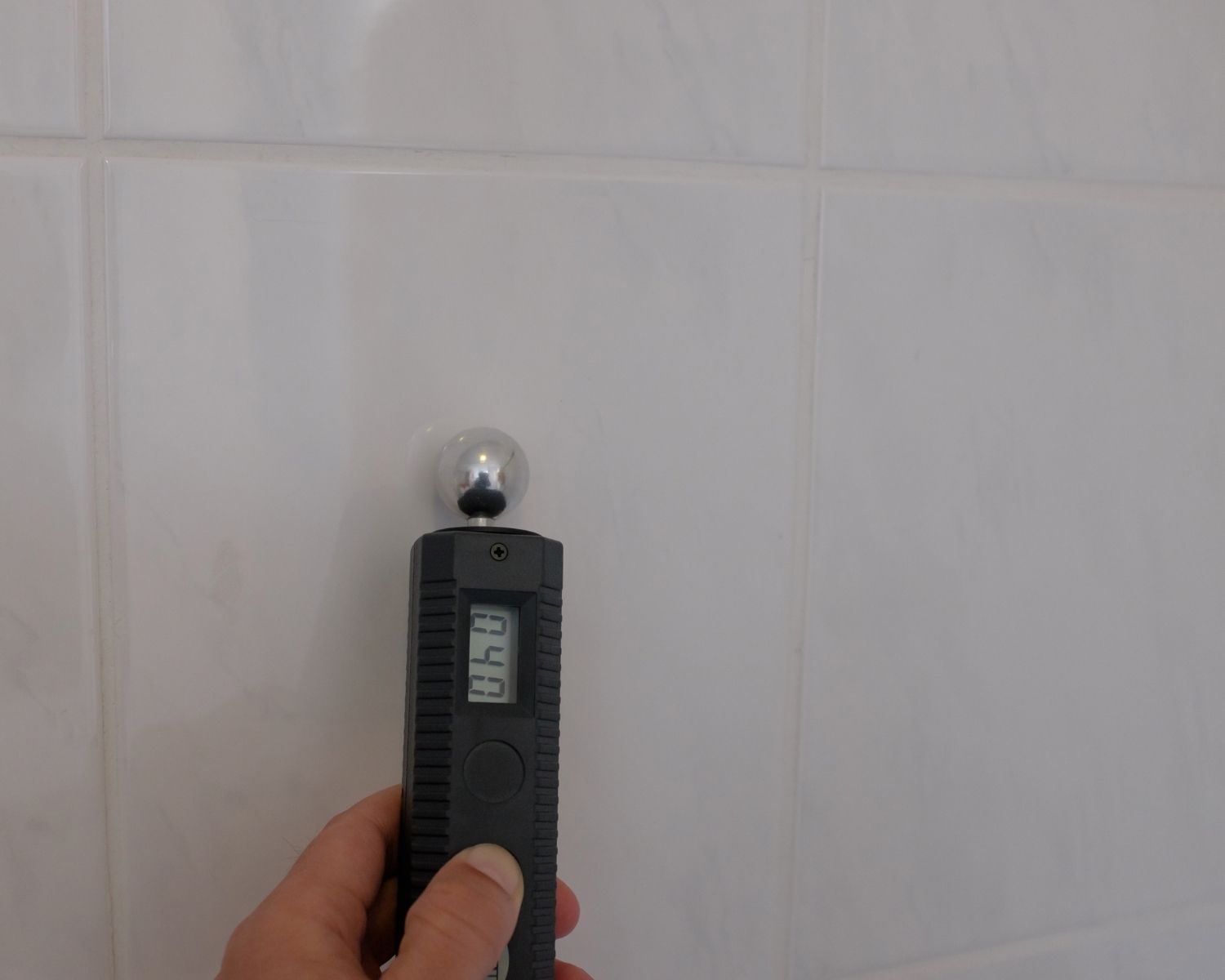
Homes and businesses both get the same rule: the readings decide when drying is finished, not the calendar.
What Eastside Buildings Add to the Job
Redmond and the Greater Eastside give us a specific mix: newer office parks, older retail strips, mixed use blocks, and a rainy season that runs long. Wind driven rain finds tired roof flashing. Aging supply lines let go on a cold January morning. We see the same handful of causes every year.
Tech and lab tenants raise the stakes further. Server rooms, sensitive gear, and raised floors need careful sequencing, not brute force airflow. Ground floor suites near the Sammamish River valley also sit lower than people assume.
Our calendar has a rhythm
Late December and January bring the freeze calls. Pipes in unheated back rooms and exterior walls give out first. Spring and fall bring roof and window leaks after heavy rain and wind. Appliance failures show up all year, and they do not care what day it is.
Businesses get hit hardest over long weekends. A line breaks Friday night, nobody walks in until Monday, and sixty hours of water beats any repair bill. Homes have the same risk during vacations.
On the home side, crawl spaces and sump pumps are the usual suspects, and our residential restoration services are built around those patterns. Local knowledge saves hours, and hours are the whole game here.
What Happens After You Call Us
You get a live person, day or night. We ask a few quick questions, dispatch a crew, and start the clock on containment. On arrival we find the source, map the moisture, extract standing water, and set the drying plan in writing. Free estimates apply to homes and businesses alike.
From there the difference shows up in reporting. Commercial clients get daily updates, tenant friendly scheduling, and a documentation package their adjuster can actually use. Homeowners get the same care with far less paperwork.
We also tell you what we are not doing. We handle mitigation and restoration, which means drying the building and cleaning what can be saved. Anything beyond that scope, we point you to the right people.
Sixteen years in business and more than forty five years of combined crew experience mean we have likely met your situation before. Probably twice.
One team for the office and the house
PuroClean of Redmond/Woodinville responds 24/7 across Redmond, Woodinville, Bellevue, Kirkland, and every community on our service areas list. We are IICRC certified, locally owned, and we were named PuroClean Franchise of the Year in 2019. Give us a call and we will get moving.
Frequently Asked Questions
Does commercial water damage take longer to dry than residential?
Often yes, because there is more material and more air to condition. A single wet room in a home may dry in three to five days. A large commercial floor with concrete or dense assemblies can run longer, and the daily readings tell us when it is done.
Can my business stay open during water damage mitigation?
In many cases, yes. We use containment barriers and controlled airflow to separate the work zone from your operating space. Night and weekend scheduling helps too, so the parts of your building that are dry keep earning.
Who is responsible when water spreads into a neighboring suite?
That depends on the lease, the source of the water, and the policies involved, so your carrier and property manager make the call. Our job is documentation. We record where the water went, when, and what we did about it, which gives everyone the same facts.
Do you handle both commercial and residential jobs in Redmond?
Yes. We run water and fire mitigation for homes and businesses throughout Redmond, Woodinville, and the Greater Eastside. Same certifications, same standards, different equipment and scheduling depending on the property.