


Jump To:
- How Water Damages Hardwood Floors
- Signs Your Hardwood Floor Can Be Saved
- How Professionals Dry Wet Hardwood
- Repair or Replace: The Deciding Factors
- When Replacement Is the Smarter Call
- Frequently Asked Questions
Most water damaged hardwood floors can be saved if drying starts within 24 to 48 hours. Whether yours falls into that category depends on the water source, how long it sat, and what’s happening underneath the boards. Our team at PuroClean of Redmond/Woodinville has been checking hardwood floor water damage across the Greater Eastside since 2009. The answer is rarely obvious from the surface. A floor that looks ruined often dries out beautifully. A floor that looks fine sometimes hides a soaked subfloor.
This guide walks through how we assess wet hardwood, the drying techniques that actually work, and the warning signs that point toward replacement instead.
Around here, the usual suspects are familiar. Burst pipes during a January freeze. A dishwasher line that gave up quietly. Roof leaks after a week of sideways rain. The source matters less than your response time. Wood starts absorbing water the moment it lands, and the clock runs whether you notice or not.
How Water Damages Hardwood Floors
Wood is a sponge with a finish on top. When water gets past that finish, through seams, gaps, or unsealed edges, the boards soak it up and swell. The damage shows up in three stages you can spot yourself. Knowing which stage you’re looking at tells you a lot about your odds.
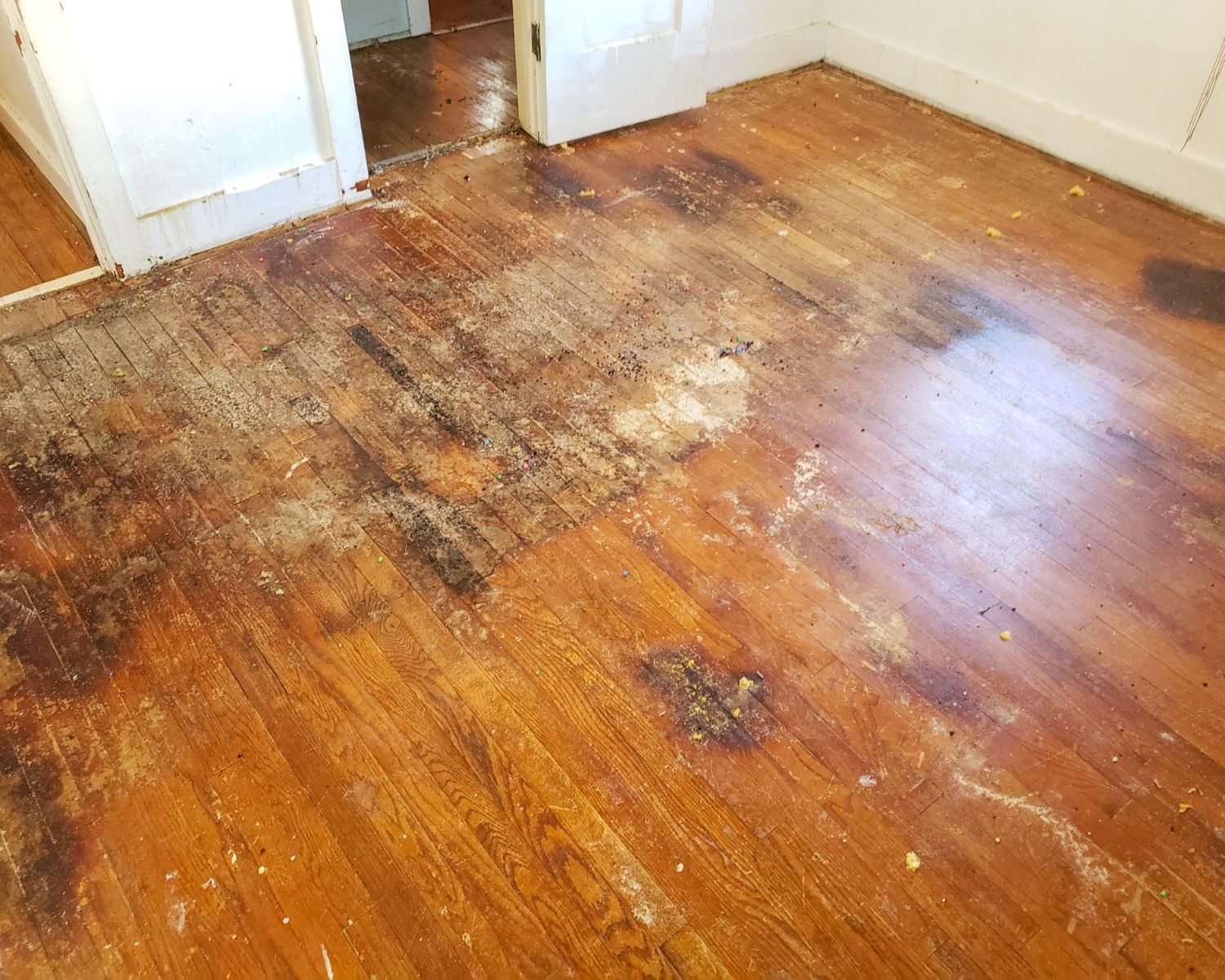
Staining that has soaked into the boards tells us how far the water traveled before anyone caught it.
Cupping
The edges of each board rise higher than the center, creating a washboard texture underfoot. Cupping means the bottom of the board is wetter than the top. Run your hand across the floor and you’ll feel it before you see it. It’s the most common stage we see, and it’s frequently reversible with controlled drying.
Crowning
The opposite of cupping. The center of the board swells above the edges. Crowning often happens when a cupped floor gets sanded too early, before the moisture inside has evened out. This is exactly why patience matters in flooring recovery.
Buckling
Boards pull free of the subfloor and lift in waves or tents. Buckling is the severe end of the scale. It usually follows long flooding. It’s the stage where replacement becomes a serious option.
Signs Your Hardwood Floor Can Be Saved
A hardwood floor is a strong candidate for drying and repair when three things line up. The water was clean. The exposure was short. The structure underneath stayed sound. Here’s the quick checklist we run through on-site:
- Clean water source. A supply line, dishwasher leak, or water heater failure involves clean water, which gives wood the best recovery odds.
- Exposure under 48 hours. The faster extraction starts, the less moisture the boards absorb.
- Minor cupping only. Mild cupping frequently flattens back out as moisture levels equalize during drying.
- Dry subfloor readings. If moisture meters show the subfloor held its normal range, you’re in good shape.
- Solid hardwood, not engineered. Solid boards tolerate moisture swings far better than engineered planks with thin veneer layers.
We saw this play out recently when a water heater leak flooded a Snohomish garage and living room. Quick extraction made the difference between drying the affected flooring and tearing it all out.
Wet floors right now? Don’t wait for the boards to decide for you.
Our team at PuroClean of Redmond/Woodinville answers 24/7, and estimates are always free. Give us a call and we’ll tell you honestly whether your floor can be saved.
How Professionals Dry Wet Hardwood
Professional hardwood drying works by pulling moisture out of the boards slowly and evenly, then verifying the results with meters instead of guesswork. Rushing this process is how salvageable floors get wrecked. The industry-recognized IICRC S500 standard guides every step our certified technicians take, and the sequence matters.

Boards that dry out in time can often be sanded and refinished instead of torn out.
- Extract standing water immediately. Truck-mounted extraction removes the bulk of the water in the first hours.
- Map the moisture. Moisture meters and thermal imaging show us how far water spread under the boards. It often goes well past the wet spot you can see.
- Place drying mats. Specialty floor mats create a vacuum seal against the wood and draw moisture up through the grain.
- Control the environment. Dehumidifiers and directed airflow keep the room pulling moisture out of the wood, not pushing it back in.
- Verify before declaring victory. We take daily readings. We don’t stop until the boards match the dry wood elsewhere in the home.
Why so slow and careful? Because wood that dries unevenly warps. Dry the top faster than the bottom and the cupping flips into crowning. Dry one room while the next stays damp and moisture migrates right back. Even, measured drying is the whole game.
One more scenario worth mentioning: floors soaked during firefighting. Water from hoses behaves just like any flood, and dryout is a standard part of fire damage restoration work. If your floors survived the flames, there’s a real chance they can survive the water too.
Repair or Replace: The Deciding Factors
The repair-versus-replace call comes down to five factors. Here’s how they stack up side by side:
| Factor | Leans Toward Repair | Leans Toward Replacement |
|---|---|---|
| Water type | Clean supply line or appliance water | Sewage backup or outdoor floodwater |
| Time exposed | Under 48 hours | Several days or longer |
| Damage stage | Mild to moderate cupping | Buckling or tenting boards |
| Subfloor condition | Dry or quickly dried plywood | Swollen, soft, or delaminating subfloor |
| Floor type | Solid hardwood | Engineered planks with saturated cores |
Notice that none of these factors is about how the floor looks today. We’ve dried floors that resembled rolling hills and watched them flatten over two weeks. The meters tell the story, not the eyeballs.
There’s also a math angle worth knowing. Drying often costs far less than tearing out and installing new flooring, and insurance adjusters know it. That’s why a proper assessment pays for itself. Nobody wants to replace a floor that two weeks of drying would have saved. And nobody wants to spend two weeks drying a floor that was done for on day one.
When Replacement Is the Smarter Call
Replacement becomes the right answer when contaminated water is involved, when boards have buckled free of the subfloor, or when the subfloor itself has failed. At that point, continued drying spends money chasing a floor that can’t come back.
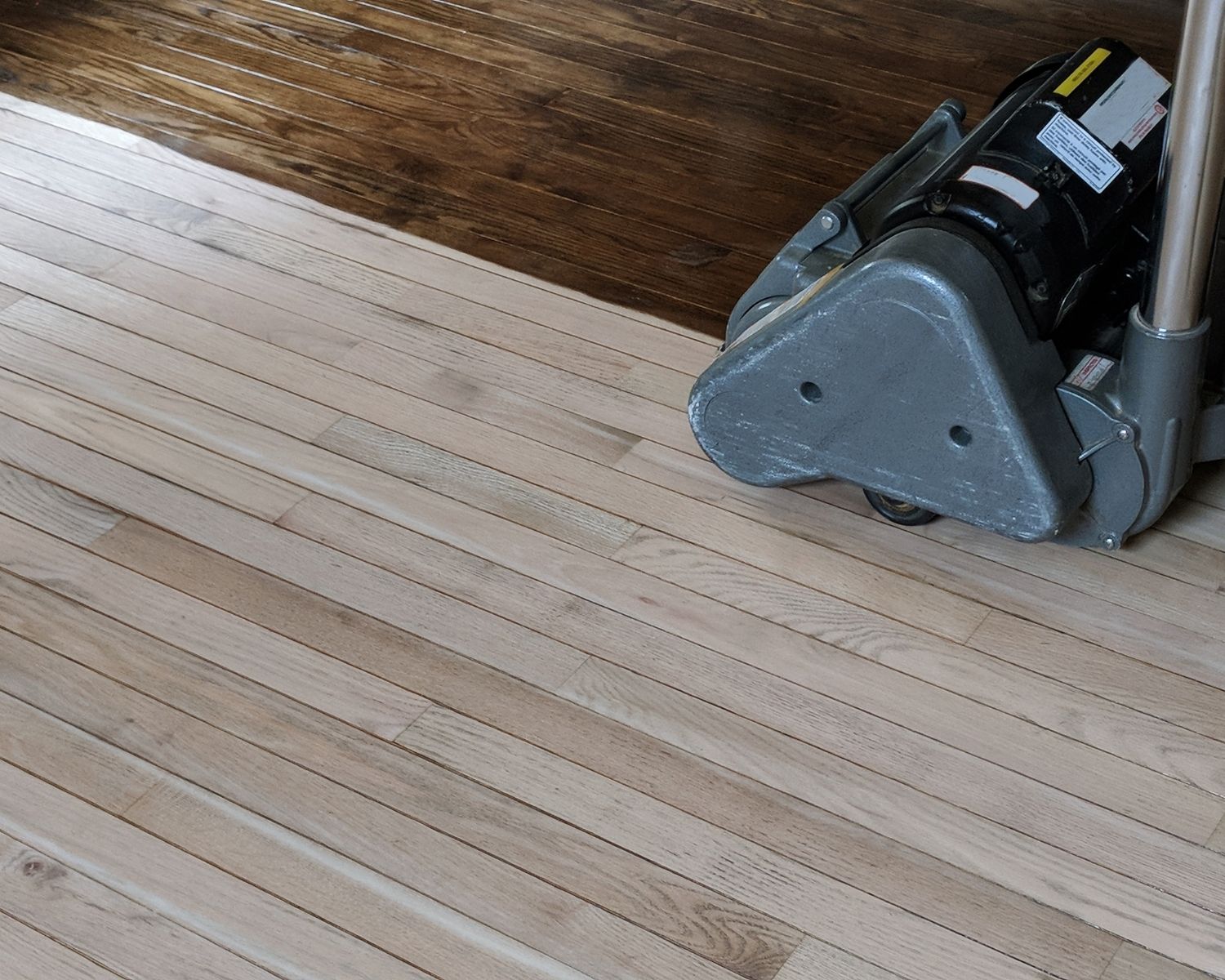
Sanding down to bare wood reveals whether the boards underneath are still sound.
The subfloor deserves special mention here. It’s the plywood or plank layer your hardwood is nailed to. When it swells, softens, or comes apart, the finished floor above it has nothing solid to hold onto. New boards over a failed subfloor will fail too.
Contamination is the firmest line. The EPA’s flooded homes guidance says to remove porous materials soaked by floodwater or sewage. Hardwood that soaked up dirty water falls into that group. No amount of drying makes those boards sanitary again.
Here in the Pacific Northwest, our long rainy season adds a local wrinkle. Slow leaks around windows, doors, and roofs can feed moisture into flooring for months before anyone notices. That long exposure usually pushes the answer toward replacement. Our post on spring thaw water damage prevention for Redmond homeowners covers the sneaky entry points worth checking each season.
One honest note about our role: PuroClean of Redmond/Woodinville handles the mitigation side. That means extraction, drying, and getting your home stable again. When boards do need to come out, we remove the damaged material and document it all for your insurance claim. A flooring pro then handles the new installation. If you’re comparing companies for this kind of work, our guide on how to choose a water damage restoration company in Snohomish County lays out the questions worth asking.
What To Do in the First 24 Hours
Your actions in the first day matter more than anything a contractor does in week three. You don’t need special tools for this part. You need speed and a few towels. Move fast on these:
- Stop the water at its source, whether that’s a shutoff valve or a towel dam.
- Mop and blot up surface water. Every gallon you remove is moisture the boards never absorb.
- Move rugs, furniture, and anything wet off the floor. Wet rugs trap moisture against the wood.
- Skip the space heaters. Aggressive heat dries the top of the boards faster than the bottom, which makes cupping worse.
- Call a professional with the right drying equipment. Household fans can’t pull moisture from inside dense hardwood.
Whether you’re in Redmond, Woodinville, or anywhere across the Greater Eastside, our 2019 Franchise of the Year team can be on-site fast, day or night. Free estimates, honest assessments, and no pressure either way.
Contact Our Team for a Free Floor Assessment
Frequently Asked Questions
How long does it take to dry water damaged hardwood floors?
Most hardwood floors take 7 to 14 days to dry fully with pro equipment. Cupping can take a few more weeks to flatten as moisture levels even out. We verify progress with daily moisture readings rather than relying on appearance.
Will cupped hardwood floors flatten on their own?
Sometimes. If the moisture source is gone and exposure was brief, mild cupping can settle down on its own over several weeks. But without controlled drying, moisture trapped in the subfloor keeps feeding the boards from below, and the cupping becomes permanent. Professional drying improves the odds by a wide margin.
Does homeowners insurance cover hardwood floor water damage?
Most policies cover sudden water damage, like a burst pipe or a failed appliance. Slow damage from long-term leaks is usually excluded. We document every job in detail and work directly with adjusters to support your claim.
Can engineered hardwood be dried after water damage?
Occasionally, but the odds are slimmer than with solid hardwood. Engineered planks have layered cores that swell and split apart when soaked. That damage can’t be reversed. A quick moisture assessment tells us whether yours is worth drying.