


The tenant on the third floor runs a bath, and nobody notices that the drain fitting under the tub has cracked. By evening, the second-floor kitchen ceiling is dripping. By morning, there’s a stain on the first-floor ceiling too. A triple-decker plumbing leak in Worcester can move through three homes before anyone finds the source. Here’s how that happens, and how stacked walls and ceilings are dried.
Why Do Leaks Travel So Far in a Triple-Decker?
Because the units are stacked. In most triple-deckers, kitchens and bathrooms line up floor over floor. The plumbing runs in a shared chase, and the drain stack drops straight through all three levels.
When water escapes upstairs, gravity does the rest. It follows pipes, joists, and wall cavities downward. It can soak plaster or drywall, pool on top of a ceiling, and then show up one or two floors below.
Older buildings add more paths. Balloon framing, which some older homes have, can leave wall cavities open from the basement to the attic. That lets water run a long way inside a wall.
How Common Are Triple-Deckers in Worcester?
Very common. Table B25024 in the Census Bureau’s ACS 2020–2024 five-year data counts units by building size. For Worcester city, about 21,346 units (±1,244) sit in buildings with three or four units. That’s roughly a quarter of the city’s 85,876 homes (±1,072).
The same data, from table B25034, show that about 41 percent of Worcester’s homes were built in 1939 or earlier. The median year built is 1951 (±2), per table B25035. Many triple-deckers still have older drain lines, cast-iron stacks, or a mix of old and newer plumbing.
Where Do Upstairs Leaks Usually Start?
| Source | Where the water shows up below | Clue |
|---|---|---|
| Tub drain or overflow | Ceiling below the tub | Worse after baths |
| Shower valve behind the wall | Wall cavity and ceiling below | Stain along a wall line |
| Toilet seal | Ceiling directly under the toilet | Stain grows slowly |
| Kitchen sink drain | Cabinet base and ceiling below | Damp cabinet floor |
| Washer hose or drain | Floor and ceiling below the laundry | Sudden, larger leaks |
| Drain stack joint | Any level along the stack | Odor, stains near the chase |
What Should Owners and Tenants Do First?
Fast teamwork matters in a three-unit building.
1. Whoever spots the water should alert all three units and the owner right away.
2. Shut off the fixture valve, or the main water valve for the building if the source isn’t clear.
3. Turn off ceiling lights and circuits near the leak from the panel, if you can reach it from a dry spot.
4. Keep everyone out from under sagging ceilings.
5. Put buckets and towels down, and move furniture and electronics.
6. Take dated photos in every unit.
7. Call a plumber to find and fix the source.
How Are Shared Walls and Ceilings Dried?
Our water damage restoration team follows ANSI/IICRC S500 structural drying guidance. In stacked buildings, the work covers every level the water reached.
Mapping All Three Floors
The crew takes moisture readings in each unit, from the leak point down to the first floor. Infrared cameras can help show wet areas inside walls and ceilings.
Opening Wall Cavities and Ceilings
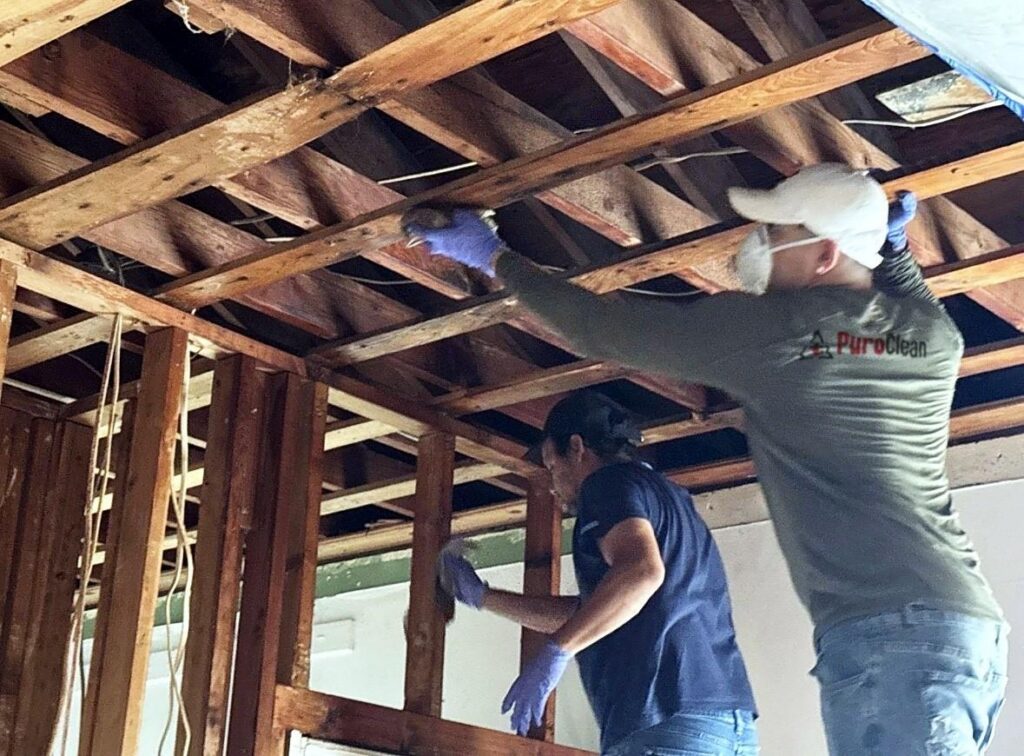
Wet insulation and badly damaged plaster or drywall are removed. In other spots, small holes or removed baseboards let air reach the cavity. The goal is to open only what’s needed.
Drying the Structure
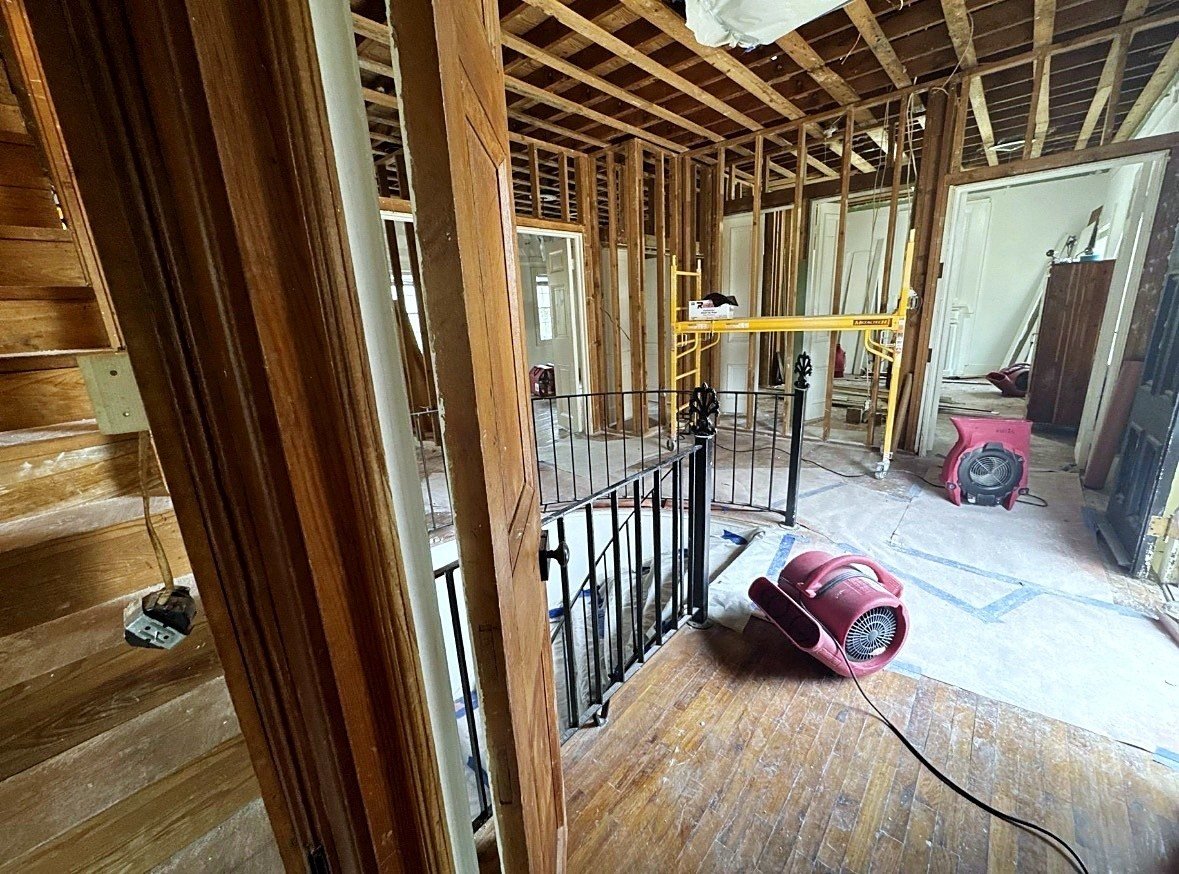
Air movers and dehumidifiers go in on each affected floor. Some jobs use specialty equipment that pushes dry air into wall cavities. Dense materials like plaster and old-growth framing can take longer to dry.
Daily Monitoring
Readings are taken each day and compared with dry areas of the same building. Equipment is moved as materials dry. Most jobs take several days, and multi-floor jobs can run longer.
Tenants can often stay in their units during drying, depending on how much space the equipment takes and which rooms are affected. The fans and dehumidifiers run day and night, so expect some noise. The crew will talk through access and scheduling with each household.
Who Does What in a Three-Unit Leak?
Clear roles keep the job moving.
- Building owner: brings in the plumber, contacts the building insurer, and gives the crew access to each unit.
- Tenants: report water quickly, move valuables, and check with their renters insurer about belongings.
- Plumber: finds and repairs the leak, and notes the cause in writing.
- Restoration crew: maps moisture on every floor, removes wet materials, and dries the structure.
During a triple-decker plumbing leak in Worcester, one shared contact list helps a lot. Put every unit’s phone number, the owner’s number, and the plumber’s number in one text thread or note.
What About the Basement and Mechanicals?
Water that reaches the bottom of the stack can end up in the basement. That’s where the boiler, water heaters, and electrical panels often sit in older triple-deckers. Have an electrician or heating technician check any equipment that got wet before it runs again.
Why Is Plaster Different From Drywall?
Plaster holds water and dries slowly. It’s also heavier, so a wet plaster ceiling can sag or let go. Crews check older plaster carefully before deciding to dry it in place or remove it.
Old finishes call for caution, too. Lead is a concern in buildings painted before 1978, and certain older plaster or texture coats contained asbestos. A trained crew tests suspect materials before cutting or sanding them.
Can Mold Grow in the Walls?
Yes, when a cavity stays damp. The EPA’s mold and moisture guide lists places hidden mold can grow. Two of them are the back side of drywall and the inside of walls around leaking pipes. The guide’s advice is to dry wet areas and items within 24 to 48 hours to keep mold from starting.
When growth is already present, remediation follows ANSI/IICRC S520. That means setting up containment, then physically removing the growth. Our team is certified in Applied Microbial Remediation.
How Is Insurance Usually Handled?
With more people involved than in a single-family house. The owner’s building policy, each tenant’s renters policy, and sometimes the plumber’s coverage may all play a part. The Insurance Information Institute’s peril guide includes accidental discharge or overflow of water from a plumbing system in its list of covered perils. The guide also notes that policies won’t pay for damage caused by poor maintenance.
No two policies read exactly alike. Owners and tenants should each check with their own agent, and the adjuster makes the coverage call. We keep separate photo and moisture records for each unit. Our estimates are written in Xactimate, software that’s widely used across the claims industry.
How Can Owners Lower the Risk?
- Have a plumber inspect drain stacks and fixture connections in older buildings.
- Replace old supply lines under sinks, toilets, and washers.
- Keep tub and shower caulk and grout in good shape.
- Install leak sensors under upstairs fixtures and near the laundry.
- Label the building’s main shutoff and make sure every tenant knows where it is.
- Ask tenants to report drips, stains, or slow drains right away.
Example: A triple-decker plumbing leak in Worcester starts when a washer drain hose slips out on the third floor. Water reaches the first-floor ceiling within an hour. This is an invented scenario used only to illustrate the steps above.
Frequently Asked Questions
How Far Can Water Travel in a Triple-Decker?
From the top floor to the basement, in some cases. It follows pipes and framing, so the stain below may not line up with the source above.
Do All Three Units Need Drying Equipment?
Only the ones that got wet. Moisture readings in each unit decide that. Sometimes the middle unit has the most damage.
How Long Does Drying After a Triple-Decker Plumbing Leak in Worcester Take?
Usually several days per affected area. Plaster walls, dense framing, and multiple floors can extend that.
Will the Ceilings Need to Come Down?
Not always. A ceiling that’s sagging, crumbling, or soaked through usually comes out. A ceiling with a small stain may dry in place with holes for airflow. Moisture readings and a look at the plaster or drywall help decide.
Should the Building’s Water Stay Off?
Only until the source is found and isolated. Once the plumber shuts off or repairs the leaking line, water can usually be restored to the rest of the building.
Do You Serve Worcester?
Yes. Learn more on our Worcester service area page.
Call About a Triple-Decker Plumbing Leak in Worcester
PuroClean Certified Restoration Specialists answers around the clock, 24/7. Our office is veteran-owned and locally owned; owner Nigel Belgrave is a US Air Force veteran. Technicians on our team are certified in Applied Structural Drying, Water Damage Restoration, Applied Microbial Remediation, and Fire and Smoke Restoration. EPA Lead-Safe certification is part of our credentials too. Call (774) 321-3232 or stop by 482 Southbridge Street, Auburn, MA 01501. We work in Worcester, Auburn, Oxford, Spencer, Webster, Whitinsville, and East Douglas.